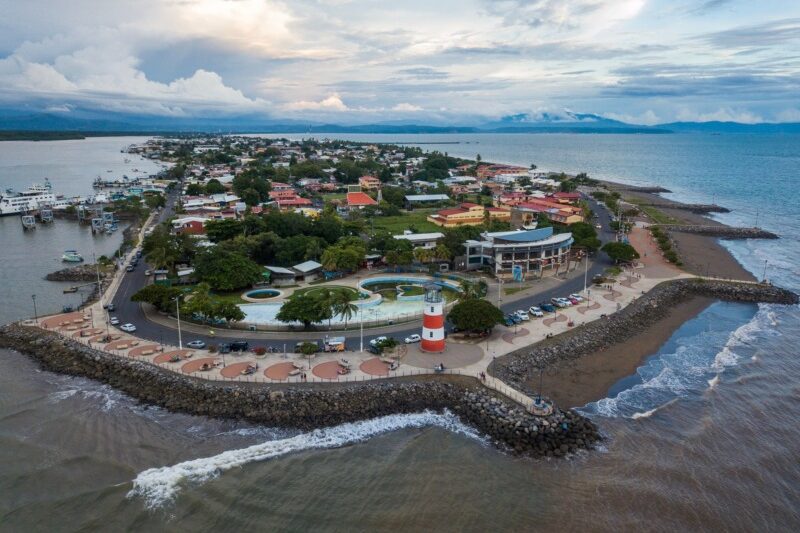
Costa Rica’s most popular national park (4,388,460 visitors 2012-2022) spanning compact 19.83km² with world’s highest biodiversity rates featuring 109 mammal species, 184 bird species, and all four Costa Rican beaches (Manuel Antonio, Espadilla Sur, Tesoro, Playita) connected by natural tombolo sand bridge formations. Endemic Central American squirrel monkey (Saimiri oerstedii citrinellus) found nowhere else with only 1,500 individuals remaining, alongside brown-throated and Hoffmann’s sloths, mantled howler monkeys, white-faced capuchins, coatis, raccoons, iguanas, anteaters, and occasional ocelots creating captivating wildlife encounters. Forbes’ 2011 listing among world’s 12 most beautiful national parks featuring TripAdvisor’s top-25 Manuel Antonio beach (2019) with white sand, lush rainforest backdrop, offshore islands, coral reefs enabling excellent snorkeling experiences. Pacific coast marine life including dolphins, migrating humpback whales (June-September), while daily visitor limits (1,200 people) protect ecological balance across this pocket paradise. Seven-square-mile concentration delivering highest Costa Rican wildlife biodiversity where pristine beaches meet rainforest ecosystems, creating the ultimate fusion of Pacific coastal beauty with tropical wildlife sanctuary accessible from Quepos base.
The destination guide
Manuel Antonio

National / State Park in Costa Rica, North AmericaUpdated
- Overall8/10
- Best forFamilies, Couples, Adventure seekers
- PeakDec–Mar
- CurrencyCRC
Manuel Antonio packs 109 mammal species into 19km² — spot the rarest squirrel monkey on earth, then swim at four beaches in one afternoon.
Travel guides for Manuel Antonio
More guides featuring Manuel Antonio (3)
At a glance
- Spanish
- Pacific coast
- Tropical rainforest
- National park
- Wildlife sanctuary
How Manuel Antonio scores
Editorial scores on a 10-point scale, weighed against destinations of the same kind.
Travel safety snapshot
SafePlace indicators use their source 100-point scale; higher is more favourable. Planning context, not a live travel advisory — check official government guidance before you go.
When to go
Best months to visit: January, February, March, April, May, June, July, August, November and December.
- January: 23 to 28.1 degrees Celsius, 47.2 millimetres of rain, best-time score 5 out of 5.
- February: 23.6 to 29.4 degrees Celsius, 20.3 millimetres of rain, best-time score 5 out of 5.
- March: 24.1 to 30.1 degrees Celsius, 41.7 millimetres of rain, best-time score 5 out of 5.
- April: 23.7 to 29.1 degrees Celsius, 206.6 millimetres of rain, best-time score 5 out of 5.
- May: 23.4 to 28.1 degrees Celsius, 559.3 millimetres of rain, best-time score 4 out of 5.
- June: 22.9 to 27.4 degrees Celsius, 550.4 millimetres of rain, best-time score 4 out of 5.
- July: 22.8 to 27.1 degrees Celsius, 589.6 millimetres of rain, best-time score 4 out of 5.
- August: 22.8 to 27.2 degrees Celsius, 680.3 millimetres of rain, best-time score 4 out of 5.
- September: 22.7 to 27.3 degrees Celsius, 633.1 millimetres of rain, best-time score 3 out of 5.
- October: 22.4 to 26.8 degrees Celsius, 917.9 millimetres of rain, best-time score 3 out of 5.
- November: 22.4 to 26.4 degrees Celsius, 650 millimetres of rain, best-time score 4 out of 5.
- December: 22.6 to 27 degrees Celsius, 164 millimetres of rain, best-time score 5 out of 5.
Month-by-month conditions and packing advice
- January
- Warm to hot, occasional rain January in Manuel Antonio: dry-season beaches, wildlife walks, boat trips, park visits, and rainforest stays are most reliable. Crowds: January in Manuel Antonio is comfortable for sightseeing, neighborhoods, food stops, day trips, and outdoor time with limited weather friction. Pack: Pack light clothing, sun protection, and comfortable walking shoes.
- February
- Warm to hot, mostly dry February in Manuel Antonio: dry-season beaches, wildlife walks, boat trips, park visits, and rainforest stays are most reliable. Crowds: February in Manuel Antonio is workable with normal seasonal planning; build in layers, weather checks, and a mix of indoor and outdoor activities. Pack: Pack light clothing, sun protection, and comfortable walking shoes.
- March
- Warm to hot, occasional rain March in Manuel Antonio: dry-season beaches, wildlife walks, boat trips, park visits, and rainforest stays are most reliable. Crowds: March in Manuel Antonio is workable with normal seasonal planning; build in layers, weather checks, and a mix of indoor and outdoor activities. Pack: Pack light clothing, sun protection, and comfortable walking shoes.
- April
- Warm to hot, rainy April in Manuel Antonio: dry-season beaches, wildlife walks, boat trips, park visits, and rainforest stays are most reliable. Crowds: April in Manuel Antonio is one of the wetter periods, so museums, food stops, flexible reservations, and backup indoor plans make the trip easier. Pack: Pack light clothing, sun protection, and comfortable walking shoes. Add a rain jacket or compact umbrella.
- May
- Warm to hot, rainy May in Manuel Antonio: green-season timing can offer value and wildlife with rain planned into the day. Crowds: May in Manuel Antonio is one of the wetter periods, so museums, food stops, flexible reservations, and backup indoor plans make the trip easier. Pack: Pack light clothing, sun protection, and comfortable walking shoes. Add a rain jacket or compact umbrella.
- June
- Warm to hot, rainy June in Manuel Antonio: green-season timing can offer value and wildlife with rain planned into the day. Crowds: June in Manuel Antonio is one of the wetter periods, so museums, food stops, flexible reservations, and backup indoor plans make the trip easier. Pack: Pack light clothing, sun protection, and comfortable walking shoes. Add a rain jacket or compact umbrella.
- July
- Warm to hot, rainy July in Manuel Antonio: green-season timing can offer value and wildlife with rain planned into the day. Crowds: July in Manuel Antonio is one of the wetter periods, so museums, food stops, flexible reservations, and backup indoor plans make the trip easier. Pack: Pack light clothing, sun protection, and comfortable walking shoes. Add a rain jacket or compact umbrella.
- August
- Warm to hot, rainy August in Manuel Antonio: green-season timing can offer value and wildlife with rain planned into the day. Crowds: August in Manuel Antonio is one of the wetter periods, so museums, food stops, flexible reservations, and backup indoor plans make the trip easier. Pack: Pack light clothing, sun protection, and comfortable walking shoes. Add a rain jacket or compact umbrella.
- September
- Warm to hot, rainy September in Manuel Antonio: heavier rains can disrupt beach, road, and park plans. Crowds: September in Manuel Antonio is one of the wetter periods, so museums, food stops, flexible reservations, and backup indoor plans make the trip easier. Pack: Pack light clothing, sun protection, and comfortable walking shoes. Add a rain jacket or compact umbrella.
- October
- Mild to warm, rainy October in Manuel Antonio: heavier rains can disrupt beach, road, and park plans. Crowds: October in Manuel Antonio is one of the wetter periods, so museums, food stops, flexible reservations, and backup indoor plans make the trip easier. Pack: Pack light clothing, sun protection, and comfortable walking shoes. Add a rain jacket or compact umbrella.
- November
- Mild to warm, rainy November in Manuel Antonio: green-season timing can offer value and wildlife with rain planned into the day. Crowds: November in Manuel Antonio is one of the wetter periods, so museums, food stops, flexible reservations, and backup indoor plans make the trip easier. Pack: Pack light clothing, sun protection, and comfortable walking shoes. Add a rain jacket or compact umbrella.
- December
- Mild to warm, rainy December in Manuel Antonio: dry-season beaches, wildlife walks, boat trips, park visits, and rainforest stays are most reliable. Crowds: December in Manuel Antonio is one of the wetter periods, so museums, food stops, flexible reservations, and backup indoor plans make the trip easier. Pack: Pack light clothing, sun protection, and comfortable walking shoes. Add a rain jacket or compact umbrella.
- December
- January
- February
- March
- September
- October
- May
- June
Know before you go
Best time to visit
The best time to visit Manuel Antonio is during the dry season from mid-December through April, when sunny skies, warm temperatures (27-32°C / 81-90°F), and calm seas create ideal conditions for beach and wildlife activities in and around the national park.
Dry Season / High Season (December-April)
The most popular time to visit, with consistent sunshine, lower humidity, and minimal rainfall. Perfect for beach activities, hiking, and wildlife spotting. January and March offer the clearest skies. Expect higher accommodation prices and larger crowds, especially around holidays.
Green Season / Shoulder (May-August)
Short afternoon rain showers give way to lush, green landscapes and more active wildlife. Mornings are usually sunny. Fewer tourists and 30-40% lower prices on accommodation. An excellent time for budget travelers who don’t mind brief daily rain.
Rainy Season (September-November)
The wettest months, with longer and heavier rainfall. September and October see the most rain. The surrounding rainforest is at its most vibrant. Lowest prices, fewest tourists, and great value — but plan for indoor time during downpours. Manuel Antonio National Park may close on Mondays.
Season by season
Dry Season (Dec-April):
Weather: 25-30°C, sunny
Highlights: Best beach days
Best For: Sun
Green Season (May-Nov):
Weather: 25-30°C, pm rain
Highlights: Lush jungle, whales
Best For: Wildlife, value
Whale Season (Aug-Oct):
Weather: Rainy
Highlights: Humpback whales
Best For: Nature
Crowds
Manuel Antonio National Park is busiest in the dry season (December–April) and during Costa Rica school holidays (mid-December and April), with park trails and beaches crowded and visitor caps often reached; quietest in the rainy season (May–November), when crowds drop substantially.
Getting there and around
Getting there
Juan Santamaría International Airport (SJO) near San José is the main gateway, located 170km from Manuel Antonio. Shared shuttle services operate twice daily (8:15am and 3:00pm) with door-to-door hotel transfers (3-4 hours, $54 per person). Private shuttles available anytime ($180 per vehicle) with air-conditioned vans and English-speaking drivers.
Direct public buses run from San José’s Tracopa Terminal to Quepos (3.5-4 hours, $8-12) every 2-3 hours. From the airport, first take a taxi to downtown San José’s terminal (25-45 minutes, $20-30), then catch the Quepos bus. Liberia Airport (LIR) serves Guanacaste with a 4.5-hour drive to Manuel Antonio.
Getting around
Manuel Antonio and nearby Quepos are connected by frequent local buses every 30 minutes (15 minutes, 250 colones/$0.50). The bus runs along Route 618 between Quepos bus station and Playa Espadilla Sur, stopping at hotels and attractions along the way.
Official red taxis with yellow triangles charge standardized rates: $7-9 between Quepos and Manuel Antonio, easily flagged down or found at designated stands. The compact Manuel Antonio area is walkable for nearby hotels, restaurants, and the national park entrance, though the hilly coastal road between towns is challenging on foot. Bicycle rentals ($20/day) and scooter rentals ($64/day) available but require caution on steep terrain.
Top experiences in Manuel Antonio
Manuel Antonio National Park
Costa Rica’s most famous national park. It combines lush rainforest with pristine white-sand beaches. It is teeming with wildlife: sloths, capuchin monkeys, howler monkeys, and iguanas are easily spotted. It is paradise.
Playa Espadilla
The main public beach outside the park. It is long, beautiful, and perfect for sunsets. Surfing lessons are popular here. At the northern end, it is quieter. It connects the town to the park entrance.
Catamaran Tour
A cruise along the coastline is a must. You can see dolphins, whales (in season), and the park from the water. Tours usually include snorkeling and a meal. The sunset cruises are particularly spectacular.
Rainmaker Conservation Park
A private reserve north of Manuel Antonio. It has hanging bridges through the canopy and waterfalls with swimming holes. It is less crowded than the national park and offers a true ‘rainforest’ experience.
Sloth Spotting
Manuel Antonio is one of the best places in the world to see sloths (both 2-toed and 3-toed). While you can see them in the park, many guides offer specific sloth tours. Look up! They are often sleeping in Guarumo trees.
Editor-curated picks carried over from our original guide. Where a full place guide exists, the card links to it.
Worth booking ahead in Manuel Antonio
Hand-picked from the operators our guides already send readers to. Prices and availability are live on the partner site.
BrowseViator
Tours and tickets in Manuel Antonio on Viator (opens Viator in a new tab)
Viator's full list of bookable tours and tickets in Manuel Antonio.
BrowseGetYourGuide
Experiences in Manuel Antonio on GetYourGuide (opens GetYourGuide in a new tab)
Everything GetYourGuide sells in Manuel Antonio, with the cancellation terms on each listing.
Where to stayBooking.com
Stays in Manuel Antonio (opens Booking.com in a new tab)
Live rates and availability for Manuel Antonio on Booking.com; filter by neighbourhood once you know where your days start.
We earn a commission if you book through these links, at no extra cost to you. It is how we keep the guides free and independent.
Where to stay
Arenas del Mar Beachfront & Rainforest Resort
Punta Quepos, Manuel Antonio, Costa Rica
A luxury eco-resort that offers the best of both worlds: direct beach access and rainforest location. You can see monkeys from your balcony. It is sustainable, high-end, and offers incredible service. Great for spotting wildlife without leaving your room.
Makanda by the Sea
1 km west of Plaza Yaraz, Manuel Antonio, Costa Rica
An adults-only design hotel. It is ultra-chic, romantic, and secluded. The infinity pools overlooking the ocean are spectacular. It feels like a private jungle hideaway for couples. The architecture blends with the forest.
Hotel Costa Verde
Km 5 to Manuel Antonio National Park, Costa Rica
Famous for the ‘727 Fuselage Home’—a suite inside a refurbished Boeing 727 airframe perched in the jungle canopy. The hotel offers great ocean views and is close to the park entrance. It is quirky, famous, and fun.
Editor-curated stays carried over from our original guide. Where we have reviewed the hotel, the card links to the review.
Tips from the field
Highlights
- Wildlife – Monkeys/Sloths
- Beaches – Jungle meets sea
- Pura Vida – Lifestyle
- Park – Accessible nature
- Adventure – Zip lining
- Sunsets – Pacific views
- Conservation – Eco-tourism
- Warmth – Tropical year-round
Best activities
- Hike the trails in Manuel Antonio National Park. Swim at Playa Manuel Antonio. Go zip-lining through the canopy. Take a sunset catamaran cruise. Spot a sloth. Walk the hanging bridges at Rainmaker.
Local experiences
- Hire a certified naturalist guide to spot white-faced capuchins, three-toed sloths, and scarlet macaws inside Manuel Antonio National Park — the guides carry spotting scopes and know exactly where to look. Kayak through the mangrove channels of Damas Island at dawn, when herons, iguanas, and caiman are most active. Catch the Friday open-air sunset catamaran cruise off the coast, where dolphins bow-ride alongside the boat and humpback whales surface between July and November. Eat ceviche and patacones (fried plantains) at a beachfront soda in Quepos, the working fishing town most tourists skip. Zipline through the rainforest canopy on a 10-cable circuit that drops you over waterfalls and treetops. Walk to the secluded cove at Playa Biesanz — a short jungle trail leads to calm turquoise water with excellent snorkeling right off the rocks.
Practical tips
- Currency: Costa Rican Colón (CRC); US Dollars widely accepted at tourist businesses but change given in colones.
- Getting There: Juan Santamaría International Airport (SJO) near San José is 3.5 hours by car. Domestic flights to Quepos (nearest town) take 25 minutes. Public buses from San José run daily (~, 3.5 hours).
- Transportation: Public buses connect Quepos and Manuel Antonio frequently (~-3). Taxis between Quepos and the park cost ~-10. Renting a car offers flexibility but roads are steep and winding.
- Dining: "Sodas" (local family restaurants) serve traditional casados and gallo pinto for -8. Mid-range restaurants -30 per person. Quepos offers more affordable dining than Manuel Antonio hotel strip.
- National Park: Entry fee ~ per person (book online). Open Tuesday-Sunday (closed Mondays). Early morning visits offer the best wildlife sightings. Self-guided visits save -80 compared to organized tours.
- Free Activities: Beach walks, wildlife spotting from the road, sunset watching, and exploring Quepos town.
- Tipping: 10% service charge is usually added at restaurants; additional tip optional
- Electricity: 120V/60Hz, Type A/B plugs (same as US)
Photography tips
- Golden Hour: Sunset on Playas Espadilla.
- Iconic Shots:
- A monkey or sloth in the trees.
- The view of Cathedral Point from the beach.
- The hanging bridges at Rainmaker.
- Sunset over the Pacific.
- A telephoto lens is essential for wildlife.
- Technique: Jungle can be dark; bump ISO. Beach is bright; watch highlights. Use a polarizing filter for water.
Timing
- Peak Season (Dec-April):
- Dry, busy, expensive
- Shoulder Season (May-June):
- Green, less crowded
- Low Season (Sept-Oct):
- Rainiest, cheapest
Keeping it authentic
- Manuel Antonio is very touristy, but for a reason—the density of wildlife is unmatched. 'Pura Vida' (Pure Life) is the local motto and greeting. Ticos (locals) are incredibly friendly. Expect monkeys to try and steal your lunch on the beach (seriously).
Culture, customs and safety
Cultural heritage
Manuel Antonio represents the cultural evolution of Costa Rica Pacific coast conservation and sustainable tourism, where traditional Quepos fishing heritage, national park protection, and eco-tourism innovation created a model for environmentally conscious coastal development. The area preserves traditional Costa Rican coastal culture while pioneering wildlife conservation and sustainable tourism practices that define contemporary Central American environmental leadership. Manuel Antonio cultural heritage encompasses traditional Costa Rican fishing culture, conservation movement innovation, sustainable tourism development, and contemporary environmental stewardship that continues to influence global eco-tourism standards and Central American conservation practices.
Local customs & etiquette
In Manuel Antonio, be respectful of local customs and traditions.
Safety notes
Manuel Antonio is generally safe for tourists, though standard tropical and rural precautions apply.
General Safety:
• Petty theft is the primary concern — do not leave belongings unattended on beaches or in vehicles
• Use hotel safes for passports, electronics, and cash
• Avoid displaying expensive items or large amounts of cash
National Park:
• Purchase park tickets online in advance — do not buy from unofficial sellers outside the park
• Ignore individuals trying to direct you to paid parking away from the entrance
• Stay on marked trails; jaguars and snakes inhabit the forest
• Do not feed or touch wildlife
Transportation:
• Use licensed taxis (red meters) — beware of unlicensed “pirate taxis” that may overcharge
• Roads are hilly and winding; drive cautiously if renting a car
Health:
• Apply insect repellent to guard against mosquitoes
• Stay hydrated in tropical heat
• Tap water is generally safe in tourist areas
Emergency number: 911