The destination guide
Marrakech

Travel guides for Marrakech
More guides featuring Marrakech (3)
At a glance
- Arabic
- French
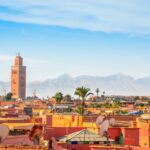
- Desert edge city
- Atlas Mountains nearby
- Medina souks
- Palm groves
- Culture
- Markets
- Architecture
- Food
- History
- Photography
- Craftsmanship
How Marrakech scores
Editorial scores on a 10-point scale, weighed against destinations of the same kind.
Travel safety snapshot
SafePlace indicators use their source 100-point scale; higher is more favourable. Planning context, not a live travel advisory — check official government guidance before you go.
When to go
Best months to visit: February, March, April, May, June, September, October, November and December.
- January: 5.8 to 20.1 degrees Celsius, 23.9 millimetres of rain, best-time score 3 out of 5.
- February: 7.4 to 21.8 degrees Celsius, 40.6 millimetres of rain, best-time score 4 out of 5.
- March: 9.2 to 23.1 degrees Celsius, 50.1 millimetres of rain, best-time score 5 out of 5.
- April: 12.1 to 26.2 degrees Celsius, 38.8 millimetres of rain, best-time score 5 out of 5.
- May: 15.1 to 30.4 degrees Celsius, 16.7 millimetres of rain, best-time score 5 out of 5.
- June: 17.9 to 33.6 degrees Celsius, 2.2 millimetres of rain, best-time score 4 out of 5.
- July: 21.2 to 38.6 degrees Celsius, 1.3 millimetres of rain, best-time score 2 out of 5.
- August: 21.9 to 38.6 degrees Celsius, 2.5 millimetres of rain, best-time score 2 out of 5.
- September: 18.8 to 33.4 degrees Celsius, 5.6 millimetres of rain, best-time score 5 out of 5.
- October: 15.7 to 30.1 degrees Celsius, 20.4 millimetres of rain, best-time score 5 out of 5.
- November: 10.5 to 24.2 degrees Celsius, 27.5 millimetres of rain, best-time score 5 out of 5.
- December: 7.1 to 20.4 degrees Celsius, 41.5 millimetres of rain, best-time score 4 out of 5.
Month-by-month conditions and packing advice
- January
- Mild to warm, mostly dry January in Marrakech: cool nights and shorter days make the trip less balanced but manageable. Crowds: January in Marrakech is comfortable for sightseeing, neighborhoods, food stops, day trips, and outdoor time with limited weather friction. Pack: Pack layered clothing and comfortable walking shoes.
- February
- Mild to warm, occasional rain February in Marrakech: conditions can still work with cool mornings or early heat planning. Crowds: February in Marrakech is comfortable for sightseeing, neighborhoods, food stops, day trips, and outdoor time with limited weather friction. Pack: Pack layered clothing and comfortable walking shoes.
- March
- Mild to warm, occasional rain March in Marrakech: souks, gardens, rooftop dining, palaces, and Atlas day trips are most comfortable in spring or fall. Crowds: March in Marrakech is comfortable for sightseeing, neighborhoods, food stops, day trips, and outdoor time with limited weather friction. Pack: Pack layered clothing and comfortable walking shoes.
- April
- Mild to warm, occasional rain April in Marrakech: souks, gardens, rooftop dining, palaces, and Atlas day trips are most comfortable in spring or fall. Crowds: April in Marrakech is comfortable for sightseeing, neighborhoods, food stops, day trips, and outdoor time with limited weather friction. Pack: Pack light clothing, sun protection, and comfortable walking shoes.
- May
- Warm to hot, mostly dry May in Marrakech: souks, gardens, rooftop dining, palaces, and Atlas day trips are most comfortable in spring or fall. Crowds: May in Marrakech is workable with normal seasonal planning; build in layers, weather checks, and a mix of indoor and outdoor activities. Pack: Pack light clothing, sun protection, and comfortable walking shoes.
- June
- Warm to hot, mostly dry June in Marrakech: conditions can still work with cool mornings or early heat planning. Crowds: June in Marrakech is workable with normal seasonal planning; build in layers, weather checks, and a mix of indoor and outdoor activities. Pack: Pack light clothing, sun protection, and comfortable walking shoes.
- July
- Very hot, mostly dry July in Marrakech: extreme summer heat makes sightseeing and medina walks difficult. Crowds: July in Marrakech can be very hot, so travelers should favor early starts, shaded breaks, indoor attractions, and flexible afternoon pacing. Pack: Pack breathable clothing, strong sun protection, and a refillable water bottle.
- August
- Very hot, mostly dry August in Marrakech: extreme summer heat makes sightseeing and medina walks difficult. Crowds: August in Marrakech can be very hot, so travelers should favor early starts, shaded breaks, indoor attractions, and flexible afternoon pacing. Pack: Pack breathable clothing, strong sun protection, and a refillable water bottle.
- September
- Warm to hot, mostly dry September in Marrakech: souks, gardens, rooftop dining, palaces, and Atlas day trips are most comfortable in spring or fall. Crowds: September in Marrakech is workable with normal seasonal planning; build in layers, weather checks, and a mix of indoor and outdoor activities. Pack: Pack light clothing, sun protection, and comfortable walking shoes.
- October
- Warm to hot, mostly dry October in Marrakech: souks, gardens, rooftop dining, palaces, and Atlas day trips are most comfortable in spring or fall. Crowds: October in Marrakech is workable with normal seasonal planning; build in layers, weather checks, and a mix of indoor and outdoor activities. Pack: Pack light clothing, sun protection, and comfortable walking shoes.
- November
- Mild to warm, mostly dry November in Marrakech: souks, gardens, rooftop dining, palaces, and Atlas day trips are most comfortable in spring or fall. Crowds: November in Marrakech is comfortable for sightseeing, neighborhoods, food stops, day trips, and outdoor time with limited weather friction. Pack: Pack light clothing, sun protection, and comfortable walking shoes.
- December
- Mild to warm, occasional rain December in Marrakech: conditions can still work with cool mornings or early heat planning. Crowds: December in Marrakech is comfortable for sightseeing, neighborhoods, food stops, day trips, and outdoor time with limited weather friction. Pack: Pack layered clothing and comfortable walking shoes.
- March
- April
- October
- November
- July
- August
- January
- February
- December
Know before you go
About
Morocco’s imperial crown jewel — a city of ochre-tinted ramparts, labyrinthine souks, and centuries of layered history where Berber, Arab, and French influences collide. Founded in 1062 as a Berber capital, Marrakech guards a UNESCO-listed medina threaded with narrow alleys that open suddenly onto mosaic-clad palaces, steaming hammams, and Jemaa el-Fna, the world’s most kinetic public square. By day the square belongs to juice sellers, herbalists, and henna artists; by night it transforms into an open-air amphitheater of storytellers, musicians, and sizzling food stalls lit by acetylene lamps.
Beyond the medina walls, the Jardin Majorelle glows cobalt blue amid tropical plantings, and the Atlas Mountains rise on the southern horizon, snow-capped from November through April. The city serves as Morocco’s cultural capital and a gateway to the High Atlas, the Saharan edge, and the coast at Essaouira.
Best time to visit
The best time to visit Marrakech is during the spring (March to May) and fall (September to November) when temperatures are mild and comfortable for exploring. Summer can be extremely hot, while winter offers cooler temperatures and fewer tourists.
Season by season
Spring (Mar–May): ideal weather (20–30°C), wildflowers, jacaranda blooms, shoulder-season pricing. Summer (Jun–Aug): extreme heat (35–45°C), fewest tourists, cheapest rates; plan activities for morning and evening. Autumn (Sep–Nov): warm and dry, cultural festivals, excellent light. Winter (Dec–Feb): cool mornings (8–15°C), warm afternoons, snow-capped Atlas views, holiday crowds around Christmas and New Year.
Crowds
High (March–May, October–November), Moderate (December–February, June), Low (July–August)
Getting there and around
Getting there
Fly into Marrakech Menara Airport (RAK), 6 km from the medina. Direct flights arrive from across Europe (Ryanair, easyJet, Transavia, British Airways, Air France), North America (Delta, United), and regional hubs on Royal Air Maroc. The journey to Jemaa el-Fna takes 15–20 minutes by taxi (fixed fare ~70 MAD day / ~100 MAD night) or ALSA bus 19 (30 MAD return, every 20–30 minutes until 11:30 PM).
Alternatively, fly into Casablanca (CMN) and take an ONCF train directly to Marrakech station — about 3 hours, with departures roughly every hour. Supratours and CTM coaches connect from Essaouira (3 hours), Fes (7 hours), and other Moroccan cities.
Getting around
Marrakech offers various transportation options including taxis, horse-drawn carriages (calesh), and buses. The medina is best explored on foot, as many streets are narrow and winding. Biking is also an option, with rental services available for those looking to explore the outskirts.
Top experiences in Marrakech
Jemaa el-Fnaa
The pulsing heart of Marrakech and a UNESCO Masterpiece of the Oral and Intangible Heritage of Humanity. By day, juice vendors, spice stalls, and henna artists fill the square; after dark, it transforms into a vast open-air food market ringed by storytellers, musicians, and Gnaoua performers.
Jardin Majorelle
A 12-acre botanical garden created by French painter Jacques Majorelle in the 1920s and later restored by Yves Saint Laurent. Electric-blue buildings house the Berber Museum, while cobalt walkways wind through cacti, bougainvillea, and bamboo groves. The adjacent YSL Museum sits next door.
Bahia Palace
A 19th-century palace built for Grand Vizier Si Moussa, showcasing Islamic and Moroccan architecture at its finest. Wander through tiled courtyards, carved stucco arches, and painted cedarwood ceilings that took hundreds of craftsmen over a decade to complete.
Medina & Souks
A labyrinth of covered alleyways and open-air markets stretching across the old medina. Separate souks specialize in leather, metalwork, textiles, spices, and carpets. Haggling is expected; start at roughly half the asking price and negotiate from there.
Koutoubia Mosque
Marrakech’s largest and oldest mosque, whose 77-m minaret has anchored the city skyline since the 12th century. Non-Muslims cannot enter, but the exterior and surrounding rose gardens are striking, especially when floodlit after dark.
Editor-curated picks carried over from our original guide. Where a full place guide exists, the card links to it.
Worth booking ahead in Marrakech
Hand-picked from the operators our guides already send readers to. Prices and availability are live on the partner site.
BrowseViator
Tours and tickets in Marrakech on Viator (opens Viator in a new tab)
Viator's full list of bookable tours and tickets in Marrakech.
BrowseGetYourGuide
Experiences in Marrakech on GetYourGuide (opens GetYourGuide in a new tab)
Everything GetYourGuide sells in Marrakech, with the cancellation terms on each listing.
Where to stayBooking.com
Stays in Marrakech (opens Booking.com in a new tab)
Live rates and availability for Marrakech on Booking.com; filter by neighbourhood once you know where your days start.
We earn a commission if you book through these links, at no extra cost to you. It is how we keep the guides free and independent.
Where to stay
Riad Yasmine
Derb Arjaan, Rahba Lakdima, Medina, Marrakech 40000, Morocco
An 8-room boutique riad with an iconic turquoise-tiled courtyard pool, lush potted palms, and individually styled rooms blending traditional Moroccan tilework with modern comforts. Breakfast on the rooftop terrace offers views over the medina rooftops to the Atlas Mountains.
Dar Darma Riad
114 Derb Lamrani, Mouassine, Medina, Marrakech 40000, Morocco
A restored 18th-century riad in the Mouassine quarter, featuring five grand suites with hand-carved cedarwood ceilings, zellige tilework, and private balconies. The courtyard has a plunge pool, and the riad organizes private cooking classes and guided medina tours.
La Sultana Marrakech
Derb Sidi Bou Amar, Kasbah, Medina, Marrakech 40000, Morocco
A Relais & Châteaux property set in the quiet Kasbah district near the Saadian Tombs, with 13 rooms, a garden courtyard, hammam, and a rooftop restaurant offering panoramic medina views. The design blends mid-century furniture with traditional Moroccan craftsmanship.
Editor-curated stays carried over from our original guide. Where we have reviewed the hotel, the card links to the review.
Tips from the field
Highlights
- Jemaa el-Fnaa — UNESCO-recognized living plaza
- Jardin Majorelle — Cobalt-blue botanical oasis
- Bahia Palace — Masterclass in Islamic architecture
- Medina Souks — Centuries-old market labyrinth
- Koutoubia Mosque — 12th-century minaret
- Rooftop terraces — Sunset views across the medina
Best activities
- Get lost in the souk labyrinth and haggle for leather goods and ceramics, eat your way through the Jemaa el-Fnaa food stalls at sunset, explore Jardin Majorelle and the YSL Museum, marvel at the tilework inside Bahia Palace, visit the Saadian Tombs, relax in a traditional hammam, take a Moroccan cooking class, watch the sunset from a rooftop terrace, and day-trip to the Atlas Mountains or Ouzoud Waterfalls.
Local experiences
- Sip mint tea on a sun-drenched rooftop as the call to prayer echoes across the medina, navigate the souk's maze of leather and spice stalls with a local guide, or steam away the dust in a centuries-old hammam.
Practical tips
- Book your riad before arrival and have them arrange airport transfer — taxis can overcharge.
- Bring cash (Moroccan dirhams); many souks and riads don't take cards.
- Tap water is not safe; drink bottled or filtered water.
- Download offline maps — the medina's GPS can be unreliable.
- Summer (Jul–Aug) temperatures exceed 40°C — plan indoor activities during midday.
- A local guide for the first souk visit saves time and prevents getting lost.
Photography tips
- The golden-hour light on Jemaa el-Fnaa from a rooftop café (Café de France, Le Grand Balcon) is the classic shot — arrive 30 minutes before sunset for the best compositions. Inside the medina, a wide-angle lens captures the narrow lanes and arched doorways
- a 50 mm prime isolates the rich textures of zellige and carved plaster. Jardin Majorelle's cobalt walls pop under overcast skies. Always ask permission before photographing people — a small tip is customary.
Timing
- Two days cover the medina, Jemaa el-Fnaa, Bahia Palace, and Jardin Majorelle. Three days add the Saadian Tombs, a hammam session, and a cooking class. Five days allow day trips to the Atlas Mountains and Ouzoud Waterfalls. A week lets you add Essaouira or the Agafay Desert.
Keeping it authentic
- Marrakech has been a trading crossroads for over a thousand years, linking sub-Saharan caravans with Mediterranean ports. The medina's layout has barely changed since the Almoravid era. Artisans in the souks still practice leather tanning in open-air vats, copper hammering, and zellige tilecutting using the same techniques their ancestors did centuries ago. The evening spectacle on Jemaa el-Fnaa — halqa (street theater circles), Gnaoua musicians, and communal food stalls — is a living cultural tradition that UNESCO has formally recognized.
Culture, customs and safety
Local customs & etiquette
Dress modestly in the medina — cover shoulders and knees, especially near mosques. Remove shoes before entering a riad or mosque. Use your right hand for eating and greetings. Haggling in the souks is expected and part of the culture. Tipping (10–15% in restaurants, a few dirhams for small services) is appreciated. Photography of locals requires permission; offering a small tip is customary. During Ramadan, avoid eating or drinking visibly in public.
Safety notes
Marrakech is generally safe for tourists but requires street smarts. Pickpocketing is common in crowded areas like Jemaa el-Fnaa and the souks — keep valuables in a front pocket or cross-body bag. Unofficial ‘guides’ may approach you; politely decline if uninterested, but be firm. Negotiate taxi fares before getting in or insist on using the meter. Scams involving ‘free’ henna or unsolicited directions (followed by a demand for payment) are common. Dress modestly to reduce unwanted attention, especially for solo female travelers. Drink only bottled water, and avoid unpeeled fruit from street stalls. The nearest hospital is Clinique Internationale de Marrakech.