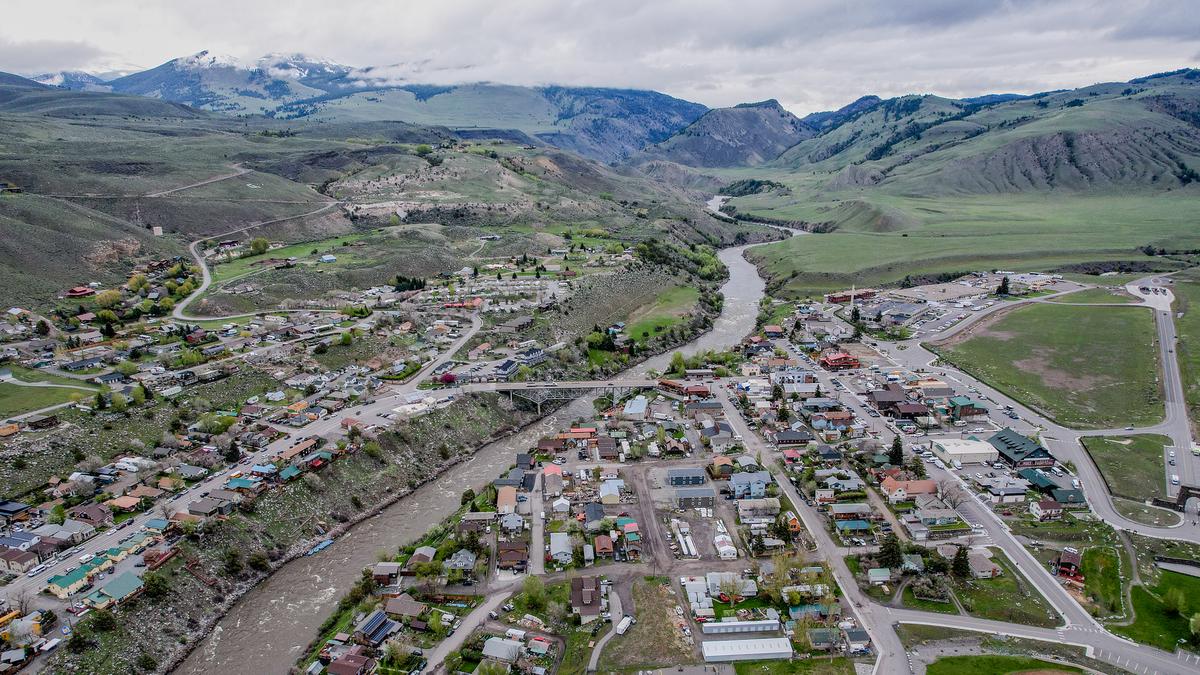
Glacier National Park’s showcase of melting glaciers, alpine meadows, carved valleys, spectacular lakes across 700+ trail miles steeped in human culture, featuring Going-to-the-Sun Road’s spectacular 1932 50-mile highway bisecting east-west through Continental Divide at 6,646-foot Logan Pass, traversing every terrain type from glacial lakes and cedar forests to windswept alpine tundra. Yellowstone’s nearly 3,500-square-mile wilderness featuring dramatic canyons, rivers, thermal features, mud pots, geysers including Old Faithful, plus hundreds of wildlife species: bears, wolves, bison, elk, antelope, 150+ bird species including bald eagles, osprey, peregrine falcons. Flathead Lake’s largest natural western freshwater body (30-mile-long, 15-mile-wide, 300-foot-deep) creating recreational hot spot in glacial-carved valleys surrounded by Mission, Salish, Swan, Whitefish mountains, enabling swimming, fishing, motorboating, paddleboarding, kayaking, sailing beneath stunning snowcapped peak reflections. Big Sky’s world-class resort destination delivering family adventures from winter slopes to summer rivers, fall foliage hiking within driving distance of West Yellowstone and Bozeman, while 269+ lakes, 2 ski areas, extensive trail networks create year-round recreation paradise. Ranch culture heritage through Kootenai chief descendants, Flathead Reservation native experiences, C.M. Russell Art Museum’s cowboy-turned-artist exhibits, Bar W Guest Ranch wagon rides creating authentic Old West encounters across “Big Sky Country’s” diverse seasonal adventures.
The destination guide
Montana
State in United States, North AmericaUpdated
- Overall8/10
- Best forSolo travelers
- PeakJan–Apr
- CurrencyUSD
Going-to-the-Sun Road alone justifies the trip — 50 miles of 1932 engineering cutting through the Continental Divide at 6,646 feet.
Travel guides for Montana
Things to do (8)
Where to stay (2)
Food & drink (2)
Destination stories (2)
More guides featuring Montana (3)
At a glance
- English
- Rocky Mountain wilderness
- Prairie grasslands
- Alpine lakes
- Glacier-carved valleys
How Montana scores
Editorial scores on a 10-point scale, weighed against destinations of the same kind.
Travel safety snapshot
SafePlace indicators use their source 100-point scale; higher is more favourable. Planning context, not a live travel advisory — check official government guidance before you go.
When to go
Best months to visit: January, February, March, June, July, August, September and December.
- January: -8.8 to 0 degrees Celsius, 28 millimetres of rain, best-time score 5 out of 5.
- February: -12.1 to -2.4 degrees Celsius, 38.8 millimetres of rain, best-time score 5 out of 5.
- March: -6.8 to 3.7 degrees Celsius, 35.5 millimetres of rain, best-time score 4 out of 5.
- April: -3.6 to 7.8 degrees Celsius, 65.7 millimetres of rain, best-time score 2 out of 5.
- May: 2.3 to 13.9 degrees Celsius, 100.1 millimetres of rain, best-time score 2 out of 5.
- June: 7.3 to 19.6 degrees Celsius, 82 millimetres of rain, best-time score 4 out of 5.
- July: 11.1 to 24.9 degrees Celsius, 53.3 millimetres of rain, best-time score 5 out of 5.
- August: 10.8 to 24.2 degrees Celsius, 34.7 millimetres of rain, best-time score 5 out of 5.
- September: 7 to 19.3 degrees Celsius, 69.1 millimetres of rain, best-time score 4 out of 5.
- October: 0.4 to 10.6 degrees Celsius, 49.5 millimetres of rain, best-time score 2 out of 5.
- November: -3.8 to 4.9 degrees Celsius, 29.9 millimetres of rain, best-time score 2 out of 5.
- December: -7.8 to 0.6 degrees Celsius, 29.7 millimetres of rain, best-time score 4 out of 5.
Month-by-month conditions and packing advice
- January
- Very cold, mostly dry Peak winter, excellent powder snow for skiing. Crowds: January in Montana is best for winter-ready travelers; outdoor plans need warm gear, shorter daylight expectations, and weather-aware transport planning. Pack: Pack insulated layers, warm footwear, gloves, and a serious winter coat.
- February
- Very cold, occasional rain Great snow base, lively winter resort atmosphere. Crowds: February in Montana is best for winter-ready travelers; outdoor plans need warm gear, shorter daylight expectations, and weather-aware transport planning. Pack: Pack insulated layers, warm footwear, gloves, and a serious winter coat.
- March
- Cold, occasional rain Spring skiing, warmer days but still good snow. Crowds: March in Montana is best for winter-ready travelers; outdoor plans need warm gear, shorter daylight expectations, and weather-aware transport planning. Pack: Pack insulated layers, warm footwear, gloves, and a serious winter coat.
- April
- Cold, occasional rain Slushy snow, ski season ending, mud season begins. Crowds: April in Montana is workable with normal seasonal planning; build in layers, weather checks, and a mix of indoor and outdoor activities. Pack: Pack warm layers, a coat, and comfortable shoes for cold mornings and evenings.
- May
- Cool to mild, some rain Mud season, many places closed for transition. Crowds: May in Montana is workable with normal seasonal planning; build in layers, weather checks, and a mix of indoor and outdoor activities. Pack: Pack warm layers, a coat, and comfortable shoes for cold mornings and evenings. Add a rain jacket or compact umbrella.
- June
- Cool to mild, some rain Summer begins, hiking trails opening up. Crowds: June in Montana is workable with normal seasonal planning; build in layers, weather checks, and a mix of indoor and outdoor activities. Pack: Pack layered clothing and comfortable walking shoes. Add a rain jacket or compact umbrella.
- July
- Mild to warm, occasional rain Perfect summer weather for hiking and mountain biking. Crowds: July in Montana is comfortable for sightseeing, neighborhoods, food stops, day trips, and outdoor time with limited weather friction. Pack: Pack light clothing, sun protection, and comfortable walking shoes.
- August
- Mild to warm, occasional rain Excellent warm mountain weather. Crowds: August in Montana is comfortable for sightseeing, neighborhoods, food stops, day trips, and outdoor time with limited weather friction. Pack: Pack light clothing, sun protection, and comfortable walking shoes.
- September
- Cool to mild, occasional rain Beautiful fall colors, cooler nights. Crowds: September in Montana is workable with normal seasonal planning; build in layers, weather checks, and a mix of indoor and outdoor activities. Pack: Pack layered clothing and comfortable walking shoes.
- October
- Cool to mild, occasional rain Transition season, getting cold, trails may close. Crowds: October in Montana is workable with normal seasonal planning; build in layers, weather checks, and a mix of indoor and outdoor activities. Pack: Pack warm layers, a coat, and comfortable shoes for cold mornings and evenings.
- November
- Cold, mostly dry Waiting for snow, quietest time of year. Crowds: November in Montana is workable with normal seasonal planning; build in layers, weather checks, and a mix of indoor and outdoor activities. Pack: Pack warm layers, a coat, and comfortable shoes for cold mornings and evenings.
- December
- Very cold, mostly dry Ski season begins, festive holiday vibe. Crowds: December in Montana is best for winter-ready travelers; outdoor plans need warm gear, shorter daylight expectations, and weather-aware transport planning. Pack: Pack insulated layers, warm footwear, gloves, and a serious winter coat.
- March
- February
- January
- April
- September
- August
- July
- June
Know before you go
Neighbourhoods
Bozeman, Missoula, Whitefish, Billings, Helena
Best time to visit
Late June through September offers warm weather, open mountain passes, and full access to Glacier and Yellowstone. Going-to-the-Sun Road in Glacier typically opens fully by early July and closes in mid-October. July and August are peak season with the warmest temperatures and longest lines. September brings fall color, thinner crowds, and excellent wildlife viewing as elk and bison enter the rut. Winter (December–March) suits skiing at Big Sky, cross-country trails, and Yellowstone snowcoach tours through a frozen landscape.
Season by season
Summer (June-Sept): Warm days (70-80°F), perfect for hiking and parks; book early.
Fall (Sept-Oct): Crisp air, golden larches, and active wildlife; snow possible by October.
Winter (Nov-March): Cold and snowy, ideal for skiing at Big Sky and Whitefish.
Spring (April-May): Unpredictable weather with rain and snow; baby animals emerge in parks.
Crowds
Montana peaks in summer (June-August) for Glacier and Yellowstone gateway towns, with major crowding on park roads and trailheads; quietest November-April when access to many national park facilities is limited and visitor numbers are low.
Getting there and around
Getting there
Montana is served by Bozeman Yellowstone International (BZN), Billings-Logan International (BIL), Missoula Montana (MSO), and Glacier Park International (FCA) airports. Interstate highways I-90 (east-west) and I-15 (north-south) form the road network backbone. Amtrak Empire Builder traverses northern Montana with stops near Glacier National Park including Whitefish and West Glacier, connecting Chicago with Seattle/Portland. Rental cars are essential for accessing parks and attractions.
Getting around
Getting around Montana requires a bit of planning due to its vast landscapes and low population density, which limit conventional public transit options. While cities like Missoula and Billings offer modest fixed-route bus systems (like Mountain Line and MET Transit), rural areas and national parks like Glacier and Yellowstone largely lack transit infrastructure—meaning a rental car is almost essential for flexibility and access. Walkability is fair in downtown cores of larger towns, but outside of those zones, sidewalks and pedestrian infrastructure are sparse. Rideshare services like Uber and Lyft operate in select cities, though availability can be limited during off-peak hours or in smaller towns, so it’s wise to book ahead or check with local taxi operators, especially when venturing to remote areas or planning early-morning departures.
Top experiences in Montana
Glacier National Park
The ‘Crown of the Continent’ features the scenic Going-to-the-Sun Road, pristine glacial lakes, and over 700 miles of hiking trails.
Yellowstone National Park (North/West Entrances)
World’s first national park, featuring the Lamar Valley wildlife haven, Mammoth Hot Springs, and Old Faithful geyser.
Flathead Lake
The largest natural freshwater lake in the West, offering boating, fishing, and cherry orchards along its shores.
Big Sky Resort
A premier year-round mountain destination known for ‘The Biggest Skiing in America’ and summer hiking trails.
Little Bighorn Battlefield National Monument
Memorializes the site of the 1876 Battle of the Little Bighorn, honoring the Lakota, Cheyenne, and U.S. 7th Cavalry.
Editor-curated picks carried over from our original guide. Where a full place guide exists, the card links to it.
Worth booking ahead in Montana
Hand-picked from the operators our guides already send readers to. Prices and availability are live on the partner site.
BrowseViator
Tours and tickets in Montana on Viator (opens Viator in a new tab)
Viator's full list of bookable tours and tickets in Montana.
BrowseGetYourGuide
Experiences in Montana on GetYourGuide (opens GetYourGuide in a new tab)
Everything GetYourGuide sells in Montana, with the cancellation terms on each listing.
Where to stayBooking.com
Stays in Montana (opens Booking.com in a new tab)
Live rates and availability for Montana on Booking.com; filter by neighbourhood once you know where your days start.
We earn a commission if you book through these links, at no extra cost to you. It is how we keep the guides free and independent.
Where to stay
The Resort at Paws Up (Greenough)
50 Big Sky Resort Road, Big Sky, MT 59716
A luxury ranch resort offering glamping tents, private homes, and wilderness adventures on 37,000 acres.
Montage Big Sky
40 Sage Lodge Road, Pray, MT 59065
An ultra-luxury alpine retreat offering ski-in/ski-out access, a spa, and fine dining in the Spanish Peaks.
Many Glacier Hotel
40060 Paws Up Road, Greenough, MT 59823
Historic Swiss-style chalet inside Glacier National Park, offering spectacular views of Swiftcurrent Lake.
Editor-curated stays carried over from our original guide. Where we have reviewed the hotel, the card links to the review.
Tips from the field
Highlights
- Glacier National Park — Going-to-the-Sun Road, 700 miles of trail, and 25 named glaciers
- Yellowstone (Montana Gateway) — geysers, Lamar Valley wolves, and the Grand Canyon of the Yellowstone
- Big Sky — one of America's largest ski areas with uncrowded slopes
- Flathead Lake — the largest natural freshwater lake west of the Mississippi
- Missoula — college-town culture, craft breweries, and the Clark Fork River
Best activities
- Drive Going-to-the-Sun Road across the Continental Divide in Glacier National Park, stopping at Logan Pass to hike to Hidden Lake Overlook. Take the Many Glacier boat tour across Swiftcurrent and Josephine Lakes to reach Grinnell Glacier on foot. In Yellowstone's Lamar Valley, arrive at dawn with binoculars for wolf and grizzly sightings — spring and fall offer the best odds. Walk the boardwalks at Grand Prismatic Spring and Old Faithful. Float the Yellowstone River near Livingston or fly-fish the Madison River near Ennis, both blue-ribbon trout streams. In Big Sky, ski Lone Mountain's 5,800 acres of terrain in winter or mountain-bike the network of downhill trails in summer. Paddle Flathead Lake's clear waters from Somers or Bigfork, then browse the galleries and live theater in Bigfork's summer arts scene. In Missoula, float the Clark Fork River through town on a hot afternoon and catch a Grizzlies game at the University of Montana.
Local experiences
- Watch wolves hunt at dawn in Yellowstone's Lamar Valley, float the Clark Fork River through downtown Missoula on a summer afternoon, or attend the Friday-night rodeo at a small-town arena in the Paradise Valley.
Practical tips
- Transport: A car is essential. Distances are vast. Book rentals months in advance for summer.
- Reservations: Glacier NP requires vehicle reservations in peak season.
- Connectivity: Cell service is limited in rural areas and parks.
Photography tips
- Glacier's Lake McDonald produces mirror reflections at sunrise when the lake is calm — the colorful pebble shoreline adds foreground interest. Wild Goose Island on St. Mary Lake is the park's most iconic shot, framed by mountains and often photographed from the pullout on Going-to-the-Sun Road. At Logan Pass, the alpine wildflower meadows peak in late July and photograph best in soft overcast or golden-hour light. In Yellowstone, Grand Prismatic Spring is most vivid from the raised overlook trail rather than the boardwalk level — midday sun brings out the full color spectrum. Lamar Valley wildlife shots require a 400mm+ telephoto and early-morning patience. For Big Sky landscapes, Mount Lone Mountain glows pink at sunrise when shot from the Meadow Village area. Montana's open prairie produces dramatic storm-light photography — thunderheads building over golden grasslands create classic Western compositions.
Keeping it authentic
- Montana earns the 'Big Sky' tag honestly — the state's population of just over a million occupies an area larger than Germany, and the landscape alternates between glacier-carved mountain ranges and rolling grassland prairie that stretches unbroken to the horizon. The western half centers on outdoor recreation: Glacier National Park anchors the northwest, while the gateway towns of Bozeman, Whitefish, and Missoula have grown into lifestyle destinations with craft beer, farm-to-table restaurants, and year-round adventure sports. The eastern half remains cattle country, where ranching communities have changed little in a century. Montana's relationship with its land is genuine — fly fishing, hunting, and horseback riding aren't tourist activities here but daily life for many residents. The state has attracted a wave of new arrivals (and celebrity ranch buyers) in recent years, which has driven up real estate prices and created tension between longtime locals and newcomers. Indigenous presence is significant: Montana is home to seven reservations, including the Blackfeet Nation adjacent to Glacier and the Flathead Reservation encompassing part of Flathead Lake.
Culture, customs and safety
Cultural heritage
Montana’s cultural heritage reflects a confluence of Indigenous traditions, frontier expansion, and natural majesty. Home to several Native American nations—including the Crow, Blackfeet, Salish, and Kootenai—Montana preserves sacred landscapes, oral histories, and ceremonial practices deeply rooted in the region’s precolonial past. The legacy of the American West is visible in preserved mining towns like Virginia City and Butte, with Victorian architecture and remnants of the copper boom era. The state also hosts one UNESCO World Heritage site: Yellowstone National Park (shared with Wyoming and Idaho), recognized for its geothermal wonders and its significance to Indigenous cosmology and ecological science. Montana’s ranching culture, powwows, and enduring connection to the land form a living tapestry of tradition and resilience.
Local customs & etiquette
Americans value individualism and direct communication; personal space is important and small talk is common. Tipping 18-20% is expected in restaurants and for many services. Punctuality is important for business but more relaxed for social events. The country is diverse – customs vary significantly by region, so observe local practices and adapt accordingly.
Safety notes
Wildlife: Bear country; always carry bear spray and keep 100 yards distance. Moose and bison are dangerous.
Driving: Watch for deer and elk on roads, especially at dawn/dusk. Winter roads can be icy.
Weather: Mountain weather changes rapidly; bring layers.