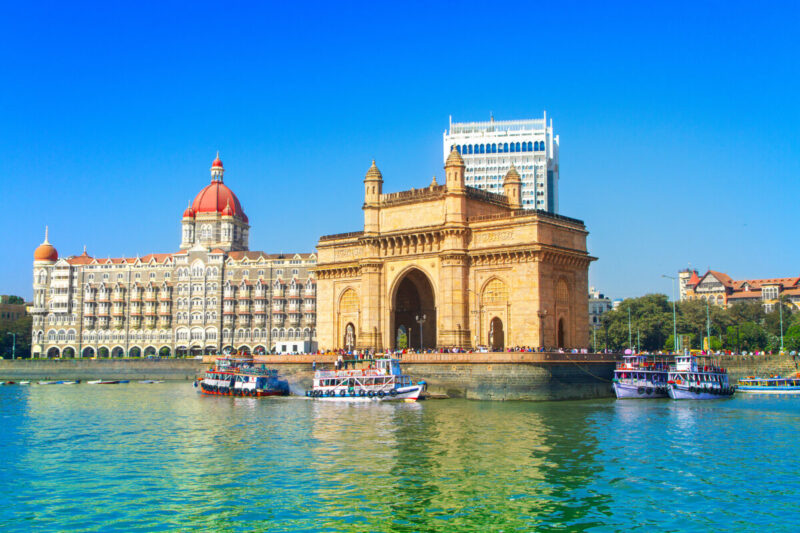
Bollywood’s beating heart where India’s film industry creates dreams-to-reality magic through studio tours revealing elaborate sets, live shooting, and star-making processes within the world’s largest movie production center. Gateway of India’s iconic 1924 landmark overlooking Arabian Sea, commemorating King George V and Queen Mary’s visit while symbolizing British colonial entry point for governors and officials, anchored by UNESCO Chhatrapati Shivaji Maharaj Terminus’ Victorian Gothic architecture showcase. Dharavi’s Asia’s largest slum spanning 2.39 square kilometers housing 1,000,000 residents in world’s most densely populated area (418,410/km²), revealing resilience and entrepreneurial spirit through thriving pottery, leatherwork, textile, and recycling industries accessible via educational tours. Marine Drive’s “Queen’s Necklace” evening promenade featuring breathtaking Arabian Sea views, while vibrant street food scenes across Juhu and Versova beaches create authentic Mumbai cultural experiences. Elephanta Caves’ ancient rock-cut Hindu temples adding spiritual heritage to this diverse metropolis where colonial landmarks meet contemporary Bollywood glamour, urban complexity challenges meet entrepreneurial innovation, and scenic coastal beauty frames India’s commercial capital’s extraordinary socio-economic diversity.
The destination guide
Mumbai

At a glance
- Hindi
- Marathi
- English
- Urban metropolis
- Arabian Sea coast
- Tropical harbor
- Mangrove wetlands
- Culture
- History
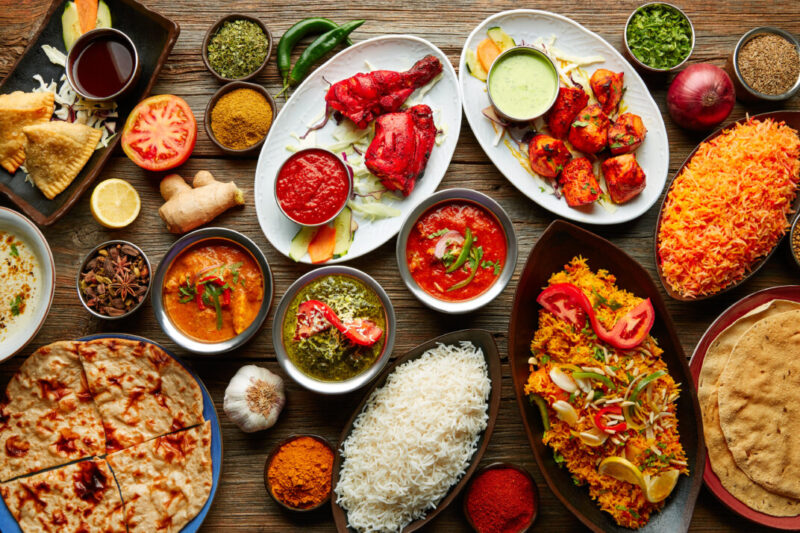
- Street Food
- Architecture
- Bollywood
How Mumbai scores
Character
Editorial scores on a 10-point scale, weighed against destinations of the same kind.
Travel safety snapshot
SafePlace indicators use their source 100-point scale; higher is more favourable. Planning context, not a live travel advisory — check official government guidance before you go.
When to go
Best months to visit: January, February, March, October, November and December.
- January: 18.8 to 29.4 degrees Celsius, 1.2 millimetres of rain, best-time score 5 out of 5.
- February: 20 to 31.1 degrees Celsius, 0.2 millimetres of rain, best-time score 5 out of 5.
- March: 22.4 to 32.4 degrees Celsius, 1.8 millimetres of rain, best-time score 5 out of 5.
- April: 24.8 to 33 degrees Celsius, 0.3 millimetres of rain, best-time score 3 out of 5.
- May: 27 to 32.7 degrees Celsius, 52.6 millimetres of rain, best-time score 3 out of 5.
- June: 26.5 to 30 degrees Celsius, 452.8 millimetres of rain, best-time score 2 out of 5.
- July: 25.5 to 27.9 degrees Celsius, 808 millimetres of rain, best-time score 2 out of 5.
- August: 25.3 to 27.9 degrees Celsius, 484.4 millimetres of rain, best-time score 2 out of 5.
- September: 25 to 28.3 degrees Celsius, 462.4 millimetres of rain, best-time score 2 out of 5.
- October: 24.5 to 31 degrees Celsius, 115.1 millimetres of rain, best-time score 4 out of 5.
- November: 22.2 to 32.2 degrees Celsius, 5.8 millimetres of rain, best-time score 5 out of 5.
- December: 20.5 to 30.8 degrees Celsius, 16 millimetres of rain, best-time score 5 out of 5.
Month-by-month conditions and packing advice
- January
- Warm to hot, mostly dry January in Mumbai: cooler, drier weather supports markets, colonial architecture, food walks, waterfronts, and day trips. Crowds: January in Mumbai is workable with normal seasonal planning; build in layers, weather checks, and a mix of indoor and outdoor activities. Pack: Pack light clothing, sun protection, and comfortable walking shoes.
- February
- Warm to hot, mostly dry February in Mumbai: cooler, drier weather supports markets, colonial architecture, food walks, waterfronts, and day trips. Crowds: February in Mumbai is workable with normal seasonal planning; build in layers, weather checks, and a mix of indoor and outdoor activities. Pack: Pack light clothing, sun protection, and comfortable walking shoes.
- March
- Warm to hot, mostly dry March in Mumbai: cooler, drier weather supports markets, colonial architecture, food walks, waterfronts, and day trips. Crowds: March in Mumbai is workable with normal seasonal planning; build in layers, weather checks, and a mix of indoor and outdoor activities. Pack: Pack light clothing, sun protection, and comfortable walking shoes.
- April
- Warm to hot, mostly dry April in Mumbai: heat and humidity build, so outdoor sightseeing is best planned early or late. Crowds: April in Mumbai is workable with normal seasonal planning; build in layers, weather checks, and a mix of indoor and outdoor activities. Pack: Pack light clothing, sun protection, and comfortable walking shoes.
- May
- Warm to hot, occasional rain May in Mumbai: heat and humidity build, so outdoor sightseeing is best planned early or late. Crowds: May in Mumbai is workable with normal seasonal planning; build in layers, weather checks, and a mix of indoor and outdoor activities. Pack: Pack light clothing, sun protection, and comfortable walking shoes.
- June
- Warm to hot, rainy June in Mumbai: monsoon rains can disrupt walks, traffic, ferry plans, and outdoor sightseeing. Crowds: June in Mumbai is one of the wetter periods, so museums, food stops, flexible reservations, and backup indoor plans make the trip easier. Pack: Pack light clothing, sun protection, and comfortable walking shoes. Add a rain jacket or compact umbrella.
- July
- Warm to hot, rainy July in Mumbai: monsoon rains can disrupt walks, traffic, ferry plans, and outdoor sightseeing. Crowds: July in Mumbai is one of the wetter periods, so museums, food stops, flexible reservations, and backup indoor plans make the trip easier. Pack: Pack light clothing, sun protection, and comfortable walking shoes. Add a rain jacket or compact umbrella.
- August
- Warm to hot, rainy August in Mumbai: monsoon rains can disrupt walks, traffic, ferry plans, and outdoor sightseeing. Crowds: August in Mumbai is one of the wetter periods, so museums, food stops, flexible reservations, and backup indoor plans make the trip easier. Pack: Pack light clothing, sun protection, and comfortable walking shoes. Add a rain jacket or compact umbrella.
- September
- Warm to hot, rainy September in Mumbai: monsoon rains can disrupt walks, traffic, ferry plans, and outdoor sightseeing. Crowds: September in Mumbai is one of the wetter periods, so museums, food stops, flexible reservations, and backup indoor plans make the trip easier. Pack: Pack light clothing, sun protection, and comfortable walking shoes. Add a rain jacket or compact umbrella.
- October
- Warm to hot, some rain October in Mumbai: conditions improve as the monsoon fades and humidity becomes more manageable. Crowds: October in Mumbai is workable with normal seasonal planning; build in layers, weather checks, and a mix of indoor and outdoor activities. Pack: Pack light clothing, sun protection, and comfortable walking shoes. Add a rain jacket or compact umbrella.
- November
- Warm to hot, mostly dry November in Mumbai: cooler, drier weather supports markets, colonial architecture, food walks, waterfronts, and day trips. Crowds: November in Mumbai is workable with normal seasonal planning; build in layers, weather checks, and a mix of indoor and outdoor activities. Pack: Pack light clothing, sun protection, and comfortable walking shoes.
- December
- Warm to hot, mostly dry December in Mumbai: cooler, drier weather supports markets, colonial architecture, food walks, waterfronts, and day trips. Crowds: December in Mumbai is workable with normal seasonal planning; build in layers, weather checks, and a mix of indoor and outdoor activities. Pack: Pack light clothing, sun protection, and comfortable walking shoes.
- October
- November
- December
- January
- February
- March
- May
- June
- July
- August
- April
- September
Know before you go
Best time to visit
Winter (October-February)
Season by season
Winter (Oct–Feb): the best season—comfortable temperatures (23–32°C), low humidity, clear skies, and the peak festival calendar. Summer (Mar–May): hot and humid (33–40°C), manageable with AC and coastal breezes. Monsoon (Jun–Sep): heavy downpours, potential flooding, lush greenery, and a dramatic atmosphere—fewer tourists and lower prices but travel disruptions likely.
Crowds
High (extremely crowded year-round, slightly less during monsoon)
Getting there and around
Getting there
Chhatrapati Shivaji Maharaj International Airport (BOM) handles international and domestic flights from all major global hubs. From the airport, pre-paid taxis and Uber/Ola connect to South Mumbai in 45–90 minutes depending on traffic. Mumbai is also connected by rail to all major Indian cities via Mumbai Central, Dadar, and Lokmanya Tilak terminus stations.
Getting around
Mumbai’s suburban train network is the city’s lifeline—efficient but extremely crowded during rush hours (avoid 8–10 AM and 5–8 PM). The Mumbai Metro is expanding rapidly and covers key corridors. Uber and Ola ride-hailing apps offer door-to-door service at fair prices. Autorickshaws operate north of Bandra; metered black-and-yellow taxis serve the entire city. BEST buses cover all routes. Walking is practical within neighborhoods like Colaba, Fort, and Bandra.
Top experiences in Mumbai
Gateway of India
An iconic 26-meter basalt arch on the waterfront, built in 1924 to commemorate King George V’s visit. It overlooks the Arabian Sea and the historic Taj Mahal Palace Hotel, and serves as the ferry terminal to Elephanta Island.
Marine Drive
A sweeping 3.6 km C-shaped boulevard along the Arabian Sea, nicknamed the ‘Queen’s Necklace’ for its sparkling streetlights at night. An evening stroll with sunset views is quintessentially Mumbai.
Chhatrapati Shivaji Maharaj Terminus (CST)
A UNESCO World Heritage Site and one of Asia’s busiest railway stations, showcasing spectacular Victorian Gothic-revival architecture with turrets, pointed arches, stained glass, and sculptural detail—built entirely from Indian stone by Indian craftsmen.
Elephanta Caves
A UNESCO World Heritage Site on an island accessible by a one-hour ferry from the Gateway of India. The 5th–8th century rock-cut cave temples feature elaborate Hindu sculptures, including a monumental three-headed Shiva (Trimurti).
Dhobi Ghat
The world’s largest open-air laundry, where hundreds of washermen (dhobis) hand-wash clothes in rows of concrete troughs. Best viewed from the overpass bridge near Mahalaxmi station for a panoramic perspective.
Editor-curated picks carried over from our original guide. Where a full place guide exists, the card links to it.
Worth booking ahead in Mumbai
Hand-picked from the operators our guides already send readers to. Prices and availability are live on the partner site.
BrowseViator
Tours and tickets in Mumbai on Viator (opens Viator in a new tab)
Viator's full list of bookable tours and tickets in Mumbai.
BrowseGetYourGuide
Experiences in Mumbai on GetYourGuide (opens GetYourGuide in a new tab)
Everything GetYourGuide sells in Mumbai, with the cancellation terms on each listing.
Where to stayBooking.com
Stays in Mumbai (opens Booking.com in a new tab)
Live rates and availability for Mumbai on Booking.com; filter by neighbourhood once you know where your days start.
We earn a commission if you book through these links, at no extra cost to you. It is how we keep the guides free and independent.
Where to stay
The Taj Mahal Palace, Mumbai
Apollo Bunder, Colaba, Mumbai 400001, India
Grand heritage palace hotel overlooking the Gateway of India and the Arabian Sea with opulent rooms, a harbour-view pool, destination spa, and ten restaurants.
ITC Grand Central
Marine Drive, Mumbai 400020, India
Art-deco landmark on Marine Drive with sweeping sea views, a rooftop pool, spa, and proximity to Girgaon Chowpatty beach.
JW Marriott Mumbai Juhu
Juhu Tara Road, Juhu, Mumbai 400049, India
Five-star beachfront resort on Juhu Beach with a tropical lagoon pool, luxury spa, multiple dining outlets, and ocean-view suites.
Editor-curated stays carried over from our original guide. Where we have reviewed the hotel, the card links to the review.
Tips from the field
Highlights
- Gateway of India – Iconic waterfront monument
- Marine Drive – The Queen's Necklace
- CST Station – UNESCO Gothic-revival masterpiece
- Elephanta Caves – Ancient rock-cut temples
- Dhobi Ghat – World's largest open-air laundry
Best activities
- Walk through the Gateway of India precinct and the Taj Mahal Palace Hotel, stroll the evening Marine Drive promenade, take a ferry to the Elephanta Caves, explore CST station's Victorian Gothic architecture, witness the spectacle of Dhobi Ghat open-air laundry, browse Crawford Market and Chor Bazaar for antiques, catch a Bollywood film at a heritage cinema, sample street food on Mohammed Ali Road, visit the Chhatrapati Shivaji Maharaj Vastu Sangrahalaya museum, and hike through Sanjay Gandhi National Park.
Local experiences
- Join an early-morning walk through Dadar Flower Market to see Mumbai's commercial pulse, or take a guided Dharavi Slum tour to witness the entrepreneurial energy of Asia's largest informal settlement.
Practical tips
- Cash & Cards: Cards and UPI payments are widely accepted, but carry small denominations for taxis, markets, and street food.
- Monsoon Season: June to September brings heavy rain and potential travel disruptions.
- Local Trains: The lifeline of Mumbai—use first class during rush hours for a less crowded (though still packed) experience.
- Dress Modestly: Cover shoulders and knees at religious sites; women should carry a scarf.
- Uber/Ola: More reliable and fairly priced than metered taxis.
- Bargaining: Expected at markets and with auto-rickshaws (outside South Mumbai where they're banned).
- Heat: Stay hydrated—carry water and apply SPF.
Photography tips
- The Gateway of India is best photographed from the Taj Mahal Palace Hotel side in early morning when crowds are thinnest. CST station's Gothic facade glows magnificently under night illumination—bring a tripod for long exposures. Marine Drive's 'Queen's Necklace' curve appears in golden hour from Malabar Hill or during blue hour from Nariman Point. Dadar Flower Market erupts with color between 4–7 AM. For street photography, Chor Bazaar and Dhobi Ghat offer rich candid opportunities—always ask before photographing people closely.
Timing
- Allow 3-4 days to cover the core sights: Gateway of India, Marine Drive, CST, the museums, Elephanta Caves (half-day ferry trip), and street food exploration. A full week allows for Bollywood studio visits, Dharavi, Sanjay Gandhi National Park, and side trips to the Ajanta/Ellora caves.
Keeping it authentic
- Mumbai's identity is defined by contradictions: it's India's financial capital and its Bollywood dream factory, home to both billion-dollar skyscrapers and sprawling informal settlements. Formerly Bombay, the city was built by the British on seven islands that were gradually connected through land reclamation. Its DNA blends Victorian Gothic architecture (CST station, Rajabai Clock Tower), Art Deco heritage (the world's second-largest collection after Miami), and the unrelenting energy of 20+ million people pursuing opportunity. The dabbawalas, local trains, and street food culture are as quintessentially Mumbai as any monument.
Culture, customs and safety
Cultural heritage
Mumbai preserves India’s richest colonial architectural heritage with Art Deco and Victorian Gothic buildings. The Victorian Gothic and Art Deco Ensemble is a UNESCO World Heritage site featuring the world’s second-largest collection of Art Deco buildings. Chhatrapati Shivaji Terminus, another UNESCO site, exemplifies Victorian Gothic Revival architecture. The city’s film heritage includes iconic theaters like Regal and Metro cinemas. Traditional fishing villages of the Koli community preserve Mumbai’s indigenous culture, while Parsi heritage is visible in fire temples and colonial-era cafes.
Local customs & etiquette
Greet with ‘Namaste’ (palms pressed together). Always eat and pass items with your right hand—the left is considered unclean. Remove shoes before entering temples and homes. Dress modestly, especially at religious sites. Public displays of affection are frowned upon. Locals may ask personal questions about family and income; this is conversational, not intrusive. If your feet accidentally touch someone, apologize immediately—pointing feet at people is disrespectful. Tipping 10% at restaurants is appreciated.
Safety notes
Mumbai is generally safe for tourists, but standard precautions are essential in this densely populated metropolis. Pickpocketing is common in crowded markets, trains, and tourist areas—use a zipped cross-body bag and leave flashy jewelry at home. Use Uber, Ola, or pre-paid taxi booths for transport; avoid unlicensed vehicles. Stick to well-lit streets after dark; Marine Drive and Colaba are safer nighttime areas. Drink only bottled water and eat from reputable stalls. Keep digital copies of passport and visa on your phone. Monsoon season (Jun–Sep) brings flooding—check weather advisories.