Myanmar captivates visitors with its golden pagodas, ancient temples, and untouched landscapes that offer a glimpse into Southeast Asia’s most preserved cultural heritage. Explore the temple-studded plains of Bagan where thousands of ancient structures create an otherworldly sunrise vista, cruise the tranquil waters of Inle Lake to witness traditional stilt villages and floating gardens, or wander through Yangon’s colonial architecture crowned by the magnificent Shwedagon Pagoda. From the remote hill tribe communities of Shan State to the pristine beaches of the Mergui Archipelago, Myanmar rewards travelers with authentic experiences and the legendary warmth of its people.
The destination guide
Myanmar

Travel guides for Myanmar
Destination stories (1)
More guides featuring Myanmar (1)
At a glance
CurrencyMMK
Time zoneYangon UTC+06:30Asia/Yangon UTC+06:30
Languages
- Burmese
Setting
- Tropical forests
- Irrawaddy River
- Ancient temples
- Mountain ranges
Known for
- Temples & Pagodas
- Buddhism
- River Cruises
- Photography
- Street Food
- Cultural Immersion
- Nature
- History
Population54.4M54,400,000 residents
VisaDuration: Tourist e-Visa allows a single entry stay of up to 28 days (valid for 90 days from issuance). Business e-Visa allows up to 70 days. · Documents: Passport with at least 6 months validity, color passport photo, confirmed return ticket, and registered hotel booking confirmation.
Practical basics
- Driving side
- Right
- Electrical standard
- 230V/50Hz Type C/D/F/G
- Measurement system
- Metric
- Emergency numbers
- 999
- Country code
- MM
How Myanmar scores
6/10OverallFair
Weather3/10
Value for money9/10
Safety2/10
Food & cuisine5/10
Culture & arts6/10
Cultural experience9/10
History3/10
Nature & outdoors4/10
Adventure4/10
Nightlife4/10
Shopping5/10
Family friendly4/10
Romance8/10
Character
Photography score9/10
Authenticity score10/10
Off-the-beaten-path score5/10
Editorial scores on a 10-point scale, weighed against destinations of the same kind.
Travel safety snapshot
Overall30/100Exercise precaution
Women travellers25/100
LGBTQ+ travellers10/100
Theft40/100
Medical care40/100
Physical harm25/100
Political freedom20/100
SafePlace indicators use their source 100-point scale; higher is more favourable. Planning context, not a live travel advisory — check official government guidance before you go.
When to go
Best months to visit: January, February, March, April, October, November and December.
- January: 18.8 to 30.3 degrees Celsius, 11.2 millimetres of rain, best-time score 5 out of 5.
- February: 19.1 to 32.8 degrees Celsius, 4.9 millimetres of rain, best-time score 5 out of 5.
- March: 22 to 35.7 degrees Celsius, 5.3 millimetres of rain, best-time score 4 out of 5.
- April: 25 to 37 degrees Celsius, 46.9 millimetres of rain, best-time score 4 out of 5.
- May: 26.1 to 34.5 degrees Celsius, 214.9 millimetres of rain, best-time score 3 out of 5.
- June: 24.8 to 30 degrees Celsius, 438.7 millimetres of rain, best-time score 2 out of 5.
- July: 24.6 to 29.5 degrees Celsius, 543.2 millimetres of rain, best-time score 2 out of 5.
- August: 24.5 to 29.5 degrees Celsius, 511.1 millimetres of rain, best-time score 2 out of 5.
- September: 24.4 to 29.9 degrees Celsius, 403.8 millimetres of rain, best-time score 2 out of 5.
- October: 24.3 to 30.5 degrees Celsius, 254.3 millimetres of rain, best-time score 4 out of 5.
- November: 23.1 to 31.1 degrees Celsius, 70.5 millimetres of rain, best-time score 5 out of 5.
- December: 21 to 30.7 degrees Celsius, 6.5 millimetres of rain, best-time score 5 out of 5.
Month-by-month conditions and packing advice
- January
- Warm to hot, mostly dry January in Myanmar: cooler dry-season weather supports temples, river travel, markets, heritage sites, and overland routes. Crowds: January in Myanmar is workable with normal seasonal planning; build in layers, weather checks, and a mix of indoor and outdoor activities. Pack: Pack light clothing, sun protection, and comfortable walking shoes.
- February
- Warm to hot, mostly dry February in Myanmar: cooler dry-season weather supports temples, river travel, markets, heritage sites, and overland routes. Crowds: February in Myanmar is workable with normal seasonal planning; build in layers, weather checks, and a mix of indoor and outdoor activities. Pack: Pack light clothing, sun protection, and comfortable walking shoes.
- March
- Very hot, mostly dry March in Myanmar: conditions can still work near the dry-season edges, though heat increases. Crowds: March in Myanmar can be very hot, so travelers should favor early starts, shaded breaks, indoor attractions, and flexible afternoon pacing. Pack: Pack breathable clothing, strong sun protection, and a refillable water bottle.
- April
- Very hot, occasional rain April in Myanmar: conditions can still work near the dry-season edges, though heat increases. Crowds: April in Myanmar can be very hot, so travelers should favor early starts, shaded breaks, indoor attractions, and flexible afternoon pacing. Pack: Pack breathable clothing, strong sun protection, and a refillable water bottle.
- May
- Very hot, rainy May in Myanmar: pre-monsoon heat makes outdoor sightseeing more tiring. Crowds: May in Myanmar can be very hot, so travelers should favor early starts, shaded breaks, indoor attractions, and flexible afternoon pacing. Pack: Pack breathable clothing, strong sun protection, and a refillable water bottle. Add a rain jacket or compact umbrella.
- June
- Warm to hot, rainy June in Myanmar: monsoon rain can disrupt roads, coastlines, and outdoor plans. Crowds: June in Myanmar is one of the wetter periods, so museums, food stops, flexible reservations, and backup indoor plans make the trip easier. Pack: Pack light clothing, sun protection, and comfortable walking shoes. Add a rain jacket or compact umbrella.
- July
- Warm to hot, rainy July in Myanmar: monsoon rain can disrupt roads, coastlines, and outdoor plans. Crowds: July in Myanmar is one of the wetter periods, so museums, food stops, flexible reservations, and backup indoor plans make the trip easier. Pack: Pack light clothing, sun protection, and comfortable walking shoes. Add a rain jacket or compact umbrella.
- August
- Warm to hot, rainy August in Myanmar: monsoon rain can disrupt roads, coastlines, and outdoor plans. Crowds: August in Myanmar is one of the wetter periods, so museums, food stops, flexible reservations, and backup indoor plans make the trip easier. Pack: Pack light clothing, sun protection, and comfortable walking shoes. Add a rain jacket or compact umbrella.
- September
- Warm to hot, rainy September in Myanmar: monsoon rain can disrupt roads, coastlines, and outdoor plans. Crowds: September in Myanmar is one of the wetter periods, so museums, food stops, flexible reservations, and backup indoor plans make the trip easier. Pack: Pack light clothing, sun protection, and comfortable walking shoes. Add a rain jacket or compact umbrella.
- October
- Warm to hot, rainy October in Myanmar: conditions can still work near the dry-season edges, though heat increases. Crowds: October in Myanmar is one of the wetter periods, so museums, food stops, flexible reservations, and backup indoor plans make the trip easier. Pack: Pack light clothing, sun protection, and comfortable walking shoes. Add a rain jacket or compact umbrella.
- November
- Warm to hot, some rain November in Myanmar: cooler dry-season weather supports temples, river travel, markets, heritage sites, and overland routes. Crowds: November in Myanmar is workable with normal seasonal planning; build in layers, weather checks, and a mix of indoor and outdoor activities. Pack: Pack light clothing, sun protection, and comfortable walking shoes. Add a rain jacket or compact umbrella.
- December
- Warm to hot, mostly dry December in Myanmar: cooler dry-season weather supports temples, river travel, markets, heritage sites, and overland routes. Crowds: December in Myanmar is workable with normal seasonal planning; build in layers, weather checks, and a mix of indoor and outdoor activities. Pack: Pack light clothing, sun protection, and comfortable walking shoes.
Peak season
- November
- December
- January
- February
Off-peak
- April
- May
- June
- July
- August
- September
- October
- March
Know before you go
Neighbourhoods
Yangon Downtown – Historic colonial core with grand British – era architecture, vibrant street markets, and traditional teahouses showcasing Myanmar’s urban heritage; Mandalay Palace Area – Cultural heart featuring royal palaces, ancient monasteries, and artisan workshops preserving Burmese craftsmanship and history; Bagan Archaeological Zone – Vast plain dotted with thousands of ancient Buddhist temples and stupas, embodying Myanmar’s spiritual and architectural legacy; Inle Lake Villages – Unique lakeside communities known for floating gardens, traditional crafts, and distinctive Shan culture
Best time to visit
November through February for the cool dry season (25–30 °C), blue skies, and comfortable sightseeing. October–April for hot-air balloon rides over Bagan. March–May is extremely hot (38–42 °C). June–September brings monsoon rains that green the landscape but flood some roads.
Season by season
Cool Season (Nov–Feb): 20–30 °C, dry, clear skies, best for all regions. Hot Season (Mar–May): 35–42 °C, increasingly humid, challenging for outdoor sightseeing. Monsoon (Jun–Oct): Heavy rains, some flooded roads, lush green landscapes, lowest prices and fewest tourists.
Crowds
Moderate in peak season (Nov–Feb); low in monsoon season; overall low tourist numbers due to political situation
Getting there and around
Getting there
Myanmar entry requires connecting flights through Bangkok, Singapore, Kuala Lumpur, or Hong Kong to Yangon (RGN), Mandalay (MDL), or Nay Pyi Taw (NYT) airports. Tourist visas via government E-visa portal and trip permission letters from authorized tour operators are required. Land crossings with Thailand and China exist but are often restricted to organized tours, making air travel most reliable for independent visitors.
Getting around
Navigate Myanmar’s diverse terrain via four distinct transport modes—fly Air KBZ between Yangon-Mandalay (2 hours, $110, 8 daily flights) for safety and efficiency, avoiding Air Bagan’s old aircraft and Myanmar Airways’ poor safety record. Experience the iconic Irrawaddy River aboard fast boats (9 hours, $43) or slow local vessels (14-17 hours, $10) between Mandalay and Bagan, navigating 5,000 miles of waterways including the legendary Ayeyarwady downstream cruise past five major cities. Board comfortable VIP buses with reclining 2+1 seating and air conditioning (K6,000-30,000) for simple, cheap overland travel—though long-distance journeys often depart 4-10pm, arriving at dawn destinations. Rent Japanese second-hand taxis for daily exploration (30,000 Kyats in Bagan/Mandalay)—negotiate beforehand since no meters exist. Skip uncomfortable overnight trains despite scenic routes; buses prove faster, cheaper, and more reliable. Book early November-April tourist season, especially for popular routes, and remember dry season (March-May) reduces river boat availability on the Irrawaddy.
Top experiences in Myanmar
Shwedagon Pagoda (Yangon)
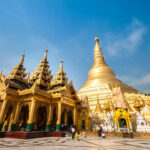
Myanmar’s most sacred Buddhist monument: a 99-meter golden stupa encrusted with 4,531 diamonds (including a 76-carat stone at the tip), believed to enshrine relics of four Buddhas. The pagoda complex covers 14 acres atop Singuttara Hill. Visit at sunrise or sunset when the gold ignites against the sky.
Bagan Temple Plain
An archaeological zone spanning 26 square miles on the banks of the Irrawaddy River, containing over 2,200 surviving temples and pagodas from the 9th–13th century Bagan Kingdom. A hot-air balloon ride at dawn over the misty plain is widely considered one of the world’s most breathtaking experiences (available October–April).
Inle Lake
A serene freshwater lake in Shan State at 880 m elevation, famous for its Intha leg-rowers, floating gardens of tomatoes and flowers, stilted villages, and centuries-old Phaung Daw Oo Pagoda. A full-day boat tour covers weaving workshops, silver-smithing, and a floating market (held on a rotating five-day cycle).
Ananda Temple (Bagan)
A masterpiece of Mon architecture built in 1105, housing four 9.5-meter standing Buddha statues facing each cardinal direction. The temple’s cross-shaped floor plan and vaulted corridors create a majestic interior light effect. Considered the finest surviving monument in Bagan and one of Southeast Asia’s greatest temples.
Mandalay & U Bein Bridge
Myanmar’s last royal capital, home to Mandalay Palace, Kuthodaw Pagoda (the ‘world’s largest book’ — 729 marble inscription slabs), and the 1.2 km U Bein Bridge, the longest teakwood bridge on Earth. Walk or cycle across the bridge at sunset for the classic silhouette photograph.
Editor-curated picks carried over from our original guide. Where a full place guide exists, the card links to it.
Worth booking ahead in Myanmar
Hand-picked from the operators our guides already send readers to. Prices and availability are live on the partner site.
BrowseViator
Tours and tickets in Myanmar on Viator (opens Viator in a new tab)
Viator's full list of bookable tours and tickets in Myanmar.
BrowseGetYourGuide
Experiences in Myanmar on GetYourGuide (opens GetYourGuide in a new tab)
Everything GetYourGuide sells in Myanmar, with the cancellation terms on each listing.
Where to stayBooking.com
Stays in Myanmar (opens Booking.com in a new tab)
Live rates and availability for Myanmar on Booking.com; filter by neighbourhood once you know where your days start.
We earn a commission if you book through these links, at no extra cost to you. It is how we keep the guides free and independent.
Where to stay
The Strand Yangon
27 Min Ye Kyaw Swa Rd, Dagon, Yangon, Myanmar
A meticulously restored Art Deco landmark from 1901, originally the headquarters of the Irrawaddy Flotilla Company. Teak floors, brass fittings, and ceiling fans evoke colonial grandeur alongside modern comforts. The Strand Café serves high tea and Burmese-fusion cuisine. Steps from Strand Road and the Yangon River.
Aureum Palace Hotel Bagan
Bagan-Nyaung U Rd, Old Bagan, Myanmar
A full-service resort set in tropical gardens near major temple clusters, with a large swimming pool, spa, and pagoda-view restaurant. Popular for its sunrise balloon-ride coordination desk and complimentary bicycle loans for temple exploration.
Bagan Thiripyitsaya Sanctuary Resort
Thiripyitsaya Quarters, Old Bagan, Myanmar
A peaceful resort overlooking the Irrawaddy River in Old Bagan, surrounded by ancient pagodas. Rooms in traditional Burmese-style bungalows feature river or garden views. The property’s sunset terrace, facing west across the river, is one of the most scenic spots in Bagan.
Editor-curated stays carried over from our original guide. Where we have reviewed the hotel, the card links to the review.
Tips from the field
Highlights
- Shwedagon Pagoda – Yangon
- Bagan Temple Plain
- Inle Lake – Floating Gardens
- Hot-Air Balloon over Bagan
- U Bein Bridge – Mandalay
- Irrawaddy River Cruise
- Burmese Street Food
- Ananda Temple
Best activities
- Watch sunrise over Bagan's temple plain by hot-air balloon, circumambulate Shwedagon Pagoda at sunset, boat across Inle Lake to floating villages, walk U Bein Bridge at dusk, explore Mandalay's monasteries and Kuthodaw Pagoda, ride the circular train in Yangon, eat mohinga (fish noodle soup) at a street stall, visit a silk-weaving workshop on Inle Lake, browse Bogyoke Aung San Market for gems and lacquerware, and take a river cruise on the Irrawaddy from Mandalay to Bagan.
Local experiences
- Wake before dawn to watch monks collect alms in Mandalay, eat mohinga (fish noodle soup) at a sidewalk stall for breakfast, join a meditation session at Mahasi Sasana Yeiktha in Yangon, visit a lacquerware workshop in Bagan's Myinkaba Village, and share tea-shop conversation over laphet thoke (fermented tea-leaf salad).
Practical tips
- Travel Advisories: Level 4 travel advisories in effect; verify active embassy notices before any travel. Many regions are strictly closed to foreigners.
- Visa & Entry: Apply for an official e-Visa at evisa.moip.gov.mm at least 1–2 weeks before departure; enter only via Yangon or Mandalay airports.
- Cash & Payments: International credit/debit cards are largely inoperable outside select luxury hotels. Bring uncreased, pristine US Dollars (post-2013 series) with no tears or marks for currency exchange into Myanmar Kyat (MMK).
- Connectivity: Internet access and international SIM roaming are subject to frequent regional throttling and outages. Local SIMs require passport registration.
- Cultural Etiquette: Modest dress covering shoulders and knees is mandatory at all pagodas; footwear and socks must be removed prior to temple grounds entry.
Photography tips
- Bagan's balloon-filled sunrise is the signature shot—book a window seat on the east side of the balloon for temples lit by first light. Shwedagon Pagoda's gold glows warmest 30 minutes before sunset, shot from the eastern terrace. U Bein Bridge silhouettes photograph best from a rented boat on Taungthaman Lake at sunset. Inle Lake's leg-rowers are best captured in early morning mist with a telephoto lens. Remove shoes for all pagoda visits—keep a pair of socks handy for hot stone floors.
Timing
- Allow 2–3 days for Yangon, 3 days for Bagan, 2 days for Inle Lake, and 2 days for Mandalay. A classic Myanmar circuit (Yangon → Bagan → Inle → Mandalay) takes 10–14 days. Internal flights connect all major destinations (30–60 min each).
Keeping it authentic
- Myanmar remains one of the least commercially developed countries in Southeast Asia. Buddhism permeates daily life: monks in saffron robes collect morning alms at dawn, families donate food at monasteries, and pagoda festivals draw entire communities. The thanaka face paste (a natural sunscreen from tree bark) is worn by women and children across the country. Tea-shop culture is the Burmese equivalent of the café—drinking sweet laphet yay (milk tea) and eating laphet thoke (fermented tea-leaf salad) with friends is a daily ritual.
Culture, customs and safety
Cultural heritage
Myanmar’s cultural heritage is deeply rooted in its ancient Buddhist traditions, reflected in the thousands of pagodas and temples dotting the landscape, most notably in the archaeological zone of Bagan, a UNESCO World Heritage site. The region has seen the rise and fall of powerful kingdoms, such as the Pagan (Bagan) Kingdom, which unified the country in the 11th century and fostered a golden age of art, architecture, and Theravāda Buddhism. Traditional practices like the Thingyan water festival, thanaka application, and longyi clothing remain integral to daily life. The country’s diverse ethnic groups—over 130 in total—contribute to a rich mosaic of languages, rituals, and craftsmanship, including intricate weaving and lacquerware. Despite modern challenges, Myanmar’s layered heritage continues to influence regional identity and Southeast Asian history.
Local customs & etiquette
Myanmar customs are deeply influenced by Theravada Buddhism and strong respect for social hierarchy. Head is most sacred body part and feet most impure – never touch persons head and avoid pointing feet at anyone or religious icons. When giving or receiving items, use right hand or both hands as respect sign; left hand traditionally used for personal hygiene. When visiting temples or pagodas, dress modestly covering shoulders and knees, always remove shoes and socks before entering. Women not permitted in certain religious site areas and should avoid touching monks. Traditional greeting is slight bow, though handshakes becoming common in business. Public affection displays discouraged, and remaining calm avoiding raised voice important as losing temper seen as face loss.
Safety notes
As of 2026, the US Department of State maintains a Level 4 (Do Not Travel) advisory and the UK FCDO advises against all travel to most of Myanmar due to ongoing armed conflict, civil unrest, and arbitrary enforcement of local laws under the nationwide state of emergency. Curfews remain active in many urban townships. If traveling: strictly avoid all demonstrations, military checkpoints, and border regions; do not photograph police, military personnel, or government buildings; always carry physical passport identification; and monitor local security conditions daily. Emergency services: Police 199, Medical 192, Fire 191.

Season