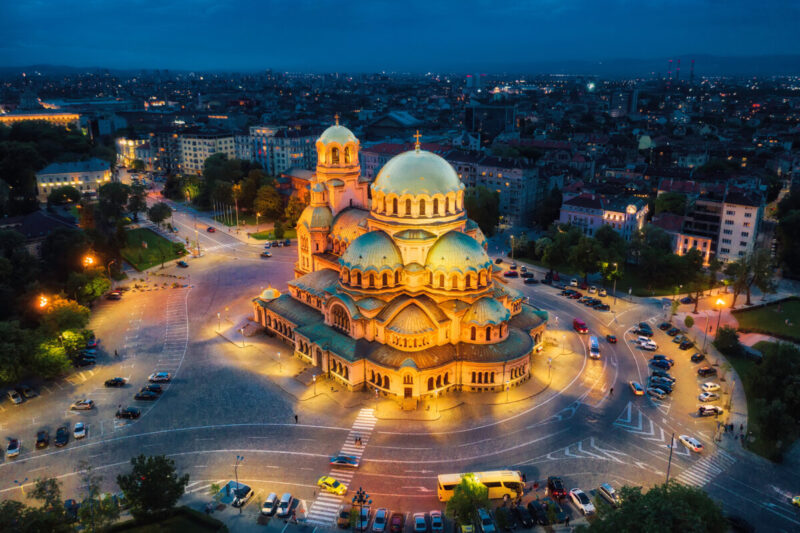
Plovdiv, Bulgaria’s second-largest city, stands as Europe’s oldest continuously inhabited city with a documented history spanning over 8,000 years across six distinctive hills. This extraordinary urban center layers civilizations—Thracian, Greek, Roman, Byzantine, Ottoman, and Bulgarian—creating an open-air museum where ancient ruins exist alongside medieval structures and National Revival architecture. The city’s crown jewel, the remarkably preserved Roman Theater from the 1st century AD, still hosts performances against a backdrop of the Rhodope Mountains, while the nearby Roman Stadium and Forum reveal the city’s importance within the ancient empire. Plovdiv’s cobblestone Old Town showcases the distinctive Bulgarian National Revival style through asymmetrical homes with colorful facades, ornate wooden interiors, and overhanging upper floors, many now housing museums, galleries, and restaurants. Beyond historical treasures, Plovdiv maintains a progressive cultural identity as evidenced by its selection as a 2019 European Capital of Culture, with the Kapana (“The Trap”) creative district transforming former craftsmen’s workshops into stylish galleries, boutiques, and cafés. Strategically positioned between the Rhodope Mountains and the Thracian Plain along the Maritsa River, Plovdiv serves as a gateway to Bulgaria’s renowned wine regions and the Orthodox monasteries dotting nearby mountains. Throughout the year, the city animates its spaces with cultural festivals celebrating everything from opera and jazz to wine and contemporary art, creating a dynamic atmosphere where ancient heritage and modern creative energy harmoniously coexist in one of Eastern Europe’s most underrated urban destinations.
The destination guide
Plovdiv

Plovdiv is one of the world’s oldest continuously inhabited cities — a Roman amphitheater downtown, a creative Kapana district, and Bulgarian wine that deserves more attention.
At a glance
- Bulgarian
- Thracian plain
- Mountain backdrop
- Roman amphitheater
- Historic old town
How Plovdiv scores
Character
Editorial scores on a 10-point scale, weighed against destinations of the same kind.
Travel safety snapshot
SafePlace indicators use their source 100-point scale; higher is more favourable. Planning context, not a live travel advisory — check official government guidance before you go.
When to go
Best months to visit: March, April, May, June, September, October and November.
- January: -2.3 to 6.1 degrees Celsius, 1.1 millimetres of rain, best-time score 2 out of 5.
- February: -3.1 to 7.3 degrees Celsius, 15.7 millimetres of rain, best-time score 2 out of 5.
- March: 1.1 to 12.3 degrees Celsius, 27 millimetres of rain, best-time score 4 out of 5.
- April: 5.7 to 17.6 degrees Celsius, 12.4 millimetres of rain, best-time score 5 out of 5.
- May: 9.9 to 23.2 degrees Celsius, 14.9 millimetres of rain, best-time score 5 out of 5.
- June: 13.3 to 26.8 degrees Celsius, 24.1 millimetres of rain, best-time score 5 out of 5.
- July: 16.3 to 31.1 degrees Celsius, 8.6 millimetres of rain, best-time score 3 out of 5.
- August: 16.9 to 31.1 degrees Celsius, 7.9 millimetres of rain, best-time score 3 out of 5.
- September: 13.8 to 27.6 degrees Celsius, 4.1 millimetres of rain, best-time score 5 out of 5.
- October: 8.1 to 19.3 degrees Celsius, 24 millimetres of rain, best-time score 5 out of 5.
- November: 3.6 to 12.7 degrees Celsius, 9.5 millimetres of rain, best-time score 4 out of 5.
- December: -0.9 to 7.8 degrees Celsius, 10.8 millimetres of rain, best-time score 3 out of 5.
Month-by-month conditions and packing advice
- January
- Cold weather, mostly dry January in Plovdiv: cold winter weather makes outdoor sightseeing less balanced. Crowds: Traveling to Plovdiv in January means experiencing the city in its off-season, with thinner crowds at heritage sites and lower accommodation prices compared to spring and summer. While outdoor café culture is limited due to the cold, this period is ideal for cultural immersion through museums, galleries, and local winter festivals. Snow rarely settles in the city itself, but nearby ski resorts like Pamporovo are in full swing, offering excellent day-trip options. Travelers should expect reduced daylight hours and plan excursions accordingly, favoring morning explorations before temperatures drop again in the evening. For those seeking authenticity and quieter streets, January provides an atmospheric window into daily life without the bustle of peak-season tourism. Pack: Thermal base layers for insulation under clothing; Insulated winter coat with wind protection; Waterproof boots suitable for icy streets; Wool hat and insulated gloves for outdoor comfort; Warm scarf for added protection against cold air; Smart casual layers for indoor cultural venues
- February
- Cold weather, mostly dry February in Plovdiv: cold winter weather makes outdoor sightseeing less balanced. Crowds: Travelers visiting Plovdiv in February will encounter its off-season character. The city is far quieter than in spring or summer, with few tourists crowding its landmarks. This makes it an excellent time for cultural immersion, as museums, galleries, and archaeological sites can be enjoyed at a relaxed pace without queues. Accommodation prices are typically lower, offering good value for longer stays. Outdoor exploration is limited by the cold, so travelers should plan for layered clothing and shorter walking tours balanced with indoor activities. While festivals and events are fewer this month, the absence of peak-season crowds gives visitors a more intimate, local experience. It’s an ideal period for those seeking authentic Bulgarian culture and historical depth without the bustle of tourism. Pack: Warm insulated coat for cold days; Thermal base layers for subzero mornings; Sturdy waterproof boots for icy streets; Wool hat and insulated gloves; Casual but modest outfits for cultural sites; Camera with protective case for cold-weather photography
- March
- Cool weather, some rain March in Plovdiv: conditions remain useful with early spring or late fall planning. Crowds: March represents shoulder season in Plovdiv, when tourism is relatively quiet compared to the busy summer months. The cooler weather allows for comfortable exploration of cultural landmarks like the Roman Amphitheatre and the colorful houses of Kapana without the summer heat or crowds. Hotel prices remain lower, making this an economical time to visit. However, some outdoor activities in the surrounding countryside may still feel brisk, especially in the evenings. Travelers should plan for flexible indoor options—like museums, wine tastings, and gallery visits—should rain showers occur. Booking in advance is not essential, but early reservations may secure the best rates for boutique accommodations near the Old Town. Pack: Warm layers including sweaters and a light insulated jacket; Comfortable waterproof walking shoes for cobblestone streets; Compact umbrella or lightweight rain jacket; Scarf and gloves for chilly evenings; Smart-casual attire for restaurants and cultural venues; Camera gear with weather protection for spring showers
- April
- Cool weather, mostly dry April in Plovdiv: Old Town walks, Roman sites, cafes, galleries, and regional day trips are most comfortable in mild weather. Crowds: April is an excellent time to visit Plovdiv, sitting comfortably in the shoulder season. The weather favors outdoor exploration without the sweltering heat of summer or the heavy rains of autumn. Tourist numbers remain moderate, meaning shorter lines at cultural landmarks and more peaceful walks through Kapana, the city’s creative quarter. Prices for accommodation and dining are relatively stable, often lower than peak summer months, offering good value. Outdoor cafés begin to reopen, giving a lively yet uncrowded atmosphere. Hiking in the nearby Rhodope Mountains is especially enjoyable with mild temperatures. Travelers should, however, be prepared for cooler evenings. Overall, April balances affordability, comfort, and authentic experiences, making it one of the most rewarding times to explore Plovdiv. Pack: Layered clothing to adjust between cool mornings and warm afternoons; Light waterproof jacket for occasional spring showers; Comfortable walking shoes for cobblestone streets and hill climbs; Scarf or light sweater for cooler evenings; Camera gear to capture blossoms and heritage sites; Modest attire for visiting monasteries and churches
- May
- Warm and pleasant, mostly dry May in Plovdiv: Old Town walks, Roman sites, cafes, galleries, and regional day trips are most comfortable in mild weather. Crowds: May represents the shoulder season in Plovdiv, when weather conditions are excellent yet summer tourist crowds have not yet fully arrived. This makes it a prime time for visitors who prefer moderate pricing on accommodations and more intimate cultural encounters. Conditions are ideal for walking tours through the city’s layered historical districts, hiking nearby hills, and attending early summer festivals without the heat waves common in July and August. Travelers can expect lively cafés and cultural events beginning to ramp up, but without the congestion of peak tourism. Outdoor dining, archaeological site visits, and photography sessions are particularly rewarding during this period. Booking accommodation in advance is recommended but prices remain more reasonable compared to high summer, making May both cost-effective and rewarding for those seeking authentic cultural immersion. Pack: Light jacket or cardigan for cool evenings; Comfortable walking shoes for cobblestone streets; Light cotton or linen shirts for warm afternoons; Sunglasses and high SPF sunscreen for outdoor exploration; Reusable water bottle for day trips and hikes; Modest clothing suitable for monasteries and religious sites
- June
- Warm and pleasant, mostly dry June in Plovdiv: Old Town walks, Roman sites, cafes, galleries, and regional day trips are most comfortable in mild weather. Crowds: June is one of the best times to visit Plovdiv, marking the beginning of high season but before the peak crowds of July and August. Comfortable temperatures and minimal rain make it ideal for outdoor exploration, from hiking the surrounding Rhodope foothills to attending cultural performances staged in the Roman theater. Prices for accommodation start to rise, especially in boutique hotels and central guesthouses, but remain more affordable compared to Western Europe. Daytime warmth is balanced by cooler evenings, offering versatility for both daytime sightseeing and evening dining outdoors. Travelers should expect lively street life and moderate tourist flow, but without the congestion of peak summer. Advance booking is advisable for popular cultural events and centrally located stays. Pack: Breathable cotton or linen clothing for warm days; Light jacket or sweater for cooler evenings; Comfortable walking shoes for cobblestone streets; Sunhat and high-SPF sunscreen for daytime outings; Reusable water bottle to stay hydrated in the heat; Modest clothing for visiting monasteries and churches
- July
- Warm and pleasant, mostly dry July in Plovdiv: heat, winter chill, or shorter days reduce the balance. Crowds: July represents peak summer season in Plovdiv, drawing both local holidaymakers and international visitors. Expect vibrant energy, full outdoor cafés, and a calendar filled with concerts and cultural events. With near-perfect weather for sightseeing and hiking, July is one of the most rewarding months to experience the city. However, as this is also high season, travelers should anticipate busier attractions and somewhat higher accommodation costs, especially in boutique hotels in the Old Town. Early reservations are recommended for centrally located stays. The warm evenings are excellent for night walking tours and al fresco dining, though midday hours can be hot, so pacing activities and planning shade breaks is essential. Pack: Lightweight breathable clothing for hot daytime conditions; Comfortable sandals or walking shoes for cobblestone streets; Wide-brimmed hat and high-SPF sunscreen; Reusable water bottle to stay hydrated in the heat; Light jacket or wrap for cooler evening breezes; Respectful attire for visiting monasteries and churches
- August
- Warm and pleasant, mostly dry August in Plovdiv: heat, winter chill, or shorter days reduce the balance. Crowds: August represents high summer in Plovdiv, aligning with Bulgaria’s peak holiday period. Expect lively streets, increased domestic and international visitors, and higher accommodation rates. The weather favors outdoor activities such as walking tours of the Old Town, attending music festivals, or day trips to nearby vineyards in the Thracian Valley. However, the intense midday heat may limit prolonged sightseeing, so travelers often adjust schedules to early mornings and late evenings. Crowds concentrate around key heritage sites and festival venues, but this also enhances the city’s vibrant summer atmosphere. Advance bookings for accommodation and cultural events are strongly recommended, especially in August when Plovdiv hosts seasonal performances and wine tastings. Pack: Light, breathable cotton or linen clothing; Comfortable sandals or walking shoes for cobblestones; Wide-brimmed hat and polarized sunglasses; High SPF sunscreen and refillable water bottle; Light jacket or shawl for cooler evenings; Modest outfit for visiting churches and monasteries
- September
- Warm and pleasant, mostly dry September in Plovdiv: Old Town walks, Roman sites, cafes, galleries, and regional day trips are most comfortable in mild weather. Crowds: September is a sweet spot for visiting Plovdiv, balancing warm temperatures with thinner crowds as the summer tourist wave recedes. This is shoulder season, so while conditions remain excellent for sightseeing, wine festivals and harvest activities in the surrounding Thracian Valley also add cultural richness. Accommodation prices begin to ease compared to peak summer, yet restaurants and attractions remain fully open. It is a prime time for exploring open-air museums, amphitheaters, and nearby wine country. Outdoor dining is still comfortable well into the evening, though a light jacket may be needed late at night. For those looking to experience authentic Plovdiv without high-season congestion, September offers one of the most rewarding times to visit. Pack: Lightweight shirts for warm daytime exploration; Comfortable walking shoes for cobblestone streets; Light jacket or cardigan for cooler evenings; Sunglasses to handle bright afternoon sun; Modest attire for churches and monasteries; Small umbrella or packable rain jacket for occasional showers
- October
- Cool weather, mostly dry October in Plovdiv: Old Town walks, Roman sites, cafes, galleries, and regional day trips are most comfortable in mild weather. Crowds: Travelers in October benefit from a quieter city as peak summer tourism wanes. Accommodation prices are more moderate compared to the high season, and attractions are less crowded, giving visitors more space to explore Plovdiv’s UNESCO-listed Old Town and vibrant street art districts. Weather conditions support both outdoor sightseeing and day trips to vineyards or monasteries in the surrounding region. The main limitation is shorter daylight hours, so planning activities earlier in the day is wise. For those interested in local culture, this month coincides with wine harvest festivals and seasonal food markets, adding depth to the experience. Overall, October is an excellent balance of mild weather, cultural immersion, and reduced crowding. Pack: Warm sweater or fleece for chilly evenings; Light jacket suitable for layering; Comfortable walking shoes for cobblestone streets; Umbrella or compact rain jacket for occasional showers; Scarf for added warmth and cultural sites; Camera gear for autumn landscapes and low light
- November
- Cool weather, mostly dry November in Plovdiv: conditions remain useful with early spring or late fall planning. Crowds: November is a shoulder-season month in Plovdiv, when international tourist numbers taper off and prices for accommodations and tours drop noticeably. The cooler weather creates ideal conditions for exploring archaeological sites, museums, and galleries without the heat or crowds of summer. Outdoor activities like hiking in the nearby Rhodope Mountains are still feasible with proper layers, though daylight hours are shorter, requiring early starts. Cafés and wine bars feel more intimate during this period, and seasonal festivals shift toward food, art, and cultural events rather than outdoor spectacles. This makes November well-suited for travelers who value authentic, unhurried experiences and budget-friendly stays, though it’s less ideal for those seeking vibrant nightlife or summer-style city buzz. Pack: Warm layered clothing including sweaters and jackets; Comfortable walking shoes with good grip for uneven streets; Light waterproof jacket for unexpected showers; Scarf and gloves for chilly evenings; Smart-casual attire for wine bars and cultural venues; Reusable water bottle and thermos for warm drinks on walks
- December
- Cold weather, mostly dry December in Plovdiv: heat, winter chill, or shorter days reduce the balance. Crowds: December represents low tourist season in Plovdiv, as cold temperatures and shorter days deter casual travelers. This period offers significant advantages for those seeking cultural depth and quiet exploration. Crowds at major landmarks, such as the Roman Theatre and Old Town museums, are minimal, providing rare opportunities for unhurried visits and better photography angles. Accommodation prices are notably lower than in spring or summer, and restaurants are easier to access without reservations. The downside lies in reduced outdoor activity options, as chilly weather limits hiking and open-air performances. However, travelers willing to embrace the cold will enjoy authentic seasonal traditions, Christmas markets, and warm local hospitality. This is an ideal time for culture-focused visitors rather than outdoor adventurers. Pack: Thermal base layers for cold mornings and evenings; Insulated winter coat suitable for sub-zero temperatures; Warm hat, gloves, and scarf to manage frosty air; Waterproof boots with good grip for icy streets; Casual but modest indoor clothing for cultural venues; Compact umbrella or hooded jacket for light winter drizzle
- June
- July
- August
- November
- December
- January
- February
Know before you go
Best time to visit
Plovdiv’s continental climate delivers hot summers and cold winters, with spring and autumn offering the most comfortable conditions.
Spring (April-May)
Warming temperatures from 12-22°C (54-72°F), blooming parks and gardens, and comfortable conditions for hill climbing and Old Town exploration. The cultural calendar picks up, and outdoor cafés open. Tourist numbers are moderate.
Summer (June-August)
Hot days with highs of 28-34°C (82-93°F). The Roman Theatre hosts open-air concerts, opera, and performances under the stars. Peak tourist season but manageable compared to Western European cities. The International Folklore Festival in August brings traditional music and dance.
Autumn (September-October)
Cooling to 14-24°C (57-75°F). The cultural season intensifies, the harvest brings fresh produce to the markets, and autumn light enhances the Old Town’s painted facades. Fewer visitors, excellent value.
Winter (November-March)
Cold (0-6°C / 32-43°F) with occasional snow that covers the Old Town in atmospheric white. Lowest visitor numbers, budget hotel rates, and indoor attractions take prominence. The Christmas atmosphere is genuine rather than commercial.
Crowds
Plovdiv is busiest during July–August and for the International Fair and Summer Nights cultural events (July); quietest in winter (December–February) when visitor numbers fall; overall the Old Town sees noticeable crowds in summer and during festivals but is calm off-season.
Getting there and around
Getting there
From Sofia, buses depart frequently from Sofia Central Bus Station to Plovdiv (approximately 2 hours, 10-20 BGN). Trains from Sofia Central Station take about 2.5 hours and cost ~9 BGN. Plovdiv Airport (PDV) handles select European routes via Ryanair and others. Sofia Airport (SOF) offers more international connections — buses and trains from Sofia make the onward journey straightforward. By car from Sofia, the Trakia Highway covers the 150 km in under 2 hours.
Getting around
Plovdiv’s center is compact and best explored on foot — the Old Town, Kapana, the pedestrian zone, and the Roman Theatre are all within walking distance of each other. City buses cost 1 BGN (~€0.50) per ride and cover the wider metropolitan area. Taxis are affordable (5-15 BGN within the city); use the TaxiMe app or ensure the meter is running. Bicycle rental provides an alternative for the flat central areas. Driving in the center is challenging due to pedestrian zones and one-way streets — a car is better suited for day trips to the Rhodopes.
Top experiences in Plovdiv
Ancient Roman Theatre
One of the world’s best-preserved Roman theatres, built in the 1st century AD during Emperor Domitian’s reign and rediscovered only in the 1970s during construction work. The semicircular marble seating — originally accommodating up to 7,000 spectators — faces south toward the Rhodope Mountains, creating a theatrical backdrop that modern stage designers cannot improve upon. The theatre is still active: summer concerts, opera performances, and cultural events bring the ancient acoustics back to life. Standing on the stage looking up at 2,000 years of stone tiers, with the mountains beyond, is Plovdiv’s most powerful experience.
Old Town (Stari Grad)
Perched across three of Plovdiv’s seven hills, the Stari Grad preserves an architectural ensemble spanning Thracian, Roman, Byzantine, Ottoman, and Bulgarian Revival periods along cobblestone streets too narrow for vehicles. The signature Bulgarian Revival houses feature painted facades bulging outward from their second stories over the streets below — Balabanov House and Kuum Jva House are the finest examples. The Church of Saints Constantine and Helena (founded 337 AD), the Hisar Kapia fortress gate, and the Regional Ethnographic Museum anchor different corners of this living museum. Art galleries and craft studios now occupy many of the restored houses, maintaining creative activity alongside preservation.
Kapana Creative District
What was once a forgotten tangle of workshops and narrow alleys between the Old Town and the commercial center has been reinvented as Plovdiv’s creative quarter. Named after the old craftsmen’s neighborhood, Kapana (‘The Trap’ — because its maze of streets could trap unwary visitors) now houses independent galleries, design studios, third-wave coffee shops, craft beer bars, and boutique restaurants. Street art murals cover many facades, and monthly Kapana Fest events close the streets to traffic for live music and food markets. The district’s transformation accelerated during Plovdiv’s 2019 European Capital of Culture year and continues to evolve.
Ancient Stadium of Philippopolis
Beneath the modern pedestrian street of Dzhumaya Square, the remains of a 2nd-century Roman stadium built for up to 30,000 spectators are partially visible through glass panels and excavated sections. The stadium, modeled on the one at Delphi, once hosted athletic competitions along a 250-meter track. Information panels explain the visible ruins, and a subterranean viewing gallery provides closer access. Seeing Roman columns and racing track foundations beneath a modern shopping street delivers a visceral sense of Plovdiv’s layered history — a city literally built on top of its own past.
Nebet Tepe
The oldest of Plovdiv’s seven hills, Nebet Tepe holds evidence of continuous settlement dating back 6,000 years — making it one of the oldest inhabited sites in Europe. Thracian walls, Macedonian fortifications, and Roman structures layer on top of each other across the hilltop. The viewpoint from the summit provides Plovdiv’s best panoramic perspective: the Old Town’s terracotta rooftops, the Maritsa River plain, the Rhodope Mountains to the south, and the modern city spreading across the valley floor. Archaeological excavations continue to reveal new layers, and the path to the summit winds through the oldest residential quarters of the Old Town.
Editor-curated picks carried over from our original guide. Where a full place guide exists, the card links to it.
Worth booking ahead in Plovdiv
Hand-picked from the operators our guides already send readers to. Prices and availability are live on the partner site.
BrowseViator
Tours and tickets in Plovdiv on Viator (opens Viator in a new tab)
Viator's full list of bookable tours and tickets in Plovdiv.
BrowseGetYourGuide
Experiences in Plovdiv on GetYourGuide (opens GetYourGuide in a new tab)
Everything GetYourGuide sells in Plovdiv, with the cancellation terms on each listing.
Where to stayBooking.com
Stays in Plovdiv (opens Booking.com in a new tab)
Live rates and availability for Plovdiv on Booking.com; filter by neighbourhood once you know where your days start.
We earn a commission if you book through these links, at no extra cost to you. It is how we keep the guides free and independent.
Where to stay
Doubletree by Hilton Plovdiv Center
ul. Knyaz Boris I Obedinitel 63, 4000 Plovdiv, Bulgaria
A contemporary international hotel in the city center, a 5-minute walk from the Roman Theatre and the pedestrian Knyaz Alexander I street. The 175 rooms feature modern amenities, and the rooftop bar provides panoramic views over the city’s hills and skyline. The restaurant serves both Bulgarian and international cuisine. Its central position between the commercial center and the Old Town provides convenient access to Plovdiv’s primary attractions. Business travelers and tourists share the lobby, reflecting Plovdiv’s growing dual identity.
Hotel Hebros
ul. Stoyan Chomakov 1, 4000 Old Town, Plovdiv, Bulgaria
A boutique hotel occupying a restored 200-year-old Bulgarian Revival house in the heart of the Old Town, steps from the Roman Theatre and the Ethnographic Museum. The 10 rooms preserve architectural details — hand-carved woodwork, painted walls, and period furnishings — while providing modern comforts. The courtyard restaurant serves traditional Bulgarian cuisine, and the terrace overlooks the Old Town’s cobblestone streets. This is the accommodation that places you inside the historic fabric rather than adjacent to it.
Hotel Evmolpia
ul. Rayko Daskalov 40, 4000 Plovdiv, Bulgaria
Boutique hotel in a restored Revival-era house in the Old Town with hand-painted ceilings, a courtyard café, and views toward the ancient Roman Theatre.
Editor-curated stays carried over from our original guide. Where we have reviewed the hotel, the card links to the review.
Tips from the field
Highlights
- Roman Theatre — 1st-century amphitheatre still hosting live performances
- Old Town — 6 millennia of history across cobblestoned Revival-era streets
- Kapana — Creative quarter with galleries, street art, and craft culture
- Ancient Stadium — Roman ruins beneath a modern pedestrian street
- Nebet Tepe — 6,000-year-old hilltop with panoramic city views
- Value — World-class heritage at a fraction of Western European prices
Best activities
- Start at the Ancient Roman Theatre — arrive early for the quietest experience and best light. Walk through the Old Town's cobbled lanes, visiting Balabanov House and the Ethnographic Museum. Climb Nebet Tepe for 6,000 years of archaeological layers and a panoramic view over the city and mountains.
- Explore Kapana's creative quarter for independent galleries, street art, and specialty coffee. Walk along Knyaz Alexander I pedestrian street to Dzhumaya Square, where the Ancient Stadium ruins are visible below. Cross the river to the Tsar Simeon Garden for relaxed people-watching. In the evening, check the Roman Theatre's programme for live performances with a 2,000-year-old backdrop. Take a day trip to Bachkovo Monastery or the Rhodope Mountains for hiking and forest landscapes.
Local experiences
- Watch a sunset opera performance at the Roman Theatre with the Rhodope Mountains as a backdrop — one of Europe's most extraordinary live music settings. Explore Kapana on a Saturday when the creative quarter is at its most animated with pop-up markets. Try traditional Bulgarian cuisine at a mehana (tavern) in the Old Town: shopska salad, kavarma, and kebapcheta with a glass of Mavrud wine from the Thracian Valley. Walk the cobblestones of the Old Town at dawn before the first visitors arrive and the painted facades catch the morning light.
Practical tips
- Currency: Bulgarian Lev (BGN). 1 EUR ≈ 1.96 BGN. Cash is widely accepted; cards work at most restaurants and hotels.
- Roman Theatre Events: Check for summer performances — opera and concerts in the ancient setting are unforgettable.
- Old Town Walking: Wear comfortable shoes; the cobblestones are uneven and can be slippery when wet.
- Kapana: Best on weekday evenings and Saturday afternoons when the creative energy peaks.
- Day Trips: Bachkovo Monastery (30 minutes south) and the Rhodope Mountains provide contrast to the urban experience.
- Language: English is widely spoken by younger residents; older generations often speak Russian.
Photography tips
- The Roman Theatre photographs best from the upper terrace seats looking south toward the Rhodope Mountains in late afternoon golden light. The Old Town's painted Revival houses are most photogenic from below, looking up at the overhanging second floors against a blue sky. Kapana's street art murals provide colorful foregrounds throughout the day. Nebet Tepe's summit delivers the definitive cityscape panorama — shoot at sunset or blue hour. The Ancient Stadium ruins under Dzhumaya Square work well at night under the illumination lighting.
Keeping it authentic
- Plovdiv operates at a fraction of the cost and tourist density of more famous European heritage cities, which preserves its authenticity. The Old Town houses are still lived in, the Kapana district's creative tenants are genuinely independent rather than chain-managed, and the markets serve local shoppers first. The 2019 European Capital of Culture year accelerated investment and international awareness but didn't overhaul the city's character — it amplified what was already there. Plovdiv's claim to being among Europe's oldest continuously inhabited cities is substantiated by genuine archaeological evidence visible throughout the city, not marketing assertion.
Culture, customs and safety
Cultural heritage
Plovdiv preserves over 6,000 years of continuous habitation, showcasing Thracian, Roman, Byzantine, and Bulgarian architectural layers as European Capital of Culture 2019. The Old Town features Bulgarian National Revival houses with distinctive wooden upper floors and painted facades. Roman Theater and ancient Stadium demonstrate the city importance in antiquity. Orthodox churches display Byzantine frescoes while Ottoman-era mosques reflect five centuries of Turkish rule. Traditional crafts include copper working, wood carving, and textile production maintaining Bulgarian cultural identity.
Local customs & etiquette
Bulgarians shake their heads to mean ‘yes’ and nod to mean ‘no’ — the opposite of most cultures. This causes endless confusion for visitors and amusement for locals. Greet with ‘Zdravei’ (hello). Restaurant tipping of 10% is customary but not obligatory. Shopkeepers in the Old Town appreciate visitors who engage with the history rather than treating the neighbourhood as a backdrop. Rakia (fruit brandy) is the national spirit and is offered as a welcome gesture — refusing politely is fine, but accepting even a small glass shows cultural openness.
Safety notes
Plovdiv is a safe city for tourists. Violent crime targeting visitors is very rare. Pickpocketing can occur in crowded areas like bus stations and during festivals, but general awareness and basic precautions are sufficient. The Old Town and Kapana are well-lit and safe for evening exploration. Taxi scams (inflated meters) can be avoided by using the TaxiMe app. The main practical concern is the Old Town’s cobblestones, which can be slippery when wet. Emergency: 112.