

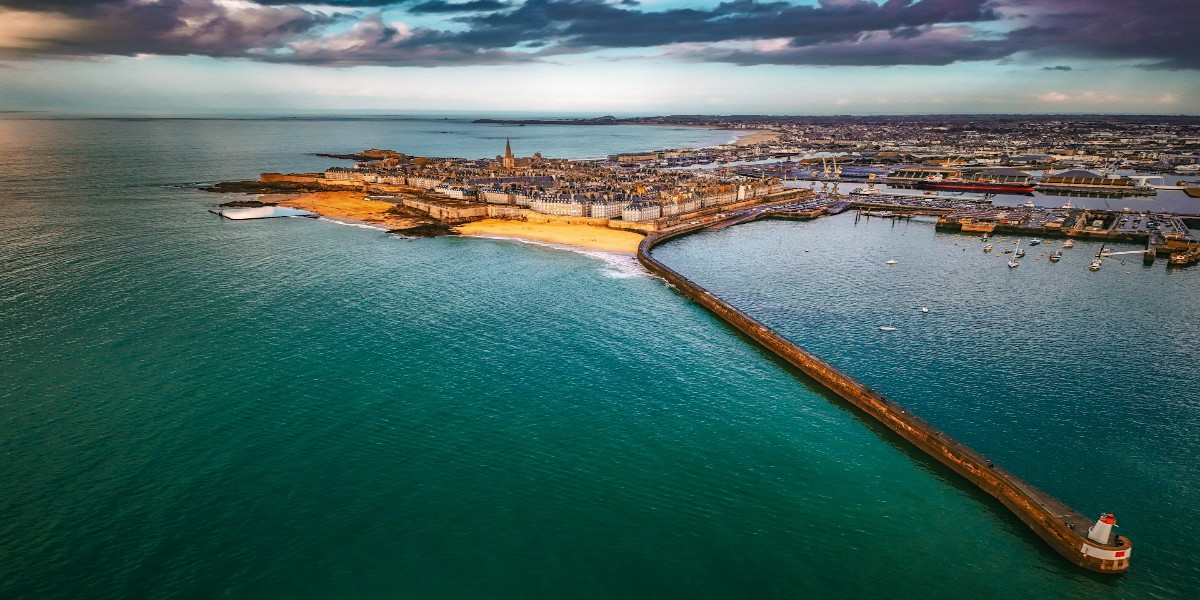
Brittany’s most visited destination featuring ramparts standing like a stone ship keeping watch over port and beaches, rebuilt after 1661’s great fire into two-kilometer granite wall loop showcasing 12th-century origins predating corsair golden age. “The Corsair City” nickname earned through maritime prowess, piracy history, extortion wealth, and overseas adventures along English Channel coast creating legendary reputation for seafaring excellence. Fort National’s 1689 Vauban-planned Siméon Garengeau construction under Louis XIV orders protecting against English-Dutch attacks, accessible at low tide June-September when French flags fly above this historic fortress. Spectacular winter high tides transforming shoreline, while low tides reveal islet-reef landscapes attracting walkers to Grand Bé island containing Chateaubriand’s tomb (illustrious Saint-Malo-born writer) accessible via mouth of Rance. WWII near-total destruction survival creating beautifully restored ramparts preserving 14th-15th century towers, castle walls, 17th-18th century bastions, plus Saint-Vincent cathedral’s 12th-century dazzling stained-glass windows. Emerald Coast jewel combining medieval architecture (large keep 1424, Quic-en-Groigne tower 1498-1501) with tidal phenomena across this perfectly preserved Breton fortress city where corsair heritage meets contemporary coastal tourism.
The destination guide
Saint-Malo
At a glance
- French
- Breton walled port
- Tidal island
- Atlantic coast
- Granite ramparts
- Maritime history
- Coastal exploration
- Medieval architecture
How Saint-Malo scores
Character
Editorial scores on a 10-point scale, weighed against destinations of the same kind.
Travel safety snapshot
SafePlace indicators use their source 100-point scale; higher is more favourable. Planning context, not a live travel advisory — check official government guidance before you go.
When to go
Best months to visit: April, May, June, July, August, September and October.
- January: 5 to 8.9 degrees Celsius, 32.5 millimetres of rain, best-time score 2 out of 5.
- February: 5.6 to 10.6 degrees Celsius, 7.3 millimetres of rain, best-time score 2 out of 5.
- March: 6.3 to 11.8 degrees Celsius, 7.6 millimetres of rain, best-time score 3 out of 5.
- April: 7.2 to 13.4 degrees Celsius, 12.9 millimetres of rain, best-time score 4 out of 5.
- May: 9.1 to 15.1 degrees Celsius, 14.3 millimetres of rain, best-time score 5 out of 5.
- June: 12.5 to 17.9 degrees Celsius, 19.5 millimetres of rain, best-time score 5 out of 5.
- July: 14.3 to 20.4 degrees Celsius, 20.8 millimetres of rain, best-time score 5 out of 5.
- August: 14.7 to 21.3 degrees Celsius, 7.6 millimetres of rain, best-time score 5 out of 5.
- September: 13.6 to 19.4 degrees Celsius, 27 millimetres of rain, best-time score 5 out of 5.
- October: 11 to 16.1 degrees Celsius, 22.9 millimetres of rain, best-time score 4 out of 5.
- November: 9.1 to 12.9 degrees Celsius, 18.6 millimetres of rain, best-time score 3 out of 5.
- December: 6.3 to 10 degrees Celsius, 28.4 millimetres of rain, best-time score 3 out of 5.
Month-by-month conditions and packing advice
- January
- Cool weather, some rain January in Saint-Malo: cold, wet winter weather makes coast-first plans less balanced. Crowds: January is the off-peak season in Saint-Malo, leading to fewer crowds, quieter streets, and more affordable accommodations. While some attractions may have reduced hours, the serene atmosphere enhances the charm of the walled city and its maritime heritage. Outdoor activities like coastal walks along the ramparts, exploring the tidal islands, and savoring local seafood are still enjoyable with appropriate clothing. The cool, damp weather might deter beach activities, but it’s an excellent time for cultural immersion without tourist congestion. Pack: Warm, waterproof jacket for chilly, damp weather; Comfortable waterproof walking shoes for cobblestone streets; Layered clothing to adjust to indoor and outdoor temperature changes; Compact umbrella for sudden rain showers; Cozy scarf, hat, and gloves for added warmth; Camera with weather protection for moody coastal photography
- February
- Cool weather, mostly dry February in Saint-Malo: cold, wet winter weather makes coast-first plans less balanced. Crowds: February is part of the off-peak tourist season in Saint-Malo, offering a tranquil experience with fewer crowds and more affordable accommodations. The cool, dry conditions are ideal for leisurely coastal walks along the ramparts, exploring Fort National, and enjoying uninterrupted views of the dramatic seascapes. While some seasonal attractions may have limited hours, the quiet ambiance provides a more authentic connection to the city’s maritime heritage. It’s an excellent time for photographers seeking moody coastal light and for travelers who prefer peaceful cultural immersion. Pack: Warm, layered clothing for cool temperatures; Water-resistant jacket for windy coastal conditions; Comfortable walking shoes with good grip; Cozy scarf and gloves for chilly mornings; Compact umbrella for occasional light showers; Camera with weather protection for coastal photography
- March
- Cool weather, mostly dry March in Saint-Malo: wind, rain, or short days push plans toward food and indoor culture. Crowds: March marks the shoulder season in Saint-Malo, offering a quieter, more authentic travel experience with fewer tourists compared to the summer months. The cool, mostly dry weather is ideal for leisurely walks along the ramparts, beachcombing, and exploring cultural sites without the summer crowds. Accommodation prices are generally more affordable, and local cafes and markets are less busy, allowing for relaxed dining and immersive local experiences. While the sea is too cold for swimming, the scenic beauty and peaceful ambiance are perfect for travelers seeking a serene coastal getaway. Pack: Warm layers, including sweaters and a light jacket; Water-resistant walking shoes for cobblestone streets; Scarf and gloves for cool mornings and evenings; Compact umbrella for occasional light showers; Comfortable daypack for coastal walks; Camera with extra batteries for scenic photography
- April
- Cool weather, mostly dry April in Saint-Malo: shoulder months can be scenic with fewer crowds and usable coastal weather. Crowds: April marks the shoulder season in Saint-Malo, offering a balance of mild weather and thinner tourist crowds compared to the summer rush. This period is ideal for visiting the city's historic fortifications, enjoying coastal walks, and exploring nearby Mont Saint-Michel without the peak-season congestion. Accommodation and activity prices are more reasonable, and popular sites are more accessible. While the sea remains too chilly for swimming, the crisp air is invigorating for outdoor activities. Booking in advance isn’t strictly necessary, but securing accommodations early ensures the best options. Pack: Water-resistant jacket for occasional light showers; Comfortable walking shoes for cobbled streets; Layered clothing to adjust to temperature shifts; Light scarf for breezy coastal walks; Compact umbrella for unexpected drizzle; Camera with extra batteries for scenic photography
- May
- Cool weather, mostly dry May in Saint-Malo: rampart walks, beaches, tides, seafood, boat trips, and Brittany day trips have the strongest weather window. Crowds: A pleasant shoulder-season month with lighter crowds than summer and generally comfortable conditions for walking, sightseeing, and coastal excursions. Accommodation rates and availability are more favorable than peak season, though weekends can see an uptick. While mostly dry, brief showers are still possible; seawater remains cool for swimming, but outdoor dining and terrace cafés are increasingly inviting. Pack: Layered clothing (light sweater or fleece over breathable base layers); Waterproof shell or compact umbrella for occasional showers; Comfortable walking shoes with good grip for cobbles and ramparts; Light scarf or windbreaker for coastal breezes; Sunglasses and SPF 30+ sunscreen for longer daylight hours; Daypack and reusable water bottle for excursions
- June
- Warm and pleasant, mostly dry June in Saint-Malo: rampart walks, beaches, tides, seafood, boat trips, and Brittany day trips have the strongest weather window. Crowds: June marks the start of the summer season in Saint-Malo, attracting more travelers eager to enjoy outdoor activities like coastal hikes, beach visits, and sailing. While it's not peak season yet, the city experiences a noticeable increase in tourists, especially on weekends. Accommodation prices begin to rise, though they’re still more moderate compared to July and August. The pleasant weather supports maritime festivals and local markets, enhancing the cultural experience. Booking accommodations in advance is wise, especially for waterfront views. Pack: Light jacket or windbreaker for cool sea breezes; Comfortable walking shoes for cobblestone streets; Lightweight layers for fluctuating temperatures; Compact umbrella or rain jacket for occasional showers; Sunglasses and sunscreen for bright, long days; Scarf or shawl for added warmth during breezy evenings
- July
- Warm and pleasant, mostly dry July in Saint-Malo: rampart walks, beaches, tides, seafood, boat trips, and Brittany day trips have the strongest weather window. Crowds: July marks the peak tourist season in Saint-Malo, attracting visitors with its warm weather and vibrant coastal atmosphere. Expect bustling streets, lively markets, and crowded beaches. Accommodation and activity prices are at their highest, with advance bookings recommended. The pleasant climate supports a wide range of activities, from beach lounging and sailing to exploring the walled city and nearby Mont Saint-Michel. Occasional light showers may occur but rarely interfere with travel plans. Early mornings and evenings offer quieter moments for sightseeing. Pack: Lightweight layers for fluctuating coastal temperatures; Comfortable walking shoes for cobblestone streets; Waterproof light jacket for occasional showers; Sunhat and sunglasses for long sunny days; Swimwear for beach activities; Scarf or light sweater for cooler evenings
- August
- Warm and pleasant, mostly dry August in Saint-Malo: rampart walks, beaches, tides, seafood, boat trips, and Brittany day trips have the strongest weather window. Crowds: August marks the peak tourist season in Saint-Malo, bustling with visitors enjoying the warm weather and vibrant summer festivals. Expect lively crowds, especially around popular landmarks like Fort National and the bustling harbor. Accommodation rates are at their highest, and advance bookings are recommended. The delightful weather is perfect for beach activities, sailing excursions, and outdoor dining with seaside views. However, popular spots may be crowded, so consider early morning visits for a quieter experience. Pack: Light layers for warm daytime temperatures; Comfortable walking shoes for cobblestone streets; Light jacket or sweater for cooler evenings; Sunglasses and a wide-brimmed hat for sun protection; Swimsuit for beach outings; Reusable water bottle to stay hydrated
- September
- Warm and pleasant, some rain September in Saint-Malo: rampart walks, beaches, tides, seafood, boat trips, and Brittany day trips have the strongest weather window. Crowds: September is an excellent time to visit Saint-Malo, as the summer crowds have thinned, but the weather remains pleasant for outdoor activities like strolling the historic walls, beachcombing, and harbor exploration. This shoulder season offers a balance of mild temperatures and moderate tourist traffic, with accommodation prices slightly lower than peak summer rates. Some local festivals and markets continue into early autumn, offering authentic cultural experiences. Occasional rain showers might interrupt outdoor plans briefly, but they're usually short-lived. Pack: Light waterproof jacket for occasional rain; Comfortable walking shoes for cobblestone streets; Layered clothing for fluctuating temperatures; Scarf or light sweater for cool evenings; Compact umbrella for sudden showers; Camera with extra memory for scenic coastal views
- October
- Cool weather, mostly dry October in Saint-Malo: shoulder months can be scenic with fewer crowds and usable coastal weather. Crowds: October marks the shoulder season in Saint-Malo, offering a peaceful retreat without the summer crowds. The cool, mostly dry conditions are ideal for exploring the walled city, coastal paths, and nearby Mont Saint-Michel. Accommodations are more affordable compared to peak summer months, and attractions are less crowded, providing a more authentic experience. While outdoor dining may be limited due to cooler evenings, cozy cafés and creperies offer warm refuges. Light layers are a must as the temperature can shift throughout the day. Pack: Light to medium-weight jacket for cool mornings and evenings; Comfortable walking shoes for cobblestone streets; Layered clothing for variable temperatures; Water-resistant outerwear for occasional showers; Scarf and hat for breezy coastal walks; Compact umbrella for light rain
- November
- Cool weather, mostly dry November in Saint-Malo: wind, rain, or short days push plans toward food and indoor culture. Crowds: November marks the low tourist season in Saint-Malo, offering a tranquil atmosphere ideal for travelers seeking a quieter, more reflective experience. You’ll find fewer crowds at popular spots like the ramparts, Grand Bé, and the walled old town, and accommodations are often more affordable. While outdoor activities like coastal hikes and beach walks are still enjoyable, shorter daylight hours and cooler temperatures mean indoor attractions—such as maritime museums and cozy cafés—become more appealing. Packing warm layers ensures you can make the most of brisk seaside explorations. Pack: Warm, layered clothing for fluctuating temperatures; Water-resistant jacket for occasional showers; Comfortable walking shoes suitable for cobblestone streets; Scarf and gloves for chilly sea breezes; Compact umbrella for light rain; Camera with weather protection for moody coastal photography
- December
- Cool weather, some rain December in Saint-Malo: wind, rain, or short days push plans toward food and indoor culture. Crowds: Peak tourist season with excellent conditions for cultural exploration, including visiting historic sites, enjoying local cuisine, and participating in winter festivals. Hotel rates and crowd levels are highest during this period. Rainfall is moderate, but it adds a romantic touch to the city's atmosphere. Visitors should be prepared for occasional showers. Pack: Lightweight layers for temperature variation; Waterproof jacket for rain showers; Comfortable walking shoes for exploring cobblestone streets; Umbrella for unexpected rain; Warm scarf and gloves for cooler evenings; Breathable cotton/linen fabrics
- July
- August
- June
- September
- November
- January
- February
- March
- April
- October
- December
Know before you go
Neighbourhoods
Intra-Muros (the walled city) is the historic core, rebuilt in granite after severe World War II damage, with narrow streets, creperies, and the cathedral. Saint-Servan to the south has the Tour Solidor (a medieval tower with a maritime museum) and the Anse des Bas-Sablons beach. Parame to the east is a Belle Epoque seaside resort area with a long promenade. Rotheneuf further east offers sculpted rocks and quieter beaches.
Best time to visit
The best time to visit Saint-Malo is during the late spring (May to June) and early fall (September to October) when the weather is mild and the crowds are smaller. Summer is popular for beachgoers, while winter offers a quieter experience with festive decorations and local markets.
Getting there and around
Getting there
TGV high-speed trains run from Paris Montparnasse to Saint-Malo in about 2 h 30 min. Regional TER trains connect to Rennes (1 hour), from which TGVs continue to Paris and other French cities. Brittany Ferries and Condor Ferries sail from Saint-Malo to Portsmouth (UK, 9 h overnight or 5 h fast ferry) and the Channel Islands (Jersey and Guernsey, 1-2 h). The nearest airport is Rennes Bretagne (RNS), 75 km south.
Getting around
The walled city (Intra-Muros) is entirely walkable—about 600 m across. A walk along the ramparts takes 30-40 minutes and offers views of the harbour, tidal islands, and coastline. Local buses (MAT network) connect Saint-Servan, Parame, and the train station to the Intra-Muros gates. Bikes are useful for reaching the beaches east of the centre. At low tide, visitors can walk to the Grand Be island (burial place of writer Chateaubriand) and Fort National.
Top experiences in Saint-Malo
Ramparts Walk & Intra-Muros
The continuous granite rampart circuit atop the city walls provides a 1.6-km elevated walk with views in every direction—the harbour, the open Atlantic, the tidal island of Grand Be, and Fort National. Below, narrow streets open onto small squares, creperies, cider bars, and seafood restaurants. The reconstructed granite buildings preserve the city’s 17th- and 18th-century corsair character. Entry to the ramparts is free and accessible from several stairways.
Grand Be & Fort National (Tidal Islands)
At low tide, a stone causeway emerges connecting the Intra-Muros to the rocky island of Grand Be, where the Romantic writer Francois-Rene de Chateaubriand is buried overlooking the sea. Fort National, a 17th-century Vauban fortress on a separate tidal island, opens for guided tours at low tide (check tide tables). Both islands are cut off at high tide, stranding anyone who lingers—an experience that dramatises Saint-Malo’s extreme tidal range (up to 13 metres).
Plage du Sillon
A 3-km crescent of fine sand stretching east from the walled city, backed by a Belle Epoque promenade and a row of breakwater posts (brise-lames). The beach is ideal for long walks, kite-flying, and watching the dramatic tides—Saint-Malo has some of the highest tidal ranges in Europe. Swimming is best around mid-tide; at low tide, the sea retreats hundreds of metres. Surf schools and stand-up paddleboard rentals operate in season.
Tour Solidor & Cite d'Alet
A fortified medieval tower complex in Saint-Servan dating to the 14th century, overlooking the Rance estuary. The tower houses the International Museum of Cape Horners, documenting the 19th-century sailing ships that rounded Cape Horn. The surrounding Cite d’Alet headland features ruins of a Gallo-Roman settlement and World War II bunkers, with panoramic views of Dinard across the estuary. A coastal path connects the Cite d’Alet to the Anse des Bas-Sablons beach.
Mont-Saint-Michel Day Trip
The UNESCO-listed tidal island monastery of Mont-Saint-Michel lies 55 km east of Saint-Malo—an easy day trip by car or bus (Keolis operates seasonal shuttles). The Benedictine abbey, founded in 708 CE, crowns a granite islet that becomes an island at high tide. Narrow medieval streets, ramparts, and the abbey’s Gothic spire draw 2.5 million visitors annually. The crossing walkway from the mainland offers the best approach views.
Editor-curated picks carried over from our original guide. Where a full place guide exists, the card links to it.
Worth booking ahead in Saint-Malo
Hand-picked from the operators our guides already send readers to. Prices and availability are live on the partner site.
Day tripGetYourGuide
Versailles Palace guided tour with coach transfer (opens GetYourGuide in a new tab)
Guided palace visit with the coach transfer handled, so you skip the RER connection and the ticket-office line.
Where to stayBooking.com
Stays in Saint-Malo (opens Booking.com in a new tab)
Live rates and availability for Saint-Malo on Booking.com; filter by neighbourhood once you know where your days start.
We earn a commission if you book through these links, at no extra cost to you. It is how we keep the guides free and independent.
Where to stay
Grand Hôtel des Thermes
100 Boulevard Hébert, 35400 Saint-Malo
Five-star Belle Époque beachfront hotel with a spa, indoor pool, sea-view rooms with balconies, and a gourmet restaurant.
La Maison des Armateurs
6 Grand' Rue, 35400 Saint-Malo
Charming boutique hotel inside the walled city (Intra-Muros) with meticulous period décor, cozy rooms, and parking.
Hôtel Beaufort
25 Chaussée du Sillon, 35400 Saint-Malo
Art Deco-inspired hotel overlooking Grande Plage du Sillon with 14 of 22 rooms offering sweeping bay views, plus a sea-facing bar.
Editor-curated stays carried over from our original guide. Where we have reviewed the hotel, the card links to the review.
Tips from the field
Highlights
- The fortified old town (Intra-Muros)
- Saint-Malo Cathedral
- Beaches with dramatic tides
Best activities
- Walk along the [Les Remparts de Saint-Malo](https://www.tripadvisor.com/Tourism-g187104-Saint_Malo_Ille_et_Vilaine_Brittany-Vacations.html) (city walls)
- Visit the [Solidor Tower](https://www.france-justforyou.com/blog/how-to-spend-a-day-in-st-malo-brittany) for panoramic views
- Explore the [Grand Bé](https://www.lonelyplanet.com/france/brittany/st-malo) island at low tide
Practical tips
- Check tide times before exploring beaches and islands
- Book accommodations in advance during peak summer season
- Consider staying in Saint-Servan for a more local experience
Keeping it authentic
- Visit the [Jacques Cartier Museum](https://www.brittanytourism.com/destinations/the-10-destinations/cap-frehel-saint-malo-mont-saint-michel-bay/saint-malo/) for insights into local maritime history
- Explore the cobblestone streets of the old town within the city walls
Culture, customs and safety
Cultural heritage
Saint-Malo was a stronghold of corsairs (privateers authorised by the French crown) from the 16th to 18th centuries. The most famous, Robert Surcouf, preyed on British East India Company ships and is commemorated with a statue on the ramparts. Jacques Cartier, who claimed Canada for France in 1534, was born here. The walled city was 80 % destroyed during the 1944 Allied liberation and was meticulously reconstructed in its original granite style over two decades. The ramparts, dating to the 12th century, were left largely intact and offer a circuit walk with views of the Rance estuary and the Channel Islands on clear days.
Local customs & etiquette
- Greet locals with a friendly ‘Bonjour’ when entering shops or restaurants
- Respect the historical significance of the city and its monuments
- Try local delicacies such as galettes and seafood, and consider dining at local establishments
- Participate in local festivals and events to engage with the community

