MenuClose

The destination guide

Slovakia

Square in Old Town of Bratislava, Slovakia
Kyle Kroeger / ViaTravelers

Country in EuropeUpdated

  • Overall8/10
  • Best forFamilies, Solo travelers, Adventure seekers
  • PeakJun–Aug

Bratislava Castle overlooks three countries at once. Most visitors miss that — and the Old Town streets below it entirely.

Travel guides for Slovakia

Things to do (2)
Destination stories (2)
More guides featuring Slovakia (7)
Essentials

At a glance

Time zoneBratislava UTC+01:00Europe/Bratislava UTC+01:00
Languages
  • Slovak
Setting
  • Carpathian mountains
  • Castle landscapes
  • Historic towns
  • Rolling countryside
Known for
  • History
  • Nature
  • Castles
  • Mountains
  • Budget
Population5.5M5,458,827 residents
VisaDuration: Up to 90 days within any 180-day rolling window across the Schengen Area for tourism and business purposes. · Documents: Passport issued within the past 10 years and valid for at least 3 months beyond the planned date of departure from the Schengen Area, plus proof of onward travel.
Daily budget$40–$250 / day Full budget guide →Mid-Range destination
Scorecard

How Slovakia scores

8/10OverallExcellent
Weather7/10
Value for money9/10
Safety9/10
Food & cuisine7/10
Culture & arts7/10
Cultural experience8/10
History9/10
Nature & outdoors10/10
Adventure8/10
Nightlife6/10
Shopping6/10
Family friendly7/10
Romance7/10

Editorial scores on a 10-point scale, weighed against destinations of the same kind.

Safety

Travel safety snapshot

Overall78/100Moderate rating
Women travellers76/100
LGBTQ+ travellers70/100
Theft72/100
Medical care80/100
Physical harm76/100
Political freedom75/100

SafePlace indicators use their source 100-point scale; higher is more favourable. Planning context, not a live travel advisory — check official government guidance before you go.

Seasonality

When to go

Best months to visit: January, February, April, May, June, September, October and December.

  1. January: -8.7 to -2.1 degrees Celsius, 54.8 millimetres of rain, best-time score 5 out of 5.
  2. February: -7 to 0.9 degrees Celsius, 65 millimetres of rain, best-time score 5 out of 5.
  3. March: -4.5 to 5.1 degrees Celsius, 46.1 millimetres of rain, best-time score 3 out of 5.
  4. April: -0.7 to 9.6 degrees Celsius, 63.3 millimetres of rain, best-time score 4 out of 5.
  5. May: 3.5 to 13.4 degrees Celsius, 93.4 millimetres of rain, best-time score 5 out of 5.
  6. June: 8.6 to 18.9 degrees Celsius, 104.2 millimetres of rain, best-time score 4 out of 5.
  7. July: 9.7 to 19.8 degrees Celsius, 102.6 millimetres of rain, best-time score 3 out of 5.
  8. August: 10 to 20.4 degrees Celsius, 96.6 millimetres of rain, best-time score 2 out of 5.
  9. September: 6.1 to 15.4 degrees Celsius, 85.4 millimetres of rain, best-time score 4 out of 5.
  10. October: 1.4 to 9.5 degrees Celsius, 72.4 millimetres of rain, best-time score 4 out of 5.
  11. November: -2.7 to 3.3 degrees Celsius, 71.7 millimetres of rain, best-time score 3 out of 5.
  12. December: -6.4 to -0.9 degrees Celsius, 59.1 millimetres of rain, best-time score 4 out of 5.
Month-by-month conditions and packing advice
January
Very cold, occasional rain Coldest month, best for skiing. Crowds: January in Slovakia is best for winter-ready travelers; outdoor plans need warm gear, shorter daylight expectations, and weather-aware transport planning. Pack: Pack insulated layers, warm footwear, gloves, and a serious winter coat.
February
Very cold, occasional rain Great for winter sports. Crowds: February in Slovakia is best for winter-ready travelers; outdoor plans need warm gear, shorter daylight expectations, and weather-aware transport planning. Pack: Pack insulated layers, warm footwear, gloves, and a serious winter coat.
March
Cold, occasional rain Unpredictable weather. Crowds: March in Slovakia is workable with normal seasonal planning; build in layers, weather checks, and a mix of indoor and outdoor activities. Pack: Pack warm layers, a coat, and comfortable shoes for cold mornings and evenings.
April
Cold, occasional rain Spring bloom, fewer crowds. Crowds: April in Slovakia is workable with normal seasonal planning; build in layers, weather checks, and a mix of indoor and outdoor activities. Pack: Pack warm layers, a coat, and comfortable shoes for cold mornings and evenings.
May
Cool to mild, some rain Pleasant weather, ideal for sightseeing. Crowds: May in Slovakia is workable with normal seasonal planning; build in layers, weather checks, and a mix of indoor and outdoor activities. Pack: Pack layered clothing and comfortable walking shoes. Add a rain jacket or compact umbrella.
June
Cool to mild, some rain Warm, start of peak season. Crowds: June in Slovakia is workable with normal seasonal planning; build in layers, weather checks, and a mix of indoor and outdoor activities. Pack: Pack layered clothing and comfortable walking shoes. Add a rain jacket or compact umbrella.
July
Cool to mild, some rain Peak crowds, hot. Crowds: July in Slovakia is workable with normal seasonal planning; build in layers, weather checks, and a mix of indoor and outdoor activities. Pack: Pack layered clothing and comfortable walking shoes. Add a rain jacket or compact umbrella.
August
Mild to warm, some rain Peak crowds, hot. Crowds: August in Slovakia is workable with normal seasonal planning; build in layers, weather checks, and a mix of indoor and outdoor activities. Pack: Pack layered clothing and comfortable walking shoes. Add a rain jacket or compact umbrella.
September
Cool to mild, some rain Shoulder season, pleasant. Crowds: September in Slovakia is workable with normal seasonal planning; build in layers, weather checks, and a mix of indoor and outdoor activities. Pack: Pack layered clothing and comfortable walking shoes. Add a rain jacket or compact umbrella.
October
Cold, some rain Beautiful autumn foliage. Crowds: October in Slovakia is workable with normal seasonal planning; build in layers, weather checks, and a mix of indoor and outdoor activities. Pack: Pack warm layers, a coat, and comfortable shoes for cold mornings and evenings. Add a rain jacket or compact umbrella.
November
Cold, some rain Cold, rainy. Crowds: November in Slovakia is workable with normal seasonal planning; build in layers, weather checks, and a mix of indoor and outdoor activities. Pack: Pack warm layers, a coat, and comfortable shoes for cold mornings and evenings. Add a rain jacket or compact umbrella.
December
Very cold, occasional rain Christmas markets, cold. Crowds: December in Slovakia is best for winter-ready travelers; outdoor plans need warm gear, shorter daylight expectations, and weather-aware transport planning. Pack: Pack insulated layers, warm footwear, gloves, and a serious winter coat.
Peak season
  • June
  • July
  • August
Off-peak
  • November
  • December
  • January
  • February
  • March
Overview

Know before you go

About

Slovakia, officially the Slovak Republic, is a landlocked country in Central Europe. Situated in the heart of Europe, Slovakia is bordered by Poland to the north, Ukraine to the east, Hungary to the south, Austria to the southwest, and the Czech Republic to the northwest. The country is predominantly mountainous, with the Carpathian Mountains, particularly the High Tatras, dominating much of the landscape. Forests cover approximately 41% of the country, making it one of the most forested nations in Europe.

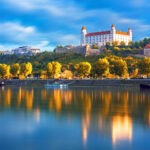
Slovakia’s capital and largest city is Bratislava, positioned on the banks of the Danube River in the southwestern part of the country. The historic Old Town of Bratislava features well-preserved medieval architecture, including Bratislava Castle, which offers panoramic views of the city and neighboring countries.

Culturally, Slovakia has a rich heritage influenced by its Slavic roots and historical connections to the Habsburg Monarchy and Czechoslovakia. The country gained independence on January 1, 1993, following the peaceful dissolution of Czechoslovakia, known as the “Velvet Divorce.” Slovak folk traditions remain vibrant, with distinctive music featuring instruments like the fujara (a traditional shepherd’s flute), colorful folk costumes, and traditional dances still performed at festivals and celebrations.

Slovak cuisine is hearty and flavorful, with national dishes including bryndzové halušky (potato dumplings with sheep cheese and bacon), kapustnica (sauerkraut soup), and various smoked meat specialties. The country also has a long tradition of winemaking, particularly in the Small Carpathian region.

Tourism in Slovakia centers around its natural landscapes, medieval castles, and historic towns. The High Tatras mountain range offers exceptional hiking in summer and skiing in winter. Slovenský raj (Slovak Paradise) National Park features stunning gorges, waterfalls, and extensive cave systems. Slovakia boasts over 220 caves, with Dobšinská Ice Cave and Demänovská Cave of Liberty among the most famous. The country’s numerous castles, including Spiš Castle (one of the largest castle complexes in Central Europe) and the picturesque Bojnice Castle, attract visitors year-round. The UNESCO-listed wooden churches of the Carpathian Mountain area and the preserved folk architecture in Vlkolínec showcase the country’s cultural heritage.

Slovakia’s spa towns, such as Piešťany and Trenčianske Teplice, have been renowned for their therapeutic thermal waters since the Roman era, offering visitors relaxation and wellness treatments. Despite being lesser-known compared to some of its neighbors, Slovakia offers travelers an authentic Central European experience with its combination of natural beauty, rich history, and warm hospitality.
Neighbourhoods

Bratislava, Košice, High Tatras, Liptov, Orava, Spiš

Best time to visit
The best time to visit Slovakia is May, June, September, and October when pleasant temperatures (60-75°F), blue skies, and manageable crowds create ideal conditions for hiking, city exploration, and experiencing Slovak culture. These shoulder season months deliver Slovakia’s finest weather without summer’s intense heat or winter’s harsh cold.

Spring (March-June)

Spring arrives gradually with flowers blossoming from mid-March. May and June represent Slovakia’s sweet spot with consistently mild weather perfect for hiking in the Tatras and exploring medieval towns. Days warm quickly with temperatures ranging from 55-75°F, while spring festivals celebrate traditional Slovak culture. However, June through August can bring heavy rainfall and summer storms – a weather phenomenon called Medardova kvapka bringing days of continuous rain.

Summer (June-August)

Summer brings warm weather with highs reaching 75-85°F, ideal for outdoor pools and riverside strolls. The long daylight hours maximize exploration time, but expect afternoon thunderstorms and higher rainfall. July and August see peak tourism at popular destinations like the High Tatras, though Slovakia remains far less crowded than Western European destinations. Your euros stretch further here year-round, with prices often half those of major tourist hubs.

Fall (September-November)

September stands out as an exceptional month with the fewest mountain storms and harvest festivals filling the valleys. The autumn foliage transforms the High Tatras into a spectacular canvas of gold and crimson. Temperatures range from 60-70°F in September, cooling to 45-55°F by November. Fall delivers Slovakia’s most reliable weather for hiking combined with cultural festivals celebrating the grape and apple harvests.

Winter (December-February)

Winter transforms Slovakia into a budget-friendly ski destination with temperatures ranging from 25-35°F. The High Tatras offer excellent skiing conditions from December through March without Western Europe’s premium prices. Christmas markets in Bratislava and medieval towns create magical winter atmospheres. However, prepare for chilly temperatures and shorter daylight hours limiting sightseeing opportunities.
Season by season

Spring (March-May)

Spring brings a gradual awakening to Slovakia, with wildflowers blooming in meadows and snow melting in the mountains. March can still be chilly, but by May, temperatures reach pleasant highs of 60-70°F. This is an excellent time for visiting castles and cities before the summer crowds arrive, though high-mountain trails may remain closed due to snow.

Summer (June-August)

Summer is the peak season for hiking in the High Tatras and exploring national parks. Temperatures range from 70-85°F, perfect for outdoor activities. However, afternoon thunderstorms are common in the mountains. Festivals and cultural events are frequent during these months, making cities lively.

Autumn (September-November)

Autumn is often considered the best time to visit. September offers stable weather with fewer storms than summer, and by October, the foliage transforms the landscape into a golden wonderland. Temperatures cool down (50-70°F), making hiking comfortable. It’s also harvest season for wine regions.

Winter (December-February)

Winter turns Slovakia into a snowy paradise, ideal for skiing in the Tatras at approachable prices compared to the Alps. Bratislava hosts charming Christmas markets in December. Temperatures drop below freezing, so warm clothing is essential. Many castles operate on reduced schedules or close entirely, but ski resorts are in full swing.

Crowds

Peak: Jul-Aug; High: Jun, Sep; Low: Nov-Mar

Logistics

Getting there and around

Getting there

M. R. Štefánik Airport (Bratislava Airport, BTS) serves as Slovakia’s main international gateway, located 9 kilometers northeast of Bratislava city center with direct flights to 63 destinations worldwide operated by 11 airlines as of February 2026. Ryanair operates 33 scheduled routes from Bratislava including 10 new summer 2026 destinations (Alicante, Athens, Barcelona, Lamezia Terme, Málaga, Naples, Palermo, Pisa, Tirana, Warsaw). Wizz Air expanded service with 12 additional routes including the Bratislava-Košice domestic connection. Budget carriers dominate with affordable connections throughout Europe. Ground transportation from the airport includes trolleybus No. 61 to city center and central railway station (21 minutes, ~€1-2), taxis, and rental cars. Vienna International Airport (VIE) located 60 kilometers west offers more extensive international connections with train service to Bratislava (1 hour, ~€10-15). Slovak Railways (ZSSK) connects Bratislava to Vienna, Budapest, Prague, and other European capitals. International trains and buses provide good connectivity to neighboring countries. The city is accessible via D1 motorway from Vienna and Czech Republic. No visa required for EU citizens; Schengen visa allows 90-day stays for most international visitors. Slovakia joined the Schengen Area enabling free movement from neighboring countries without border checks.

Getting around

Slovakia’s public transportation network efficiently connects cities and villages via modern trains and buses operated by Slovak Railways (ZSSK) and regional bus companies. Bratislava features comprehensive public transport with 481 buses, 168 trolleybuses, and 203 trams operating 4:20 AM-11 PM, with night buses (prefix ‘N’) continuing after hours. Tourist tickets offer 24-hour (€4.50), 48-hour (€7), 72-hour (€10), or 7-day (€15) unlimited travel. The IDS BK mobile app provides 10% ticket discounts and contactless convenience. Tickets must be purchased before boarding from red/yellow machines at stops, newspaper kiosks, tourist offices, or via app. Bratislava’s compact Old Town is highly walkable. Intercity trains connect Bratislava to Košice, Žilina, and regional centers with modern rolling stock and reasonable fares. Regional buses reach mountain villages and ski resorts. Rental cars are recommended for exploring rural areas, castles, and national parks where public transport is limited. Roads are generally good condition though mountain routes can be winding. Winter driving requires snow tires (November-March). International trains connect to Vienna (1 hour), Prague (4 hours), and Budapest (2.5 hours). Slovakia is compact – you can drive across the country in 6 hours. Taxis available in cities but agree on fare before departure or ensure meter is running. Ride-share services limited compared to Western Europe.

Slovakia, officially the Slovak Republic, is a landlocked country in Central Europe. Situated in the heart of Europe, Slovakia is bordered by Poland to the north, Ukraine to the east, Hungary to the south, Austria to the southwest, and the Czech Republic to the northwest. The country is predominantly mountainous, with the Carpathian Mountains, particularly the High Tatras, dominating much of the landscape. Forests cover approximately 41% of the country, making it one of the most forested nations in Europe.

Slovakia’s capital and largest city is Bratislava, positioned on the banks of the Danube River in the southwestern part of the country. The historic Old Town of Bratislava features well-preserved medieval architecture, including Bratislava Castle, which offers panoramic views of the city and neighboring countries.

Culturally, Slovakia has a rich heritage influenced by its Slavic roots and historical connections to the Habsburg Monarchy and Czechoslovakia. The country gained independence on January 1, 1993, following the peaceful dissolution of Czechoslovakia, known as the “Velvet Divorce.” Slovak folk traditions remain vibrant, with distinctive music featuring instruments like the fujara (a traditional shepherd’s flute), colorful folk costumes, and traditional dances still performed at festivals and celebrations.

Slovak cuisine is hearty and flavorful, with national dishes including bryndzové halušky (potato dumplings with sheep cheese and bacon), kapustnica (sauerkraut soup), and various smoked meat specialties. The country also has a long tradition of winemaking, particularly in the Small Carpathian region.

Tourism in Slovakia centers around its natural landscapes, medieval castles, and historic towns. The High Tatras mountain range offers exceptional hiking in summer and skiing in winter. Slovenský raj (Slovak Paradise) National Park features stunning gorges, waterfalls, and extensive cave systems. Slovakia boasts over 220 caves, with Dobšinská Ice Cave and Demänovská Cave of Liberty among the most famous. The country’s numerous castles, including Spiš Castle (one of the largest castle complexes in Central Europe) and the picturesque Bojnice Castle, attract visitors year-round. The UNESCO-listed wooden churches of the Carpathian Mountain area and the preserved folk architecture in Vlkolínec showcase the country’s cultural heritage.

Slovakia’s spa towns, such as Piešťany and Trenčianske Teplice, have been renowned for their therapeutic thermal waters since the Roman era, offering visitors relaxation and wellness treatments. Despite being lesser-known compared to some of its neighbors, Slovakia offers travelers an authentic Central European experience with its combination of natural beauty, rich history, and warm hospitality.

Curated picks

Top experiences in Slovakia

  1. High Tatras Mountains

    The High Tatras form the highest mountain range in the Carpathians, with 25 peaks exceeding 2,500 meters and Gerlachovský štít reaching 2,654 meters as Slovakia’s highest point. This compact alpine range spans just 26 kilometers but packs dramatic scenery including glacial valleys, alpine lakes, waterfalls, and diverse wildlife (chamois, marmots, lynx, brown bears). The mountains offer 600 kilometers of marked hiking trails ranging from easy valley walks to challenging high-altitude scrambles requiring cables and chains. Štrbské Pleso serves as the main resort town with mountain lake, ski areas, and hiking trail access. Popular hikes include Symbolic Cemetery (memorial to mountain victims), Popradské pleso lake, and ascents to peaks like Rysy (2,503m, highest accessible without technical climbing). Winter transforms the range into ski destination with resorts at Tatranská Lomnica, Štrbské Pleso, and Smokovec offering downhill skiing, cross-country trails, and snowshoeing. The Tatra Electric Railway connects resort towns along the mountain base. Cable cars and chairlifts provide access to higher elevations. Mountain huts offer overnight accommodation for multi-day treks. The compact size means you can access high alpine terrain quickly. Weather changes rapidly – bring layers and check forecasts. Best hiking June-September; ski season December-April. Allow 3-5 days to properly explore the range.

  2. Spiš Castle (Spišský hrad)

    Spiš Castle sprawls across a hilltop commanding views over the Spiš region as one of the largest castle complexes in Central Europe, covering 41,426 square meters and designated a UNESCO World Heritage Site. The fortress dates to 12th century with additions through the 18th century before falling into picturesque ruins that remain today. The massive stone walls, towers, courtyards, and palace buildings demonstrate evolution of military architecture across six centuries. Visitors can explore the upper castle with Romanesque palace, middle castle with Gothic chapel, and lower ward with defensive bastions. The hilltop position provides 360-degree panoramas across Spiš countryside with Tatra Mountains visible on clear days. The castle served as filming location for numerous movies including ‘Dragonheart’ and ‘The Last Legion.’ A small museum displays medieval artifacts, weapons, and exhibits about castle history. Operating hours vary seasonally (typically 9 AM-7 PM summer, 9 AM-4 PM winter); admission ~€8-10 adults. The climb from parking to castle entrance involves steep path – wear sturdy shoes. Allow 2-3 hours for exploration. The surrounding Spiš region features additional UNESCO sites including Spišská Kapitula (ecclesiastical town) and Žehra village with church containing medieval frescoes. Located 90 minutes from High Tatras, the castle makes excellent day trip. Best photographed from surrounding valley for full scale.

  3. Bojnice Castle

    Bojnice Castle rises as Slovakia’s most romantic and most visited castle, its fairy-tale silhouette featuring Gothic and Renaissance elements with distinctive turrets, spires, and ornamental details. The 12th-century fortress was transformed in 19th-20th centuries by Count János Ferenc Pálffy into neo-Gothic masterpiece inspired by French Loire châteaux. The interior showcases period furnishings, artwork, and decorative elements including the ornate Golden Hall and Knights’ Hall. Underground passages lead to a cave with natural spring and stunning dripstone formations. The castle is surrounded by one of the oldest zoos in Europe (established 1955) and landscaped park with ancient lime tree (allegedly over 1,000 years old). The International Festival of Ghosts and Spirits transforms the castle each May with medieval performances, demonstrations, and ghostly tales. The castle hosts concerts and cultural events year-round. Operating hours typically 9 AM-5 PM; admission ~€10-12 adults with combined tickets for zoo available. The castle can be crowded during peak season and festivals – visit early or late in day. Located in central Slovakia, accessible from Bratislava (2.5 hours) or Košice (3 hours). The castle appears even more magical under snow. Allow 2-3 hours for castle and grounds. Photography is stunning from the park with castle reflected in ornamental ponds.

  4. Slovak Paradise National Park (Slovenský raj)

    Slovak Paradise National Park creates one of Europe’s most unique hiking experiences where visitors climb through dramatic gorges using 300+ wooden ladders and metal catwalks attached to vertical cliffs, with chains and handrails assisting passage beside waterfalls and through narrow canyons. The park encompasses 197 square kilometers of limestone plateau carved by streams into deep ravines including Suchá Belá, Piecky, and Kyseľ gorges – each offering different difficulty levels and spectacular scenery. The Dobšinská Ice Cave, a UNESCO World Heritage Site within the park, maintains year-round ice formations in underground chambers. Above-ground trails lead to waterfalls like Závojový vodopád (Bridal Veil Falls) and viewpoints overlooking forested valleys. The unique via ferrata-style ladder routes require no technical climbing skills but demand good fitness, balance, and confidence with heights – some sections are near-vertical. The park is best experienced May-September when water flow is optimal and ladders are maintained and safe. Winter closes most gorge routes due to ice. Proper hiking boots with ankle support are essential as routes can be slippery. Waterproof jacket recommended as you’ll get splashed near waterfalls. The park entrance towns of Čingov and Podlesok provide accommodation and trail access. Popular routes can be crowded July-August – start early. Allow full day for gorge hiking. The experience combines adventure with natural beauty in ways few European parks offer.

  5. Bratislava Old Town

    Bratislava’s Old Town (Staré Mesto) preserves medieval and baroque architecture within compact pedestrianized center crowned by Bratislava Castle overlooking the Danube River. St. Martin’s Cathedral, a Gothic masterpiece from 14th century, served as coronation church for Hungarian kings. The Main Square (Hlavné námestie) features the Old Town Hall (14th century) now housing city museum, and colorful baroque buildings surrounding Roland Fountain. Michael’s Gate, the only preserved medieval gate, offers tower views across red-tiled rooftops. Quirky bronze statues pepper the streets including ‘Man at Work’ (Čumil) emerging from manhole. Primate’s Palace showcases neoclassical architecture and rare English tapestries. The Danube riverfront promenade provides views toward UFO Observation Deck on SNP Bridge (85 meters high with restaurant offering 360-degree panoramas). The Old Town blends history with vibrant café culture, traditional Slovak restaurants, and modern bars occupying medieval cellars. The area is highly walkable within 30 minutes across. Free to explore 24/7; individual attractions charge admission (~€5-10). Evening brings atmospheric lighting of historic buildings. The compact scale makes Bratislava easy to explore in 1-2 days. The Old Town sits just 60 kilometers from Vienna, enabling easy day trips. Christmas markets transform the Main Square December-January. Allow one full day minimum for comprehensive Old Town exploration plus castle visit.

Editor-curated picks carried over from our original guide. Where a full place guide exists, the card links to it.

Bookable experiences

Worth booking ahead in Slovakia

Hand-picked from the operators our guides already send readers to. Prices and availability are live on the partner site.

We earn a commission if you book through these links, at no extra cost to you. It is how we keep the guides free and independent.

Insider tips

Tips from the field

Highlights
  • High Tatras Mountains – Carpathian peaks reaching 2,654m with world-class hiking and skiing
  • Spiš Castle – One of Central Europe's biggest strongholds, UNESCO World Heritage Site
  • Bojnice Castle – Slovakia's most romantic fairy-tale castle
  • Orava Castle – Stunning hilltop fortress, one of Slovakia's most beautiful locations
  • Bratislava Old Town – Historic capital with charming architecture
  • 9 National Parks – Including Slovak Paradise and Low Tatras
  • 8 UNESCO World Heritage Sites – Rich cultural and natural heritage
  • Ice Caves – Ethereal underground formations
  • Note: Slovakia has more than 120 castles – the highest number per capita of any country in the world
  • Sources: Lonely Planet, History Hit, National Geographic Adventure Map
Best activities
  • Slovakia surprises visitors with its compact geography packing remarkable diversity – nine national parks, 180 castles, and UNESCO heritage sites all within easy train or bus reach. Bratislava anchors explorations with its medieval Michael's Tower, art-nouveau Blue Church, and the award-winning Slovak National Gallery housed in a striking modernist space, while the city's reputation as a party destination centers on Lánius beer halls and traditional Slivovitz plum brandy. Day trips from the capital reach Červený Kameň Castle, Piešťany's thermal spas, and Trenčín's clock tower all within 90 minutes.
  • The High Tatras deliver Slovakia's signature mountain experience, with peaks reaching 2655 meters and glacial valleys carved during the Ice Age – the crooked Kriváň peak stands as a national symbol. The Tatra Electric Railway connects lakeside Štrbské Pleso to mountain resort Tatranská Lomnica for car-free exploration, while trails range from gentle strolls around Popradské Pleso glacial lake to challenging ascents like Kôprovsky Štit. Slovenský Raj National Park lives up to its 'Slovak Paradise' name with adventure-playground trails through gorges where visitors climb metal ladders and cross wooden walkways above waterfalls at Suchá Belá and Kláštorská. The mining heritage of UNESCO-listed Banská Štiavnica reveals itself both in the town's Gothic and Renaissance architecture nestled inside an extinct volcanic caldera and underground through Slovak Mining Museum tours. Košice offers second-city sophistication with its Gothic St Elizabeth's Cathedral anchoring a medieval plaza, while art studios line Hrnčiarska street and the converted Tabačka Kulturfabrik hosts performances in a creative coworking space. Near the Polish border, Ždiar village preserves distinct Goral culture in its traditionally painted log houses decorated with geometric blue and red patterns, with the Ždiarsky Dom folk museum and restaurant serving up mountain heritage.
Local experiences
  • Attend traditional folk festivals in villages like Východná showcasing music, dance, and colorful regional costumes
  • Visit a koliba (traditional mountain hut/restaurant) sampling bryndzové halušky (potato dumplings with sheep cheese and bacon)
  • Join harvest festivals in September-October celebrating local wine production with tastings and live music
  • Explore wine cellars in Small Carpathian region (Pezinok, Modra) meeting local winemakers
  • Attend the World Championship of Bryndzové Halušky cooking and eating competition in Turecká village
  • Experience traditional Slovak folk music featuring fujara (wooden flute), gajdy (bagpipes), and cimbalom
  • Visit authentic wooden churches in eastern Slovakia dating to 15th-17th centuries
  • Sample traditional dishes: kapustnica (sauerkraut soup), parenica (smoked cheese), trdelník (sweet pastry)
  • Take thermal spa treatments at historic spa towns renowned since Roman times
  • Explore village markets for traditional crafts: embroidered textiles, wooden carvings, painted eggs
  • Attend folk dance performances showcasing regional styles like čardáš and odzemok
  • Visit during Christmas markets in Bratislava's Main Square for mulled wine and traditional crafts
Practical tips
  • High Tatras Electric Railway (TEŽ): The scenic mountain electric railway connects Poprad-Tatry to Starý Smokovec, Štrbské Pleso, and Tatranská Lomnica with affordable day passes.
  • Currency & Cards: Euro (€). Contactless payment with bank cards and mobile devices is standard across shops, hotels, and mountain chalets (horské chaty).
  • Castle Trail: Explore Spiš Castle (one of Europe's largest castle complexes, UNESCO-listed), Bojnice Castle, and Orava Castle perched on high limestone cliffs.
  • Bratislava-Vienna Twin Cities: Twin City Liner catamarans link Bratislava and Vienna along the Danube in 75 minutes, or take direct regional trains (approx. 1 hour).
Photography tips
  • Best Seasons for Photography:
  • Spring (April-May): Wildflowers and fruit tree blossoms
  • Autumn (September-October): Fall foliage in heavily forested areas with stunning color changes
  • Winter: Snow-covered Tatra peaks and fairy-tale castle landscapes
  • Iconic Shots:
  • High Tatras: Dawn over Gerlachovský štít peak
  • Bojnice Castle: Sunset golden hour for romantic fairy-tale lighting
  • Spiš Castle: Wide-angle shots from valley showcasing hilltop fortress scale
  • Bratislava: Blue hour along Danube with castle illuminated
  • Equipment: Telephoto lens for mountain wildlife; wide-angle for castle exteriors; tripod for low-light cave photography
  • Timing: September-October offers clear settled weather lasting days with excellent visibility
Timing
  • Peak Season (July-August):
  • Warmest weather for hiking and outdoor activities
  • Mountain huts fully staffed
  • Higher prices and more crowds at major attractions
  • Possible afternoon storms in mountains
  • Shoulder Seasons (April-June & September-October):
  • Ideal weather conditions
  • Fewer crowds, better value
  • September: Fewest mountain storms, harvest festivals
  • October: Stunning fall foliage
  • Best time for castle visits and city exploration
  • Winter Season (December-April):
  • Ski season in High Tatras and Low Tatras
  • Christmas markets in December
  • Snow-covered landscapes perfect for winter sports
  • Some mountain roads may be closed
  • Low Season (November & March):
  • Shoulder weather between seasons
  • Lowest prices and smallest crowds
  • Some tourist facilities may have reduced hours
Keeping it authentic
  • Slovakia's authenticity reveals itself in social customs that matter deeply to locals but surprise first-time visitors. Taking shoes off when entering Slovak homes is mandatory even when hosts politely insist otherwise – they're being courteous but expect you to remove them anyway. Learning even basic Slovak phrases like 'dobrú chuť' (wish fellow diners good appetite before eating) and 'na zdravie' (toast before drinking) breaks down Slovak reserve far more effectively than assuming everyone speaks English. Formal greetings with handshakes are standard with strangers and older people – casual 'ahoj' is reserved strictly for close friends, not acquaintances. Slovaks understand Czech perfectly from decades of shared history, but this linguistic equation doesn't work in reverse. When invited to eat, bringing wine or chocolates isn't optional politeness but expected custom. This formality exists alongside a scrappy second-city attitude in places like Košice and genuine mountain culture in villages like Ždiar, where Goral traditions dating to 14th-century Wallachian shepherds remain unmistakably present in daily life rather than performed for tourists.
Context

Culture, customs and safety

Cultural heritage

Slovakia’s cultural and historical heritage is a rich mosaic shaped by Celtic tribes, Roman frontiers, Slavic migrations, and centuries under Hungarian rule. Its medieval towns and hilltop castles, such as Spiš Castle—a UNESCO World Heritage Site—reflect a strategic and artistic legacy tied to the Kingdom of Hungary. Traditional folklore is vividly preserved in crafts, music, and village architecture, particularly in the wooden churches of the Carpathian region, also UNESCO-listed. Bratislava’s Baroque palaces and Gothic cathedrals contrast with preserved rural traditions in regions like Liptov and Orava, offering a layered view into Central European cultural evolution. This continuity of past and present is a defining feature of Slovak identity.

Local customs & etiquette

Slovaks value politeness, formality, and privacy in social interactions. Greet people with ‘dobrý deň’ (good day) or ‘dobrý večer’ (good evening) – handshakes are standard for introductions. Address older people using formal ‘Vy’ (you formal) rather than informal ‘ty’ until invited otherwise. Slovaks can seem reserved initially as they take time to trust new people – don’t interpret this as unfriendliness. When invited to a Slovak home, remove shoes at the door even if told otherwise (they’re being polite), bring wine or chocolates as gifts, and arrive on time as punctuality is appreciated. At meals, wish fellow diners ‘dobrú chuť’ (good appetite) before eating and make a toast ‘na zdravie’ (to health) before drinking. Table manners are Continental European – fork in left hand, knife in right. Tipping is customary: round up bills or leave 10% at restaurants, €1-2 per bag for hotel porters, round up taxi fares. Tipping isn’t required but appreciated. Slovaks take pride in their folk traditions – showing interest in traditional music, dance, and crafts earns goodwill. The fujara (traditional wooden flute) and folk costumes are cultural treasures. When visiting churches or religious sites, dress modestly and speak quietly. Slovakia maintains conservative values though younger generations are more cosmopolitan. Public drinking is legal but drunkenness is frowned upon. Smoking restrictions apply in indoor public spaces. Learn basic Slovak phrases (ďakujem – thank you, prosím – please) as English is limited outside tourist areas and younger populations.

Safety notes

As of 2026, Slovakia is recognized as a very safe Central European nation, policed by the Policajný zbor Slovenskej republiky.

Mandatory Mountain, Driving & Urban Legal Rules:
• Mandatory High Tatras Rescue Insurance: Under Slovak Law No. 544/2002, search and rescue operations by the Mountain Rescue Service (HZS) in the High Tatras, Low Tatras, and Slovak Paradise are billed directly to the individual. Hikers must purchase dedicated mountain rescue insurance (poistenie do hôr, approx. €1–€2/day online) to avoid thousands of Euros in rescue liability.
• Electronic Highway Vignette (Eznamka): Driving on motorways (D1, D2, D3, D4) requires an active electronic vignette purchased prior to highway entry at the official portal (eznamka.sk); automated cameras enforce strict fines (€150).
• Strict Zero-Tolerance Alcohol Driving Limit (0.0‰): Slovakia has a strict zero-tolerance policy for driving under the influence of alcohol (0.00% blood alcohol level); violation results in immediate license confiscation and heavy penalties.
• Emergency: Unified European Emergency 112, Police 158, Ambulance 155, Mountain Rescue Service (HZS) 18 300.

Updated Data: Editorial research · SafePlace safety indicators