

Taipei, the bustling capital of Taiwan, is a vibrant city known for its rich history, modern skyscrapers, and delicious street food. From the iconic Taipei 101 to the serene National Palace Museum, visitors can explore a blend of traditional and contemporary attractions. The city’s night markets offer a taste of local culture and cuisine, making it a must-visit destination for food lovers.
The destination guide
Taipei

City in AsiaUpdated
- Overall6/10
- Best forSolo travelers
- PeakApr, Oct, Nov, Dec
- CurrencyTWD
Taipei has night markets that run until midnight, Taipei 101 towering over the skyline, and a temple scene so dense that incense scent follows you through most neighborhoods.
Travel guides for Taipei
More guides featuring Taipei (4)
At a glance
CurrencyTWD
Time zoneTaipei Standard Time
Languages
- Mandarin Chinese
- Taiwanese Hokkien
- Hakka
- English
Setting
- Urban metropolis
- Mountain backdrop
- Night markets
- Subtropical climate
Known for
- Food
- Night Markets
- Temples
- Skyline
- Culture
- Tea
- Hot Springs
- Art
Population2.8M2,792,490 residents
VisaDuration: Less than 90 days for tourist or short-term visitor travel · Documents: Valid U.S. passport through the number of days you intend to stay
How Taipei scores
6/10OverallFair
Weather7/10
Value for money8/10
Safety8/10
Food & cuisine9/10
Culture & arts4/10
Cultural experience8/10
History8/10
Nature & outdoors6/10
Adventure4/10
Nightlife8/10
Shopping8/10
Family friendly5/10
Romance6/10
Character
Photography score9/10
Authenticity score6/10
Off-the-beaten-path score7/10
Editorial scores on a 10-point scale, weighed against destinations of the same kind.
Travel safety snapshot
Overall88/100High rating
Women travellers86/100
LGBTQ+ travellers78/100
Theft88/100
Medical care90/100
Physical harm85/100
Political freedom82/100
SafePlace indicators use their source 100-point scale; higher is more favourable. Planning context, not a live travel advisory — check official government guidance before you go.
When to go
Best months to visit: January, February, March, April, May, September, October, November and December.
- January: 13.7 to 17.4 degrees Celsius, 22.1 millimetres of rain, best-time score 4 out of 5.
- February: 14.5 to 18.8 degrees Celsius, 11.7 millimetres of rain, best-time score 4 out of 5.
- March: 15.3 to 20.9 degrees Celsius, 16.4 millimetres of rain, best-time score 5 out of 5.
- April: 18.6 to 23.4 degrees Celsius, 33.8 millimetres of rain, best-time score 5 out of 5.
- May: 22.8 to 27.8 degrees Celsius, 53.5 millimetres of rain, best-time score 5 out of 5.
- June: 25.4 to 28.9 degrees Celsius, 89.7 millimetres of rain, best-time score 3 out of 5.
- July: 27.1 to 31.9 degrees Celsius, 19 millimetres of rain, best-time score 2 out of 5.
- August: 27.1 to 31.1 degrees Celsius, 22.7 millimetres of rain, best-time score 2 out of 5.
- September: 26.2 to 30.2 degrees Celsius, 33.2 millimetres of rain, best-time score 4 out of 5.
- October: 23.1 to 25.5 degrees Celsius, 32.2 millimetres of rain, best-time score 5 out of 5.
- November: 20.7 to 23.1 degrees Celsius, 12.9 millimetres of rain, best-time score 5 out of 5.
- December: 16.7 to 20.5 degrees Celsius, 52.3 millimetres of rain, best-time score 4 out of 5.
Month-by-month conditions and packing advice
- January
- Warm and pleasant, mostly dry January in Taipei: conditions remain useful at cooler or early-fall edges with some rain planning. Crowds: January marks the peak tourist season in Taipei, with excellent weather conditions for outdoor activities such as hiking, visiting temples, and exploring traditional markets. The city experiences moderate humidity and occasional light rain showers, but overall, the weather remains favorable. Tourist crowds are high, with hotel rates and transportation costs peaking during this period. Visitors should plan for peak prices and larger crowds, but the pleasant climate makes it an ideal time to experience Taipei's cultural richness. Pack: Lightweight layers for temperature variation; Comfortable walking shoes for city exploration; Broad-brimmed hat and SPF 50+ sunscreen; Light cardigan for air-conditioned spaces; Modest clothing for cultural sites and temples; Breathable cotton/linen fabrics
- February
- Warm and pleasant, mostly dry February in Taipei: conditions remain useful at cooler or early-fall edges with some rain planning. Crowds: February marks the beginning of the high tourist season in Taipei, with favorable weather conditions for sightseeing and outdoor activities. The city experiences moderate humidity and occasional light rain showers, but overall, the climate remains suitable for exploring cultural sites, visiting museums, and enjoying the vibrant local food scene. Tourist numbers peak during this time, leading to higher accommodation prices and crowded attractions. Pack: Lightweight layers for temperature variation; Comfortable walking shoes for city exploration; Broad-brimmed hat and SPF 50+ sunscreen; Light cardigan for air-conditioned spaces; Modest clothing for cultural sites and temples; Breathable cotton/linen fabrics
- March
- Warm and pleasant, mostly dry March in Taipei: night markets, temples, hot springs, hikes, food streets, and day trips are most comfortable. Crowds: March marks the beginning of peak tourist season in Taipei, with excellent weather conditions for sightseeing, shopping, and cultural experiences. The city's attractions, including temples, museums, and bustling markets, are most accessible during this time. Hotel prices and tourist crowds peak, but the pleasant weather enhances the overall experience. Visitors should plan for higher accommodation costs and larger crowds, especially during weekends and public holidays. Pack: Lightweight layers for temperature variation; Comfortable walking shoes for city exploration; Broad-brimmed hat and SPF 50+ sunscreen; Light cardigan for air-conditioned spaces; Modest clothing for cultural sites and temples; Breathable cotton/linen fabrics
- April
- Warm and pleasant, some rain April in Taipei: night markets, temples, hot springs, hikes, food streets, and day trips are most comfortable. Crowds: April marks the beginning of the high tourist season in Taipei, with excellent weather conditions for outdoor activities such as hiking, visiting temples, and exploring local markets. The city experiences moderate humidity and occasional rain, which can be refreshing during the day. Tourist crowds are expected to peak, with hotel rates and transportation costs generally higher than usual. Visitors should prepare for potential rain showers and pack accordingly. Pack: Lightweight layers for temperature variation; Comfortable walking shoes for city exploration; Rain jacket for occasional showers; Light cardigan for air-conditioned spaces; Modest clothing for cultural sites and temples; Breathable cotton/linen fabrics
- May
- Hot and sunny, some rain May in Taipei: night markets, temples, hot springs, hikes, food streets, and day trips are most comfortable. Crowds: May marks the peak tourist season in Taipei, with excellent weather conditions for outdoor activities such as hiking, visiting temples, and exploring traditional markets. The city's attractions are bustling with visitors, leading to higher hotel rates and crowded streets. However, the pleasant weather allows for comfortable sightseeing, and the cooler temperatures provide relief from the summer heat. Pack: Lightweight, breathable clothing for daytime activities; Sunscreen with high SPF for outdoor protection; Comfortable walking shoes for exploring historic sites; Light jacket or sweater for cooler evenings; Wide-brimmed hat and sunglasses for sun protection; Light rain jacket for occasional showers
- June
- Hot and sunny, some rain June in Taipei: plum rain and humidity can interrupt outdoor plans. Crowds: June marks the peak tourist season in Taipei, with excellent weather conditions ideal for sightseeing and outdoor activities. The city's attractions, including temples, museums, and parks, are bustling with visitors. Hotel prices and crowd levels are at their highest, so early booking is recommended. Despite the warm temperatures, the humidity remains manageable, making it comfortable for exploring. Visitors should be prepared for occasional rain showers, which are part of the city's natural climate. Pack: Lightweight, breathable clothing for daytime exploration; Sunscreen with high SPF for outdoor activities; Comfortable walking shoes for navigating urban areas; Rain jacket or umbrella for unexpected showers; Light scarf or shawl for cultural sites; Lightweight, moisture-wicking fabrics
- July
- Hot and sunny, mostly dry July in Taipei: summer heat, humidity, and typhoon risk make walking-heavy days less comfortable. Crowds: July marks the peak tourist season in Taipei, with excellent weather conditions for outdoor activities such as hiking, visiting temples, and enjoying the city's night markets. The high temperatures and humidity can be challenging, especially during the day. Visitors should plan for early morning or evening activities to avoid the heat. Accommodation prices and tourist attractions are at their highest during this period. Pack: Lightweight, breathable clothing for daytime activities; Sunscreen with high SPF; Wide-brimmed hat and sunglasses; Light jacket or sweater for cooler evenings; Comfortable walking shoes; Light scarf or shawl for cultural sites
- August
- Hot and sunny, mostly dry August in Taipei: summer heat, humidity, and typhoon risk make walking-heavy days less comfortable. Crowds: August marks the peak tourist season in Taipei, with excellent weather conditions for outdoor activities such as hiking, visiting temples, and enjoying the city's night markets. The weather is warm, but the dry climate makes it comfortable for sightseeing. Crowds are high, and accommodation prices can be steep. Visitors should plan for peak hours and consider booking popular attractions in advance. Pack: Lightweight, breathable clothing for daytime activities; Sunscreen with high SPF; Comfortable walking shoes; Light jacket or sweater for cooler evenings; Reusable water bottle; Hat and sunglasses for sun protection
- September
- Hot and sunny, some rain September in Taipei: conditions remain useful at cooler or early-fall edges with some rain planning. Crowds: September marks the peak tourist season in Taipei, with excellent weather conditions for outdoor activities such as hiking, visiting temples, and exploring traditional markets. The city's attractions are bustling with visitors, leading to higher hotel rates and crowded streets. Despite the heat, the dry weather allows for comfortable sightseeing, and the cooler evenings provide a pleasant respite. Pack: Lightweight, breathable clothing for daytime activities; Sunscreen with high SPF for outdoor protection; Comfortable walking shoes for exploring urban areas; Light jacket or sweater for cooler evenings; Wide-brimmed hat and sunglasses for sun protection; Light scarf or shawl for cultural sites
- October
- Warm and pleasant, some rain October in Taipei: night markets, temples, hot springs, hikes, food streets, and day trips are most comfortable. Crowds: Peak tourist season with excellent conditions for all outdoor activities including hiking, cultural site visits, and city walking tours. Hotel rates and crowd levels are highest during this period. UV levels remain high despite cooler temperatures. Pack: Lightweight layers for temperature variation; Comfortable walking shoes for city exploration; Broad-brimmed hat and SPF 50+ sunscreen; Light cardigan for air-conditioned spaces; Modest clothing for cultural sites and mosques; Breathable cotton/linen fabrics
- November
- Warm and pleasant, mostly dry November in Taipei: night markets, temples, hot springs, hikes, food streets, and day trips are most comfortable. Crowds: Peak tourist season with excellent conditions for all outdoor activities including hiking, cultural site visits, and city exploration. Hotel rates and crowd levels are highest during this period. UV levels remain high despite cooler temperatures. Pack: Lightweight layers for temperature variation; Comfortable walking shoes for city exploration; Broad-brimmed hat and SPF 50+ sunscreen; Light cardigan for air-conditioned spaces; Modest clothing for cultural sites and mosques; Breathable cotton/linen fabrics
- December
- Warm and pleasant, some rain December in Taipei: conditions remain useful at cooler or early-fall edges with some rain planning. Crowds: December marks the peak tourist season in Taipei, with excellent weather conditions for outdoor activities such as hiking, visiting national parks, and exploring cultural sites. The city experiences moderate rainfall, which typically occurs in the afternoon, allowing visitors to enjoy most attractions without significant disruptions. Hotel rates and crowd levels are at their highest, making it a popular time for travelers. Despite the occasional rain, the overall weather remains mild, with temperatures ranging from 18.73°C to 20.53°C. Visitors are advised to carry an umbrella for brief showers and to dress in layers to accommodate temperature variations. Pack: Lightweight layers for temperature variation; Waterproof jacket for occasional rain; Comfortable walking shoes for exploring; Hat and sunglasses for sun protection; Light raincoat for brief showers; Breathable fabrics for comfort
Peak season
- October
- November
- December
- April
Off-peak
- June
- July
- January
- February
- March
Know before you go
About
Taipei, the capital of Taiwan, is a densely populated city of roughly 2.6 million people set in a basin in the island’s mountainous north, with a greater metro area exceeding seven million. Han Chinese settlers from Fujian began farming the Taipei Basin around 1709, and the city became a regional administrative seat in the late 19th century. Its defining landmark is Taipei 101, which on its 2004 opening was the world’s tallest building and the first to surpass half a kilometer at 509 meters. Other highlights include the white-walled Chiang Kai-shek Memorial Hall, the National Palace Museum and its vast collection of Chinese imperial art, and the incense-filled Longshan Temple. Famous for its night markets and street food, Taipei blends dense urban energy with hot springs and mountain trails on its doorstep.
Best time to visit
The best time to visit Taipei is during the fall (September to November) and spring (March to May) when the weather is mild and pleasant. Summer can be hot and humid, while winter is cooler but still enjoyable.
Season by season
Spring (Mar–May): warm (20–28°C), occasional rain, pleasant for sightseeing. Summer (Jun–Aug): hot (30–35°C), humid, afternoon thunderstorms, typhoon risk. Autumn (Sep–Nov): warm, drier, best weather, festival season. Winter (Dec–Feb): cool (12–18°C), damp, fewer crowds, hot springs season.
Crowds
High (October–November, Chinese New Year), Moderate (March–May, December), Low (June–September)
Getting there and around
Getting there
The main international gateway is Taiwan Taoyuan International Airport (TPE), located 40 km west of Taipei. The Airport MRT express train reaches Taipei Main Station in 35 minutes (NTD 160). Kuo-Kuang Bus 1819 runs 24/7 to Taipei Main Station (NTD 140, about 50 minutes). Taxis cost NTD 1,100–1,500 and take 30–50 minutes depending on traffic.
Taipei Songshan Airport (TSA), located within the city, handles some international flights from Japan, China, and Korea, plus domestic routes to Hualien, Taitung, and the islands.
Major airlines serving Taoyuan include China Airlines, EVA Air, Cathay Pacific, ANA, JAL, Korean Air, Singapore Airlines, and several low-cost carriers. Direct flights arrive from most major Asian cities, as well as North America and Europe.
Getting around
Taipei has an efficient public transportation system, including the Taipei Metro (MRT), buses, and taxis. The city is also bike-friendly, with numerous bike-sharing options available. Walking is a great way to explore the city, especially in areas with pedestrian-friendly streets.
Top experiences in Taipei
Taipei 101
A 508-m bamboo-shaped supertall skyscraper that held the world’s tallest title from 2004 to 2009. The 89th-floor observatory delivers panoramic views; a 660-tonne wind-damper ball is visible from the 87th–88th floors. The base houses a luxury shopping mall and gourmet food courts.
Shilin Night Market
Taipei’s largest and most famous night market, a sprawling maze of food stalls, game booths, and clothing shops. Must-try dishes include stinky tofu, oyster omelettes, grilled sausages, and bubble milk tea. The underground food court is the most concentrated area. Open nightly, busiest after 7 PM.
Longshan Temple
The oldest Buddhist-Taoist temple in Taipei, founded in 1738. The ornate interior is alive with incense smoke, chanting, and worshippers seeking blessings. The surrounding Bopiliao Historic Block preserves Qing-dynasty red-brick shop houses.
Elephant Mountain (Xiangshan)
A short but steep trail (20–30 minutes) on the eastern edge of the city, rewarding hikers with the defining Taipei skyline shot: Taipei 101 rising behind layers of rooftops. Arrive 45 minutes before sunset for the best light-to-dark transition.
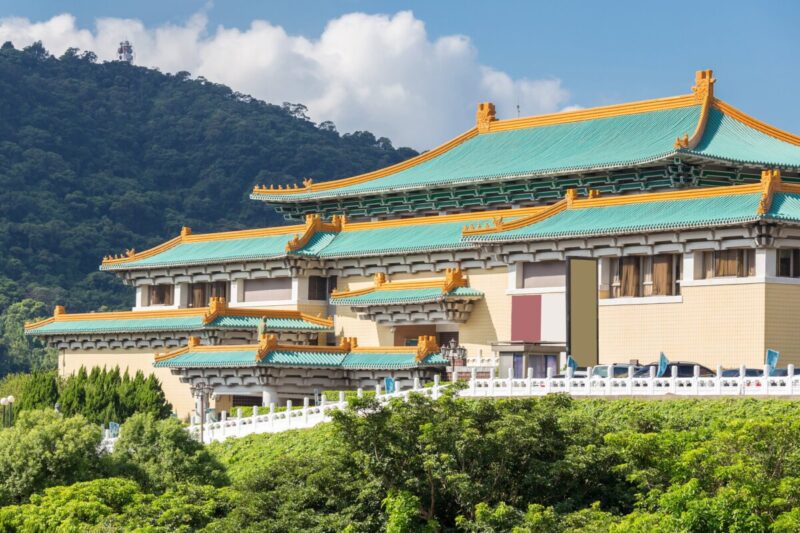
National Palace Museum
One of the world’s greatest collections of Chinese art and artifacts, spanning 8,000 years and including jadeite cabbage, meat-shaped stone, and thousands of scrolls, ceramics, and bronzes. The collection originated from the Chinese imperial palaces.
Editor-curated picks carried over from our original guide. Where a full place guide exists, the card links to it.
Worth booking ahead in Taipei
Hand-picked from the operators our guides already send readers to. Prices and availability are live on the partner site.
BrowseViator
Tours and tickets in Taipei on Viator (opens Viator in a new tab)
Viator's full list of bookable tours and tickets in Taipei.
BrowseGetYourGuide
Experiences in Taipei on GetYourGuide (opens GetYourGuide in a new tab)
Everything GetYourGuide sells in Taipei, with the cancellation terms on each listing.
Where to stayBooking.com
Stays in Taipei (opens Booking.com in a new tab)
Live rates and availability for Taipei on Booking.com; filter by neighbourhood once you know where your days start.
We earn a commission if you book through these links, at no extra cost to you. It is how we keep the guides free and independent.
Where to stay
Grand Hyatt Taipei
No. 2, Songshan Road, Xinyi District, Taipei 110, Taiwan
A 853-room luxury hotel directly connected to Taipei 101 by a covered walkway, with a Yunyan Spa, a 20-m indoor pool, and seven restaurants including an Italian and a Japanese teppanyaki. Corner rooms offer floor-to-ceiling views of the skyscraper.
MGH Mitsui Garden Hotel Taipei Zhongshan
No. 168, Dunhua N. Road, Zhongshan District, Taipei 104, Taiwan
A 256-room Japanese-style hotel in the Zhongshan arts district, with understated timber-and-stone interiors, an in-house soba restaurant, and a garden courtyard. Within walking distance of the Taipei Fine Arts Museum and the Lin Sen Park area.
Hotel Resonance Taipei
No. 172, Section 1, Zhongxiao East Road, Zhongzheng District, Taipei 100, Taiwan
A design-forward hotel near Taipei Main Station, with bold geometric interiors, a rooftop bar, and rooms themed around sound and music. Walking distance to Zhongshan MRT, Ximending, and the high-speed rail terminal.
Editor-curated stays carried over from our original guide. Where we have reviewed the hotel, the card links to the review.
Tips from the field
Highlights
- Taipei 101 — Bamboo-design supertall skyscraper
- Shilin Night Market — Taipei's biggest after-dark food maze
- Longshan Temple — 1738 Buddhist-Taoist sanctuary
- Elephant Mountain — Skyline sunset hike
- National Palace Museum — 8,000 years of Chinese art
- Jiufen — Spirited Away hillside lantern lanes
Best activities
- Ascend Taipei 101 for panoramic views, graze through Shilin Night Market, hike Elephant Mountain at sunset, visit Longshan Temple, explore the National Palace Museum, ride the Maokong Gondola over tea plantations, day-trip to Jiufen's lantern-lit alleys, soak in Beitou Hot Springs, shop Ximending's pedestrian streets, and sample soup dumplings at Din Tai Fung.
Local experiences
- Hike Elephant Mountain as the sun sets behind Taipei 101, squeeze between the sizzling food stalls of Shilin Night Market until well past midnight, or watch centuries-old rituals unfold inside incense-filled Longshan Temple.
Practical tips
- The Taipei MRT is clean, efficient, and covers most tourist sites. Buy an EasyCard for seamless payment.
- Night markets are best visited after 6:30 PM when all stalls are open.
- Convenience stores (7-Eleven, FamilyMart) are everywhere and offer free Wi-Fi, ATMs, and hot meals.
- Carry tissues — some public restrooms are BYOTP (bring your own toilet paper).
- Tap water is boiled before drinking; bottled water is widely available.
- Typhoon season runs May–November; monitor Central Weather Administration updates.
Photography tips
- Elephant Mountain at sunset is the definitive Taipei shot — arrive 45 minutes before sunset and claim a spot at the first rock platform. Taipei 101 from below looks best shot with an ultra-wide (14–16 mm) aimed straight up. Longshan Temple's interior requires a high ISO and a fast lens (f/1.4–f/2.0) due to dim, moody lighting. Jiufen's lantern-lit stairs are most photogenic just after dark on a weekday. Night markets shine under the glow of fluorescent signs — a 35 mm prime captures the energy.
Timing
- Two days cover Taipei 101, Longshan Temple, Elephant Mountain, and a night market. Three days add the National Palace Museum and Ximending. Five days include Jiufen, Beitou Hot Springs, and Maokong. A week lets you add Yehliu Geopark, Taroko Gorge, and Sun Moon Lake day trips.
Keeping it authentic
- Taipei is a city where centuries-old temple rituals coexist with neon-lit tech hubs. Longshan Temple has been a center of worship since 1738. Night-market culture is not a tourist invention but a Taiwanese institution — families have run the same stalls for generations, and locals outnumber visitors at most markets. The National Palace Museum's imperial collection was transported from Beijing during World War II and represents one of the most comprehensive records of Chinese civilization in existence.
Culture, customs and safety
Cultural heritage
Taipei blends Chinese traditions with Japanese colonial legacy and indigenous Taiwanese culture, creating dynamic Asian democracy and technology hub. Longshan Temple showcases traditional architecture while Taipei 101 represented world tallest building ambitions. Night markets like Shilin preserve street food culture and social gathering traditions. National Palace Museum houses finest Chinese art collection from Forbidden City. Japanese colonial architecture in Ximending contrasts with traditional shophouses. The city celebrates through festivals, temple processions, and contemporary arts creating unique Taiwanese identity.
Local customs & etiquette
Taiwanese people are exceptionally welcoming and polite. Tipping is not customary. Remove shoes when entering someone’s home or some traditional shops. At temples, walk through the side doors (the center door is for the gods), and avoid pointing at deity statues. Chopstick etiquette: never stick them upright in rice (resembles funeral incense). MRT (metro) is impeccably clean — no drinking or eating allowed inside.
Safety notes
Taipei is one of the safest major cities in Asia. Violent crime is extremely rare, and petty crime like pickpocketing is uncommon. The MRT is safe at all hours, and it is perfectly normal to walk alone at night. The main natural risks are typhoons (May–November), earthquakes (Taiwan sits on a tectonic boundary), and heavy rain causing localized flooding. Emergency number: 110 (police) or 119 (fire/ambulance). Hospitals are modern and affordable, and many doctors speak English.

Travel Style
Season