

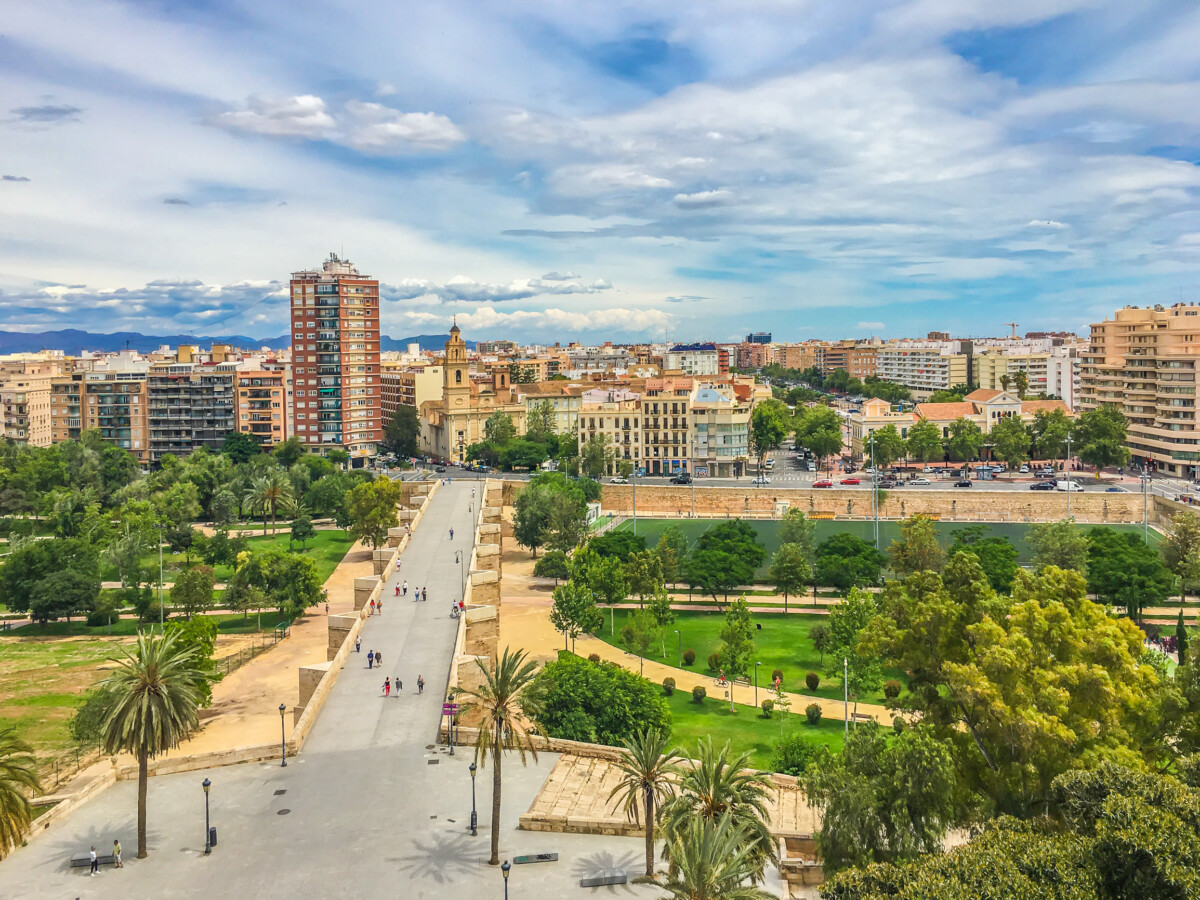
Valencia, known for its stunning architecture and vibrant culture, is a city that beautifully blends the old with the new. Famous for its historic landmarks such as the Valencia Cathedral and the futuristic City of Arts and Sciences, Valencia also boasts beautiful beaches and a rich culinary scene, particularly its world-renowned paella.
The destination guide
Valencia
- Overall7/10
- Best forCouples, Budget travelers, Solo travelers
- PeakMar–Aug
- CurrencyEUR
Valencia invented paella and transformed a dry riverbed into the City of Arts and Sciences — a Spanish Mediterranean city that finally gets the attention it earned.
Travel guides for Valencia
More guides featuring Valencia (8)
At a glance
Currency€ EURCode: EUR
Time zoneCentral European Time
Languages
- Spanish
- Catalan
- Basque
- Galician
Setting
- Mediterranean coast
- Orange groves
- Modernist architecture
- City of Arts
Known for
- Architecture
- History
- Beach
- Gastronomy
- Arts and Culture
Population841K841,000 residents
VisaDuration: Up to 90 days within any 180-day period in the Schengen Area · Documents: Valid passport issued within the last 10 years and valid for at least 3 months after planned departure, plus proof of accommodation, onward or return travel, and sufficient funds if requested
How Valencia scores
7/10OverallGood
Weather9/10
Value for money8/10
Safety7/10
Food & cuisine9/10
Culture & arts7/10
Cultural experience8/10
History8/10
Nature & outdoors7/10
Adventure4/10
Nightlife7/10
Shopping7/10
Family friendly5/10
Romance8/10
Character
Photography score9/10
Authenticity score9/10
Off-the-beaten-path score7/10
Editorial scores on a 10-point scale, weighed against destinations of the same kind.
Travel safety snapshot
Overall80/100High rating
Women travellers78/100
LGBTQ+ travellers80/100
Theft60/100
Medical care84/100
Physical harm82/100
Political freedom78/100
SafePlace indicators use their source 100-point scale; higher is more favourable. Planning context, not a live travel advisory — check official government guidance before you go.
When to go
Best months to visit: March, April, May, June, September, October and November.
- January: 20.1 to 28.3 degrees Celsius, 7.3 millimetres of rain, best-time score 3 out of 5.
- February: 20.5 to 29 degrees Celsius, 1.9 millimetres of rain, best-time score 3 out of 5.
- March: 21 to 29.6 degrees Celsius, 11.1 millimetres of rain, best-time score 5 out of 5.
- April: 21.8 to 29 degrees Celsius, 56.4 millimetres of rain, best-time score 5 out of 5.
- May: 22.2 to 29.3 degrees Celsius, 31.3 millimetres of rain, best-time score 5 out of 5.
- June: 21.2 to 27.8 degrees Celsius, 65.6 millimetres of rain, best-time score 4 out of 5.
- July: 21.3 to 27.2 degrees Celsius, 58.9 millimetres of rain, best-time score 3 out of 5.
- August: 21.3 to 27.9 degrees Celsius, 100.2 millimetres of rain, best-time score 3 out of 5.
- September: 22.1 to 29.1 degrees Celsius, 74.8 millimetres of rain, best-time score 5 out of 5.
- October: 21.9 to 28.8 degrees Celsius, 67.6 millimetres of rain, best-time score 5 out of 5.
- November: 21.8 to 28.3 degrees Celsius, 71.9 millimetres of rain, best-time score 4 out of 5.
- December: 20.9 to 28 degrees Celsius, 8 millimetres of rain, best-time score 3 out of 5.
Month-by-month conditions and packing advice
- January
- Warm and pleasant, mostly dry January in Valencia: winter mildness or peak summer beach energy can work, but the balance is weaker. Crowds: January marks the peak tourist season in Valencia, with excellent weather conditions for a variety of activities. Visitors can indulge in beach outings, explore the city's numerous cultural sites, and participate in local festivals. Hotel prices and crowd levels are at their highest, so early booking is recommended. Despite the warm temperatures, UV levels remain high, necessitating the use of sunscreen and protective clothing. Pack: Lightweight layers for temperature variation; Comfortable walking shoes for city exploration; Broad-brimmed hat and SPF 50+ sunscreen; Light cardigan for air-conditioned spaces; Modest clothing for cultural sites and mosques; Breathable cotton/linen fabrics
- February
- Warm and pleasant, mostly dry February in Valencia: winter mildness or peak summer beach energy can work, but the balance is weaker. Crowds: February marks the peak tourist season in Valencia, with excellent conditions for outdoor activities such as exploring the historic old town, visiting the beaches, and participating in cultural festivals. Hotel rates and crowd levels are at their highest, with high UV levels persisting despite cooler temperatures. Ideal timing for beach visits and cultural experiences, but be prepared for peak tourist activity. Pack: Lightweight layers for temperature variation; Comfortable walking shoes for city exploration; Broad-brimmed hat and SPF 50+ sunscreen; Light cardigan for air-conditioned spaces; Modest clothing for cultural sites and mosques; Breathable cotton/linen fabrics
- March
- Hot and sunny, mostly dry March in Valencia: old-town walks, beaches, paella, parks, and festivals align with warm weather and fewer peak crowds. Crowds: March marks the beginning of Valencia's peak tourist season, with excellent weather conditions for outdoor activities such as exploring the City of Arts and Sciences, visiting the historic old town, and enjoying the beaches. Hotel rates and crowd levels are high, with prices reflecting the increased demand. Despite the warm temperatures, UV levels remain high, so visitors should apply sunscreen and wear protective clothing. Pack: Lightweight layers for temperature variation; Comfortable walking shoes for city exploration; Broad-brimmed hat and SPF 50+ sunscreen; Light cardigan for air-conditioned spaces; Modest clothing for cultural sites and mosques; Breathable cotton/linen fabrics
- April
- Hot and sunny, some rain April in Valencia: old-town walks, beaches, paella, parks, and festivals align with warm weather and fewer peak crowds. Crowds: April is peak tourist season in Valencia, with high demand for accommodations and attractions. Hotel rates and crowd levels are at their highest, but the weather remains ideal for exploring the city's beaches, historic architecture, and lively festivals. Visitors can enjoy outdoor activities such as boat tours and cultural events, while the sunny weather enhances the vibrant atmosphere. Pack: Lightweight summer clothing for daytime activities; Sunglasses and wide-brimmed hat for sun protection; Comfortable walking shoes for exploring historic sites; Light rain jacket for occasional showers; Swimwear for beach visits; Light scarf for cultural sites
- May
- Hot and sunny, some rain May in Valencia: old-town walks, beaches, paella, parks, and festivals align with warm weather and fewer peak crowds. Crowds: May marks the peak tourist season in Valencia, with excellent weather conditions for beach outings, boat tours, and exploring the city's historic sites. The city's vibrant atmosphere and cultural festivals coincide with the warm climate, attracting visitors from around the globe. Hotel prices and tourist crowds are at their highest, so early booking is advisable. Despite the heat, the pleasant weather enhances the city's charm, making it a perfect time to experience Valencia's rich heritage and lively atmosphere. Pack: Lightweight, breathable clothing for daytime activities; Sunscreen with high SPF for outdoor protection; Comfortable walking shoes for exploring narrow streets; Light jacket or sweater for cooler evenings; Wide-brimmed hat and sunglasses for sun protection; Light scarf or shawl for cultural sites
- June
- Warm and pleasant, some rain June in Valencia: conditions remain useful, though early summer or late fall bring tradeoffs. Crowds: June marks the peak tourist season in Valencia, with excellent weather conditions for outdoor activities such as beach visits, boat tours, and exploring the city's historic architecture. The city's attractions are bustling with visitors, leading to higher hotel rates and crowded streets. Despite the warm temperatures, UV levels remain high, so visitors should apply sunscreen and stay hydrated. Ideal for photography, June offers vibrant lighting conditions. Pack: Lightweight layers for temperature variation; Comfortable walking shoes for exploring historic sites; Wide-brimmed hat and SPF 50+ sunscreen; Light cardigan for air-conditioned spaces; Light, breathable clothing for beach outings; Comfortable sandals for walking
- July
- Warm and pleasant, some rain July in Valencia: winter mildness or peak summer beach energy can work, but the balance is weaker. Crowds: July marks the peak tourist season in Valencia, with excellent weather conditions for beach outings, boat tours, and exploring the city's rich history and architecture. The city's attractions are bustling with visitors, leading to higher hotel rates and crowded streets. Despite the warmth, the Mediterranean climate offers comfortable temperatures, perfect for sightseeing and enjoying local cuisine. Visitors are advised to stay hydrated and apply sunscreen due to the high UV levels. Pack: Lightweight layers for temperature variation; Comfortable walking shoes for exploring historic sites; Wide-brimmed hat and SPF 50+ sunscreen; Light cardigan for air-conditioned venues; Light, breathable clothing for beach days; Comfortable sandals for casual strolls
- August
- Warm and pleasant, some rain August in Valencia: winter mildness or peak summer beach energy can work, but the balance is weaker. Crowds: Peak tourist season with excellent conditions for outdoor activities such as beach visits, cultural tours, and exploring the city's historic sites. Hotel rates and crowd levels are highest during this period. UV levels remain high despite cooler temperatures, so sunscreen and protective clothing are recommended. Pack: Lightweight layers for temperature variation; Comfortable walking shoes for city exploration; Broad-brimmed hat and SPF 50+ sunscreen; Light cardigan for air-conditioned spaces; Modest clothing for cultural sites and mosques; Breathable cotton/linen fabrics
- September
- Hot and sunny, some rain September in Valencia: old-town walks, beaches, paella, parks, and festivals align with warm weather and fewer peak crowds. Crowds: September marks the peak tourist season in Valencia, with excellent weather conditions for outdoor activities such as beach visits, boat tours, and exploring the city's historic center. Hotel prices and crowd levels are at their highest, so early booking is recommended. Despite the warm temperatures, UV levels remain high, necessitating the use of sunscreen and protective clothing. Visitors can enjoy a mix of cultural events and festivals, enhancing the vibrant atmosphere. Pack: Lightweight, breathable clothing for beach outings; Sunscreen with high SPF; Comfortable walking shoes for exploring; Wide-brimmed hat for sun protection; Light jacket for cooler evenings; Light, breathable fabrics for cultural sites
- October
- Hot and sunny, some rain October in Valencia: old-town walks, beaches, paella, parks, and festivals align with warm weather and fewer peak crowds. Crowds: January marks the peak tourist season in Valencia, with excellent weather conditions for outdoor activities such as beach visits, cultural tours, and exploring the city's historic architecture. Hotel rates and crowd levels are at their highest, with high UV levels due to the sunny weather. Ideal for beach activities, cultural exploration, and city tours, visitors should plan accordingly to enjoy the best of Valencia's offerings. Pack: Lightweight layers for temperature variation; Comfortable walking shoes for city exploration; Broad-brimmed hat and SPF 50+ sunscreen; Light cardigan for air-conditioned spaces; Modest clothing for cultural sites and mosques; Breathable cotton/linen fabrics
- November
- Hot and sunny, some rain November in Valencia: conditions remain useful, though early summer or late fall bring tradeoffs. Crowds: January marks the peak tourist season in Valencia, with excellent weather conditions for beach outings, water sports, and exploring the city's historic architecture. The city's attractions are bustling with visitors, and accommodation prices and dining options can be higher. Despite the warmth, UV levels remain high, so sun protection is essential. Ideal activities include exploring the Gothic Quarter, visiting the Oceanogràfic, and enjoying Valencia's renowned paella. Pack: Lightweight layers for temperature variation; Comfortable walking shoes for city exploration; Broad-brimmed hat and SPF 50+ sunscreen; Light cardigan for air-conditioned spaces; Modest clothing for cultural sites and mosques; Breathable cotton/linen fabrics
- December
- Warm and pleasant, mostly dry December in Valencia: winter mildness or peak summer beach energy can work, but the balance is weaker. Crowds: December marks the peak tourist season in Valencia, with excellent weather conditions for outdoor activities such as beach visits, cultural tours, and exploring the city's historic sites. The average high temperature of 28°C and low humidity levels make it an ideal time for sightseeing and beach outings. However, this period also sees higher hotel rates and increased tourist crowds, particularly in popular areas like the City of Arts and Sciences. Visitors are advised to book accommodations in advance to secure better rates and avoid peak congestion. Pack: Lightweight layers for temperature variation; Comfortable walking shoes for exploring the city; Sunscreen and a wide-brimmed hat for beach visits; Light cardigan for cooler evenings; Comfortable sandals for beach and casual outings; Light, breathable clothing for cultural sites
Peak season
- July
- August
- March
- April
- May
- June
Off-peak
- January
- February
- October
- November
- December
Know before you go
About
Valencia, on Spain’s sunny Mediterranean east coast, is the country’s third-largest city and the capital of the Valencian Community, blending ancient roots with bold modern architecture. Founded as the Roman colony of Valentia in 138 BC, it is today home to about 790,000 residents and famous as the birthplace of paella. Its showpiece is the futuristic City of Arts and Sciences, a complex of gleaming Santiago Calatrava structures—including L’Oceanogràfic, Europe’s largest aquarium—built in the former Turia riverbed after the river was diverted following a catastrophic 1957 flood and the old bed turned into a sweeping urban park. The historic center holds the Gothic La Lonja de la Seda silk exchange, a UNESCO World Heritage Site, and a cathedral said to house the Holy Grail. Each March, the explosive Las Fallas festival fills the streets with giant sculptures and fireworks. With beaches, gardens, and a relaxed pace, Valencia is one of Spain’s most livable cities.
Neighbourhoods
Ciutat Vella (Old Town) encompasses the medieval lanes, the Cathedral, and La Lonja de la Seda. Ruzafa (Russafa) is an artistic neighbourhood south of the centre with galleries, brunch spots, and weekend street markets. El Cabanyal is a former fishing quarter near Malvarrosa beach, known for colourful tile facades and seafood restaurants. The City of Arts and Sciences area contains Calatrava’s futuristic complex in the old Turia riverbed.
Best time to visit
The best time to visit Valencia is during the spring (March to May) and fall (September to November) when the weather is pleasant. The city also hosts the famous Las Fallas festival in March, which is a spectacular event filled with fireworks and traditional celebrations.
Getting there and around
Getting there
Fly into Valencia Airport (VLC), 8 km west of the centre. Metro Lines 3 and 5 reach downtown in 20 minutes. AVE high-speed trains connect Valencia to Madrid (1 h 40 min), Barcelona (3 h), and Seville (4 h). Flixbus and ALSA run intercity coaches. By car, Valencia sits on the AP-7 Mediterranean motorway between Barcelona and Alicante.
Getting around
Metrovalencia runs metro and tram lines across the city; a single ride costs about EUR 1.50. EMT city buses cover 46 daytime and 12 night routes. The Turia Gardens cycling path runs 9 km from the Bioparc to the City of Arts and Sciences. Valenbisi bike-share stations are located throughout the centre. Uber and Cabify operate alongside metered taxis. The historic centre is compact and walkable.
Top experiences in Valencia
City of Arts and Sciences
A futuristic cultural complex designed by Santiago Calatrava and Felix Candela in the drained Turia riverbed. The ensemble includes the Hemisferic (IMAX cinema and planetarium in an eye-shaped building), the Principe Felipe Science Museum, the Oceanografic (Europe’s largest aquarium, with over 500 marine species), the Palau de les Arts Reina Sofia opera house, and the Umbracle sculpture garden. The white concrete and water-mirror pools make it one of Spain’s most photographed landmarks.
Valencia Cathedral & The Holy Grail
A Gothic cathedral incorporating Romanesque, Baroque, and neoclassical elements, built on the site of a former mosque starting in 1262. The Chapel of the Holy Chalice houses a 1st-century agate cup that the Vatican officially recognises as a plausible candidate for the Holy Grail. Climbing the 207 steps of the Miguelete bell tower rewards visitors with a 360-degree panorama of the city’s rooftops and the sea beyond.
La Lonja de la Seda (Silk Exchange)
A masterpiece of late Gothic civil architecture built between 1482 and 1548, when Valencia was Europe’s silk-trading capital. The main hall’s 24 spiralling columns soar 17 metres to a ribbed vault ceiling, creating a forest-like interior. The upper floor housed the maritime trade tribunal. Inscribed as a UNESCO World Heritage Site in 1996, the building also includes an orange-tree courtyard and a gargoyle-lined exterior.
Central Market (Mercado Central)
One of Europe’s largest covered fresh-food markets, housed in an Art Nouveau building from 1928 featuring stained glass, ceramic tiles, and ironwork. Over 300 vendors sell regional produce, cured Iberian ham, saffron, horchata, and fresh-caught Mediterranean fish. The market sits across from La Lonja and the Santos Juanes church, anchoring the historic commercial quarter.
Albufera Natural Park
A coastal lagoon and wetland reserve 10 km south of the city, home to over 350 bird species and the rice paddies where paella was invented. Visitors can take a traditional wooden boat ride (paseo en barca) at sunset across the lake, which turns gold and pink as the sun drops. The surrounding villages of El Palmar and El Saler serve authentic Valencian paella cooked over orange-wood fires.
Editor-curated picks carried over from our original guide. Where a full place guide exists, the card links to it.
Worth booking ahead in Valencia
Hand-picked from the operators our guides already send readers to. Prices and availability are live on the partner site.
BrowseViator
Tours and tickets in Valencia on Viator (opens Viator in a new tab)
Viator's full list of bookable tours and tickets in Valencia.
BrowseGetYourGuide
Experiences in Valencia on GetYourGuide (opens GetYourGuide in a new tab)
Everything GetYourGuide sells in Valencia, with the cancellation terms on each listing.
Where to stayBooking.com
Stays in Valencia (opens Booking.com in a new tab)
Live rates and availability for Valencia on Booking.com; filter by neighbourhood once you know where your days start.
We earn a commission if you book through these links, at no extra cost to you. It is how we keep the guides free and independent.
Where to stay
Caro Hotel
Carrer del Marquès de Dos Aigües 6, 46002 Valencia, Spain
Five-star hotel in a restored 19th-century palace overlooking the National Ceramics Museum with frescoed ceilings, a rooftop pool, and Michelin-starred dining.
The Westin Valencia
Calle Colón 32, 46004 Valencia, Spain
Grand hotel on Valencia’s main shopping boulevard with classic luxury rooms, an indoor pool, spa, and a storied history dating to 1910.
One Shot Palacio Reina Victoria 04
Calle del Poet Llombart 14, 46006 Valencia, Spain
Boutique hotel in the Ruzafa district with contemporary design, individually styled rooms, a rooftop terrace bar, and proximity to the Central Market.
Editor-curated stays carried over from our original guide. Where we have reviewed the hotel, the card links to the review.
Tips from the field
Highlights
- City of Arts and Sciences
- Valencia Cathedral
- La Lonja de la Seda
- Bioparc Valencia
- Turia Gardens
Best activities
- Visit the City of Arts and Sciences
- Explore the Valencia Cathedral and climb El Micalet tower
- Stroll through the Turia Gardens
- Visit the La Lonja de la Seda (Silk Exchange)
Practical tips
- Currency: Malaysian Ringgit (MYR). Cards accepted at malls and hotels; cash needed at street food stalls and markets.
- Getting There: KL International Airport (KLIA) connects via KLIA Ekspres (28 minutes, RM55) or Grab (~RM80-100).
- Transportation: LRT, MRT, and KL Monorail cover the city. Touch 'n Go card works on all transit. Grab ride-hailing is affordable and reliable. Walking can be challenging due to heat and lack of sidewalks in some areas.
- Dining: KL is a food paradise. Street food at Jalan Alor from RM5-15. Nasi lemak, char kuey teow, and roti canai are must-tries. Hawker stalls offer full meals for RM5-12. Fine dining at Petronas Towers area.
- Free Attractions: Petronas Towers exterior and park, Batu Caves (train to Batu Caves station), Merdeka Square, Central Market browsing, KL Bird Park grounds.
- Tipping: Not expected; 10% service charge usually included at restaurants
- Electricity: 240V/50Hz, Type G plugs
Keeping it authentic
- Visit the Central Market for a genuine local experience
- Explore the historic El Carmen neighborhood for authentic Valencian atmosphere
Culture, customs and safety
Cultural heritage
Valencia’s history stretches back to its founding as a Roman colony (Valentia) in 138 BCE. The Silk Exchange (La Lonja de la Seda), a UNESCO World Heritage Site (1996), testifies to the city’s Golden Age as a Mediterranean trading power in the 15th century. Valencia is the birthplace of paella, originally a rice dish cooked over an open fire in the Albufera lagoon communities. The annual Fallas festival in March fills the city with enormous combustible sculptures (ninots) that are paraded and then burned on the final night.
Local customs & etiquette
- Greet locals with a friendly “Hola” and a smile
- Try to learn a few basic phrases in Spanish or Valencian
- Respect local customs, especially during festivals
- Enjoy meals late in the evening, as dining times are typically later in Spain
Safety notes
Kuala Lumpur is generally safe for tourists with standard urban precautions.
General Safety:
• Tourist areas (KLCC, Bukit Bintang, Chinatown) are well-patrolled
• Snatch thefts (bag/phone snatching by motorcyclists) can occur — carry bags on the side away from the road
• Avoid walking alone in poorly lit areas after dark
Scams:
• Overcharging by unlicensed taxis — use Grab app or metered taxis
• “Friendly” locals inviting you to card games — always decline
Weather:
• Tropical thunderstorms occur daily, usually in the afternoon
• Flash flooding possible in low-lying areas during monsoon
Emergency contacts:
• Police: 999
• Tourist police: 03-2166 8322


Travel Style
Activities