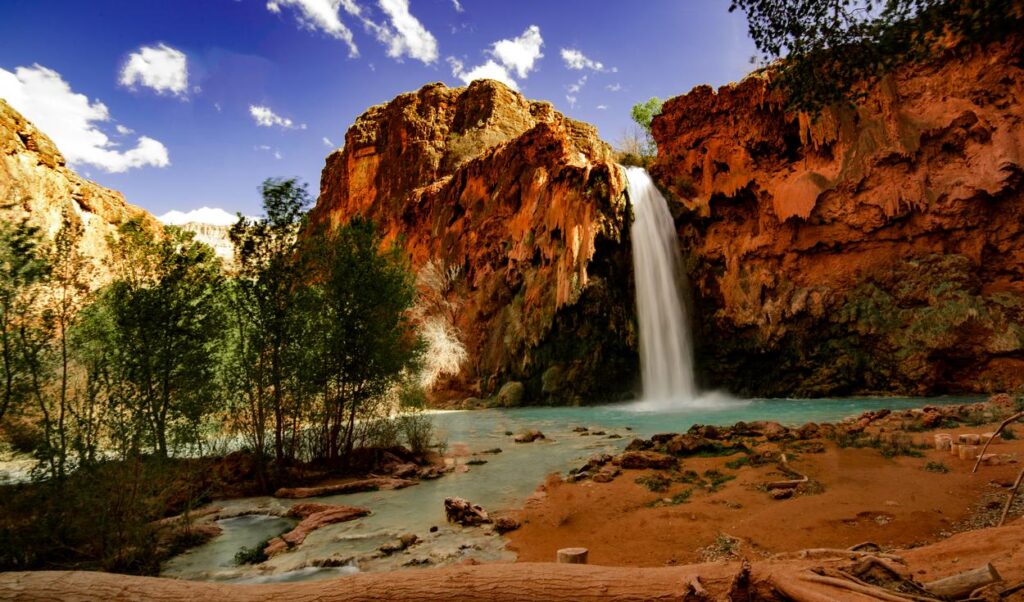
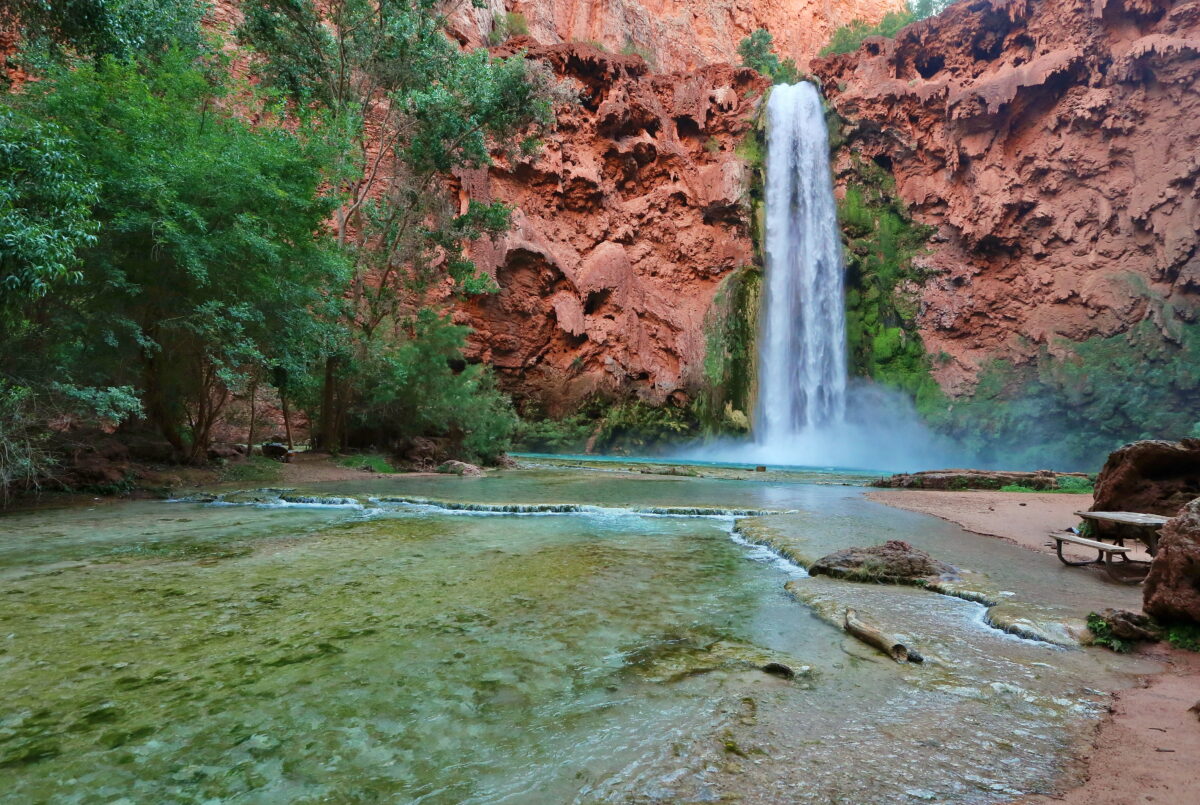
Havasupai Falls cascades through red rock canyons into turquoise pools, creating one of North America’s most spectacular natural wonders. Located deep within the Grand Canyon on the Havasupai Indian Reservation, this remote paradise requires a challenging 10-mile hike but rewards visitors with otherworldly beauty.
The journey to Havasupai Falls takes you through ancient lands of the Havasupai Tribe, “People of the Blue-Green Waters,” who have called this canyon home for over 800 years. Five major waterfalls – Navajo, Fifty Foot, Havasu, Mooney, and Beaver – transform the desert landscape into an oasis that seems impossibly vibrant against the surrounding red rocks.
Securing permits for Havasupai has become increasingly competitive. The lottery system manages overwhelming demand for this fragile ecosystem, with thousands competing for limited spots. This comprehensive guide covers everything from permit strategies to trail preparation, ensuring your Havasupai adventure becomes the trip of a lifetime.
2025 Havasupai permit system and reservation process
Lottery system overview
The Havasupai Tribe manages all reservations through an online lottery system to fairly distribute permits among thousands of applicants. This system replaced the previous first-come, first-served approach that crashed servers and left many disappointed.
Reservation Timeline:
- Presale lottery (December – January): Early access for previous visitors
- General lottery opens: February at 8:00 AM Arizona time
- Lottery closes: February at 11:59 PM Arizona time
- Results announced: Mid-March
- Payment deadline: 72 hours after selection notification
Permit costs and requirements
Camping Permits (required for all visitors):
- 3 nights/4 days: $455 per person
- Entrance fee: Included in permit cost
- Environmental fee: $10 per person (included)
- Minimum stay: 3 nights (no day hiking permitted)
- Maximum group size: 12 people per reservation
Lodge Accommodations (limited availability):
- Lodge rooms: $2,140 for 4 people (3 nights)
- Includes meals at village cafe
- Must book entire room (no partial bookings)
- Extremely limited availability
Lottery application tips
Maximize your chances of securing permits with these strategies:
- Create account early: Set up your profile on the official Havasupai Reservations website before lottery opens
- Flexible dates: Select multiple date ranges to increase selection odds
- Shoulder seasons: April-May and September-October have better availability than summer
- Weekday arrivals: Tuesday-Thursday check-ins face less competition
- Group applications: Have multiple group members apply separately, then cancel duplicates
- Payment ready: Have credit card information ready for immediate payment upon selection
The five waterfalls of Havasupai
Navajo Falls (1.5 miles from village)
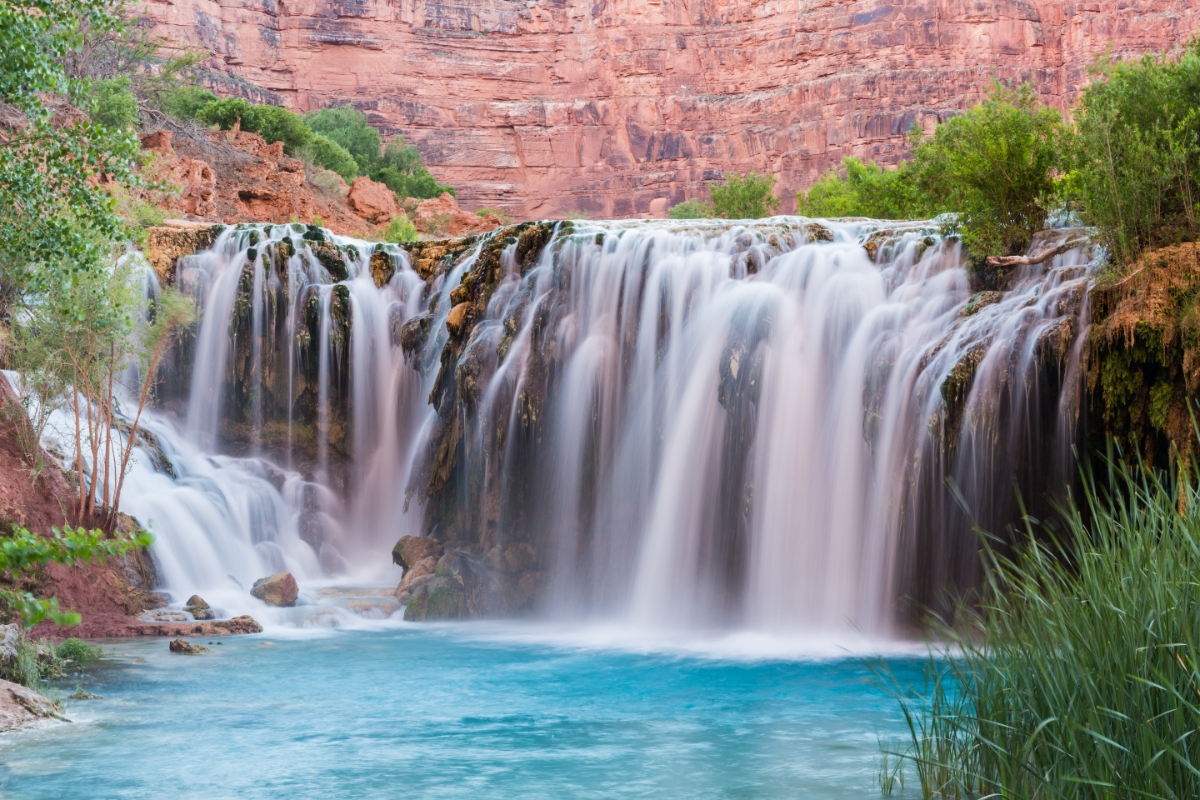
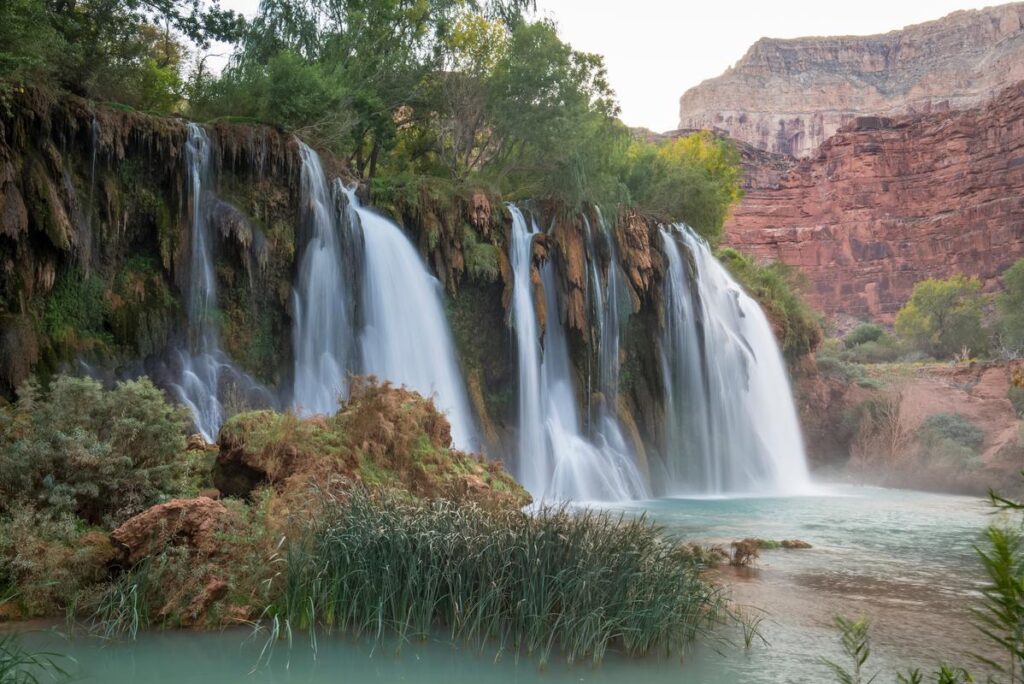
The first waterfall to greet hikers, Navajo Falls, spans a 75-foot-wide travertine cliff. Multiple cascades create a curtain of water flowing into shallow turquoise pools perfect for wading. The original Navajo Falls was destroyed in a 2008 flash flood, with the current formation emerging from the reorganized landscape.
Photography tip: Visit during golden hour when sunlight illuminates the falls while canyon walls provide dramatic contrast.
Fifty Foot Falls (0.25 miles past Navajo)
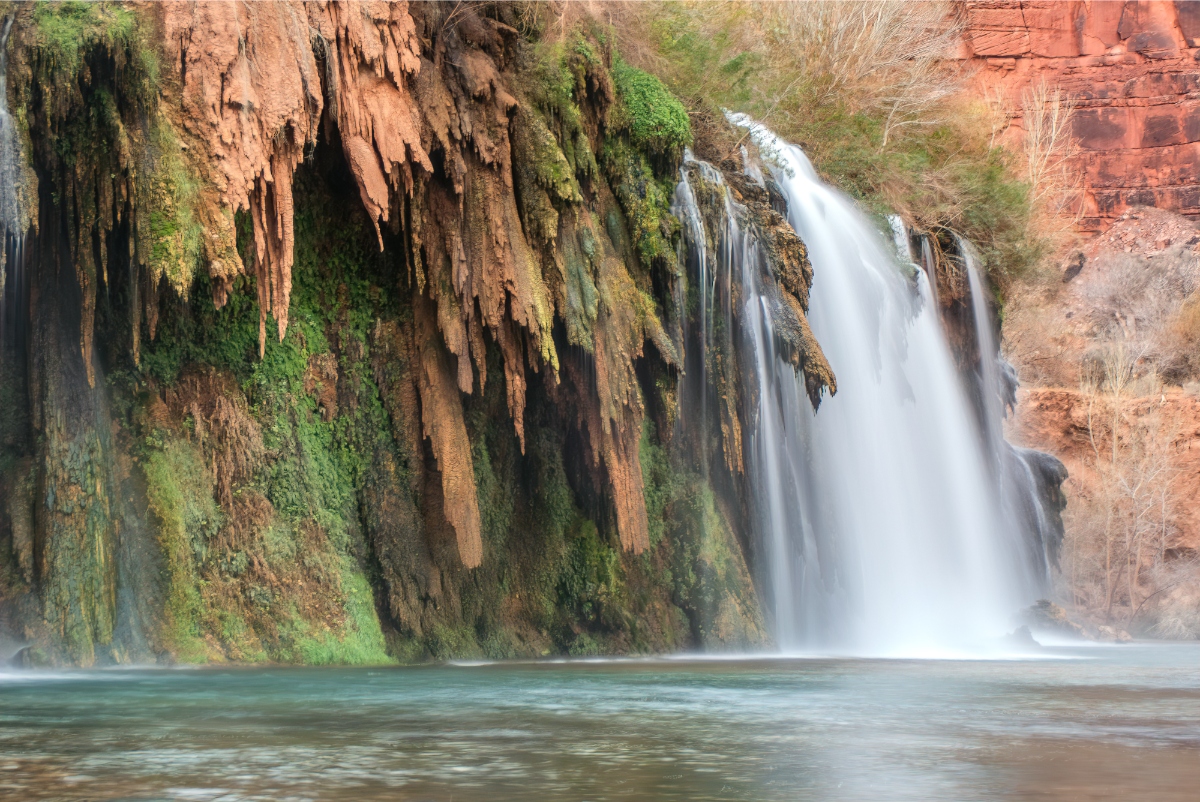
Often overlooked due to its location slightly off the main trail, Fifty Foot Falls rewards explorers with a pristine swimming hole. The single cascade plunges into a deep pool surrounded by cottonwood trees, offering a more secluded experience than the main falls.
Havasu Falls (2 miles from village)
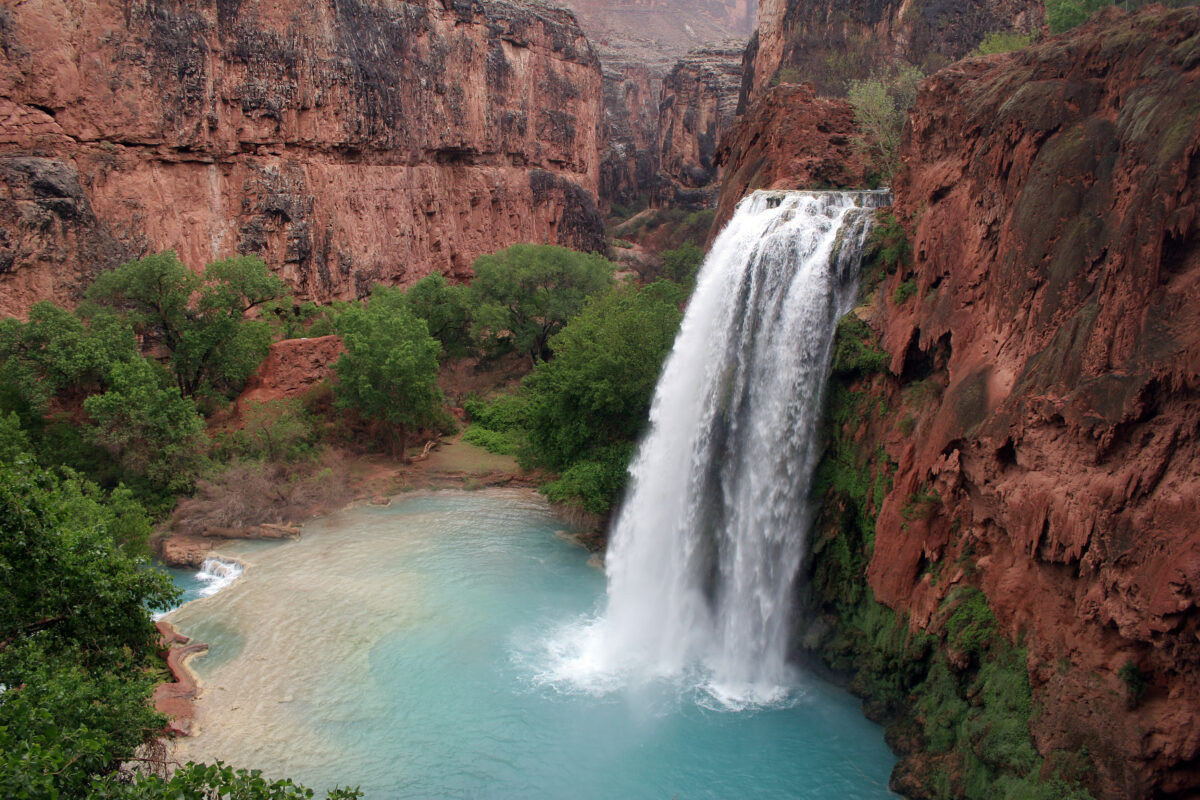
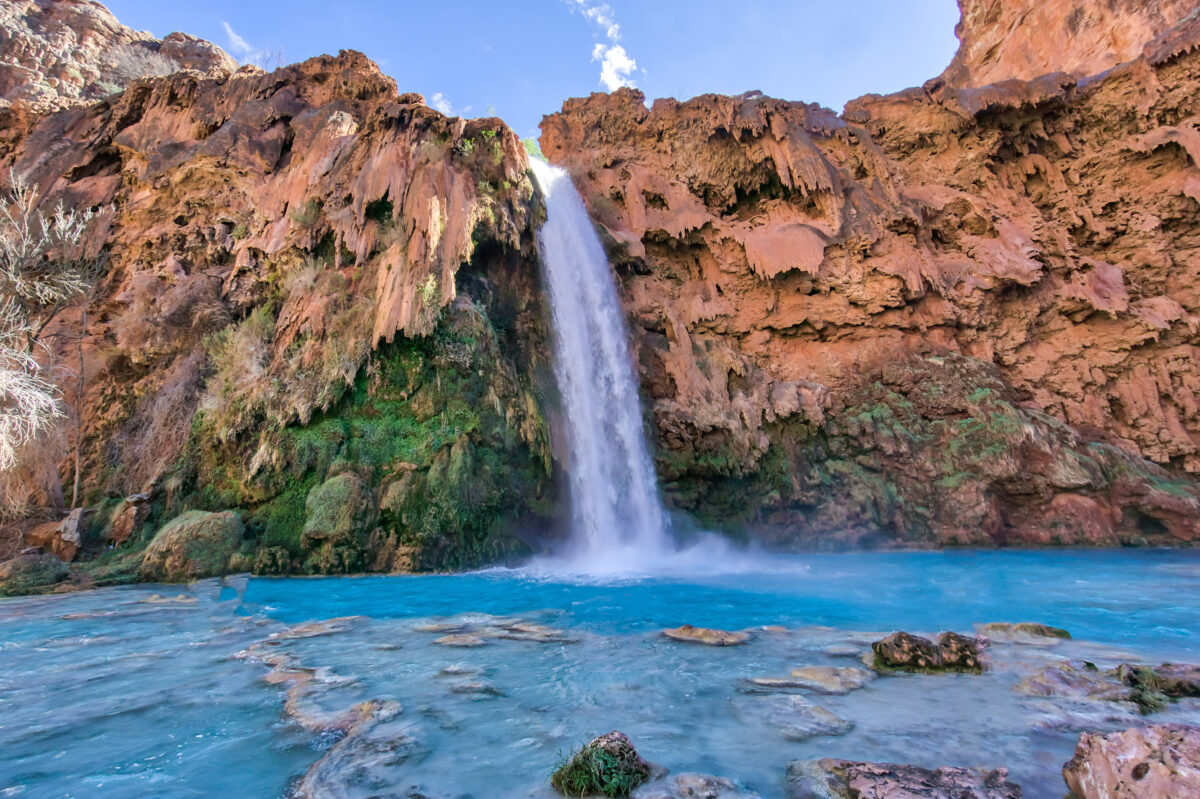
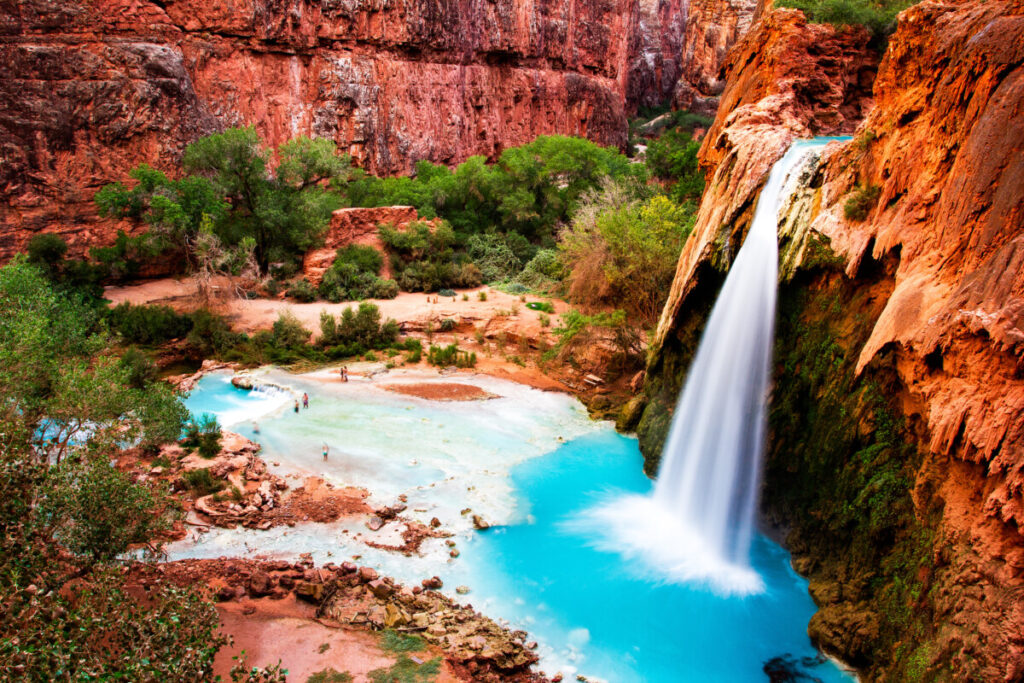
The crown jewel of Havasupai, this 100-foot waterfall creates the iconic image synonymous with the reservation. Calcium carbonate and magnesium in the water produce the stunning turquoise color, while travertine formations create natural pools perfect for swimming. The main pool reaches depths of 15 feet near the falls.
Best swimming: Early morning before crowds arrive, water temperature averages 70 degreesF year-round.
Mooney Falls (3 miles from the village)
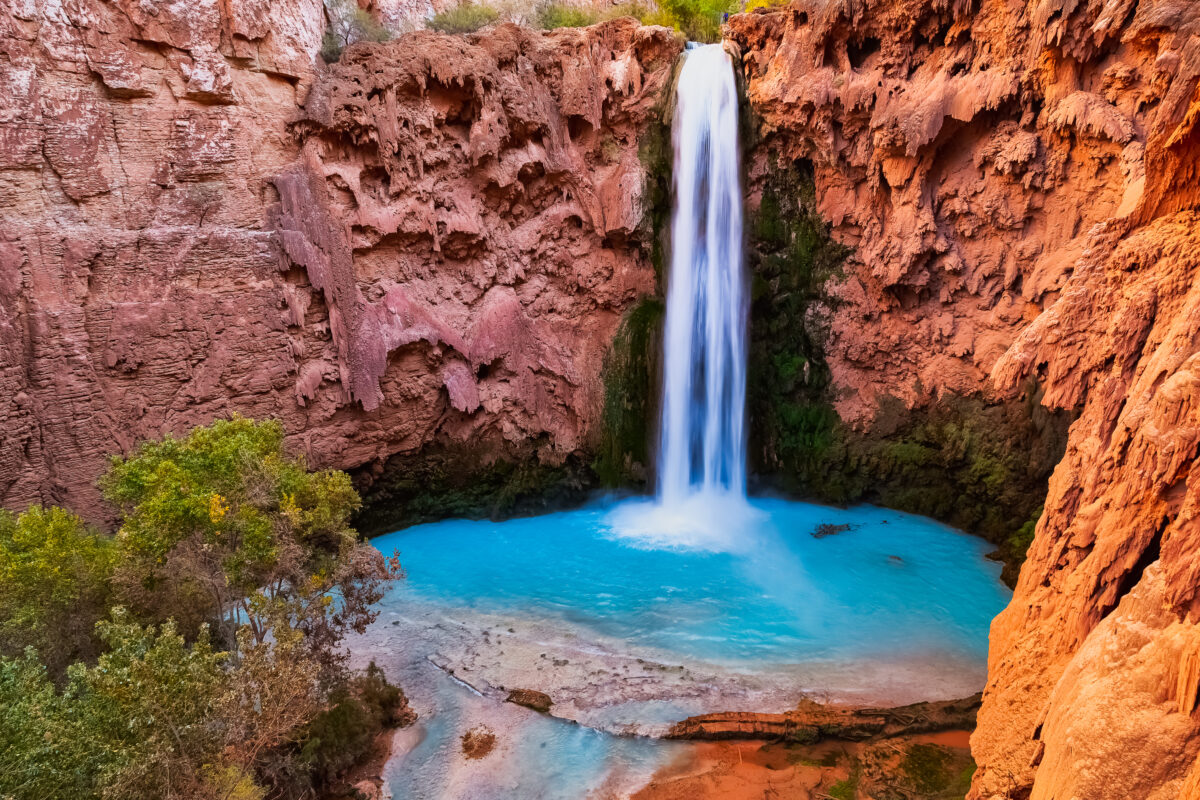
At 190 feet, Mooney Falls stands as the tallest and most dramatic cascade. Reaching its base requires descending through tunnels and climbing down chains and ladders bolted into the cliff face – not for those with a fear of heights. Named after prospector Daniel Mooney, who fell to his death here in 1882, the falls create a massive plunge pool surrounded by lush vegetation.
Safety warning: Chains and ladders become extremely slippery when wet. Bring gloves fora better grip.
Beaver Falls (7 miles from the village)
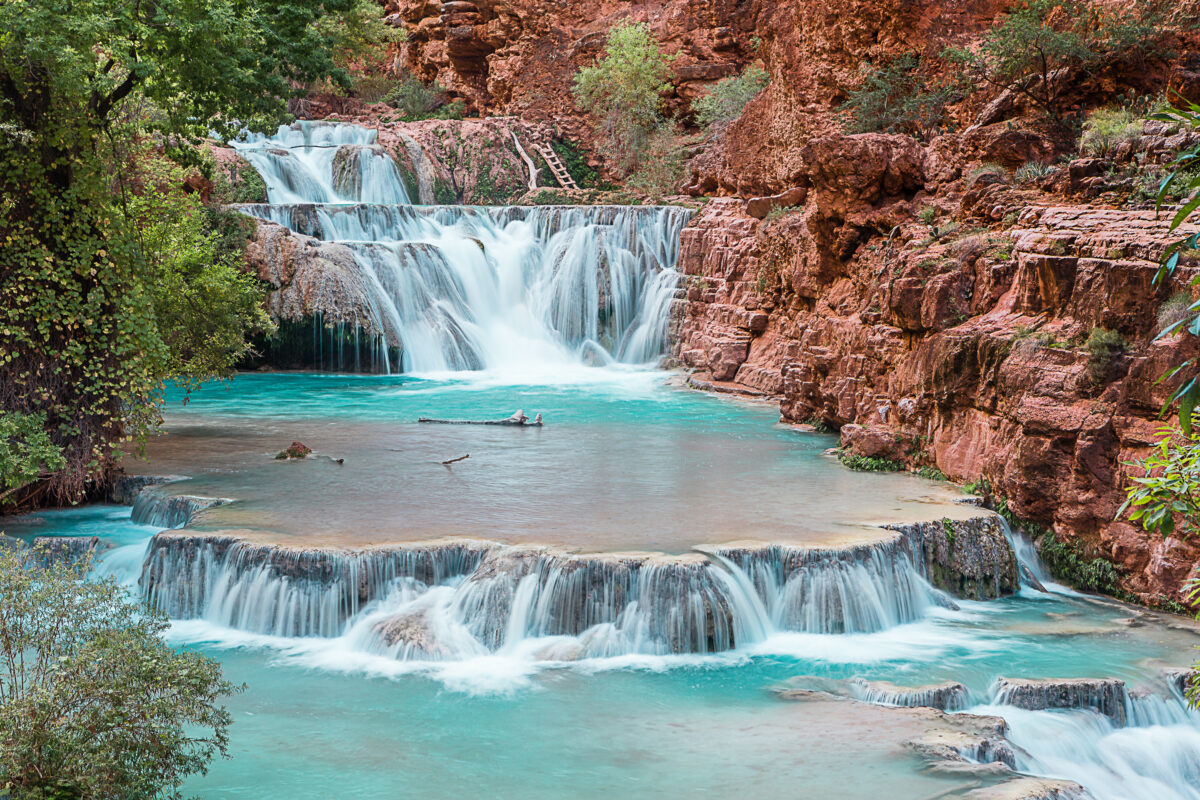
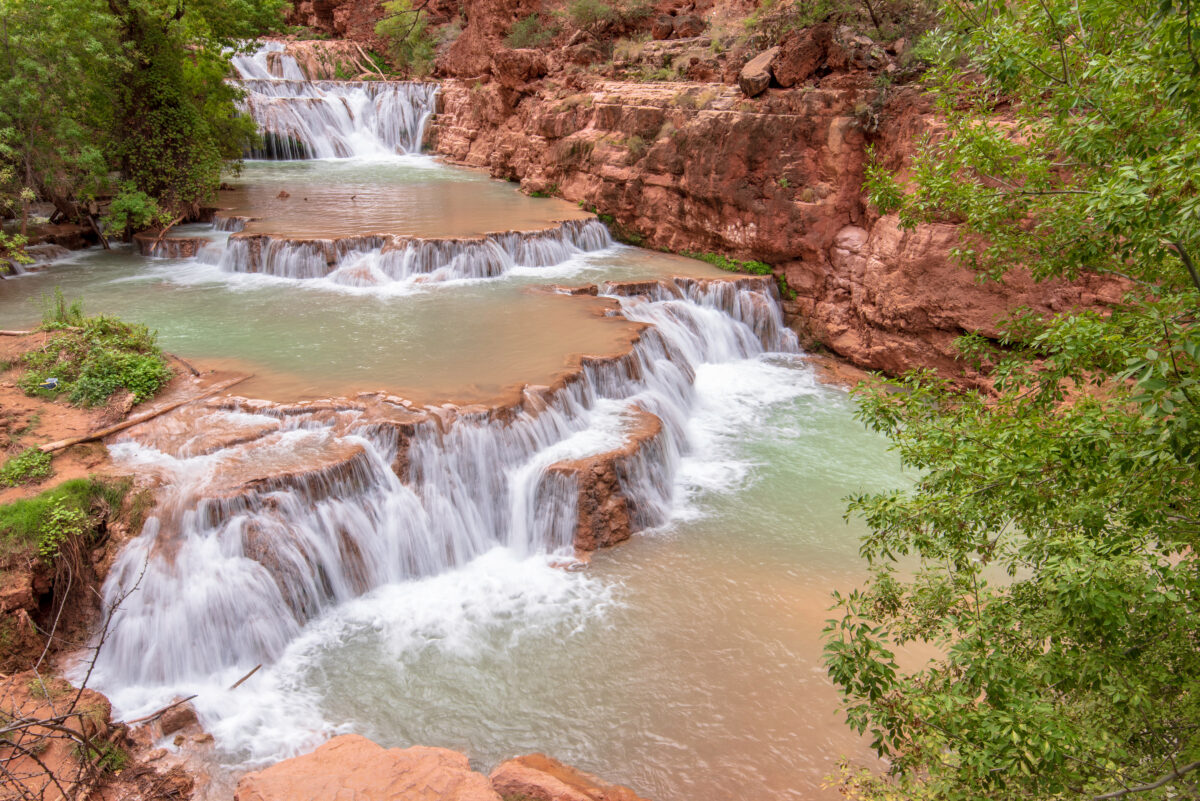
The most remote waterfall requires a challenging 4-mile hike from Mooney Falls through multiple river crossings. A series of cascading terraces creates natural infinity pools stepping down the canyon. The journey involves route-finding skills and possibly swimming through deep sections depending on water levels.
Trail conditions: No maintained trail; expect boulder hopping, creek crossings, and potential waist-deep wading.
See Related: Best Hiking Trails in the World
Hiking to Havasupai: complete trail guide
Hualapai Hilltop to Supai Village (8 miles)
The adventure begins at Hualapai Hilltop, elevation 5,200 feet. The trail descends 2,000 feet through switchbacks for the first 1.5 miles – the most challenging section for many hikers. After the initial descent, the trail follows a gradually descending wash through stunning canyon scenery.
Trail breakdown:
- Miles 0-1.5: Steep switchbacks, full sun exposure, loose rocks
- Miles 1.5-6: Sandy wash, gradual descent, some shade from canyon walls
- Miles 6-8: Approaching village, occasional views of creek, helicopter landing area
Supai Village to campground (2 miles)
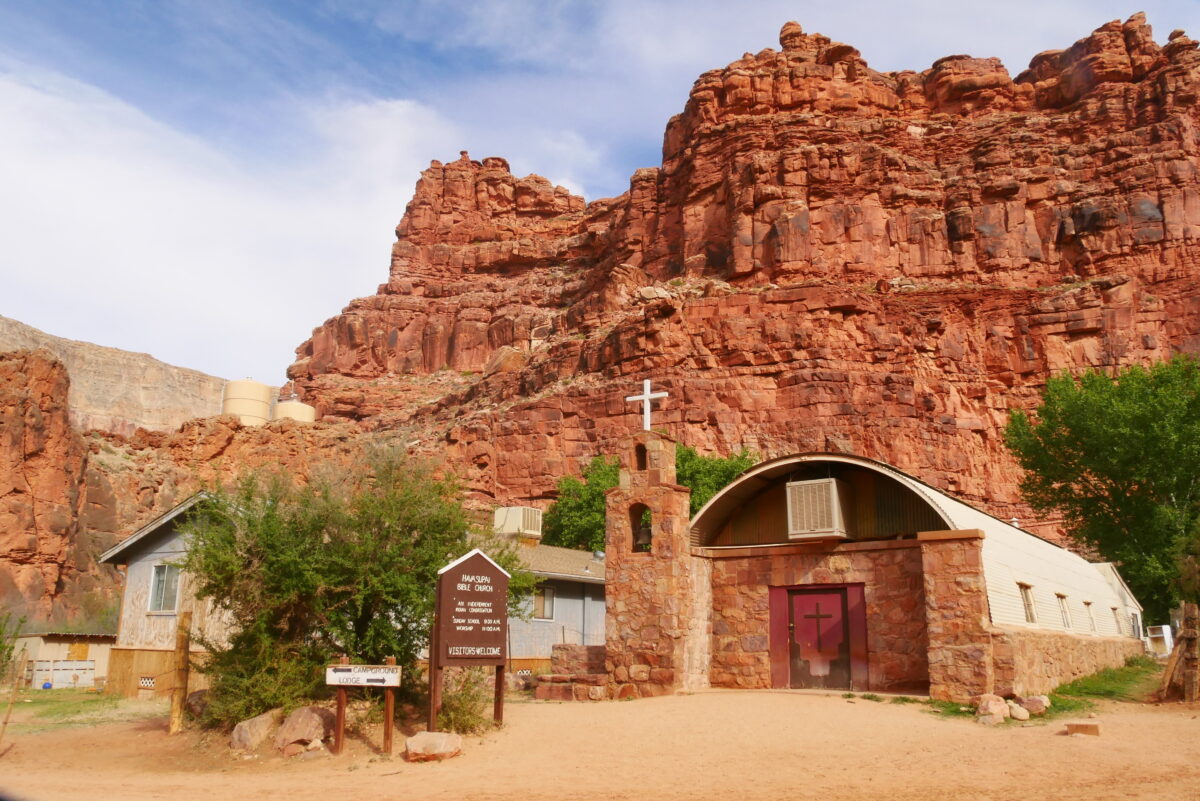
After checking in at the tourism office in Supai Village (population ~400), continue through the village and descend further into the canyon. The trail passes Navajo Falls and Fifty Foot Falls before reaching the campground near Havasu Falls.
Essential gear for the trail
Required items:
- Broken-in hiking boots with ankle support
- Trekking poles (crucial for switchbacks)
- 3+ liters of water capacity (no water for the first 8 miles)
- Electrolyte supplements
- Sun protection: hat, sunscreen, sunglasses
- Headlamp (for early starts)
- First aid kit with blister treatment
- Rain gear (monsoon season: July-September)
Camping essentials:
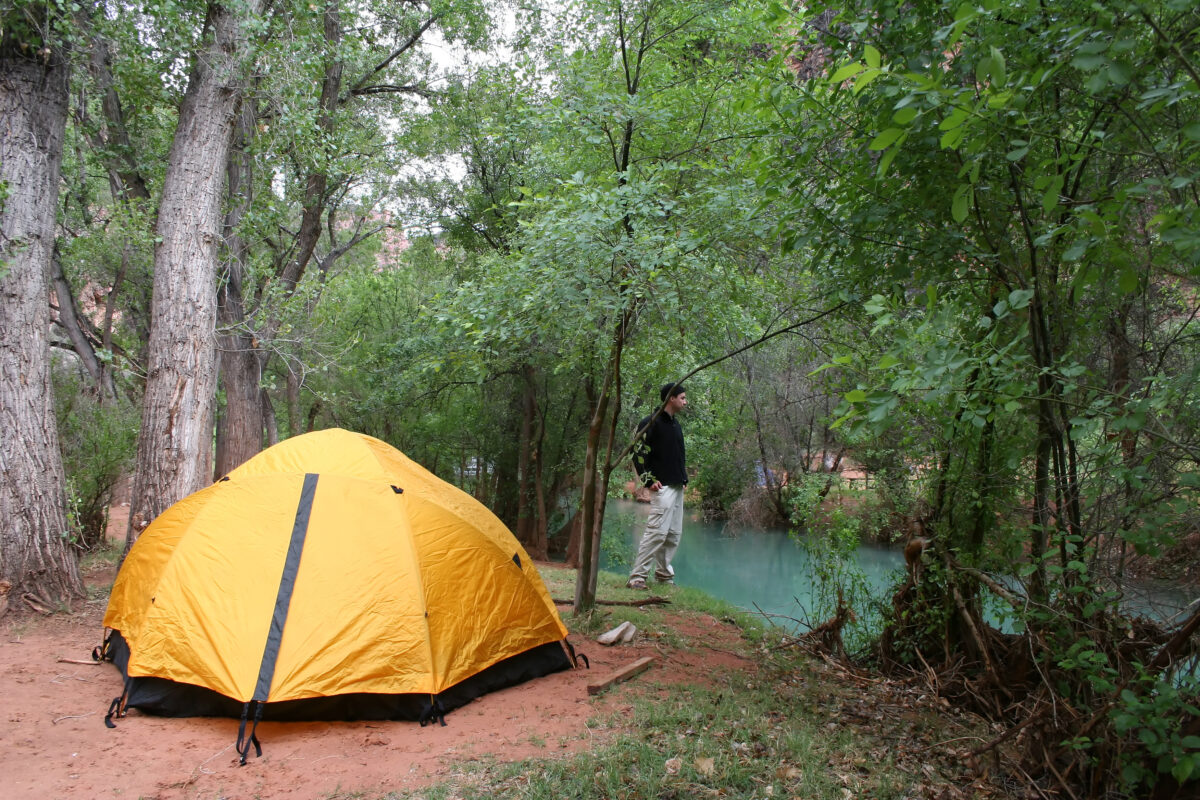
- Lightweight tent (sites are dirt/sand)
- Sleeping bag rated for nighttime temperatures
- Water filter or purification tablets
- Camp stove and fuel (no fires allowed)
- Rope/carabiners for food storage
- Dry bags for water activities
- Water shoes for creek crossings
Alternative transportation options
Helicopter service
For those unable to hike or wanting to transport gear, a helicopter service operates from Hualapai Hilltop to Supai Village (not to the campground).
- Cost: $150 per person one-way (2025 rates)
- Schedule: Limited flights, weather dependent
- Booking: First-come basis at hilltop, no advance reservations
- Weight limit: 300 pounds per person including gear
- Note: Still requires 2-mile hike from village to campground
Pack mule service
- Gear transport: $400 roundtrip for up to 130 pounds
- Rider mules: $200 one-way (limited availability)
- Advance booking: Required through Havasupai Tourist Enterprise
- Pick-up: Gear must be ready at hilltop by 8 AM
Best time to visit Havasupai
Spring (March-May)
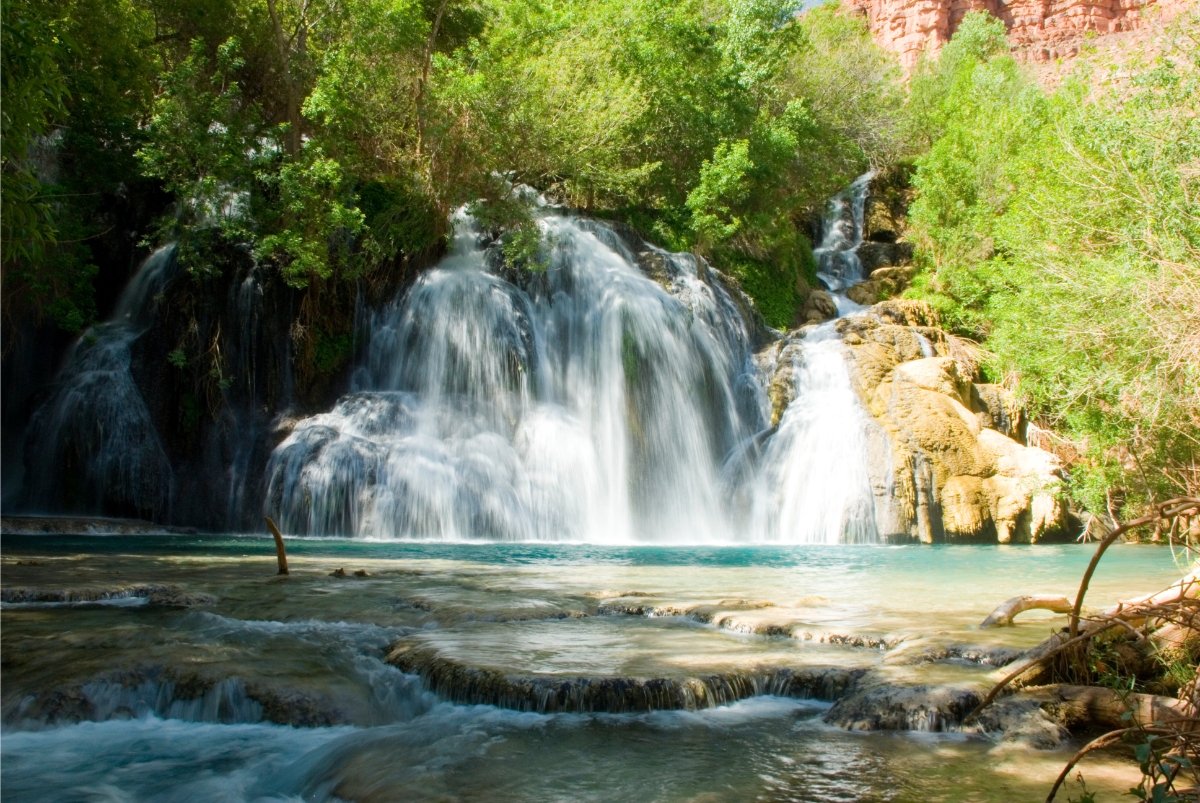
Pros: Perfect hiking temperatures (60-80 degreesF), wildflowers bloom, moderate water levels
Cons: Can be crowded during spring break, occasional rain
Best for: First-time visitors seeking ideal conditions
Summer (June-August)
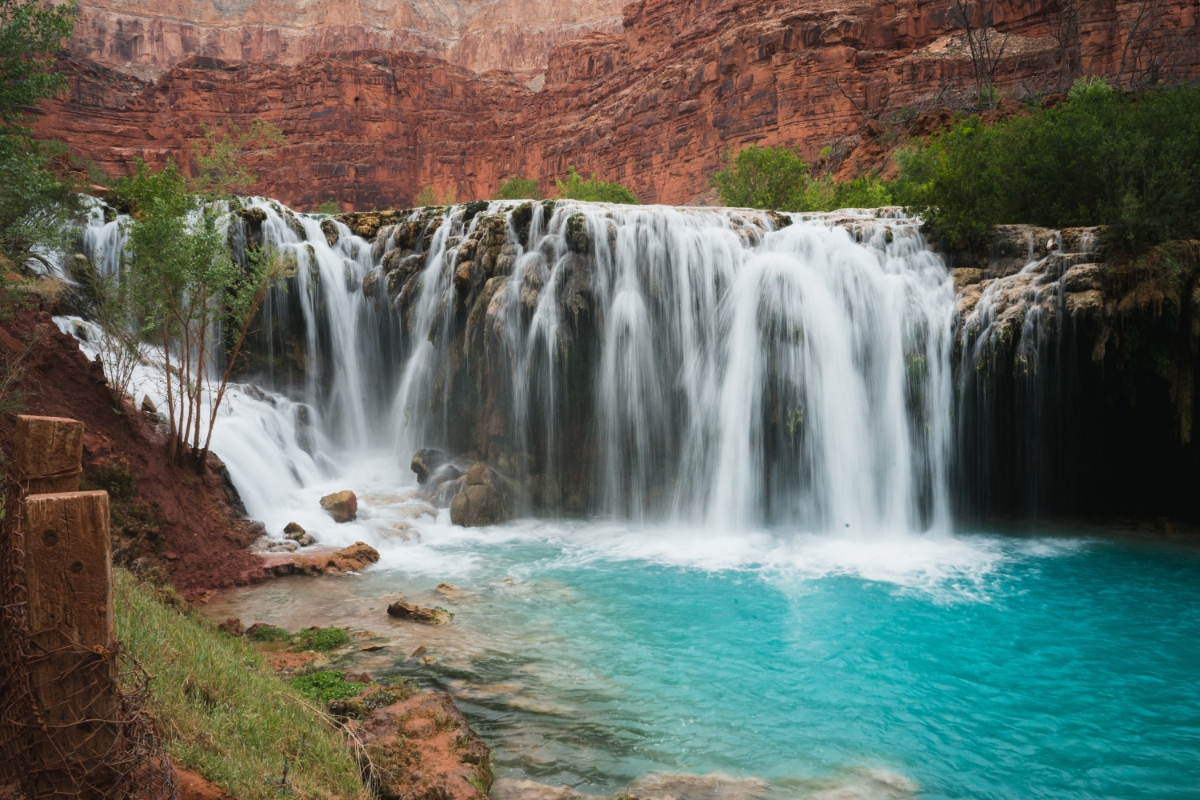
Pros: Warmest swimming conditions, long daylight hours
Cons: Extreme heat on the trail (100 degreesF+), monsoon storms, peak crowds
Best for: Those prioritizing swimming over hiking comfort
Fall (September-November)
Pros: Excellent hiking weather, fewer crowds, changing cottonwood colors
Cons: Cooler water temperatures, shorter days
Best for: Experienced hikers seeking solitude
Winter (December-February)
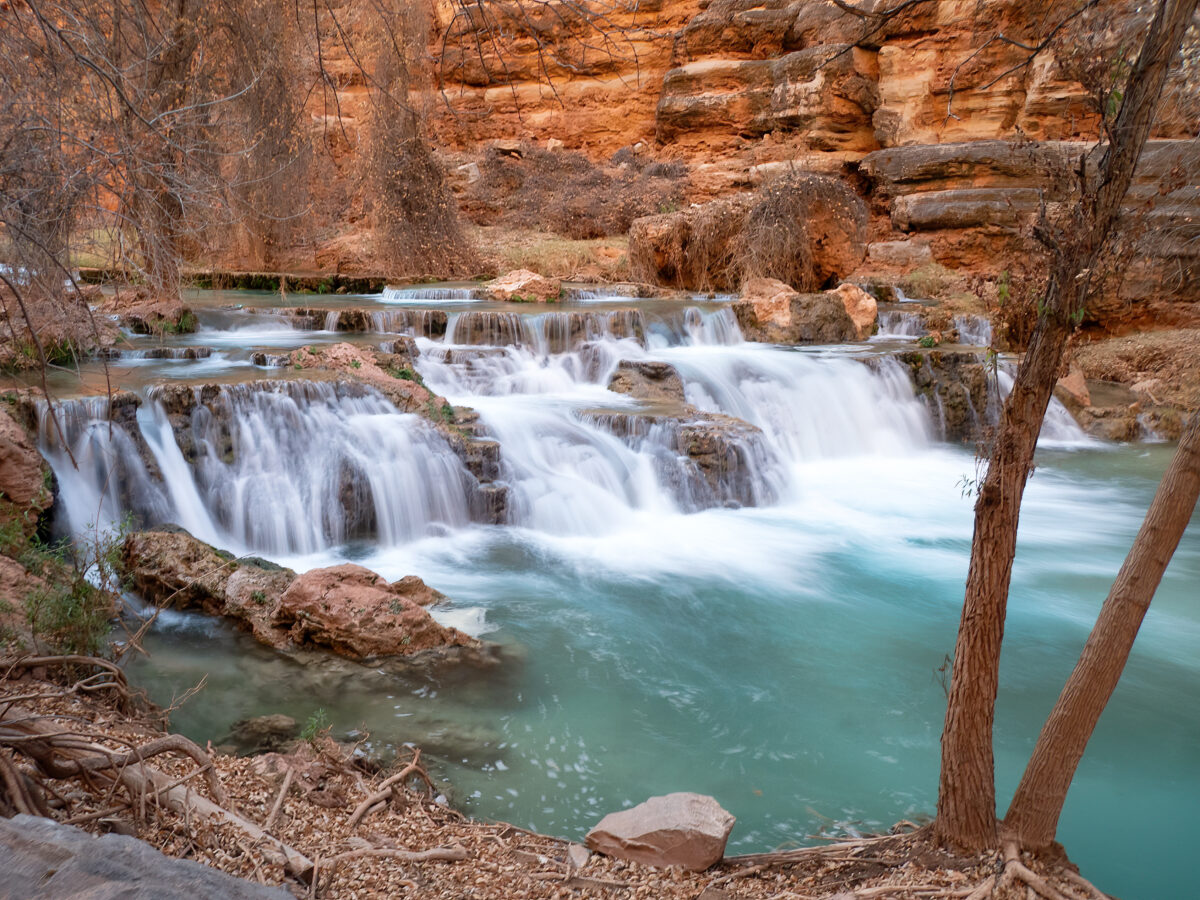
Pros: Minimal crowds, dramatic light for photography
Cons: Cold nights (below freezing), limited swimming, possible trail ice
Best for: Photography enthusiasts and solitude seekers
Respecting the Havasupai Tribe and land
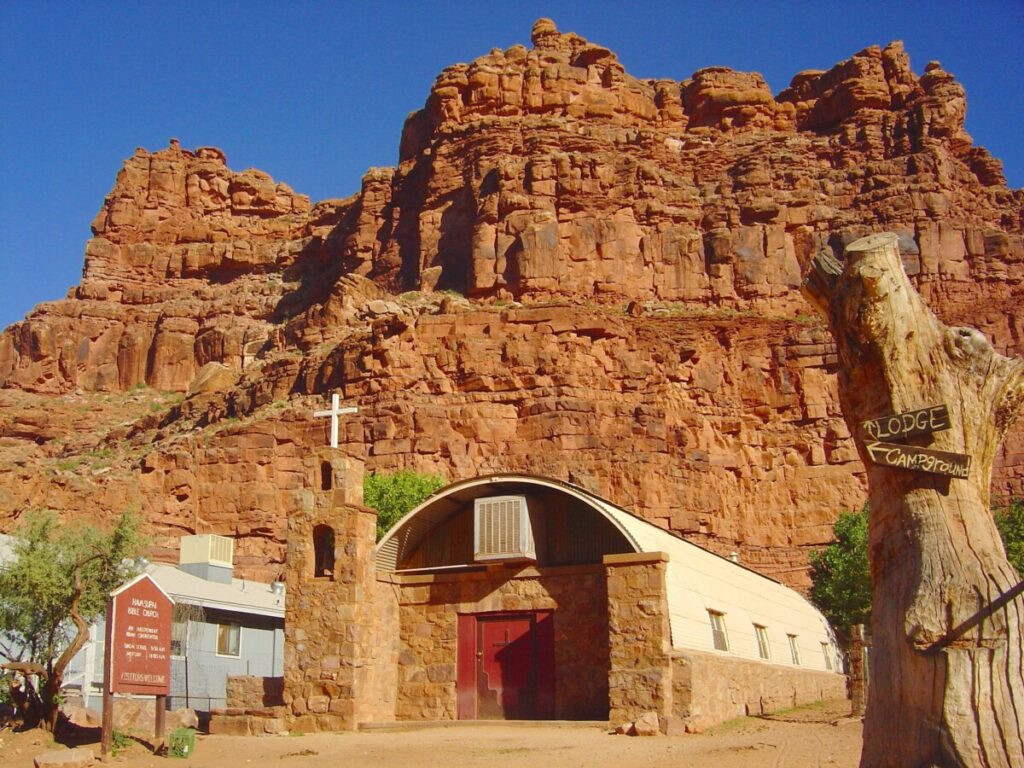
The Havasupai people have inhabited this canyon for centuries, long before it became a tourist destination. Their name means “People of the Blue-Green Waters,” and the falls remain sacred to their culture.
- Photography of tribal members requires permission
- Respect private property in Supai Village
- Follow all tribal laws and regulations
- Support the local economy by purchasing from tribal vendors
- Learn about Havasupai history and traditions
Leave No Trace principles
- Pack out all trash: No garbage facilities at campground
- Stay on designated trails: Prevent erosion and protect vegetation
- No soap in water: Bathe and wash dishes 200 feet from streams
- Respect wildlife: Don’t feed animals, secure food properly
- Minimize campfire impact: Fires prohibited, use camp stoves only
- Respect other visitors: Keep noise levels down, especially at night
See Related: Most Beautiful & Best Vacations in the US
Safety considerations and emergency preparedness
Flash flood danger
Flash floods pose the greatest danger at Havasupai. Monsoon storms miles away can send walls of water through the canyon with little warning.
- Monitor weather forecasts before and during the trip
- Never camp in washes or low-lying areas
- Know evacuation routes from the campground
- If water turns muddy brown, seek high ground immediately
- August 2008 flood created Navajo Falls and destroyed the original campground
Medical emergencies

- Village clinic: Basic medical care available in Supai
- Evacuation: Helicopter only for serious emergencies (extremely expensive)
- Cell service: Very limited; emergency satellite beacon recommended
- Common issues: Dehydration, heat exhaustion, twisted ankles, bee stings
Water and food safety

- Spring water available at campground (filter recommended)
- The village store has limited supplies at high prices
- Pack all necessary food from home
- Secure food from animals (ringtails, squirrels, ravens)
- Cafe in the village offers basic meals (cash only)
Photography tips for Havasupai Falls
Best shooting times
- Havasu Falls: Mid-morning when the sun illuminates the falls
- Mooney Falls: Early afternoon for rainbow effects in the mist
- Navajo Falls: Golden hour for warm canyon glow
- Night photography: Minimal light pollution, perfect for stars
Equipment recommendations

- Waterproof camera housing or dry bags
- Polarizing filter to reduce glare on water
- Neutral density filter for long exposures
- Lightweight tripod for stability
- Microfiber cloths for water spray
- Extra batteries (no charging available)
Havasupai Falls remains one of Earth’s most extraordinary natural wonders, where turquoise waters create an impossible oasis in the desert. The challenging journey to reach this paradise makes the destination even more rewarding, offering an adventure that combines physical achievement with spiritual renewal.
While securing permits requires patience and planning, those fortunate enough to experience Havasupai understand why it ranks among the world’s most coveted destinations. The memories of swimming in crystal pools beneath towering waterfalls, surrounded by ancient canyon walls, last a lifetime.
See Related: Best Tours in Sedona, Arizona
Sedona is the closest town with a real dining scene, and it is worth building a night around. See where to eat in Sedona for the ten worth the drive.
Frequently asked questions
Can I day hike to Havasupai Falls?
No, day hiking is strictly prohibited. All visitors must have camping or lodge reservations for a minimum of three nights. This policy protects the fragile ecosystem and ensures a quality experience for permitted visitors.
How difficult is the hike to Havasupai?
The 10-mile hike is rated moderate to strenuous. The initial 1.5-mile descent involves steep switchbacks with 2,000 feet of elevation loss. The remaining distance follows a gradual sandy wash. Most reasonably fit hikers complete it in 4-6 hours. The return climb is significantly more challenging.
What if I can’t get permits through the lottery?
Options include: trying again next year, checking for last-minute cancellations on the website, booking through authorized tour operators (limited availability and higher cost), or exploring alternatives like the nearby Colorado River or other Grand Canyon waterfalls.
Is the water that blue?
Yes, the stunning turquoise color is natural, caused by calcium carbonate and magnesium dissolved from the limestone. The minerals reflect blue and green wavelengths while absorbing others. Color intensity varies with weather, time of day, and recent rainfall.
Can I bring my dog to Havasupai?
No, pets are not allowed on the reservation. The trail’s difficulty, heat exposure, and tribal regulations prohibit animals. Service animals may be permitted with advance approval from the Havasupai Tourist Enterprise.
What’s the best campsite location?
Sites closest to Havasu Falls offer convenience but more foot traffic. Sites near the composting toilets should be avoided. Many prefer middle-ground sites balancing proximity to falls with privacy. Arrive early for better selection as sites are first-come, first-served within the campground.