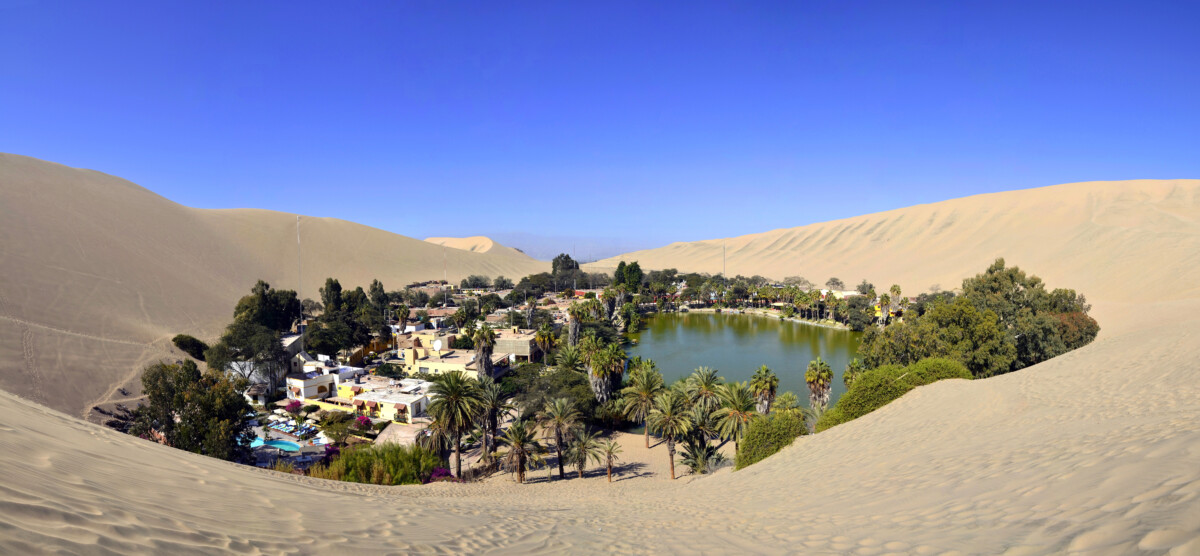
Huacachina is a compact oasis village about five kilometers west of Ica, Peru. Its main draw is the surrounding desert: most first-time visitors come for a late-afternoon dune-buggy ride, sandboarding, and sunset from a high ridge. One full day covers the essential experience, while one night gives you a less rushed arrival and cooler conditions for an early-morning dune walk.
Regular intercity buses generally stop in Ica rather than beside the lagoon, so plan a separate local transfer to Huacachina. Treat the destination as an adventure stop with a protected landscape—not as an isolated wilderness retreat or a swimming resort.
Huacachina trip-planning essentials
- Allow one full day: Stay one night when possible, especially if arriving from Lima or continuing to Paracas or Nazca.
- Travel to Ica first: From the bus terminal or city center, complete the journey by taxi, authorized local transfer, or mototaxi.
- Prioritize late afternoon: The sun is less intense, the sand is cooler, and many dune tours are timed around sunset.
- Inspect the buggy before boarding: Every passenger should have a working seat belt, and the operator should explain the route and safety rules.
- Do not assume the lagoon is suitable for swimming: Follow current signs and local authority guidance rather than old travel articles.
- Separate pisco tasting from adventure activities: Skip alcohol before a buggy ride, sandboarding session, or dune hike.

Huacachina at a glance
| Planning question | Practical answer |
|---|---|
| Where is Huacachina? | Beside Ica in Peru’s southern coastal desert, a short local transfer from the city. |
| How long do you need? | One full day for the core activities; one night for an easier schedule and an early dune walk. |
| What is it best known for? | Dune-buggy rides, sandboarding, desert viewpoints, the lagoon, and nearby pisco vineyards. |
| How do you get there from Lima? | Take an intercity bus to Ica, then arrange a local transfer to Huacachina. |
| What is the best time of day? | Early morning for walking and late afternoon for dune tours and sunset. |
| Do you need to book ahead? | Booking ahead is sensible for a specific sunset tour, holiday weekend, or limited itinerary. |
| Is it accessible? | The lagoon area is easier to navigate than the dunes, but surfaces and curbs vary. Buggy transfers, seats, and boarding arrangements differ by operator. |
Is Huacachina worth visiting?
Huacachina is worth visiting if you want a compact desert-adventure stop with sandboarding, high dunes, sunset views, and easy access to Ica’s pisco-producing countryside. It is less suitable for travelers seeking solitude, a pristine natural lake, extensive cultural attractions, or a quiet resort atmosphere.
| Good reasons to visit | Tradeoffs to consider |
|---|---|
| The dunes create a dramatically different landscape from Lima, Cusco, and the Andes. | The lagoonfront is small, commercial, and frequently busy with tour groups. |
| You can combine dune buggies, sandboarding, sunset, and a vineyard in a short stop. | Tour quality and driving intensity vary, so choosing an operator matters. |
| Huacachina fits naturally between Lima, Paracas, Nazca, and southern Peru. | Traveling from Lima and back in one day creates a long, rigid schedule. |
| The oasis is photogenic from the surrounding ridges. | Deep sand, strong sun, wind, and steep slopes can make the dunes physically demanding. |
| A night in Huacachina gives you access to quieter morning conditions. | The lagoon should not be treated as an assumed swimming area. |
What is Huacachina?
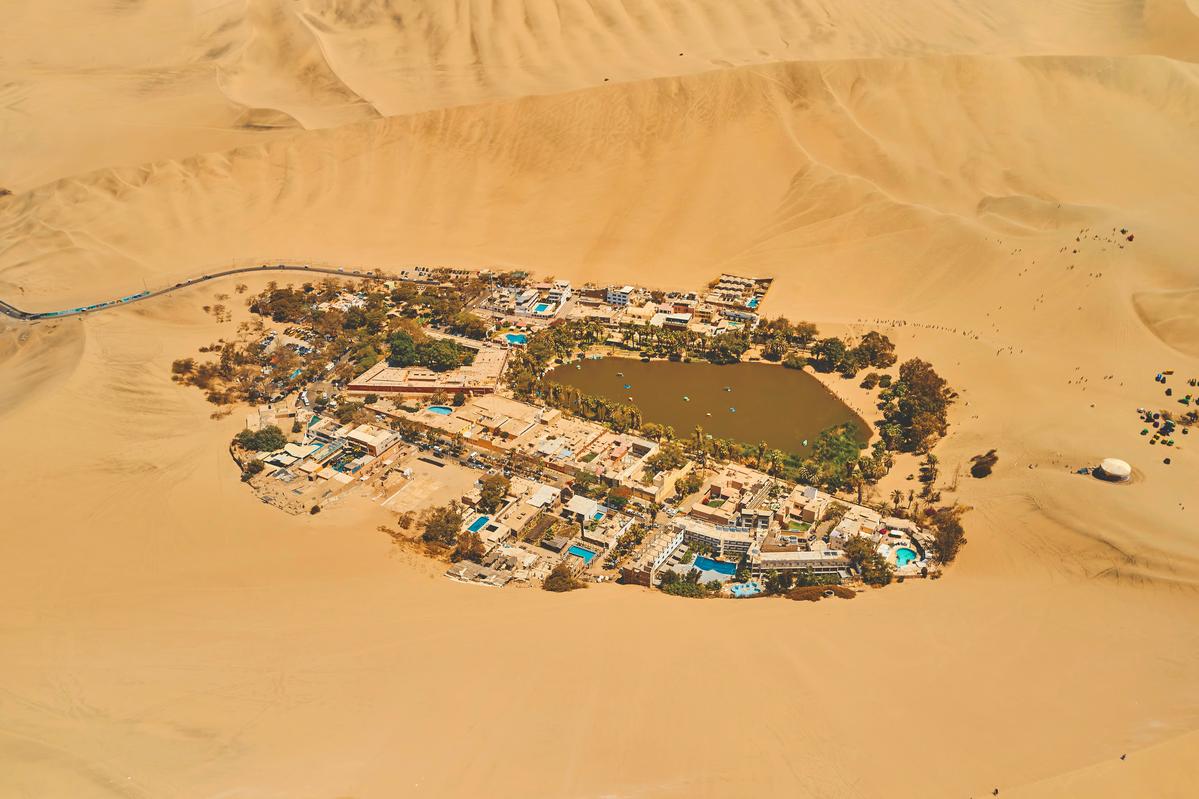
Huacachina is a settlement built around a lagoon in the Pacific coastal desert near Ica. Palm trees, hotels, restaurants, and a promenade occupy the low ground, while steep dunes rise immediately around the village.
You may see Huacachina promoted as the “only natural oasis in South America.” That superlative is not reliably documented and is unnecessary. A more accurate description is that Huacachina is one of South America’s best-known desert-oasis settlements.
The wider landscape has formal environmental protection. In 2014, Peru established the Área de Conservación Regional Laguna de Huacachina, covering 2,407.72 hectares. Its stated purpose is to conserve the area’s biological, cultural, and scenic values while supporting sustainable resource use. The Regional Government of Ica administers the conservation area with technical supervision from SERNANP.

Best things to do in Huacachina
The dunes are the main attraction. Plan the rest of your visit around the desert activity you most want to do, then use the lagoon, restaurants, and nearby vineyards to fill the remaining time.

Take a dune-buggy tour
A dune-buggy ride is the signature Huacachina experience. Purpose-built vehicles climb and descend the surrounding dunes, often stopping at viewpoints and sandboarding slopes. Some rides are scenic; others use sharp drops and fast turns. Ask about the driving style before committing, particularly when traveling with children or anyone with back, neck, heart, balance, or mobility concerns.
Do not judge a tour only by price or the promise of a dramatic sunset. Check the vehicle, seat belts, passenger capacity, operator identity, cancellation terms, activity restrictions, and what the quoted price includes.

Try sandboarding
Many buggy tours include several sandboarding stops. Basic tours may supply a simple board intended for a seated or chest-down descent, while more specialized operators may offer boards with bindings for experienced riders. Confirm the equipment before booking if standing sandboarding is important to you.
Beginners should follow the guide’s instructions and choose a controlled descent. Do not attempt a steep standing run merely for a photograph. Sand can be fast, falls can be awkward, and medical help is not immediate once a tour is deep in the dunes.

Affiliate disclosure: ViaTravelers may earn a commission from this booking link at no extra cost to you. Compare the operator’s seat-belt policy, activity restrictions, cancellation terms, and stated inclusions before booking.
Climb a dune for sunrise or sunset
You do not need a vehicle to reach a worthwhile viewpoint. Several ridges rise directly behind the village, but deep sand makes even a short climb harder than the distance suggests. Carry water, wear secure footwear, and give yourself enough time to descend before dark.
Sunrise usually offers cooler conditions and fewer people. Sunset is easier to fit around a day trip, although popular ridges can become busy. Stay visible, keep away from active buggy routes, and do not sit in vehicle tracks.

Walk around the lagoon and check paddle-boat availability
The lagoonfront is compact enough for a short walk. It is a useful orientation activity before lunch, a tour, or hotel check-in, but it should not consume most of your day.
Paddle boats or rowboats may operate on the lagoon. Availability and local rules can change, so confirm the service in person. Use an authorized concession, follow posted limits, and wear a life jacket when one is provided.

Visit a pisco vineyard near Ica
Ica is one of Peru’s principal wine and pisco-producing areas. Pisco is a grape spirit, and local bodega visits may cover vineyard cultivation, fermentation, distillation, and regional drinking traditions.
Ask whether the visit is primarily an educational tour, a tasting, a restaurant stop, or a retail presentation. Harvest activity depends on the producer and agricultural calendar, so do not assume grapes will be picked during your visit.
Do not drink before a dune-buggy ride, sandboarding session, or solo dune hike. Schedule the tasting afterward, use a designated driver, or taste without swallowing when the vineyard visit must come first.

Eat in Huacachina or Ica
Huacachina has convenient lagoonfront restaurants and bars, but businesses and opening hours change. Check recent menus and reviews instead of planning around names published years ago. Ica offers a wider selection and may provide better value, especially when you are already passing through the city.
Before a dune tour, choose a moderate meal, drink water, and avoid excessive alcohol. Carry a small backup amount of cash, but do not bring unnecessary valuables into the dunes.

Can you swim in Huacachina lagoon?
Do not assume Huacachina lagoon is a designated or suitable swimming area. Peru’s National Water Authority formally recognized a participatory committee for monitoring the lagoon’s water quality in 2018. That document does not establish a permanent swimming ban, but it is a strong reason to rely on current local signs and authority guidance rather than old descriptions of clear water.
Unless local authorities explicitly indicate that swimming is permitted and current conditions are suitable, enjoy the lagoon from the promenade or an authorized paddle craft. Do not enter the water simply because other visitors are doing so.

Huacachina image gallery



How to choose a Huacachina dune tour
Tour quality varies more than the activity name suggests. Ask the operator these questions before paying:
- Does every passenger have a working seat belt? Inspect the belt and buckle rather than accepting a verbal assurance.
- How intense is the ride? Ask whether the route is scenic, moderate, or designed around steep drops and aggressive turns.
- What sandboarding equipment is included? Confirm whether you receive a basic slide board or a board with proper bindings.
- What is the exact meeting point and return time? “Sunset tour” does not always mean the vehicle remains in the dunes until after sunset.
- Are there age, pregnancy, health, height, or mobility restrictions? Explain relevant conditions before booking.
- What is included in the final price? Ask about boards, transfers, local fees, photographs, equipment, and any optional upgrades.
- What happens if weather, vehicle problems, or road disruption affect the tour? Read the cancellation and rescheduling terms.
- Who operates the activity? Record the company name, meeting address, and a reliable contact number.
Walk away if seat belts are missing or damaged, the operator refuses to explain the route, or the vehicle appears overloaded. A low price does not compensate for avoidable safety risks.
Best time to visit Huacachina
Huacachina can be visited throughout the year. The more useful choice is often the time of day rather than the month: early morning is better for walking, while late afternoon offers cooler sand and easier sunset timing.
| Period | What to expect | Planning advice |
|---|---|---|
| December to March | Hotter daytime conditions and strong sun. Vineyard activity may be more noticeable depending on the producer and harvest calendar. | Avoid a long midday dune climb. Reserve water and sun protection before entering the desert. |
| April to May | Warm shoulder-season conditions that suit a mixed Ica and Huacachina itinerary. | Use late afternoon for the dunes and keep a light layer for the period after sunset. |
| June to August | Cooler mornings and evenings, particularly when wind picks up on exposed ridges. | Carry an extra layer and do not assume the desert remains hot after sunset. |
| September to November | Warming conditions before the hottest part of the year. | Early and late activities remain more comfortable than prolonged midday exposure. |
Best time of day
- Sunrise: Best for cooler dune walking, softer light, and fewer people. Carry a headlamp if leaving before daylight.
- Late afternoon: The most practical period for a combination buggy, sandboarding, and sunset tour.
- Midday: Suitable for lunch, hotel check-in, the lagoon promenade, or a shaded break—not a long exposed dune climb.
Weekends, Peruvian holidays, and major travel periods can increase demand. Reserve a specific sunset departure in advance when your itinerary has little flexibility.
How to get to Huacachina
The key logistical point is simple: book long-distance transport to Ica, then arrange a local transfer to Huacachina. Do not assume that a regular intercity bus continues to the lagoon unless the operator explicitly states that it does.
Cruz del Sur is one operator that advertises Lima-to-Ica service. Departure points, journey times, prices, and terminal locations vary by company, so compare the current operator schedule rather than relying on an old timetable. From Lima, allow roughly half a day door to door once city traffic, terminal procedures, the bus journey, and the final local transfer are included.
| Starting point | Recommended route | Important detail |
|---|---|---|
| Ica | Taxi, authorized transfer, or mototaxi to Huacachina. | Confirm the fare before departure and use a reputable pickup arrangement when arriving late. |
| Lima | Intercity bus to Ica, followed by a local transfer. | A same-day return is possible but long. Check the last practical return departure before booking a sunset tour. |
| Paracas | Bus or arranged road transfer toward Ica, then continue locally to Huacachina. | Confirm whether your ticket ends at an Ica terminal, a hotel, or another pickup point. |
| Nazca | Northbound bus to Ica, followed by a local transfer. | Leave schedule buffer when connecting from a flight or archaeological tour. |
| Arequipa or Cusco | Long-distance service toward Ica, often involving an overnight journey or substantial travel day. | Routes, terminals, and arrival times vary. Do not describe this as a quick or simple local bus ride. |
Keep your hotel address, tour meeting point, and offline map available when arriving. Avoid accepting an unsolicited transfer without first confirming the destination and price.
A practical one-day Huacachina itinerary
This sequence works better than treating every activity as mandatory. Adjust the times to the season, bus schedule, and actual sunset-tour departure.
- Morning: Arrive in Ica. Leave luggage at your accommodation or arrange a secure hold before beginning the day.
- Late morning: Choose either a bodega visit or an unhurried transfer to Huacachina. When visiting a vineyard before the dunes, skip alcohol or taste without swallowing.
- Midday: Eat lunch and hydrate. Avoid a heavy meal or alcohol immediately before an aggressive buggy ride.
- Early afternoon: Walk around the lagoon. Confirm your tour meeting point, inspect the vehicle, and store loose valuables.
- Late afternoon: Join the dune-buggy and sandboarding tour. Choose a departure that allows enough time for the activity and sunset rather than the shortest possible ride.
- Evening: Eat in Huacachina or return to Ica. Staying overnight avoids the pressure of reaching a tightly timed long-distance bus after dark.
Should you visit Huacachina as a day trip or stay overnight?
Stay one night when your schedule permits. Huacachina is small, but the journey from Lima and the late timing of the best dune experience make a same-day round trip more tiring than the attraction itself.
| Visit style | Best for | Main drawback |
|---|---|---|
| Day trip from Lima | Travelers with a fixed guided transfer and no room for an overnight stop. | Long travel day, less flexibility, and higher risk of missing a return connection. |
| Day trip from Ica | Travelers already staying in the city who want a lagoon walk and afternoon dune tour. | You miss the quieter early morning unless you start before sunrise. |
| One night in Huacachina | Most first-time visitors, photographers, and travelers combining several activities. | Lagoonfront accommodation can be busier and noisier than staying in Ica. |
| One night in Ica | Travelers prioritizing restaurants, transport convenience, and vineyard access. | Requires a separate transfer for sunrise, sunset, or evening activity in Huacachina. |
Responsible travel and practical safety
Huacachina is both a tourism center and part of a protected desert landscape. A responsible visit means reducing physical impact, choosing safer operators, and leaving enough flexibility for changing road and weather conditions.

- Pack out rubbish: Do not leave bottles, board wax, food packaging, or cigarette waste in the dunes.
- Avoid vegetation and sensitive ground: Follow established access routes and operator instructions.
- Protect yourself from sun and wind: Use sunscreen, a hat that can be secured, sunglasses, and a face covering for blowing sand.
- Carry water: Do not depend on buying drinks after entering the dune field.
- Secure electronics: Keep phones and cameras zipped, tethered, or protected from fine sand.
- Review insurance coverage: Confirm that your policy covers the adventure activities you intend to do.
- Check current conditions: Review your government’s current Peru travel advice, local news, and transport messages before a long road journey.
- Keep schedule buffer: Demonstrations, road closures, traffic, and vehicle problems can affect intercity connections.
- Limit valuables: Bring only the cash, cards, and equipment needed for the activity.
What to pack for Huacachina
- Refillable water bottle
- Broad-spectrum sunscreen and lip protection
- Secure hat and close-fitting sunglasses
- Buff, scarf, or face covering for blowing sand
- Closed shoes with good support
- Light layer for wind and the period after sunset
- Small zipped bag rather than loose pockets
- Headlamp when planning a sunrise walk
- Offline maps, accommodation details, and operator contact information
Accessibility considerations
The lagoon promenade is more accessible than the surrounding dunes, but pavement quality, curbs, crowding, and entrances vary. Deep sand is difficult for wheelchairs, mobility devices, and travelers with limited balance or stamina.
Before booking a buggy, ask about the step-up height, transfer assistance, seat type, restraint system, ride intensity, and whether the operator can accommodate your specific needs. Do not accept a generic assurance that an activity is “accessible” without discussing the actual boarding process.
Huacachina history and lagoon legend
Huacachina’s most clearly documented recent history concerns protection of the lagoon and surrounding dunes. Peru declared the lagoon’s recovery and conservation to be of national interest, and the regional conservation area was formally established in 2014.
The better-known origin story is folklore rather than documented history. In one common version, a young woman or princess was bathing or looking into a mirror when she was startled by a man. As she fled, the water or mirror became the lagoon, the folds of her clothing became the dunes, and she remained in the oasis as a mermaid.
Details change among retellings. Present the story as a local legend—not as a factual explanation of the lagoon’s geology or as evidence that its water has medicinal properties.
Frequently asked questions
Is Huacachina worth visiting?
Huacachina is worth visiting for dune buggies, sandboarding, desert viewpoints, sunset, and access to Ica’s pisco-producing countryside. Travelers seeking solitude, a pristine lake, or extensive cultural attractions may prefer a shorter visit.
How many days do you need in Huacachina?
One full day is enough for the lagoon, a dune tour, sandboarding, and sunset. Staying one night is better when arriving from Lima, adding a vineyard, or planning an early-morning dune walk.
How do you get from Lima to Huacachina?
Take an intercity bus from Lima to Ica, then use a taxi, authorized transfer, or mototaxi for the final journey to Huacachina. Confirm the current terminal, schedule, and return connection directly with the operator.
Can you swim in Huacachina lagoon?
Do not assume the lagoon is a designated swimming area. Water quality has required formal monitoring, so follow current local signs and authority guidance. Unless swimming is explicitly permitted, enjoy the lagoon from the promenade or an authorized paddle craft.
What is the best time to visit Huacachina?
Huacachina can be visited year-round. Early morning is best for a cooler dune walk, while late afternoon is the most practical time for a buggy ride, sandboarding, and sunset.
Is Huacachina the only natural oasis in South America?
The claim that Huacachina is South America’s only natural oasis is not reliably documented. It is more accurately described as one of the continent’s best-known desert-oasis settlements.
Are Huacachina dune buggies suitable for children?
Suitability depends on the child, vehicle, restraint system, route, and operator rules. Ask about minimum ages or heights, request a less aggressive ride, and do not board when an appropriate working seat belt is unavailable.
Plan your Huacachina visit
Build the trip in this order: reserve transport to Ica, decide where to stay, arrange the final local transfer, vet the dune operator, and then add a vineyard or restaurant around the main activity. Do not make swimming or a specific unverified business essential to the itinerary.
For a first visit, the strongest plan is one night near Ica or Huacachina, a late-afternoon dune-buggy and sandboarding tour, sunset in the desert, and a separate pisco visit that does not involve drinking before the adventure activity.
Continue building the wider route with ViaTravelers’ South America destination guides.