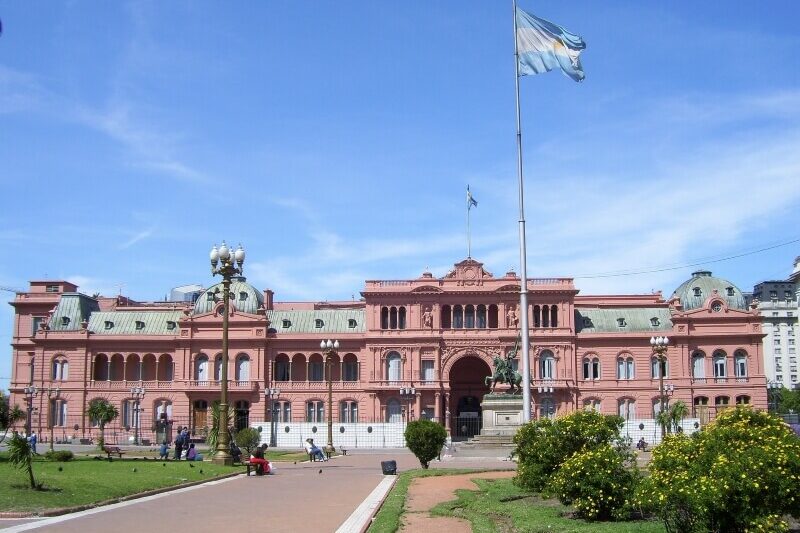
South America captivates visitors with its extraordinary natural wonders and vibrant cultural tapestry. The continent hosts some of Earth’s most spectacular features: the mighty Amazon rainforest teeming with unparalleled biodiversity, the towering Andes mountains stretching like a spine along the western edge, and the otherworldly landscapes of Patagonia and the Atacama Desert. Marvel at Machu Picchu’s ancient Incan engineering in Peru, witness the thundering power of Iguazu Falls on the Brazil-Argentina border, or explore the pristine beauty of the Galapagos Islands. The continent’s cultural heritage is equally mesmerizing, from the colonial architecture of Cartagena and Buenos Aires to the pulsating rhythms of Brazilian samba and Argentine tango. Indigenous traditions remain vibrant throughout the region, creating a rich mosaic of customs, handicrafts, and cuisines. With its warm hospitality, diverse landscapes from tropical beaches to Andean heights, and a passionate approach to life, South America offers travelers authenticity and adventure in equal measure.
The destination guide
South America
Browse all 7 destinations in South America
Travel guides for South America
Destination stories (1)
More guides featuring South America (9)
At a glance
- Spanish
- Portuguese
- Quechua
- Aymara
- Andes Mountains
- Amazon rainforest
- Patagonian steppe
- Coastal deserts
How South America scores
Character
Editorial scores on a 10-point scale, weighed against destinations of the same kind.
Travel safety snapshot
SafePlace indicators use their source 100-point scale; higher is more favourable. Planning context, not a live travel advisory — check official government guidance before you go.
When to go
Best months to visit: January, February, March, April, May, June, July, August, September, October, November and December.
- January: 20.7 to 27.5 degrees Celsius, 293.2 millimetres of rain, best-time score 4 out of 5.
- February: 20.7 to 27.8 degrees Celsius, 292.4 millimetres of rain, best-time score 4 out of 5.
- March: 20.8 to 27.8 degrees Celsius, 275.4 millimetres of rain, best-time score 4 out of 5.
- April: 20.9 to 28.1 degrees Celsius, 186.7 millimetres of rain, best-time score 5 out of 5.
- May: 21 to 29.2 degrees Celsius, 52.3 millimetres of rain, best-time score 5 out of 5.
- June: 20.5 to 30.4 degrees Celsius, 17.2 millimetres of rain, best-time score 4 out of 5.
- July: 20.7 to 32.2 degrees Celsius, 2.4 millimetres of rain, best-time score 4 out of 5.
- August: 21.6 to 33.2 degrees Celsius, 14.2 millimetres of rain, best-time score 4 out of 5.
- September: 21.7 to 31.9 degrees Celsius, 78.8 millimetres of rain, best-time score 5 out of 5.
- October: 21.4 to 30.1 degrees Celsius, 159.4 millimetres of rain, best-time score 5 out of 5.
- November: 21 to 28.8 degrees Celsius, 208.5 millimetres of rain, best-time score 5 out of 5.
- December: 20.8 to 27.8 degrees Celsius, 286.8 millimetres of rain, best-time score 4 out of 5.
Month-by-month conditions and packing advice
- January
- Warm to hot, rainy January in South America: regional highlights are strong, from Andean dry-season trips to Patagonia and southern summer routes. Crowds: January in South America is one of the wetter periods, so museums, food stops, flexible reservations, and backup indoor plans make the trip easier. Pack: Pack light clothing, sun protection, and comfortable walking shoes. Add a rain jacket or compact umbrella.
- February
- Warm to hot, rainy February in South America: regional highlights are strong, from Andean dry-season trips to Patagonia and southern summer routes. Crowds: February in South America is one of the wetter periods, so museums, food stops, flexible reservations, and backup indoor plans make the trip easier. Pack: Pack light clothing, sun protection, and comfortable walking shoes. Add a rain jacket or compact umbrella.
- March
- Warm to hot, rainy March in South America: regional highlights are strong, from Andean dry-season trips to Patagonia and southern summer routes. Crowds: March in South America is one of the wetter periods, so museums, food stops, flexible reservations, and backup indoor plans make the trip easier. Pack: Pack light clothing, sun protection, and comfortable walking shoes. Add a rain jacket or compact umbrella.
- April
- Warm to hot, rainy April in South America: shoulder-season timing works across more regions, balancing cities, wine country, Andes access, and southern scenery. Crowds: April in South America is one of the wetter periods, so museums, food stops, flexible reservations, and backup indoor plans make the trip easier. Pack: Pack light clothing, sun protection, and comfortable walking shoes. Add a rain jacket or compact umbrella.
- May
- Warm to hot, occasional rain May in South America: shoulder-season timing works across more regions, balancing cities, wine country, Andes access, and southern scenery. Crowds: May in South America is workable with normal seasonal planning; build in layers, weather checks, and a mix of indoor and outdoor activities. Pack: Pack light clothing, sun protection, and comfortable walking shoes.
- June
- Warm to hot, mostly dry June in South America: regional highlights are strong, from Andean dry-season trips to Patagonia and southern summer routes. Crowds: June in South America is workable with normal seasonal planning; build in layers, weather checks, and a mix of indoor and outdoor activities. Pack: Pack light clothing, sun protection, and comfortable walking shoes.
- July
- Warm to hot, mostly dry July in South America: regional highlights are strong, from Andean dry-season trips to Patagonia and southern summer routes. Crowds: July in South America is workable with normal seasonal planning; build in layers, weather checks, and a mix of indoor and outdoor activities. Pack: Pack light clothing, sun protection, and comfortable walking shoes.
- August
- Warm to hot, mostly dry August in South America: regional highlights are strong, from Andean dry-season trips to Patagonia and southern summer routes. Crowds: August in South America is workable with normal seasonal planning; build in layers, weather checks, and a mix of indoor and outdoor activities. Pack: Pack light clothing, sun protection, and comfortable walking shoes.
- September
- Warm to hot, some rain September in South America: shoulder-season timing works across more regions, balancing cities, wine country, Andes access, and southern scenery. Crowds: September in South America is workable with normal seasonal planning; build in layers, weather checks, and a mix of indoor and outdoor activities. Pack: Pack light clothing, sun protection, and comfortable walking shoes. Add a rain jacket or compact umbrella.
- October
- Warm to hot, rainy October in South America: shoulder-season timing works across more regions, balancing cities, wine country, Andes access, and southern scenery. Crowds: October in South America is one of the wetter periods, so museums, food stops, flexible reservations, and backup indoor plans make the trip easier. Pack: Pack light clothing, sun protection, and comfortable walking shoes. Add a rain jacket or compact umbrella.
- November
- Warm to hot, rainy November in South America: shoulder-season timing works across more regions, balancing cities, wine country, Andes access, and southern scenery. Crowds: November in South America is one of the wetter periods, so museums, food stops, flexible reservations, and backup indoor plans make the trip easier. Pack: Pack light clothing, sun protection, and comfortable walking shoes. Add a rain jacket or compact umbrella.
- December
- Warm to hot, rainy December in South America: regional highlights are strong, from Andean dry-season trips to Patagonia and southern summer routes. Crowds: December in South America is one of the wetter periods, so museums, food stops, flexible reservations, and backup indoor plans make the trip easier. Pack: Pack light clothing, sun protection, and comfortable walking shoes. Add a rain jacket or compact umbrella.
Know before you go
Neighbourhoods
Buenos Aires’ San Telmo and La Boca neighbourhoods define Argentine tango culture. Rio de Janeiro’s Copacabana and Ipanema beaches sit beneath Sugarloaf Mountain. Cusco in Peru is the gateway to Machu Picchu and the Sacred Valley. Medellín’s transformation from cartel city to innovation hub makes it Colombia’s most dynamic destination. Quito’s colonial centre is a UNESCO World Heritage City at 2,800 m elevation in Ecuador.
Best time to visit
South America spans both hemispheres, so seasons vary by region. October through April is best for Patagonia and the Andes. June through September is dry season in the Amazon and ideal for Salar de Uyuni (Bolivia). December through March is summer in Argentina and Brazil. The Galápagos and Machu Picchu are year-round destinations, though shoulder months (April–May, September–November) offer smaller crowds and moderate weather.
Crowds
South America overall has varied peaks: coastal and Andean destinations are busiest December–March (summer in the Southern Hemisphere) and during Carnival (February/March) and major festivals; quietest in shoulder seasons April–May and September–October for many destinations, though specifics depend on country and altitude.
Getting there and around
Getting there
Major international gateways include São Paulo–Guarulhos (GRU), Buenos Aires–Ezeiza (EZE), Lima–Jorge Chávez (LIM), Bogotá–El Dorado (BOG), and Santiago–Arturo Merino Benítez (SCL). Direct flights from North America, Europe, and the Middle East serve these hubs. Overland entry is possible from Central America into Colombia, and from Bolivia/Brazil into Peru and Argentina. Most South American nations do not require visas for US, EU, and Commonwealth passport holders for stays under 90 days.
Getting around
Domestic flights connect the continent’s vast distances—LATAM, Avianca, GOL, and Sky Airline cover major routes. Long-distance buses (often overnight sleepers with cama or semi-cama seats) are comfortable and affordable in Argentina, Chile, Peru, and Colombia. Trains are limited outside of commuter lines, though the Belmond Hiram Bingham (Cusco–Machu Picchu) and Tren a las Nubes (Argentina) are notable exceptions. Ride-hailing apps (Uber, Cabify, DiDi, InDrive) operate in most cities.
Top experiences in South America
Machu Picchu, Peru
The 15th-century Inca citadel sits at 2,430 m on a narrow ridge between the Huayna Picchu and Machu Picchu peaks. Built under the rule of Pachacuti, the complex includes terraced agricultural platforms, stone temples, and the Intihuatana sundial. Access is via a 4-day Inca Trail trek or a train from Cusco to Aguas Calientes. Daily visitor numbers are capped, and timed-entry tickets must be pre-booked.
Iguazú Falls, Argentina/Brazil
A system of 275 waterfalls spread across nearly 3 km of the Iguazú River on the Argentina-Brazil border. The Devil’s Throat (Garganta del Diablo), an 80-metre-high U-shaped cascade, is the centrepiece—accessible via a walkway from the Argentine side. The Brazilian side offers panoramic views of the entire curtain of water framed by subtropical rainforest. Boat tours approach the base of the falls on both sides.
Galápagos Islands, Ecuador
An archipelago of volcanic islands 1,000 km off Ecuador’s Pacific coast, the Galápagos are home to species found nowhere else—giant tortoises, marine iguanas, blue-footed boobies, and penguins on the equator. Charles Darwin’s 1835 visit inspired his theory of evolution by natural selection. Access is by air from Quito or Guayaquil; multi-day cruise itineraries and island-hopping trips are the primary ways to explore.
Salar de Uyuni, Bolivia
The world’s largest salt flat, covering 10,582 square kilometres at 3,656 m elevation on the Bolivian Altiplano. During the wet season (December–April), a thin layer of water transforms the flat into the world’s largest natural mirror, reflecting the sky in every direction. Multi-day jeep tours depart from the town of Uyuni, passing cactus-covered islands, coloured mineral lakes with flamingos, and steaming geysers near the Chilean border.
Patagonia, Argentina & Chile
The southern cone of South America, split between Argentina and Chile, stretches from alpine lakes and ancient forests to wind-blasted steppe and calving glaciers. Torres del Paine (Chile) and Los Glaciares National Park (Argentina, home to Perito Moreno Glacier) are the headline draws. El Chaltén is Argentina’s trekking capital, with views of Fitz Roy and Cerro Torre. Ushuaia at the continent’s tip bills itself as the ‘End of the World’ and is the departure point for Antarctica cruises.
Editor-curated picks carried over from our original guide. Where a full place guide exists, the card links to it.
Worth booking ahead in South America
Hand-picked from the operators our guides already send readers to. Prices and availability are live on the partner site.
BrowseViator
Tours and tickets in South America on Viator (opens Viator in a new tab)
Viator's full list of bookable tours and tickets in South America.
BrowseGetYourGuide
Experiences in South America on GetYourGuide (opens GetYourGuide in a new tab)
Everything GetYourGuide sells in South America, with the cancellation terms on each listing.
Where to stayBooking.com
Stays in South America (opens Booking.com in a new tab)
Live rates and availability for South America on Booking.com; filter by neighbourhood once you know where your days start.
We earn a commission if you book through these links, at no extra cost to you. It is how we keep the guides free and independent.
Where to stay
Alvear Palace Hotel, Buenos Aires
Av. Alvear 1891, C1129 Buenos Aires, Argentina
Grand Parisian-style palace hotel on Buenos Aires’ most prestigious avenue with opulent suites, a rooftop wine terrace, spa, and Michelin-quality dining.
Hotel Fasano Rio de Janeiro
Rua Delfim Moreira 630, Leblon, Rio de Janeiro 22441-000, Brazil
Beachfront luxury hotel on Leblon Beach with ocean-view suites, rooftop pool, spa, and access to Rio’s most exclusive neighbourhood.
Belmond Palacio Nazarenas, Cusco
Calle Tambo del Montero 105, Cuzco 08002, Peru
Intimate luxury hotel in a restored 16th-century monastery in Cusco’s historic centre with suites around a colonial courtyard, an acclaimed restaurant, and Andean-inspired spa.
Editor-curated stays carried over from our original guide. Where we have reviewed the hotel, the card links to the review.
Culture, customs and safety
Cultural heritage
From the cloud-wrapped citadel of Machu Picchu high in the Andes, through the vast animal-shaped Nazca Lines etched into Peru’s coastal desert, to the 30,000-kilometre Qhapaq Ñan Inca road system that stitched together mountains, rainforests and coasts, South America preserves pre-Columbian feats of engineering and cosmology in landscapes as monumental as the structures themselves. These Inca-era legacies coexist with living traditions such as the intricate communal weaving of Taquile Island on Lake Titicaca and the annual Inti Raymi sun festival in Cusco, both of which continue to encode Andean world-views in colour, pattern and ritual. The colonial period added new layers: Brazil’s baroque gold-rush capital Ouro Preto, the forest-shrouded Jesuit Missions of the Guaranis straddling Argentina, Paraguay and Brazil, and Colombia’s fortified port city of Cartagena all exemplify how European plans blended with Indigenous craftsmanship to create singular urban landscapes now protected by UNESCO. South America’s cultural pulse also beats in music and dance—Bahia’s circle-drumming Samba de Roda and the cosmopolitan Tango of Buenos Aires and Montevideo—each recognised by UNESCO for articulating histories of diaspora, resistance and shared identity. In total, the continent hosts more than seventy World Heritage properties, alongside a growing roster of safeguarded intangible practices, illustrating a dynamic cultural landscape where ancient ingenuity, colonial hybridity and contemporary creativity intertwine on a globally significant scale.
Local customs & etiquette
Greetings across the continent typically involve a single kiss on the cheek between acquaintances. Lunch is the main meal in many countries—service can be slower than in North America or Europe. Tipping 10 % is standard at restaurants in most countries, though customs vary (service charges are sometimes included in Brazil). Bargaining is common at markets but not in shops. Altitude sickness can affect visitors in the Andes above 2,500 m—coca tea is a traditional remedy.