Vast South American nation combining sophisticated European-influenced cities, dramatic natural landscapes from tropical waterfalls to Patagonian glaciers, world-renowned wine regions, passionate tango culture, and authentic gaucho traditions across diverse geographic regions.
The destination guide
Argentina

Country in South AmericaUpdated
- Overall8/10
- Best forFamilies, Couples
- PeakDec–Mar
- CurrencyARS
Buenos Aires runs on steak and late nights. Patagonia takes three days to cross. Argentina rewards the traveler who stays longer than planned.
Travel guides for Argentina
More guides featuring Argentina (2)
At a glance
CurrencyARS
Time zoneArgentina Time (UTC−03:00)
Languages
- Spanish (Rioplatense dialect)
Setting
- Pampas grasslands
- Andes Mountains
- Patagonian steppe
- Atlantic coast
Known for
- Nature
- Adventure
- Wine
- Tango
- Culture
- Trekking
- Glaciers
Population46.7M46,654,581 residents
VisaDuration: Up to 90 days for tourism or business · Documents: Valid U.S. passport
How Argentina scores
8/10OverallExcellent
Weather3/10
Value for money3/10
Safety6/10
Food & cuisine3/10
Culture & arts8/10
Cultural experience7/10
History3/10
Nature & outdoors3/10
Adventure4/10
Nightlife3/10
Shopping7/10
Family friendly5/10
Romance3/10
Character
Photography score3/10
Authenticity score10/10
Off-the-beaten-path score5/10
Editorial scores on a 10-point scale, weighed against destinations of the same kind.
Travel safety snapshot
Overall72/100Moderate rating
Women travellers68/100
LGBTQ+ travellers70/100
Theft60/100
Medical care75/100
Physical harm70/100
Political freedom70/100
SafePlace indicators use their source 100-point scale; higher is more favourable. Planning context, not a live travel advisory — check official government guidance before you go.
When to go
Best months to visit: January, February, March, April, May, September, October, November and December.
- January: 19.1 to 31.2 degrees Celsius, 41.3 millimetres of rain, best-time score 5 out of 5.
- February: 17.9 to 29.4 degrees Celsius, 54 millimetres of rain, best-time score 5 out of 5.
- March: 15.2 to 25.8 degrees Celsius, 71.9 millimetres of rain, best-time score 5 out of 5.
- April: 11.6 to 21 degrees Celsius, 59.4 millimetres of rain, best-time score 5 out of 5.
- May: 7.6 to 16 degrees Celsius, 33 millimetres of rain, best-time score 4 out of 5.
- June: 4.8 to 13.1 degrees Celsius, 25.3 millimetres of rain, best-time score 3 out of 5.
- July: 3.9 to 12.5 degrees Celsius, 23.6 millimetres of rain, best-time score 3 out of 5.
- August: 5.6 to 15.7 degrees Celsius, 19.8 millimetres of rain, best-time score 3 out of 5.
- September: 8 to 18.9 degrees Celsius, 39.6 millimetres of rain, best-time score 4 out of 5.
- October: 10.6 to 21.9 degrees Celsius, 41.1 millimetres of rain, best-time score 4 out of 5.
- November: 14.1 to 25.8 degrees Celsius, 78.4 millimetres of rain, best-time score 5 out of 5.
- December: 16.9 to 29.8 degrees Celsius, 40.2 millimetres of rain, best-time score 5 out of 5.
Month-by-month conditions and packing advice
- January
- Warm to hot, occasional rain January in Argentina: Buenos Aires, Patagonia, wine regions, waterfalls, and road trips align with spring, summer, or fall regional highlights. Crowds: January in Argentina is workable with normal seasonal planning; build in layers, weather checks, and a mix of indoor and outdoor activities. Pack: Pack light clothing, sun protection, and comfortable walking shoes.
- February
- Warm to hot, occasional rain February in Argentina: Buenos Aires, Patagonia, wine regions, waterfalls, and road trips align with spring, summer, or fall regional highlights. Crowds: February in Argentina is workable with normal seasonal planning; build in layers, weather checks, and a mix of indoor and outdoor activities. Pack: Pack light clothing, sun protection, and comfortable walking shoes.
- March
- Mild to warm, some rain March in Argentina: Buenos Aires, Patagonia, wine regions, waterfalls, and road trips align with spring, summer, or fall regional highlights. Crowds: March in Argentina is workable with normal seasonal planning; build in layers, weather checks, and a mix of indoor and outdoor activities. Pack: Pack light clothing, sun protection, and comfortable walking shoes. Add a rain jacket or compact umbrella.
- April
- Mild to warm, occasional rain April in Argentina: Buenos Aires, Patagonia, wine regions, waterfalls, and road trips align with spring, summer, or fall regional highlights. Crowds: April in Argentina is comfortable for sightseeing, neighborhoods, food stops, day trips, and outdoor time with limited weather friction. Pack: Pack layered clothing and comfortable walking shoes.
- May
- Cool to mild, occasional rain May in Argentina: shoulder timing can reduce crowds while keeping many regions comfortable. Crowds: May in Argentina is workable with normal seasonal planning; build in layers, weather checks, and a mix of indoor and outdoor activities. Pack: Pack layered clothing and comfortable walking shoes.
- June
- Cool to mild, mostly dry June in Argentina: winter travel can work for cities, the north, or ski trips but narrows Patagonia access. Crowds: June in Argentina is workable with normal seasonal planning; build in layers, weather checks, and a mix of indoor and outdoor activities. Pack: Pack layered clothing and comfortable walking shoes.
- July
- Cool to mild, mostly dry July in Argentina: winter travel can work for cities, the north, or ski trips but narrows Patagonia access. Crowds: July in Argentina is workable with normal seasonal planning; build in layers, weather checks, and a mix of indoor and outdoor activities. Pack: Pack layered clothing and comfortable walking shoes.
- August
- Cool to mild, mostly dry August in Argentina: winter travel can work for cities, the north, or ski trips but narrows Patagonia access. Crowds: August in Argentina is workable with normal seasonal planning; build in layers, weather checks, and a mix of indoor and outdoor activities. Pack: Pack layered clothing and comfortable walking shoes.
- September
- Cool to mild, occasional rain September in Argentina: shoulder timing can reduce crowds while keeping many regions comfortable. Crowds: September in Argentina is workable with normal seasonal planning; build in layers, weather checks, and a mix of indoor and outdoor activities. Pack: Pack layered clothing and comfortable walking shoes.
- October
- Mild to warm, occasional rain October in Argentina: shoulder timing can reduce crowds while keeping many regions comfortable. Crowds: October in Argentina is comfortable for sightseeing, neighborhoods, food stops, day trips, and outdoor time with limited weather friction. Pack: Pack layered clothing and comfortable walking shoes.
- November
- Mild to warm, some rain November in Argentina: Buenos Aires, Patagonia, wine regions, waterfalls, and road trips align with spring, summer, or fall regional highlights. Crowds: November in Argentina is workable with normal seasonal planning; build in layers, weather checks, and a mix of indoor and outdoor activities. Pack: Pack light clothing, sun protection, and comfortable walking shoes. Add a rain jacket or compact umbrella.
- December
- Warm to hot, occasional rain December in Argentina: Buenos Aires, Patagonia, wine regions, waterfalls, and road trips align with spring, summer, or fall regional highlights. Crowds: December in Argentina is workable with normal seasonal planning; build in layers, weather checks, and a mix of indoor and outdoor activities. Pack: Pack light clothing, sun protection, and comfortable walking shoes.
Peak season
- December
- January
- February
- March
Off-peak
- June
- July
Know before you go
About
Argentina, the second-largest country in South America, is a vast and diverse travel destination stretching from subtropical north to the icy edge of Patagonia, famous for tango, beef, Malbec wine, and dramatic natural wonders. The capital, Buenos Aires, is a cosmopolitan metropolis often called the “Paris of South America,” where European-style boulevards meet the passionate culture of tango, which was born in its neighborhoods. In the far northeast, Iguazu Falls forms one of the world’s largest and most spectacular waterfall systems on the border with Brazil, surrounded by lush rainforest. To the west, the wine region of Mendoza spreads across the foothills of the Andes, producing world-renowned Malbec, while the towering peak of Aconcagua, the highest mountain in the Americas, rises nearby. The south unfolds into Patagonia’s glaciers, jagged peaks, and steppe, with highlights such as the Perito Moreno Glacier and the trekking hub of El Chalten. With glaciers, waterfalls, vineyards, and a rich cafe and football culture, Argentina rewards travelers with both adventure and sophistication.
Best time to visit
October to April for Patagonia; March to May and September to November for Buenos Aires and Iguazú
Season by season
Summer (December–February): 65–90°F, peak season, long days in Patagonia, hot in Buenos Aires
Autumn (March–May): 50–75°F, wine harvest in Mendoza, golden foliage in Bariloche
Winter (June–August): 30–55°F, ski season in Bariloche, tango festivals in Buenos Aires
Spring (September–November): 55–75°F, whale season at Valdés, jacaranda blooms in Buenos Aires
Crowds
High at Iguazú Falls and Perito Moreno in January–February; moderate in Buenos Aires; low in Patagonia’s remote areas and the northwest
Getting there and around
Getting there
Ezeiza International Airport (EZE) in Buenos Aires is the main international gateway. Direct flights from Miami, New York, Dallas, Madrid, Rome, London, and São Paulo via Aerolíneas Argentinas, LATAM, American, Delta, and European carriers. Aeroparque (AEP) handles domestic and regional flights. Most nationalities enter visa-free for 90 days.
Getting around
Domestic flights (Aerolíneas Argentinas, FlyBondi, JetSMART) connect Buenos Aires to El Calafate, Ushuaia, Mendoza, Bariloche, and Iguazú. Long-distance buses are comfortable with cama (sleeper) service. Ruta 40 road trips are legendary but distances are vast. Buenos Aires has the Subte (metro), good bus network, and Uber. Car rental is useful in wine country and the Lake District.
Top experiences in Argentina
Buenos Aires
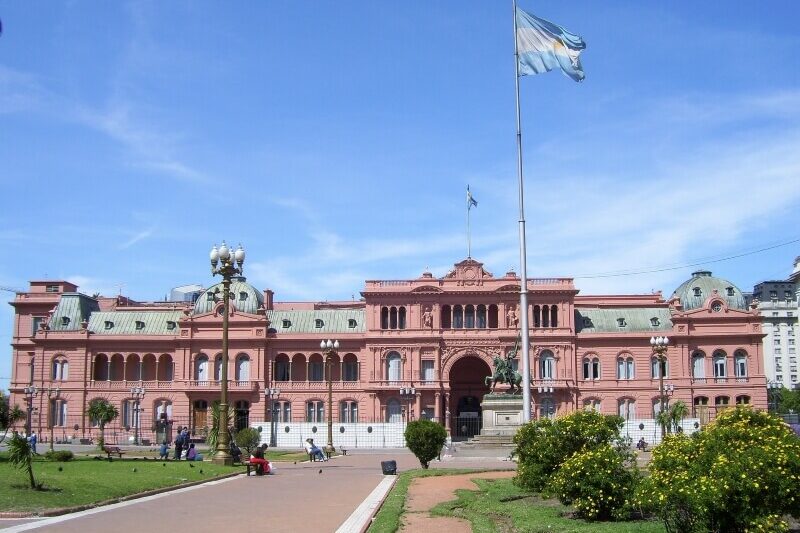
Argentina’s capital is a city of tango, steak, and European-style grandeur. Recoleta Cemetery houses Eva Perón’s mausoleum among elaborate marble tombs. San Telmo’s Sunday antique fair and cobblestone streets evoke old Buenos Aires. La Boca’s Caminito is a colourful street-art canvas. Teatro Colón is one of the world’s finest opera houses. El Ateneo Grand Splendid (converted theatre) is the world’s most beautiful bookshop. Parrillas (steakhouses) serve world-class beef. The Sunday Ciclovia opens roads for cycling.
Perito Moreno Glacier
Perito Moreno Glacier (UNESCO, Los Glaciares National Park) is one of the world’s few advancing glaciers. The 5 km-wide, 60 m-high ice wall cracks and calves massive icebergs into Lago Argentino with thunderous booms. Boardwalk viewing platforms provide front-row seats. Big Ice and Mini Trekking excursions allow walking on the glacier with crampons. Boat tours sail to the glacier face. 80 km from El Calafate.
Iguazú Falls
Iguazú Falls (UNESCO) is a system of 275 waterfalls spanning 2.7 km on the Argentina-Brazil border. The Devil’s Throat (Garganta del Diablo) is the tallest cascade at 80 m. The Argentine side offers extensive trail networks (Upper Circuit, Lower Circuit, Isla San Martín) and a boat ride into the spray. The Brazilian side provides the panoramic overview. Over 1.5 million visitors annually make this one of South America’s most visited sites.
El Chaltén & Fitz Roy
El Chaltén is Argentina’s trekking capital, set at the base of Mount Fitz Roy (3,405 m) and Cerro Torre in Los Glaciares National Park. The Laguna de los Tres trek (20 km round trip) climaxes with Fitz Roy reflected in a turquoise alpine lake. The Laguna Torre trail offers views of Cerro Torre’s ice-capped spire. No permits or fees are required for day hikes. The town has a laid-back mountain vibe with craft breweries and parrillas. 3 hr from El Calafate.
Mendoza Wine Region
Mendoza is the heart of Argentina’s wine country, producing 70% of the nation’s wine (especially Malbec). The Uco Valley and Lujan de Cuyo regions feature boutique bodegas with Andes-backdrop tastings. Multi-course wine-pairing lunches, cycling between vineyards, and hot-air balloon rides over the vines define the experience. Aconcagua (6,961 m), the Western Hemisphere’s highest peak, is visible from the vineyards. 1 hr flight from Buenos Aires.
Editor-curated picks carried over from our original guide. Where a full place guide exists, the card links to it.
Worth booking ahead in Argentina
Hand-picked from the operators our guides already send readers to. Prices and availability are live on the partner site.
BrowseViator
Tours and tickets in Argentina on Viator (opens Viator in a new tab)
Viator's full list of bookable tours and tickets in Argentina.
BrowseGetYourGuide
Experiences in Argentina on GetYourGuide (opens GetYourGuide in a new tab)
Everything GetYourGuide sells in Argentina, with the cancellation terms on each listing.
Where to stayBooking.com
Stays in Argentina (opens Booking.com in a new tab)
Live rates and availability for Argentina on Booking.com; filter by neighbourhood once you know where your days start.
We earn a commission if you book through these links, at no extra cost to you. It is how we keep the guides free and independent.
Where to stay
Alvear Palace Hotel, Buenos Aires
Avenida Alvear 1891, Buenos Aires, Argentina
Alvear Palace Hotel is Buenos Aires’ grand dame, anchoring Recoleta since 1932. The 210-room Beaux-Arts palace features Louis XV furnishings, a rooftop health club with city views, and Alvear Grill steakhouse. Afternoon tea in the lobby is a Buenos Aires institution. Walking distance to Recoleta Cemetery and the National Museum of Fine Arts. Rates USD 350–1,500+ per night.
Los Glaciares Hosteria, El Calafate
Perito Moreno 1457, El Calafate, Patagonia, Argentina
Los Glaciares Hosteria sits 6 km from El Calafate with direct Perito Moreno Glacier views. The 200-hectare estancia offers horseback riding, birdwatching, and Patagonian lamb asado. Rooms feature panoramic windows framing the glacier and Lago Argentino. A quieter alternative to town-centre hotels. Rates USD 200–600+ per night.
Aguas Arriba Lodge, El Chaltén
Ruta 40 & Lago Viedma, El Chaltén, Patagonia, Argentina
Aguas Arriba Lodge near El Chaltén is accessible only by a 4 km trail or boat across Lago del Desierto. The off-grid lodge runs on solar power and wood stoves. Five rooms face Mount Fitz Roy across the lake. Guided trekking, kayaking, and fly-fishing are included. The isolation and mountain panoramas define authentic Patagonian hospitality. Rates USD 400–1,200+ per person per night (all-inclusive).
Editor-curated stays carried over from our original guide. Where we have reviewed the hotel, the card links to the review.
Tips from the field
Highlights
- Buenos Aires — Tango, teatro, steak, and European-style boulevards in South America's most cosmopolitan capital
- Perito Moreno Glacier — Advancing ice wall calving into Lago Argentino with thunderous booms
- Iguazú Falls — 275 waterfalls spanning 2.7 km on the Argentina-Brazil border
- El Chaltén & Fitz Roy — World-class trekking to Laguna de los Tres and Cerro Torre
- Mendoza — Heart of Argentine wine country, Malbec, Andes views, and Aconcagua
- Ushuaia — 'End of the World' city and gateway to Antarctica and Tierra del Fuego
- Bariloche — Lake District town with alpine scenery, chocolate, and craft beer
- Quebrada de Humahuaca — Rainbow-striped Andean valley in the northwest (UNESCO)
- Península Valdés — Southern right whales, sea lions, and elephant seals (UNESCO)
- Cueva de las Manos — 7,300-year-old handprint cave paintings in Patagonia (UNESCO)
Best activities
- Watch tango dancers at a Buenos Aires milonga
- Stand before Perito Moreno Glacier as icebergs calve
- Feel the spray at Iguazú Falls' Devil's Throat
- Trek to Laguna de los Tres at the base of Fitz Roy
- Taste Malbec at a Mendoza bodega with Andes views
- Eat a premium steak at a Buenos Aires parrilla
- Share mate with locals in a park
- Drive Ruta 40 through Patagonia
- Explore penguin colonies at Punta Tombo
- Visit Recoleta Cemetery and Eva Perón's tomb
Local experiences
- Share Sunday asado with an Argentine family, dance tango at a milonga in San Telmo, drink mate in a park, taste Mendoza Malbec directly from the tank at a small bodega, eat empanadas salteñas in Salta, hike to Fitz Roy at sunrise, watch Southern right whales breach at Península Valdés, and drink a cortado at a Buenos Aires café notable.
Practical tips
- Argentina's peso fluctuates — check the blue dollar rate vs official rate before exchanging.
- Credit cards are widely accepted in cities; cash is needed in smaller towns.
- Patagonia is windy year-round — pack windproof layers and good hiking boots.
- Distances are vast — fly between major regions to save multi-day bus rides.
- Buenos Aires is walkable but avoid La Boca after dark.
- Steak quality is exceptional — order bife de chorizo or ojo de bife medium-rare.
Photography tips
- Fitz Roy: the classic reflection shot in Laguna de los Tres requires arriving pre-dawn (4:30 AM start in summer). Iguazú: the Argentine side's walkways photograph best in morning light
- the Brazilian side offers the classic panorama in afternoon. Buenos Aires: photograph Caminito and San Telmo in morning light. Perito Moreno: blue ice is most vivid under overcast skies. Mendoza: golden-hour vineyards with Andes backdrop in March (harvest season).
Timing
- Plan 3–4 days for Buenos Aires, 2 days for El Calafate (Perito Moreno), 3–4 days for El Chaltén (Fitz Roy trekking), 2 days for Iguazú Falls, 2–3 days for Mendoza, 2 days for Ushuaia. A comprehensive Argentina trip takes 14–21 days.
Keeping it authentic
- Argentine culture is deeply embedded in daily life, not performed. The tango milongas of Buenos Aires (dance halls, not shows) are genuine community events. The Sunday asado (barbecue) is a sacred family ritual. The mate-sharing tradition — passing the gourd and metal straw in a circle — is a symbol of friendship and trust. Gaucho culture survives on estancias in the Pampas. Patagonian isolation and self-sufficiency shape a resilient frontier character.
Culture, customs and safety
Cultural heritage
Argentina blends Indigenous, Spanish colonial, and immigrant European cultures. Tango (UNESCO Intangible Heritage) originated in Buenos Aires’ port neighbourhoods. Gaucho culture on the Pampas estancias preserves horsemanship and cattle-ranching traditions. The country has 11 UNESCO World Heritage Sites including Iguazú, Los Glaciares, Quebrada de Humahuaca, and Cueva de las Manos (cave paintings from 7,300 BC). Argentine literature (Borges, Cortázar, Puig) is among Latin America’s most influential.
Local customs & etiquette
Argentines greet with a single kiss on the right cheek, even between men who are friends. Mate is a daily ritual — when offered, accept the gourd, drink until it’s empty, then return it. Never stir or add sugar to someone else’s mate without asking. Dinner starts at 9–10 PM; restaurants don’t fill until 10. Tipping 10% is standard (cash preferred). ‘Che’ is an informal address comparable to ‘mate’ or ‘buddy.’ The abrazo (hearty hug) is common among friends. Football is a quasi-religion — pick your side and argue passionately.
Safety notes
US State Department rates Argentina Level 1 (exercise normal precautions; exercise increased caution in some areas). Buenos Aires is generally safe in tourist areas (Palermo, Recoleta, San Telmo) but bag-snatching and pickpocketing occur, especially at markets and transit hubs. Avoid La Boca outside the Caminito tourist zone, especially after dark. Use Uber or registered taxis at night. Patagonian weather changes rapidly — be prepared. Emergency: 911.