Colombia, the gateway to South America, is a country of extraordinary biodiversity, vibrant culture, and dramatic landscapes ranging from Caribbean beaches to snow-capped Andean peaks. Known as the birthplace of magical realism and home to world-renowned coffee, Colombia offers travelers an intoxicating blend of colonial architecture, indigenous heritage, and modern urban energy. From the cobblestone streets of Cartagena’s walled city to the emerald hills of the Coffee Triangle, the country showcases remarkable diversity within its borders. Colombia’s transformation from conflict to cultural renaissance has created a destination where salsa rhythms fill the air, colorful street art adorns buildings, and warm hospitality welcomes visitors to experience authentic South American culture.
The destination guide
Colombia
Country in South AmericaUpdated
- Overall9/10
- Best forBudget travelers, Families
- PeakJan, Jul, Aug, Dec
- CurrencyCOP
Colombia’s shift from cautionary tale to one of South America’s best trips happened fast — and Cartagena’s walled city is only the beginning.
Travel guides for Colombia
Destination stories (1)
More guides featuring Colombia (4)
At a glance
- Spanish
- Andes Mountains
- Caribbean coast
- Amazon rainforest
- Coffee region
- Culture
- Adventure
- Beach
- Coffee
- History
- Nature
- Nightlife
How Colombia scores
Editorial scores on a 10-point scale, weighed against destinations of the same kind.
Travel safety snapshot
SafePlace indicators use their source 100-point scale; higher is more favourable. Planning context, not a live travel advisory — check official government guidance before you go.
When to go
Best months to visit: January, February, March, April, June, July, August, September, November and December.
- January: 8.7 to 17.2 degrees Celsius, 283.6 millimetres of rain, best-time score 5 out of 5.
- February: 9.5 to 17.2 degrees Celsius, 372.4 millimetres of rain, best-time score 5 out of 5.
- March: 9.6 to 17.1 degrees Celsius, 553.9 millimetres of rain, best-time score 5 out of 5.
- April: 9.7 to 17.2 degrees Celsius, 639.3 millimetres of rain, best-time score 4 out of 5.
- May: 9.9 to 17.4 degrees Celsius, 675.9 millimetres of rain, best-time score 3 out of 5.
- June: 9.5 to 17.1 degrees Celsius, 622.6 millimetres of rain, best-time score 4 out of 5.
- July: 9.2 to 17.3 degrees Celsius, 559.3 millimetres of rain, best-time score 5 out of 5.
- August: 9.1 to 17.8 degrees Celsius, 512.5 millimetres of rain, best-time score 5 out of 5.
- September: 9.2 to 17.8 degrees Celsius, 526.5 millimetres of rain, best-time score 4 out of 5.
- October: 9.3 to 17.1 degrees Celsius, 602.2 millimetres of rain, best-time score 3 out of 5.
- November: 9.5 to 16.9 degrees Celsius, 425.8 millimetres of rain, best-time score 4 out of 5.
- December: 9 to 17 degrees Celsius, 329.5 millimetres of rain, best-time score 5 out of 5.
Month-by-month conditions and packing advice
- January
- Cool to mild, rainy January in Colombia: dry-season windows support Caribbean beaches, coffee-region hikes, cities, wildlife, and Andean routes more reliably. Crowds: January in Colombia is one of the wetter periods, so museums, food stops, flexible reservations, and backup indoor plans make the trip easier. Pack: Pack layered clothing and comfortable walking shoes. Add a rain jacket or compact umbrella.
- February
- Cool to mild, rainy February in Colombia: dry-season windows support Caribbean beaches, coffee-region hikes, cities, wildlife, and Andean routes more reliably. Crowds: February in Colombia is one of the wetter periods, so museums, food stops, flexible reservations, and backup indoor plans make the trip easier. Pack: Pack layered clothing and comfortable walking shoes. Add a rain jacket or compact umbrella.
- March
- Cool to mild, rainy March in Colombia: dry-season windows support Caribbean beaches, coffee-region hikes, cities, wildlife, and Andean routes more reliably. Crowds: March in Colombia is one of the wetter periods, so museums, food stops, flexible reservations, and backup indoor plans make the trip easier. Pack: Pack layered clothing and comfortable walking shoes. Add a rain jacket or compact umbrella.
- April
- Cool to mild, rainy April in Colombia: regional planning can still produce a strong itinerary with some rain built into the day. Crowds: April in Colombia is one of the wetter periods, so museums, food stops, flexible reservations, and backup indoor plans make the trip easier. Pack: Pack layered clothing and comfortable walking shoes. Add a rain jacket or compact umbrella.
- May
- Cool to mild, rainy May in Colombia: rainier months can make trails, transfers, and outdoor plans less predictable. Crowds: May in Colombia is one of the wetter periods, so museums, food stops, flexible reservations, and backup indoor plans make the trip easier. Pack: Pack layered clothing and comfortable walking shoes. Add a rain jacket or compact umbrella.
- June
- Cool to mild, rainy June in Colombia: regional planning can still produce a strong itinerary with some rain built into the day. Crowds: June in Colombia is one of the wetter periods, so museums, food stops, flexible reservations, and backup indoor plans make the trip easier. Pack: Pack layered clothing and comfortable walking shoes. Add a rain jacket or compact umbrella.
- July
- Cool to mild, rainy July in Colombia: dry-season windows support Caribbean beaches, coffee-region hikes, cities, wildlife, and Andean routes more reliably. Crowds: July in Colombia is one of the wetter periods, so museums, food stops, flexible reservations, and backup indoor plans make the trip easier. Pack: Pack layered clothing and comfortable walking shoes. Add a rain jacket or compact umbrella.
- August
- Cool to mild, rainy August in Colombia: dry-season windows support Caribbean beaches, coffee-region hikes, cities, wildlife, and Andean routes more reliably. Crowds: August in Colombia is one of the wetter periods, so museums, food stops, flexible reservations, and backup indoor plans make the trip easier. Pack: Pack layered clothing and comfortable walking shoes. Add a rain jacket or compact umbrella.
- September
- Cool to mild, rainy September in Colombia: regional planning can still produce a strong itinerary with some rain built into the day. Crowds: September in Colombia is one of the wetter periods, so museums, food stops, flexible reservations, and backup indoor plans make the trip easier. Pack: Pack layered clothing and comfortable walking shoes. Add a rain jacket or compact umbrella.
- October
- Cool to mild, rainy October in Colombia: rainier months can make trails, transfers, and outdoor plans less predictable. Crowds: October in Colombia is one of the wetter periods, so museums, food stops, flexible reservations, and backup indoor plans make the trip easier. Pack: Pack layered clothing and comfortable walking shoes. Add a rain jacket or compact umbrella.
- November
- Cool to mild, rainy November in Colombia: regional planning can still produce a strong itinerary with some rain built into the day. Crowds: November in Colombia is one of the wetter periods, so museums, food stops, flexible reservations, and backup indoor plans make the trip easier. Pack: Pack layered clothing and comfortable walking shoes. Add a rain jacket or compact umbrella.
- December
- Cool to mild, rainy December in Colombia: dry-season windows support Caribbean beaches, coffee-region hikes, cities, wildlife, and Andean routes more reliably. Crowds: December in Colombia is one of the wetter periods, so museums, food stops, flexible reservations, and backup indoor plans make the trip easier. Pack: Pack layered clothing and comfortable walking shoes. Add a rain jacket or compact umbrella.
- December
- January
- July
- August
- April
- May
- October
Know before you go
About
Colombia, a country in northwestern South America with coastlines on both the Caribbean Sea and the Pacific Ocean, is a vibrant travel destination renowned for its colonial cities, lush coffee region, and warm hospitality. Its capital, Bogota, is a high-altitude Andean metropolis known for the world-class Gold Museum and the cobblestoned La Candelaria historic district. On the Caribbean coast, Cartagena enchants visitors with its UNESCO-listed walled old town, brightly painted colonial mansions, and lively plazas, while Medellin, once notorious and now hailed as a model of urban innovation, charms travelers with its spring-like climate and mountain cable cars. In the heart of the country, the Zona Cafetera produces some of the world’s finest coffee amid green valleys, and the nearby Cocora Valley is studded with the towering wax palms that are Colombia’s national tree. From Caribbean beaches at Tayrona National Park to Andean peaks and Amazon rainforest, Colombia offers an extraordinary diversity of landscapes and culture.
Best time to visit
December to March and July to August (dry seasons); Colombia is year-round due to equatorial climate
Season by season
Dry Season 1 (December–March): 55–80°F depending on altitude, sunny, peak season, festivals
Dry Season 2 (July–August): 55–80°F, second dry window, school holidays
Rainy Season 1 (April–June): Afternoon showers, lush green, fewer tourists, lower prices
Rainy Season 2 (September–November): Heavier rains, especially on coasts, good for Amazon
Crowds
High in Cartagena during December–January and Semana Santa; moderate in Medellín and Bogotá; low in the Amazon and Pacific coast
Getting there and around
Getting there
El Dorado International Airport (BOG) in Bogotá is the main international gateway. Rafael Núñez (CTG) serves Cartagena, José María Córdova (MDE) serves Medellín. Direct flights from Miami, New York, Houston, Madrid, London, and other major cities via Avianca, LATAM, Copa, American, JetBlue, and Spirit. Tourist visa not required for US, EU, UK, and most nationalities (90-day stay).
Getting around
Domestic flights (Avianca, LATAM, Viva Air, JetSMART) connect major cities quickly and affordably. Long-distance buses are comfortable but slow (Colombia is mountainous). Bogotá has TransMilenio BRT. Medellín has the Metro, Metrocable, and Metroplus. Uber, InDriver, and DiDi operate in major cities. Colectivos and chivas (open-sided buses) serve rural routes.
Top experiences in Colombia
Cartagena's Walled City
Cartagena’s Centro Histórico is a UNESCO World Heritage Site of cobblestone streets, flower-draped balconies, colonial churches, and plazas within a 13 km fortified wall built to repel pirates. Castillo San Felipe de Barajas (1657) offers panoramic views. Getsematí, the adjacent bohemian quarter, pulses with street art, salsa bars, and Colombian street food. The Rosario Islands (45 min by boat) provide Caribbean beach escapes. Sunsets from Café del Mar on the city walls are unmissable.
Medellín & Comuna 13
Medellín’s transformation from its troubled past is symbolised by Comuna 13, where outdoor escalators ascend through a hillside community now famous for street art, hip-hop, and cultural resilience. Guided tours and graffiti workshops are the best way to visit respectfully. Downtown, Plaza Botero displays 23 monumental sculptures by Fernando Botero. The Metrocable system and Parque Arví provide aerial views and nature access. The Museum of Memory (Museo Casa de la Memoria) confronts Colombia’s history with honesty.
Bogotá
Colombia’s high-altitude capital (2,640 m) combines colonial La Candelaria with modern Zona Rosa dining and nightlife. Montserrate Hill (3,152 m) offers panoramic views from a 17th-century church. The Gold Museum (Museo del Oro) houses 34,000+ pre-Hispanic gold artefacts — one of the world’s most important collections. The Botero Museum (free) displays 123 works. Plaza de Bolívar features the Cathedral, Congress, and Palace of Justice. The Sunday Ciclovia closes 120 km of streets to cars for cycling and running.
Coffee Triangle (Eje Cafetero)
The Eje Cafetero (Quindío, Risaralda, Caldas departments) is a UNESCO Cultural Landscape of rolling green hills, coffee fincas, and colourful Paisa towns. Visit a working finca for the bean-to-cup process (Hacienda Guayabal, Filandia, Salento). Hike the Cocora Valley to see wax palms (the world’s tallest palm species, up to 60 m). Stay in a traditional finca for the Colombian campo experience. 30 min flight from Bogotá.
Tayrona National Park
Tayrona National Park (150 km²) on the Caribbean coast near Santa Marta is where tropical rainforest meets white sand beaches and turquoise coves backed by the Sierra Nevada de Santa Marta (the world’s highest coastal mountain range). Hike 2 hr through jungle to reach Cabo San Juan (eco-hammock camp on a headland). Snorkelling, birdwatching, and Indigenous Kogi community visits are highlights. The Lost City (Ciudad Perdida) — a 4–6 day jungle trek to a pre-Columbian city — starts from nearby.
Editor-curated picks carried over from our original guide. Where a full place guide exists, the card links to it.
Worth booking ahead in Colombia
Hand-picked from the operators our guides already send readers to. Prices and availability are live on the partner site.
BrowseViator
Tours and tickets in Colombia on Viator (opens Viator in a new tab)
Viator's full list of bookable tours and tickets in Colombia.
BrowseGetYourGuide
Experiences in Colombia on GetYourGuide (opens GetYourGuide in a new tab)
Everything GetYourGuide sells in Colombia, with the cancellation terms on each listing.
Where to stayBooking.com
Stays in Colombia (opens Booking.com in a new tab)
Live rates and availability for Colombia on Booking.com; filter by neighbourhood once you know where your days start.
We earn a commission if you book through these links, at no extra cost to you. It is how we keep the guides free and independent.
Where to stay
Sofitel Legend Santa Clara, Cartagena
Calle del Arzobispado 34-52, Cartagena, Colombia
Sofitel Legend Santa Clara occupies a restored 17th-century convent in Cartagena’s Walled City. Stone cloisters, a courtyard pool, and frescoed ceilings blend colonial history with French luxury. The 1621 Restaurant serves refined Colombian-French cuisine. The rooftop bar overlooks the Old City skyline. The spa occupies the former chapel. Walking distance to every major attraction in the Centro Histórico. Rates USD 400–1,500+ per night.
The Charlee Hotel, Medellín
Calle 18 No. 11-95, El Poblado, Medellín, Colombia
The Charlee Hotel in El Poblado is Medellín’s design-forward boutique hotel. The rooftop infinity pool overlooks the Aburrá Valley. 42 rooms feature floor-to-ceiling windows, minimalist interiors, and Colombian art. The ground-floor restaurant and cocktail bar draw locals and travellers alike. Walking distance to Parque Lleras nightlife. Rates USD 200–600+ per night.
Four Seasons Hotel Bogotá
Carrera 6 No. 69A-22, Bogotá, Colombia
Four Seasons Hotel Bogotá is the capital’s premier luxury address, commanding a corner of Zona Rosa. The hotel’s neoclassical architecture, landscaped courtyard, rooftop spa, and Castanyoles dining (Spanish-Colombian fusion) set a refined tone. Rooms offer Andes views. Convenient to Zona G restaurants and Parque de la 93. Rates USD 350–1,200+ per night.
Editor-curated stays carried over from our original guide. Where we have reviewed the hotel, the card links to the review.
Tips from the field
Highlights
- Cartagena — UNESCO Walled City with colonial architecture, Getsematí street art, and Caribbean sunsets
- Medellín & Comuna 13 — City of Eternal Spring, street art, Metrocable, and Botero Plaza
- Bogotá — High-altitude capital with the Gold Museum, Montserrate, and Sunday Ciclovia
- Coffee Triangle — UNESCO Cultural Landscape of wax palms, fincas, and bean-to-cup tours
- Tayrona National Park — Rainforest meets Caribbean beach in the Sierra Nevada foothills
- Ciudad Perdida — 1,200-year-old 'Lost City' reached by a 4–6 day jungle trek
- Cali — World capital of salsa with dance schools and 24-hour salsa clubs
- San Andrés & Providencia — Caribbean islands with the 'Sea of Seven Colours
- San Agustín — 500+ pre-Columbian stone statues in the Andean highlands
- Amazon (Leticia) — Tri-border gateway to the Colombian Amazon rainforest
Best activities
- Walk the cobblestone streets of Cartagena's Walled City at golden hour
- Take a guided street-art tour of Comuna 13 in Medellín
- Ride the Montserrate funicular in Bogotá for panoramic Andes views
- Hike the Cocora Valley to see wax palms reaching 60 m
- Visit a working coffee finca in the Eje Cafetero
- Snorkel at Cabo San Juan in Tayrona National Park
- Explore the Rosario Islands by boat from Cartagena
- Browse 34,000+ gold artefacts at Bogotá's Museo del Oro
- Dance salsa in Cali (the world capital of salsa)
- Trek to the Lost City (Ciudad Perdida) through 1,200-year-old jungle ruins
Local experiences
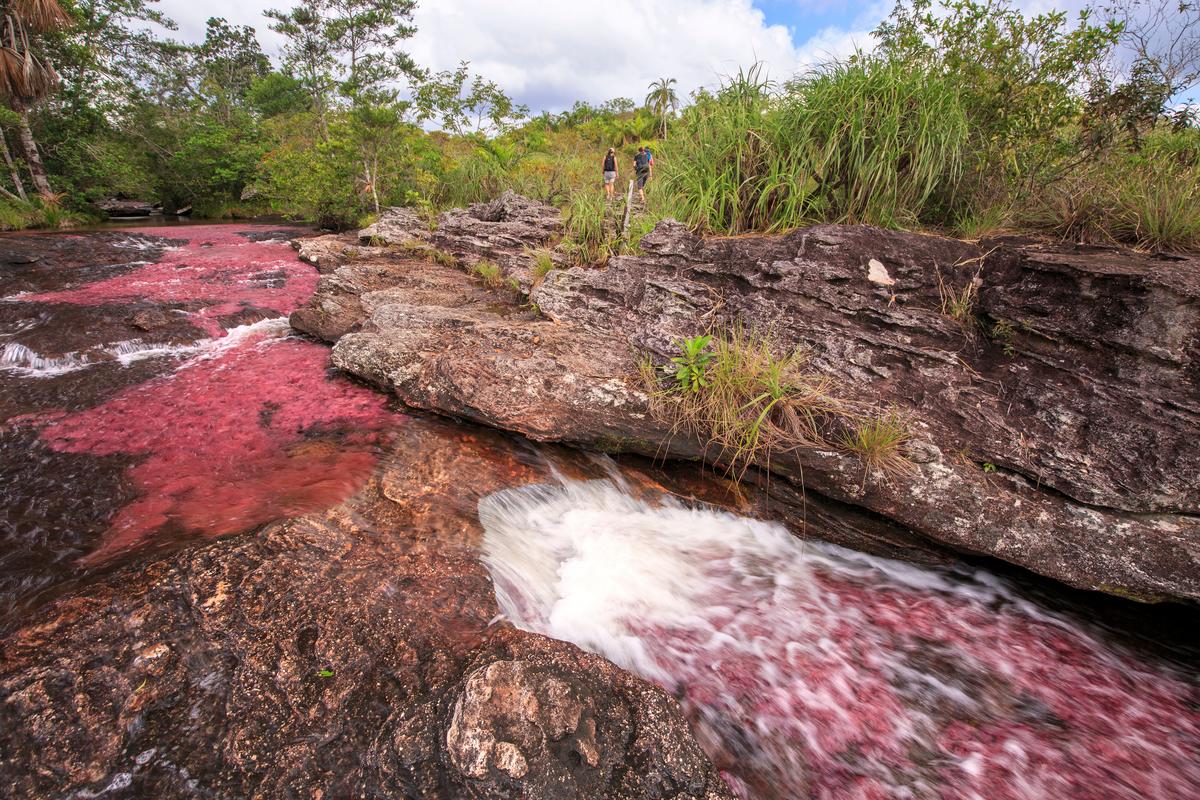
- Share a tinto (sweet black coffee) at a sidewalk café, eat arepas and empanadas from a street cart, take a salsa lesson in Cali, sail a dhow at sunset in Cartagena harbour, hike through the cloud forest of the Cocora Valley, visit a family-owned coffee finca, browse Bogotá's Usaquén flea market on Sundays, and swim in the Caño Cristales (River of Five Colours, June–November).
Practical tips
- Colombia is affordable — budget USD 50–150/day depending on style.
- Carry small bills; many vendors can't break large notes.
- Don't flash expensive phones or jewellery, especially in Bogotá.
- Altitude sickness is possible in Bogotá (2,640 m) — take it easy on day one.
- Tap water is safe in Bogotá and Medellín; drink bottled in smaller towns and the coast.
- Learn basic Spanish — English is limited outside tourist zones.
Photography tips
- Cartagena's colourful balconies and doorways photograph best in early morning light before crowds. Cocora Valley: the wax palms against misty mountains peak at dawn. Medellín's Comuna 13 street art is vivid under overcast skies (which reduce glare). Bogotá: capture the city from Montserrate at sunset for golden Andes light. Tayrona: Cabo San Juan's headland is best photographed from the lookout at sunset.
Timing
- Plan 2–3 days for Cartagena, 3–4 days for Medellín, 2–3 days for Bogotá, 2–3 days for the Coffee Triangle, 2–3 days for Tayrona/Santa Marta, 5–6 days for the Lost City trek. A comprehensive Colombia trip takes 14–21 days.
Keeping it authentic
- Colombian culture is not performed for tourists. The cumbia and salsa rhythms heard in Cartagena's plazas, the coffee-processing traditions of the Eje Cafetero, the transformation narrative of Medellín, and the Indigenous Kogi communities of the Sierra Nevada de Santa Marta represent genuine cultural expressions. The pot-gathering tradition (sancocho by a river), the Sunday Ciclovia in Bogotá, and the warmth of Colombian hospitality (tinto coffee offered everywhere) are daily realities.
Culture, customs and safety
Cultural heritage
Colombia’s cultural heritage blends Indigenous, African, and Spanish influences across 87 ethnic groups. The country has 9 UNESCO World Heritage Sites including Cartagena, San Agustín Archaeological Park, and the Coffee Cultural Landscape. Colombian music spans cumbia, vallenato, salsa, reggaeton, and champeta. Fernando Botero and Gabriel García Márquez (Nobel Literature 1982) define Colombian visual and literary art. The Barranquilla Carnival (UNESCO Intangible Heritage) is the world’s second-largest carnival after Rio.
Local customs & etiquette
Greet with a handshake or a kiss on the right cheek (between men and women). Address people with ‘Usted’ (formal you) initially. Colombians value punctuality in business but social events start 30–60 min late. Dress neatly — appearance matters. Never refer to Colombia as ‘Columbia.’ Bring a gift (flowers, pastries, or rum) when visiting a home. ‘Tinto’ (small, sweet black coffee) is offered everywhere and usually free. Tip 10% in restaurants (often included as ‘propina’ on the bill).
Safety notes
US State Department rates Colombia Level 2 (exercise increased caution; do not travel to certain areas). Major tourist cities (Cartagena, Medellín, Bogotá) have improved dramatically. Petty crime (pickpocketing, phone-snatching) is common. Use ride-hailing apps at night. Avoid border areas (Venezuela, Ecuador, Panama/Darién Gap). Don’t accept drinks or food from strangers (scopolamine drugging is a known risk). Stick to tourist zones and use registered tour operators.