Last verified: June 2026. Caño Cristales is open for the 2026 tourism season, but access, flight schedules, permitted trails, and visitor rules can change. Confirm your dates with Parques Nacionales Naturales, Cormacarena, and your tour operator before booking.
Caño Cristales is worth visiting if you want one of Colombia’s most unusual nature trips and you are comfortable with remote logistics, guided hiking, and strict environmental rules. The river sits near La Macarena in Meta, inside Parque Nacional Natural Sierra de La Macarena, where red, green, yellow, pink, and dark-blue tones appear when the aquatic plants, clear water, sunlight, and rock formations line up during the color season.
This is not a place to visit on your own or squeeze into a casual afternoon. Most travelers fly to La Macarena, join an authorized guided tour, attend the required orientation, and spend one or more full days hiking assigned trails. If you are building a broader Colombia travel guide or South America travel planning itinerary, Caño Cristales works best as a dedicated three- to five-day detour.

Quick Answer: Is Caño Cristales Worth Visiting?
Yes, Caño Cristales is worth visiting for travelers who want a rare, highly regulated ecotourism experience rather than an easy waterfall day trip. Go for the color season, the geology, the hiking, the local Llanero culture, and the chance to support community-based tourism in La Macarena.
Skip it if you need flexible independent travel, luxury infrastructure, or a low-effort stop between major Colombian cities.
Key Takeaways
- Best time: June to November is generally the strongest window for color, though the 2026 season officially opened on May 29 and is expected to run into December.
- Gateway town: La Macarena is the base for Caño Cristales. Most visitors fly in from Bogotá or Villavicencio.
- Tour required: You should book with an authorized operator. Trail access is controlled to protect the park.
- Trip length: Three days and two nights is the practical minimum; four or five days gives you a better buffer for weather, trail assignments, and side trips.
- Rules matter: Do not use sunscreen, creams, makeup, or insect repellent during river-trail visits where prohibited. Wear long sleeves, a hat, sunglasses, and sun-protective clothing instead.
- Swimming: Swimming is allowed only in designated pools, never on the plant-covered sections.
Caño Cristales Trip Planner
| Planning question | Best answer |
|---|---|
| Where is Caño Cristales? | Near La Macarena in Meta, Colombia, inside Parque Nacional Natural Sierra de La Macarena. |
| When should you go? | Plan for June through November for the best color odds. In 2026, the official season opened May 29 and is expected to run into December, conditions permitting. |
| How do you get there? | Fly to La Macarena Airport. SATENA lists flights from Bogotá on Wednesday, Friday, and Sunday, and from Villavicencio on Monday and Friday. Schedules can change. |
| Can you visit independently? | No. Use an authorized tour operator and follow your assigned trail and guide instructions. |
| How long do you need? | Three days is the minimum for most travelers. Four days is better if you want Caño Cristales plus Caño Cristalitos or Laguna del Silencio. |
| How hard is the hike? | Expect moderate to demanding trails, often 5 to 10 kilometers with several hours of heat, uneven rock, and water crossings. |
| Can you swim? | Yes, but only in marked swimming areas where guides allow it. |
| What should you not bring? | Single-use plastics and chemical products for the river trails. Ask your operator for the current prohibited-items list before departure. |
What Is Caño Cristales?

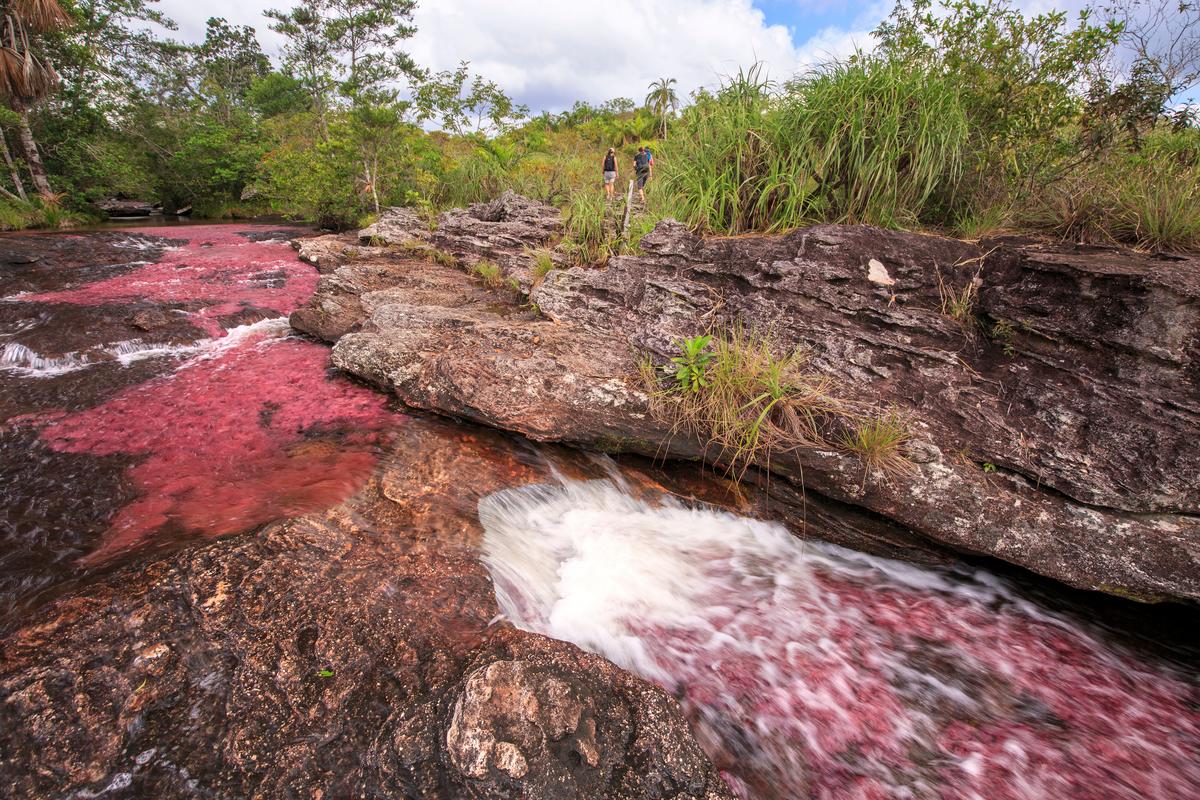
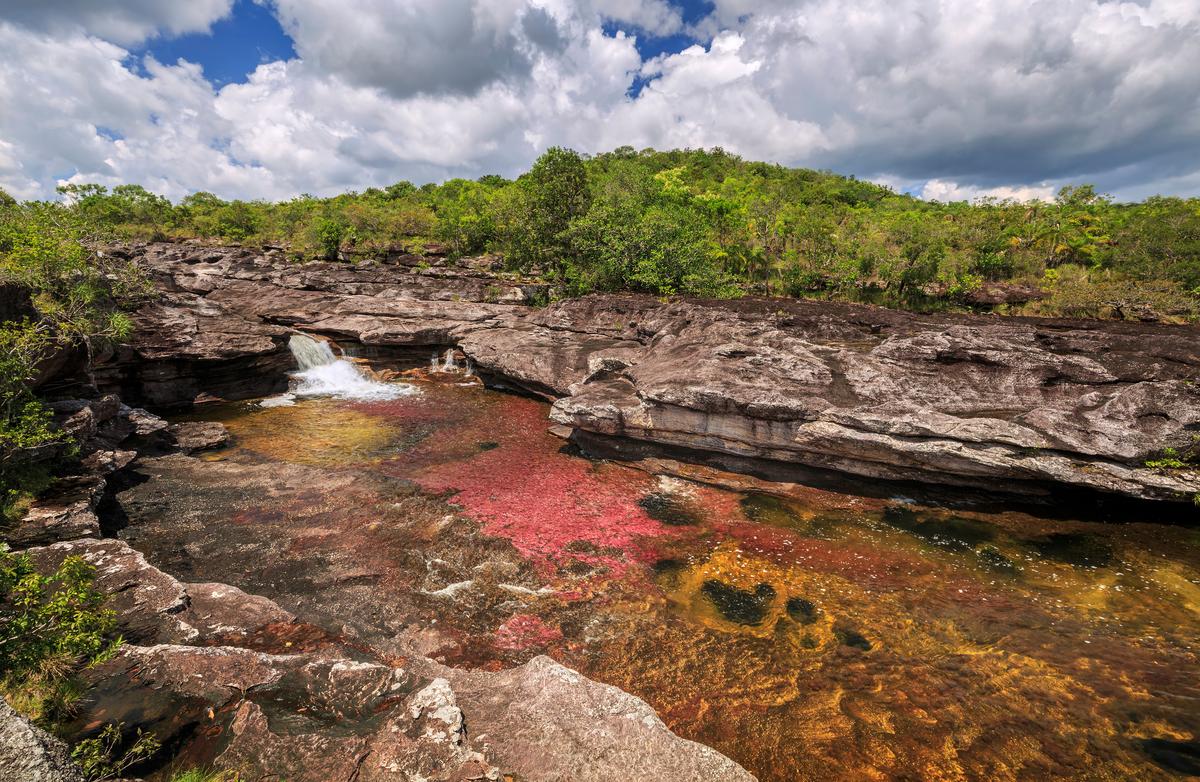
Caño Cristales is a river and ecotourism area in the Sierra de La Macarena region of Meta, Colombia. It is often called the River of Five Colors or Colombia’s Rainbow River because sections of the riverbed can appear red, green, yellow, pink, blue, and black during the right seasonal conditions.
The main color comes from an aquatic plant long known as Macarenia clavigera. The accepted scientific name is now Rhyncholacis clavigera, though travelers, guides, and older sources still commonly use Macarenia. It grows on rock in fast, clear water and changes appearance with sunlight, water level, and the plant’s seasonal cycle.
The water is not “dyed” by minerals. The color effect comes from the aquatic plants, clear water, rock formations, shadows, and reflected sky. That distinction matters because the ecosystem is fragile. Even small amounts of sunscreen, repellent, lotion, or makeup can harm the river plants that make the site special.
Image Gallery





Best Time to Visit Caño Cristales
The best time to visit Caño Cristales is usually from June to November, when rain and sunlight create better conditions for the aquatic plants to show color. In 2026, Parques Nacionales Naturales announced the season opening on May 29, with authorized experiences expected through December, depending on environmental and operational conditions.
Do not treat the season as a guarantee. Heavy rain, cloudy days, low sunlight, drought, trail maintenance, or conservation closures can affect what you see. The most sensible approach is to book with a local operator that can explain current trail conditions instead of promising a perfect rainbow every day.
| Month | What to expect |
|---|---|
| May | Possible early opening in some years, but conditions may still be developing. Confirm before booking. |
| June | Start of the usual color season. Good choice if flights and trails are operating. |
| July to September | Often the strongest planning window for color, though rain can affect hiking and visibility. |
| October to November | Still a good season window, with more rain risk and changing trail conditions. |
| December to April | Usually not the best time for Caño Cristales colors. Some nearby attractions may still operate, but do not book expecting peak river color. |
How to Get to Caño Cristales

The gateway to Caño Cristales is La Macarena. You do not drive straight to the river from Bogotá or Medellín. Most travelers fly to La Macarena Airport, then continue with their guide by boat on the Guayabero River, 4×4 vehicle, and hiking trail, depending on the assigned route.
For current routing, check SATENA’s La Macarena flight page and compare fares early. If your schedule is flexible, use ViaTravelers’ guide to the best day to book flights before locking in the full tour package.
Route Options
| Route | Best for | Watch-outs |
|---|---|---|
| Bogotá to La Macarena | Travelers who want the simplest route from an international arrival point. | Flights are seasonal and limited. Book early during weekends and holidays. |
| Villavicencio to La Macarena | Travelers already visiting the Llanos region or using Villavicencio as a staging point. | You may need an overnight in Villavicencio depending on flight times. |
| Medellín or other cities via package | Travelers who want a bundled itinerary with flights, lodging, meals, and guided excursions. | Compare what is included. Some packages look cheaper because airfare, taxes, or park fees are separate. |
Road travel to remote parts of Meta can be slow and security-sensitive. The U.K. Foreign, Commonwealth & Development Office specifically advises travelers visiting Caño Cristales to travel by air from La Macarena with a reputable tour company. Treat that as practical guidance, not a minor detail.
Do You Need a Tour or Permit?
Yes. Caño Cristales is a controlled ecotourism area. Visitors should book through an authorized tour operator, follow guide instructions, attend required briefings, and visit only the trails assigned for that day. Parques Nacionales Naturales has warned travelers not to buy packages that include unregulated or unauthorized attractions.
A good operator should clearly explain what is included before you pay. Ask about your flight, lodging, meals, guide, park and municipal fees, insurance, river transport, 4×4 transport, trail assignments, cancellation terms, and what happens if weather or conservation rules change the plan. If you are debating whether to handle pieces yourself or use a package, this guide to using a travel agent vs booking online can help you compare the tradeoffs.
Affiliate disclosure: ViaTravelers may earn a commission from partner links at no extra cost to you. Choose a tour based on authorized access, clear inclusions, safety practices, and fair cancellation terms—not just the lowest advertised price.
Suggested Caño Cristales Itinerary
The best itinerary depends on your flight schedule and the trail assignments available when you arrive. Use this as a realistic planning model, not a fixed promise.
3 Days / 2 Nights: Minimum Practical Trip
- Day 1: Fly to La Macarena, attend the required orientation, settle into your hotel, and visit an easier nearby site if permitted.
- Day 2: Full-day Caño Cristales excursion with boat transfer, 4×4 ride, guided hike, assigned trail, lunch, and designated swimming if allowed.
- Day 3: Short morning activity if the flight schedule allows, then return flight.
4 Days / 3 Nights: Better for Most Travelers
Four days gives you breathing room for a second trail, Caño Cristalitos, Laguna del Silencio, or a cultural activity in La Macarena. This is the better choice if you are traveling a long way for the river and do not want one cloudy or rainy day to define the trip.
5 Days / 4 Nights: Best for Deeper Nature Travel
A five-day plan can include more of the Sierra de La Macarena region, such as Laguna del Silencio or Raudal de Angosturas I, when officially authorized and available. It also gives you more time to experience the local food, music, birdlife, and community tourism around La Macarena.
What to See at Caño Cristales

You will not choose every stop independently. Authorities and operators assign trails based on conservation rules, weather, capacity, and current conditions. That said, common names you may hear include Los Pianos, Salto del Águila, Los Pailones, Caño Escondido, Caño Cajuche, Los Cuarzos, Piscina del Turista, and Manto de la Virgen.
Los Ochos

Los Ochos is known for rounded rock pools that can resemble figure eights from above. It is one of the most photogenic river sections when the plants and sunlight are cooperating. Stay on the approved path and do not step on plant-covered areas for a better angle.
Tapete Rojo and Color Sections
Some of the most striking parts of Caño Cristales are the plant-covered riverbeds often described as red carpets. Your guide will explain where you can walk, where you can photograph, and where the plants must be left completely undisturbed.
Caño Cristalitos
Caño Cristalitos is a smaller nearby stream often included on arrival-day or shorter excursions. It can be a good introduction to the landscape before the longer Caño Cristales hike, depending on trail assignments.
Laguna del Silencio

Laguna del Silencio is a quieter side trip focused on wetlands, forest, canoe travel, birdwatching, and community-led nature experiences. It is a good add-on if you want more than the classic river photos.
Raudal de Angosturas I
Raudal de Angosturas I combines the Guayabero River, rock formations, and archaeological interest, including petroglyphs in the wider area. Visit only through authorized operators and do not touch or mark rock art.
Can You Swim in Caño Cristales?

You can swim in some parts of Caño Cristales, but only where your guide says it is allowed. Swimming is not permitted on plant-covered sections, and you should never enter a restricted pool just because it looks calm or empty.
Do not apply sunscreen, insect repellent, body lotion, makeup, or creams before entering river-trail areas where those products are prohibited. Wear UPF-rated long sleeves, lightweight long pants, a wide-brim hat, and sunglasses instead. Keep repellent for La Macarena town, evenings, and non-river settings where your operator says it is allowed.
What to Pack for Caño Cristales
Pack for heat, rain, rock, mud, and chemical-free river rules. The goal is to protect yourself without harming the plants.
| Bring | Why it matters |
|---|---|
| Long-sleeved UPF shirt | Sun protection without sunscreen on river trails. |
| Lightweight long pants or leggings | Protection from sun, brush, and insects. |
| Hat and sunglasses | Essential because many hikes have exposed sections. |
| Reusable water bottle or hydration bladder | Single-use plastics may be restricted, and hikes are hot. |
| Hiking shoes with grip | Trails can include wet rock, mud, and uneven terrain. |
| Swimsuit | Useful for designated natural pools. |
| Dry bag or waterproof phone pouch | Boat rides, rain, and water crossings can soak gear. |
| Light rain jacket | Weather can change quickly during the color season. |
| Cash in Colombian pesos | Useful for tips, small purchases, and places that do not accept cards. |
Ask your operator for the current restricted-items list before you pack. Rules can be stricter than normal national-park packing advice because the river plants are unusually sensitive.
Where to Stay Near Caño Cristales

Stay in La Macarena if Caño Cristales is the main reason for your trip. It is the gateway town for guided excursions, airport pickup, orientation, and river access. Accommodation is simpler than in major Colombian cities, so confirm air conditioning or fan, private bathroom, meal inclusions, and pickup details before booking.
Villavicencio can work as a staging point if your flight schedule requires it or if you are combining Caño Cristales with the Llanos region. It is not a convenient base for daily visits to Caño Cristales itself.
How Much Does Caño Cristales Cost?
Caño Cristales is usually more expensive than a standard Colombia day trip because access often bundles flights or charters, local transport, guides, lodging, meals, insurance, park-related fees, and trail coordination. Local 2026 package examples vary widely depending on departure city, hotel level, trip length, and whether airfare and taxes are included.
Before booking, compare the total trip cost rather than the headline price. A cheaper package may exclude flights, park or municipal fees, travel insurance, single supplements, airport taxes, extra activities, or tips. Use ViaTravelers’ guide to ways to save money for travel for general budgeting ideas, but do not cut corners on authorized access or safety.
| Cost item | What to confirm |
|---|---|
| Flights | Are Bogotá, Villavicencio, or Medellín flights included, or booked separately? |
| Lodging | What hotel level, room type, fan or air conditioning, and private bathroom are included? |
| Meals | Are all meals included from arrival lunch to departure breakfast? |
| Guide and permits | Is the operator authorized, and are park/municipal fees included? |
| Transport | Are boat rides, 4×4 transfers, airport pickup, and local transfers included? |
| Insurance | Does the package include assistance coverage, and should you buy separate travel insurance? |
| Extras | Ask about tips, optional side trips, taxes, single supplements, and cancellation fees. |
Safety and Health Tips
Caño Cristales can be visited responsibly, but it is in a remote region and should be planned carefully. Check your government’s Colombia travel advisory before departure, use air travel to La Macarena, book with a reputable operator, avoid unregulated attractions, and do not improvise overland routes through remote areas.
- Yellow fever: Speak with a travel-health professional before your trip. The CDC recommends yellow fever vaccination for many Colombia itineraries, and Colombian tourism guidance notes that proof may be requested for some rural, jungle, or national-park destinations.
- Timing: If you need yellow fever vaccination, plan well ahead. CDC guidance says travelers should be vaccinated at least 10 days before travel to areas where vaccination is recommended.
- Insurance: Buy travel insurance that includes medical care and evacuation support, especially because La Macarena is remote.
- Physical readiness: Expect heat, humidity, uneven footing, and several hours of hiking. If you have knee, balance, heart, or heat-sensitivity concerns, ask the operator about the easiest permitted route before booking.
- Local rules: Follow guide instructions even when they seem strict. The rules exist to protect visitors, the river plants, and the community tourism model.
Responsible Travel Rules for Caño Cristales
Caño Cristales is beautiful because it is regulated. The more popular it becomes, the more important those rules get.
- Use only authorized agencies and guides.
- Do not step on aquatic plants or leave marked paths.
- Do not use sunscreen, creams, repellent, makeup, or lotions during restricted river-trail visits.
- Bring reusable containers and carry out what you bring in.
- Respect wildlife and never feed animals.
- Do not touch petroglyphs, pictographs, or rock art.
- Choose local operators that clearly explain conservation rules and community benefits.
Is Caño Cristales Right for Your Trip?
Caño Cristales is a strong fit if you want a nature-first trip, can handle a few days in a small remote town, and understand that conservation rules come before convenience. It is not the best fit if you need daily flight options, luxury service, independent trail access, or a guaranteed photo outcome.
For travelers who accept those tradeoffs, the reward is real: a rare river landscape, a locally managed tourism economy, and a trip that feels very different from Colombia’s better-known city, coffee-region, and Caribbean routes. It belongs on a bucket list trip only if you are willing to treat the place with care.
FAQs
Is Caño Cristales open in 2026?
Yes. The 2026 season officially opened on May 29, 2026, and authorities announced visits through December, conditions permitting. Always confirm current access before booking because weather, conservation rules, and operational decisions can change.
What is the best month to visit Caño Cristales?
July through September is often a strong planning window, but June through November is the broader color season. The best month in any given year depends on rain, sunlight, water levels, and trail conditions.
Can you visit Caño Cristales without a tour?
No. Visitors should use authorized guides and operators. Trail access is controlled to protect the river and keep visitors away from unregulated areas.
How do you get to Caño Cristales from Bogotá?
Fly from Bogotá to La Macarena when seasonal flights are operating, then continue with your guided tour by local transfers, boat, 4×4, and hiking trail. Do not assume daily flights are available.
Can you swim in Caño Cristales?
Yes, but only in designated swimming areas approved by your guide. Do not swim, step, or sit where river plants are growing.
Why is Caño Cristales so colorful?
The colors come mainly from the aquatic plant commonly called Macarenia and now accepted scientifically as Rhyncholacis clavigera. Clear water, sunlight, rock, and seasonal water levels all affect how the colors appear.
How hard is the Caño Cristales hike?
Expect moderate to demanding hiking. Official guidance describes trails of roughly 5 to 10 kilometers and about 5 to 7 hours, depending on the assigned route.
Do you need yellow fever vaccination for Caño Cristales?
You should speak with a travel-health professional before going. Yellow fever vaccination is recommended for many Colombia itineraries, and proof may be requested for some rural, jungle, or national-park destinations. Plan ahead because protection and documentation are not instant.
Where should you stay for Caño Cristales?
Stay in La Macarena if Caño Cristales is your main goal. Villavicencio is better as a pre- or post-flight staging point, not as a daily base for the river.
How much does a Caño Cristales tour cost?
Costs vary by departure city, hotel level, number of days, and whether flights are included. Compare the full package details, including airfare, guide, accommodation, meals, insurance, park fees, municipal fees, and cancellation terms.
Final Thoughts
Caño Cristales is one of Colombia’s most memorable nature trips when you plan it with realistic expectations. Go during the color season, fly into La Macarena, use an authorized guide, pack for chemical-free sun protection, and leave space in your itinerary for weather and trail changes.
The river does not need hype. It needs travelers who understand that the rules are part of the experience. Plan well, move lightly, and you will give yourself the best chance of seeing Colombia’s Rainbow River at its best.