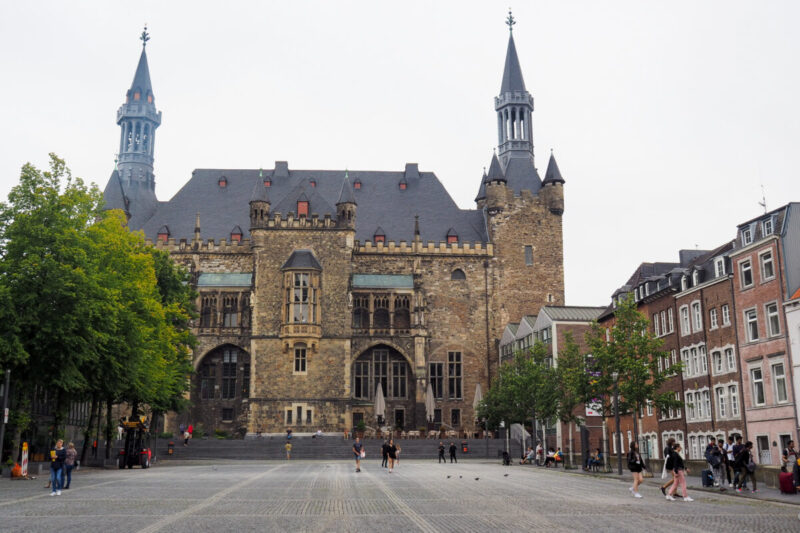
Charlemagne’s palatine chapel (c. 800 AD) creating Europe’s oldest cathedral buildings where thirty-one German kings and twelve queens were crowned (936-1531), featuring octagonal basilica with columns and marble from ancient Rome, Ravenna, Trier, and Cologne representing “where Antiquity ended and Europe as we know it today was born.” UNESCO World Heritage Cathedral Treasury housing northern Europe’s most important ecclesiastical collection including Lothar’s gold cross, precious stones, and silver-gilt Charlemagne reliquary-bust within this first-listed 1978 World Heritage site. Roman thermal springs heritage spanning 2,000+ years where 50-acre thermal complexes accommodated 100 swimmers simultaneously, now preserved through modern Carolus Thermen spa connecting visitors with ancient Celtic-Roman bathing traditions. Tri-border European position 61km west of Cologne directly touching Belgium and Netherlands, creating “Europe in miniature” where the continent’s roots, values, and ideals converge since Carolingian times. Charlemagne’s 814 burial site symbolizing Western unification and spiritual-political revival, making this strategic border city the living embodiment of European heritage where imperial grandeur meets contemporary thermal wellness across Germany’s westernmost major urban center.
The destination guide
Aachen

Travel guides for Aachen
Things to do (1)
More guides featuring Aachen (4)
At a glance
- German
- Urban cityscape
- Thermal springs
- Gothic cathedral
- Belgian-Dutch border
How Aachen scores
Character
Editorial scores on a 10-point scale, weighed against destinations of the same kind.
Travel safety snapshot
SafePlace indicators use their source 100-point scale; higher is more favourable. Planning context, not a live travel advisory — check official government guidance before you go.
When to go
Best months to visit: April, May, June, July, August, September, October, November and December.
- January: 0.8 to 5.1 degrees Celsius, 99.4 millimetres of rain, best-time score 2 out of 5.
- February: 2 to 7.7 degrees Celsius, 77.7 millimetres of rain, best-time score 2 out of 5.
- March: 3.2 to 10.4 degrees Celsius, 79.6 millimetres of rain, best-time score 3 out of 5.
- April: 5.2 to 13.7 degrees Celsius, 58.4 millimetres of rain, best-time score 5 out of 5.
- May: 9 to 17.8 degrees Celsius, 76.6 millimetres of rain, best-time score 5 out of 5.
- June: 13.5 to 22.1 degrees Celsius, 80.4 millimetres of rain, best-time score 5 out of 5.
- July: 14.4 to 22.9 degrees Celsius, 74.4 millimetres of rain, best-time score 4 out of 5.
- August: 14.9 to 23.2 degrees Celsius, 69.2 millimetres of rain, best-time score 4 out of 5.
- September: 12 to 19.8 degrees Celsius, 76.1 millimetres of rain, best-time score 5 out of 5.
- October: 9.3 to 15 degrees Celsius, 76.4 millimetres of rain, best-time score 5 out of 5.
- November: 4.6 to 9.5 degrees Celsius, 69.1 millimetres of rain, best-time score 4 out of 5.
- December: 2.7 to 6.8 degrees Celsius, 82.7 millimetres of rain, best-time score 5 out of 5.
Month-by-month conditions and packing advice
- January
- Cold, some rain January in Aachen: cold, damp winter weather outside the market season narrows the trip. Crowds: January in Aachen is workable with normal seasonal planning; build in layers, weather checks, and a mix of indoor and outdoor activities. Pack: Pack warm layers, a coat, and comfortable shoes for cold mornings and evenings. Add a rain jacket or compact umbrella.
- February
- Cold, some rain February in Aachen: cold, damp winter weather outside the market season narrows the trip. Crowds: February in Aachen is workable with normal seasonal planning; build in layers, weather checks, and a mix of indoor and outdoor activities. Pack: Pack warm layers, a coat, and comfortable shoes for cold mornings and evenings. Add a rain jacket or compact umbrella.
- March
- Cool to mild, some rain March in Aachen: early spring is usable but more variable. Crowds: March in Aachen is workable with normal seasonal planning; build in layers, weather checks, and a mix of indoor and outdoor activities. Pack: Pack layered clothing and comfortable walking shoes. Add a rain jacket or compact umbrella.
- April
- Cool to mild, occasional rain April in Aachen: cathedral visits, old-town walks, cafes, thermal heritage, day trips, and Christmas-market atmosphere align best. Crowds: April in Aachen is workable with normal seasonal planning; build in layers, weather checks, and a mix of indoor and outdoor activities. Pack: Pack layered clothing and comfortable walking shoes.
- May
- Cool to mild, some rain May in Aachen: cathedral visits, old-town walks, cafes, thermal heritage, day trips, and Christmas-market atmosphere align best. Crowds: May in Aachen is workable with normal seasonal planning; build in layers, weather checks, and a mix of indoor and outdoor activities. Pack: Pack layered clothing and comfortable walking shoes. Add a rain jacket or compact umbrella.
- June
- Mild to warm, some rain June in Aachen: cathedral visits, old-town walks, cafes, thermal heritage, day trips, and Christmas-market atmosphere align best. Crowds: June in Aachen is workable with normal seasonal planning; build in layers, weather checks, and a mix of indoor and outdoor activities. Pack: Pack layered clothing and comfortable walking shoes. Add a rain jacket or compact umbrella.
- July
- Mild to warm, some rain July in Aachen: summer and late fall can be rewarding with crowd or weather planning. Crowds: July in Aachen is workable with normal seasonal planning; build in layers, weather checks, and a mix of indoor and outdoor activities. Pack: Pack layered clothing and comfortable walking shoes. Add a rain jacket or compact umbrella.
- August
- Mild to warm, occasional rain August in Aachen: summer and late fall can be rewarding with crowd or weather planning. Crowds: August in Aachen is comfortable for sightseeing, neighborhoods, food stops, day trips, and outdoor time with limited weather friction. Pack: Pack layered clothing and comfortable walking shoes.
- September
- Cool to mild, some rain September in Aachen: cathedral visits, old-town walks, cafes, thermal heritage, day trips, and Christmas-market atmosphere align best. Crowds: September in Aachen is workable with normal seasonal planning; build in layers, weather checks, and a mix of indoor and outdoor activities. Pack: Pack layered clothing and comfortable walking shoes. Add a rain jacket or compact umbrella.
- October
- Cool to mild, some rain October in Aachen: cathedral visits, old-town walks, cafes, thermal heritage, day trips, and Christmas-market atmosphere align best. Crowds: October in Aachen is workable with normal seasonal planning; build in layers, weather checks, and a mix of indoor and outdoor activities. Pack: Pack layered clothing and comfortable walking shoes. Add a rain jacket or compact umbrella.
- November
- Cold, occasional rain November in Aachen: summer and late fall can be rewarding with crowd or weather planning. Crowds: November in Aachen is workable with normal seasonal planning; build in layers, weather checks, and a mix of indoor and outdoor activities. Pack: Pack layered clothing and comfortable walking shoes.
- December
- Cold, some rain December in Aachen: cathedral visits, old-town walks, cafes, thermal heritage, day trips, and Christmas-market atmosphere align best. Crowds: December in Aachen is workable with normal seasonal planning; build in layers, weather checks, and a mix of indoor and outdoor activities. Pack: Pack warm layers, a coat, and comfortable shoes for cold mornings and evenings. Add a rain jacket or compact umbrella.
- March
- February
- January
- April
- September
- August
- July
- June
Know before you go
About
Charlemagne’s palatine chapel (c. 800 AD) creating Europe’s oldest cathedral buildings where thirty-one German kings and twelve queens were crowned (936-1531), featuring octagonal basilica with columns and marble from ancient Rome, Ravenna, Trier, and Cologne representing “where Antiquity ended and Europe as we know it today was born.” UNESCO World Heritage Cathedral Treasury housing northern Europe’s most important ecclesiastical collection including Lothar’s gold cross, precious stones, and silver-gilt Charlemagne reliquary-bust within this first-listed 1978 World Heritage site. Roman thermal springs heritage spanning 2,000+ years where 50-acre thermal complexes accommodated 100 swimmers simultaneously, now preserved through modern Carolus Thermen spa connecting visitors with ancient Celtic-Roman bathing traditions. Tri-border European position 61km west of Cologne directly touching Belgium and Netherlands, creating “Europe in miniature” where the continent’s roots, values, and ideals converge since Carolingian times. Charlemagne’s 814 burial site symbolizing Western unification and spiritual-political revival, making this strategic border city the living embodiment of European heritage where imperial grandeur meets contemporary thermal wellness across Germany’s westernmost major urban center.
Best time to visit
Spring (March-May)
Temperatures rise from 8-18°C (46-64°F). The parks around the thermal quarter green up beautifully, and the Easter period brings local markets. Student energy is at its peak during the semester. Pleasant for walking the Old Town without summer crowds.Summer (June-August)
Warm and occasionally humid, with highs of 22-28°C (72-82°F). Outdoor café culture thrives. The open-air pools at Carolus Thermen are at their best. Cultural festivals and events run through the season.Autumn (September-November)
Mild and increasingly atmospheric, with temperatures from 8-18°C (46-64°F). Autumn foliage in the surrounding Eifel hills provides beautiful day-trip scenery. Universities resume, re-energizing the city.Winter (November-March)
The Aachen Christmas Market (late November through December 23) is one of Germany’s finest — 140+ stalls surround the Cathedral and Rathaus, with Glühwein and Printen creating the dominant scents. January-February is cold (0-5°C / 32-41°F) but perfect for thermal spa visits.Crowds
Aachen sees peaks during summer tourist season and around the Christmas market (late November–December) and university term starts, with weekends busier; quietest July–August weekdays (locals on holiday) and January–February — generally low to moderate city crowds.
Getting there and around
Getting there
Aachen Hauptbahnhof lies on major international rail corridors. ICE high-speed trains connect to Cologne (35 minutes), Düsseldorf (1 hour), Frankfurt (2 hours 15 minutes), and Berlin (4 hours). Thalys/Eurostar services reach Brussels in 1 hour and Paris in 2 hours 30 minutes. The nearest major airports are Cologne/Bonn (CGN, 90 km) and Düsseldorf (DUS, 100 km), both connected by direct regional trains. By car, the A4 and A44 motorways provide access from the Netherlands and Belgium. Maastricht (Netherlands) is only 35 km away.
Getting around
Aachen’s compact center is entirely walkable — the Cathedral, Rathaus, Elisenbrunnen, and shopping streets all lie within a 10-minute radius. The ASEAG bus network covers the wider city, with single tickets around €2.90 and day passes available. The Carolus Thermen is a 15-minute walk from the center or a short bus ride. For day trips to the Drielandenpunt, Maastricht (25 minutes by bus), or the Eifel hills, regional buses and trains connect efficiently from the Hauptbahnhof. Cycling is popular on flat routes, with rental options near the center. Taxis are metered and reliable.
Top experiences in Aachen
Aachen Cathedral (Aachener Dom)
Read the place guide →The first German UNESCO World Heritage Site (1978), built by Charlemagne beginning in 790 AD as his imperial chapel. The Palatine Chapel at its core is a masterpiece of Carolingian architecture — an octagonal domed space encrusted with Byzantine-style gold mosaics and ringed by galleries where the marble imperial throne still sits. Over 30 Holy Roman Emperors were crowned here across six centuries. Charlemagne’s gilded reliquary shrine and the Cathedral Treasury — containing the Bust of Charlemagne and the Lothar Cross — rank among Europe’s most important collections of medieval art and sacred objects.
Carolus Thermen Thermal Spa
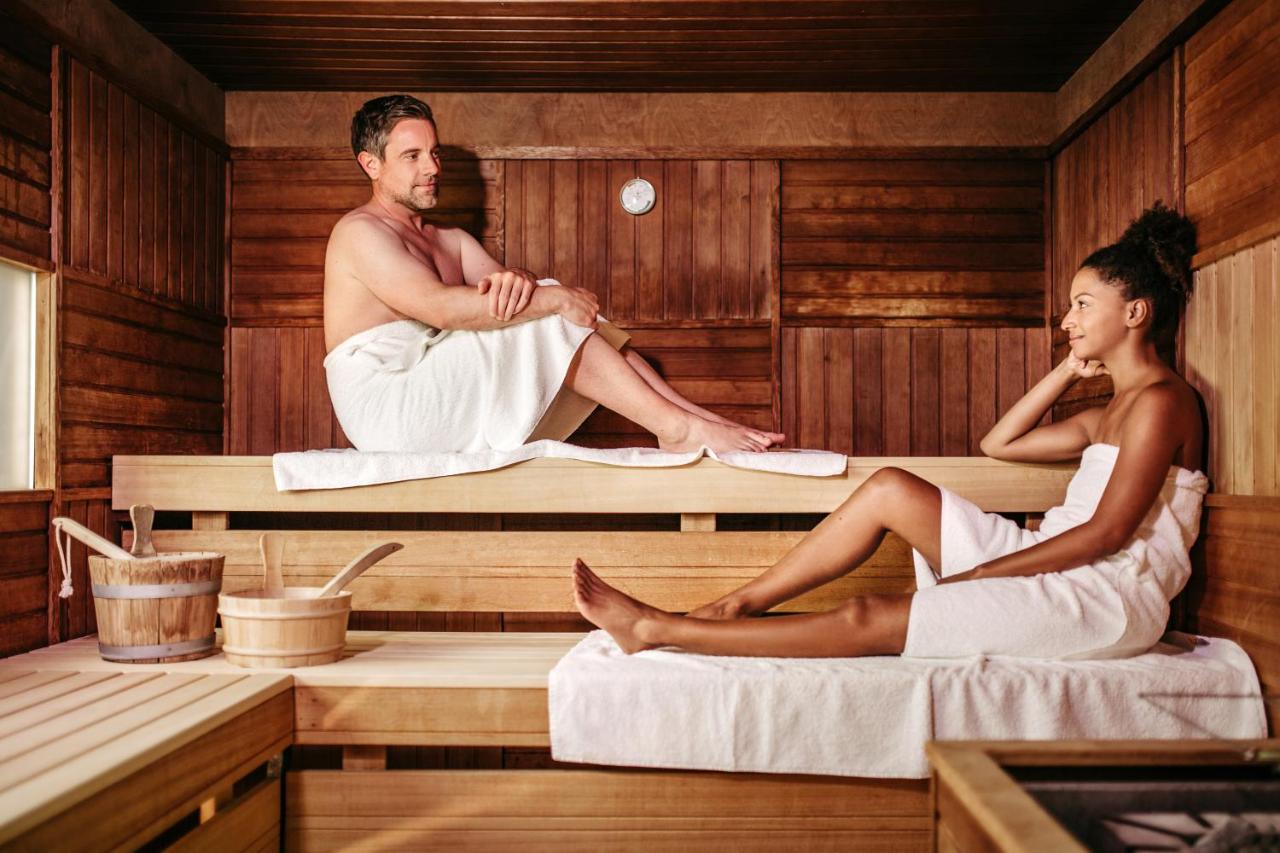
Aachen’s thermal springs have drawn visitors since Roman times, and Carolus Thermen channels 2,000 years of bathing tradition into a modern wellness complex. Indoor and outdoor pools range from 28°C to 38°C, fed by some of Europe’s hottest natural sulfur springs (sources reaching 74°C underground). The sauna landscape includes Finnish saunas, steam baths, and a Roman-themed relaxation area. Float in the warm outdoor pools at night, steam rising around you, and you’ll understand why Charlemagne made this city his capital.
Rathaus (Town Hall)
Built in the 14th century over the foundations of Charlemagne’s original palace, the Rathaus served as the coronation banquet hall for newly crowned emperors. The Gothic-Baroque facade presides over the Marktplatz, flanked by the Granus Tower — the last standing fragment of Charlemagne’s royal residence. Inside, the Coronation Hall displays full-length 19th-century frescoes depicting key moments of Charlemagne’s life, and replicas of the Imperial Crown Jewels. The juxtaposition of living medieval architecture with active civic governance makes this more than a museum.
Centre Charlemagne Museum
This modern museum occupies the heart of Aachen’s historic axis between the Cathedral and Rathaus. Interactive exhibitions trace the city’s trajectory from Roman spa settlement through Charlemagne’s imperial capital to modern university city. The Charlemagne galleries explore how one ruler’s ambition transformed a minor thermal town into the center of European power and culture. Temporary exhibitions connect Aachen’s past to contemporary themes, and the city model room provides an excellent spatial orientation for walking the historic core.
Elisenbrunnen & Old Town
The Elisenbrunnen, a neoclassical pavilion on Friedrich-Wilhelm-Platz, houses two fountains dispensing naturally heated sulfurous mineral water (warm, pungent, and bracingly medicinal to taste). It’s the public face of Aachen’s thermal heritage, free to visit and a rite of passage for every visitor. The surrounding Old Town radiates outward in narrow streets lined with cafés and specialist shops. The Puppenbrunnen (Puppet Fountain) on Kram invites playful interaction — its articulated brass figures can be posed by passersby. Aachen’s famous Printen gingerbread shops, descendants of a centuries-old baking tradition, perfume the streets.
Editor-curated picks carried over from our original guide. Where a full place guide exists, the card links to it.




Worth booking ahead in Aachen
Hand-picked from the operators our guides already send readers to. Prices and availability are live on the partner site.
BrowseViator
Tours and tickets in Aachen on Viator (opens Viator in a new tab)
Viator's full list of bookable tours and tickets in Aachen.
BrowseGetYourGuide
Experiences in Aachen on GetYourGuide (opens GetYourGuide in a new tab)
Everything GetYourGuide sells in Aachen, with the cancellation terms on each listing.
Where to stayBooking.com
Stays in Aachen (opens Booking.com in a new tab)
Live rates and availability for Aachen on Booking.com; filter by neighbourhood once you know where your days start.
We earn a commission if you book through these links, at no extra cost to you. It is how we keep the guides free and independent.
Tips from the field
Highlights
- Aachen Cathedral – First German UNESCO site, Charlemagne's imperial chapel
- Carolus Thermen – 2,000-year tradition of thermal bathing
- Rathaus – 14th-century coronation hall built on Charlemagne's palace
- Printen Gingerbread – Centuries-old specialty found nowhere else
- Three-Country Point – Where Germany, Belgium, and the Netherlands meet
- Christmas Market – One of Germany's most atmospheric
Best activities
- Begin at the Cathedral to absorb Charlemagne's 1,200-year-old architectural vision, then cross to the Rathaus to see where crowned emperors celebrated. The Centre Charlemagne museum provides the narrative thread connecting these sites. Taste the sulfurous thermal water at the Elisenbrunnen — an acquired taste but an essential Aachen ritual.
- Spend an afternoon at Carolus Thermen soaking in naturally heated mineral pools, a tradition stretching back to the Romans. Explore the Old Town's student-fueled café scene and shop for authentic Printen gingerbread at centuries-old bakeries. Take a day trip to the Drielandenpunt (Three-Country Point) where Germany, Belgium, and the Netherlands meet. In December, Aachen's Christmas market transforms the Cathedral quarter into one of Germany's most atmospheric festive markets.
Local experiences
- Taste the sulfurous thermal water at the Elisenbrunnen — it's warm, mineral, and an Aachen rite of passage. Spend a full afternoon soaking in the outdoor pools at Carolus Thermen as steam rises around you. Visit a traditional Printenbaker to sample the range from hard, spiced Printen to soft chocolate-covered versions. Walk the tri-border at Drielandenpunt and stand in three countries at once. Sit in a student café on Pontstraße for craft beer and late-night conversation.
Practical tips
- Dreiländereck (Tri-Border Point): Take ASEAG Bus Route 33 directly from Aachen center to Vaals/Drielandenpunt, where Germany, Belgium, and the Netherlands converge at the highest point of the European Netherlands (Vaalserberg at 322.5 m).
- Aachener Printen: Sample the city's protected spiced gingerbread (Printen) from historic local bakeries such as Nobis Printen, Lambertz, or Bäckerei Klein.
- Thermal Spas: Relax at Carolus Thermen, which channels the city's historic mineral thermal springs into modern thermal baths and saunas.
- Regional Rail Connections: Direct regional express trains (RE1, RE9) link Aachen Hauptbahnhof directly to Cologne (50 mins) and Düsseldorf (1 hr 15 mins).
Photography tips
- The Cathedral's octagonal interior looks best shot from the upper gallery — bring a wide-angle lens for the gold mosaics above. The Rathaus facade photographs well from the Marktplatz, especially in late afternoon light. For the Elisenbrunnen, early morning provides clean compositions without crowds. At Carolus Thermen, outdoor pools at dusk create atmospheric steam shots. During the Christmas market, the Cathedral provides a dramatic backdrop for illuminated stall scenes — blue hour is prime time. The view from Lousberg hill captures the city skyline with the Cathedral dome.
Timing
- Open-air wine festival where Rhineland-Palatinate vintners pour regional wines in a historic courtyard
- Biannual funfair on Bendplatz featuring thrill rides, carnival games, and fireworks finales
- City-wide street festival with a Ferris wheel, live music, and family entertainment across the old town
- Traditional Christmas market around the cathedral and town hall, famous for spiced Aachen Printen and festive stalls
- Colorful Karneval season climax with floats, marching bands, and satirical costumes through the city center
- Prestigious multi-discipline equestrian event drawing top riders and 350,000 spectators each summer
Keeping it authentic
- Aachen wears its Charlemagne heritage naturally rather than performatively. The Cathedral is an active parish church, not merely a museum — regular services are held in the Palatine Chapel, sometimes accompanied by the impressive organ. RWTH Aachen University, one of Europe's leading technical universities, gives the city a genuine student energy with affordable restaurants, late-night cafés, and an irreverent streak that counterbalances the imperial gravitas. The thermal springs have been in continuous use for over a millennium — locals visit Carolus Thermen for genuine relaxation, not as a tourist performance. The tri-border position means Dutch and Belgian influences appear naturally in cuisine and culture rather than as marketing angles.
Culture, customs and safety
Cultural heritage
Aachen preserves 1,200 years of European history as Charlemagne’s chosen capital and coronation site for 31 Holy Roman Emperors. The UNESCO World Heritage Aachen Cathedral, consecrated in 805 CE, showcases Charlemagne’s Palatine Chapel with its revolutionary octagonal design that influenced European architecture for centuries. The cathedral treasury holds sacred relics including Charlemagne’s sarcophagus and the Imperial Regalia. The Gothic Aachen Town Hall stands on Roman thermal springs that gave the city its name (Aquae Granni). Traditional Printen gingerbread baking dates to 1820, while the annual Charlemagne Prize honors European unification. The city maintains its spa culture in the Carolus Thermen, continuing 2,000 years of thermal bathing traditions.
Local customs & etiquette
Aachen is culturally Rhineland — open, humorous, and less formal than northern Germany. Greet with ‘Hallo’ or ‘Guten Tag’ in shops. Printen gingerbread is the essential edible souvenir: hard Printen is traditional, while weiche (soft) Printen is the popular modern version. The Karneval season (January-February) temporarily transforms staid Germany into a masked, costume-filled celebration — Aachen’s Karneval is significant, second in the Rhineland only to Cologne. Sunday closing laws mean shops are shut, but restaurants, cafés, and the thermal spa operate normally. Tipping 5-10% is standard.
Safety notes
As of 2026, Aachen is recognized as an exceptionally safe German university and spa city, policed by the Polizei Nordrhein-Westfalen.
Key Personal Security, Traffic & Health Guidelines:
• Low-Emission Driving Zone (Umweltzone): Driving a rental car into central Aachen requires a green environmental emissions badge (Grüne Umweltplakette) displayed on the windshield; unauthorized driving incurs automated fines (€100).
• Cathedral Decorum: Aachen Cathedral (UNESCO World Heritage) requires respectful attire covering shoulders and knees; flash photography and large backpacks are prohibited during liturgical services.
• Thermal Spring Minerals: The historic Elisenbrunnen springs discharge natural thermal mineral water at 52°C (125°F) with a distinct sulfur aroma; small sips are traditional, but avoid consuming large quantities due to high mineral concentrations.
• Emergency: Police 110, Fire / Ambulance 112, Medical On-Call Service (Ärztlicher Notdienst) 116 117.