I visited Museum Sammlung Rosengart in central Lucerne (Luzern), and this guide combines that firsthand visit with current official visitor information. The museum is compact and focused: Picasso’s paintings occupy the ground floor, 125 works by Paul Klee are displayed in the basement, and the upper floor brings together Picasso works on paper, five portraits of Angela Rosengart, and art by more than 20 other artists.
Bottom line: Museum Sammlung Rosengart is worth visiting for a concentrated look at Picasso, Klee, Impressionism, and Classic Modernism without spending half a day inside a large institution. Plan 60 to 90 minutes for a focused visit, or around two hours if you read most labels and study the galleries more slowly.
Hours, admission prices, and visitor policies were last verified in July 2026. These details can change, so confirm them through the museum’s official visitor information before traveling.

Museum Sammlung Rosengart at a glance
| Planning detail | Current information |
|---|---|
| Address | Pilatusstrasse 10, 6003 Lucerne, Switzerland |
| Collection | More than 300 works by Picasso, Klee, and 23 other Impressionist and Classic Modernist artists |
| Best for | Picasso and Klee fans, modern-art travelers, and an indoor cultural activity in central Lucerne |
| Suggested visit time | 60–90 minutes; allow about two hours for a slower visit |
| Opening hours | April–October: 10:00–18:00 daily; November–March: 11:00–17:00 daily |
| Adult admission | CHF 20 |
| From Lucerne station | About a three-minute walk |
| Photography | Private smartphone and compact-camera photography is allowed; no flash, tripods, or selfie sticks |
| Accessibility | Wheelchair accessible; pushchairs are not allowed |
Is Museum Sammlung Rosengart worth visiting?
Yes, for the right traveler. The collection has a clearer identity than a general city museum: it centers on Pablo Picasso and Paul Klee, then places their work beside selected European artists including Cézanne, Monet, Matisse, Chagall, Bonnard, Braque, Miró, Modigliani, and Renoir.
The manageable scale is part of the appeal. You can see the full three-level circuit without sacrificing the rest of your day in Lucerne, and the location near the railway station makes the museum easy to place at the beginning or end of a city itinerary.
The museum is a strong choice for
- Travelers seeking substantial Picasso and Paul Klee holdings in one visit
- Visitors interested in Impressionism and European modern art
- Anyone looking for a weather-independent activity near Lucerne station
- People who prefer a focused collection to a large museum with dozens of departments
It may be less suitable for
- Travelers seeking an interactive science, transport, or family-entertainment museum
- Visitors who want a broad survey of Swiss history or Swiss art
- Families who need to keep a child in a pushchair during the visit
What to see at Museum Sammlung Rosengart
The official collection overview organizes the museum across three levels. For a first visit, start with the Picasso paintings on the ground floor, continue to Klee in the basement, and finish upstairs with Picasso works on paper and the wider modernist collection. Individual works can be rotated or loaned, so treat the titles below as priorities rather than guarantees.
Ground floor: Picasso paintings from 1938 to 1969

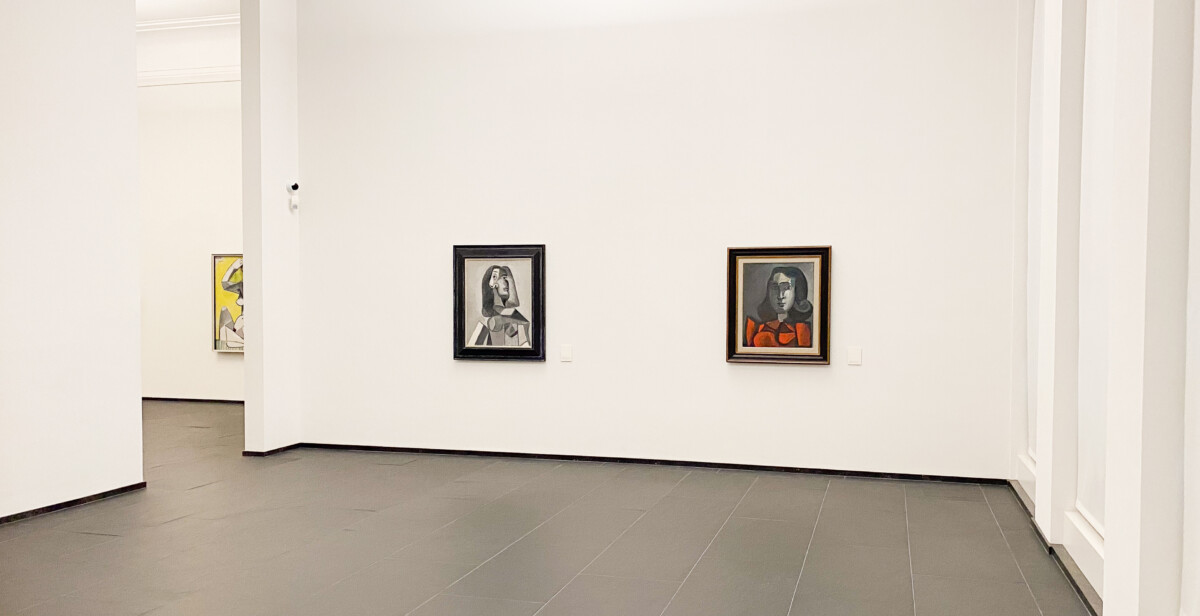
The entire ground floor follows Picasso’s paintings chronologically from 1938 to 1969. The museum’s Picasso holdings include 32 paintings, mainly from his later career, and roughly 100 drawings, watercolors, graphic works, and sculptures; the ground floor focuses on paintings from 1938 to 1969.
Works identified by the museum as collection highlights include:
- Women with Straw Hat on a Floral Background, Marie-Thérèse (1938)
- Crouching Nude (1954)
- The Studio (1955)
- Bust of a Woman (1963)
- Gentleman with a Pipe and Flowers (1968)
The chronological layout matters. Instead of treating Picasso as one fixed style, the floor shows how freely he changed scale, color, line, and references during his late period.
Basement: 125 works by Paul Klee
The basement is devoted to 125 watercolors, drawings, and oil paintings by Paul Klee. This is not a small supporting display; it covers different phases of his career and gives the museum a second major identity beyond Picasso.
Look for works such as St. Germain near Tunis (1914), Fashion Plate (1922), Fish Picture (1925), and Little X (1938). The range makes it easier to see how Klee moved between observation, symbols, geometry, humor, and narrative.
Upper floor: Picasso on paper and 20-plus other artists
The upper floor broadens the visit. It includes Picasso drawings and prints, five portraits of Angela Rosengart by Picasso, and works by more than 20 other artists. The museum’s artist directory lists 25 masters in total: Picasso, Klee, and 23 other Impressionist and Classic Modernist artists.

This floor is useful for comparison. Bonnard’s color, Cézanne’s construction of form, Dufy’s Fauvist influence, and Monet’s attention to atmosphere make the surrounding collection more than a list of famous names.


Other official highlights include Matisse’s Laurette with White Turban (1916), Chagall’s Evening at the Window (1950), Pissarro’s Around Louveciennes, the Road (1871), and Cézanne’s L’Estaque, the Village and the Sea (1882).
Watch a virtual tour of the Rosengart Collection
This virtual tour gives you a useful preview of the building and galleries before your visit.
Planning your visit
Opening hours
| Season | Hours |
|---|---|
| April through October | 10:00–18:00 daily, including public holidays |
| November through March | 11:00–17:00 daily, including public holidays |
The museum states that it closes only on specified Lucerne Fasnacht carnival days: Schmutziger Donnerstag, Güdismontag, and Güdisdienstag. Confirm the calendar if your trip overlaps with Fasnacht.
Tickets and museum passes
| Visitor | Admission |
|---|---|
| Adults | CHF 20 |
| Seniors over 65 and registered disabled visitors | CHF 18 |
| Students up to age 30 | CHF 10 |
| Children ages 7–16 | CHF 10 |
The museum accepts the Swiss Museums Pass and Raiffeisen Card. Travelers visiting several institutions can also compare the Lucerne Museum Card, which starts at CHF 39 and covers participating museums for two consecutive days. The card only makes financial sense if you will use it at more than one included museum.
Photography, accessibility, and families
- Photography: Private photography and filming with smartphones and compact digital cameras are allowed. Flash, tripods, and selfie sticks are prohibited.
- Professional shoots: Arrange approval with the museum in advance.
- Mobility: The museum is accessible to wheelchair users and visitors with impaired mobility.
- Pushchairs: Pushchairs are not allowed, so families should plan an alternative before arrival.
- Family activity: Lucerne Tourism lists a museum discovery bag for families, but it is available in German.
Guided tours
The museum’s standard public-tour program is primarily in German. Private tours can be arranged in English or another language, and the current agenda sometimes lists public English-language dates. Book ahead if an English tour is important to your visit.
How to get to Museum Sammlung Rosengart
The museum is at Pilatusstrasse 10, about a three-minute walk from Lucerne railway station. The nearest bus stops listed by the museum are Bahnhof and Kantonalbank. From the station, walking is simpler than taking local transit.
How long to spend and the best time to visit
Plan 60 to 90 minutes for a complete but focused circuit. Two hours is more comfortable if you read most labels, compare works across floors, or spend extra time with Klee and Picasso.
No season is inherently better for the art itself. The museum is indoors and open daily for most of the year, making it particularly useful when rain, heat, or winter weather changes your Lucerne plans. Arriving near opening time is a sensible strategy for a quieter visit, but crowd levels vary and it is not a guarantee.
A fast 45-minute route
- Start on the ground floor and follow Picasso’s paintings chronologically.
- Go to the basement and choose a smaller group of Klee works to study closely rather than rushing past all 125.
- Finish upstairs with Picasso’s portraits of Angela Rosengart and a selective circuit of Bonnard, Cézanne, Matisse, Chagall, Monet, and Modigliani.
The Rosengart family, collection history, and architecture

Angela Rosengart (1932–2026) was an art dealer who began working in her father Siegfried Rosengart’s firm in 1948 and became his partner in 1957. Their professional relationships with major modern artists shaped the collection, and Picasso portrayed Angela five times.
In 1978, Siegfried and Angela donated eight Picasso masterpieces to the City of Lucerne, establishing the basis of the former Lucerne Picasso Museum. Angela created the Rosengart Foundation in 1992, and the Picasso Museum works were incorporated into the Rosengart Collection in 2008.
The building was not purpose-built as a museum. It opened in 1924 as a branch of the Swiss National Bank. Angela purchased it in 2000, Basel architect Roger Diener converted it for the collection, and Museum Sammlung Rosengart opened in spring 2002. The restrained neoclassical rooms suit the art without competing with it.

How to combine the museum with central Lucerne
Because the museum is close to the station, it fits naturally into a compact walking route. After the galleries, continue toward the Chapel Bridge, cross into the Old Town, and finish along the lakefront. This sequence connects art, architecture, and the city’s most recognizable public spaces without unnecessary backtracking.
- Museum Sammlung Rosengart: Allow 60–90 minutes.
- Chapel Bridge and Old Town: Walk through the historic center and along the Reuss River.
- Lakefront: Use the Lake Lucerne travel guide to choose a promenade, cruise, or longer excursion.
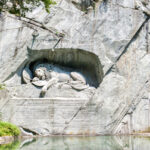
- Extra time: Add the Lion Monument or build a fuller route from this list of things to do in Lucerne.
For an overnight stay, compare neighborhoods and station access in this guide to where to stay in Lucerne.
The museum itself does not require a third-party tour for a standard visit. A guided city walk is most useful for travelers seeking local context for Chapel Bridge, Old Town, and the lakefront before or after the museum.
Affiliate disclosure: ViaTravelers may earn a commission if you book through the link below, at no extra cost to you.
FAQs
Is Museum Sammlung Rosengart worth visiting?
Yes, especially for travelers seeking a focused collection of Picasso, Paul Klee, Impressionist, and Classic Modernist art in a compact museum near Lucerne station.
How long do you need at Museum Sammlung Rosengart?
Plan 60 to 90 minutes for a focused visit. Allow about two hours if you read most labels or spend extra time in the Klee and Picasso galleries.
How much does Museum Sammlung Rosengart cost?
As of July 2026, adult admission is CHF 20. Admission is CHF 18 for seniors over 65 and registered disabled visitors, and CHF 10 for students up to age 30 and children ages 7 to 16.
Can you take photos inside Museum Sammlung Rosengart?
Private photography with smartphones and compact digital cameras is permitted. Flash, tripods, and selfie sticks are not allowed, and professional shoots require advance approval.
How far is Museum Sammlung Rosengart from Lucerne station?
The museum is at Pilatusstrasse 10, about a three-minute walk from Lucerne railway station.
Which artists are represented in the Rosengart Collection?
The collection centers on Pablo Picasso and Paul Klee and includes 23 other Impressionist and Classic Modernist artists, including Cézanne, Monet, Matisse, Chagall, Bonnard, Braque, Miró, Modigliani, and Renoir.
Are guided tours available in English?
Public tours are generally conducted in German, although the museum sometimes schedules English dates. Private tours can be arranged in English or another language.
Final verdict
Museum Sammlung Rosengart is one of Lucerne’s most efficient cultural stops: central, easy to navigate, and strong enough in Picasso and Klee to justify a dedicated visit. Go for the depth of those two collections, then use the upper floor to place them within a wider European modern-art context. A 60- to 90-minute visit leaves ample time for Chapel Bridge, Old Town, and the lakefront on the same day.