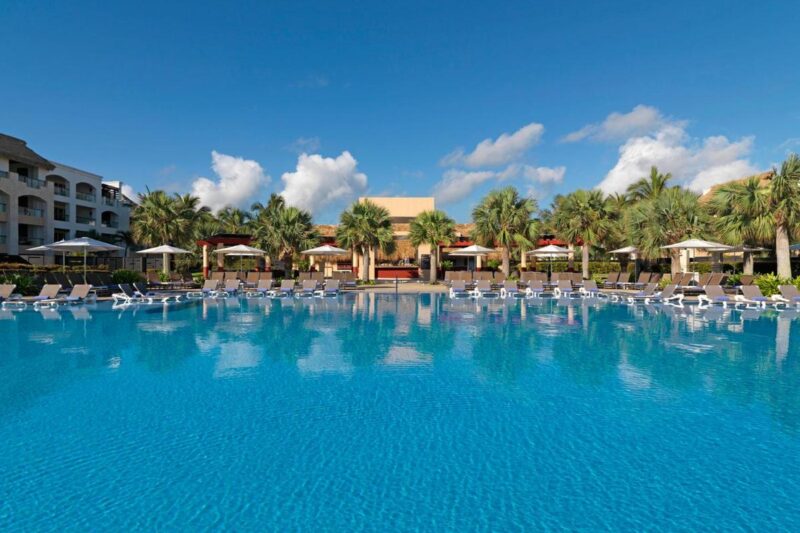
Bávaro is the main resort corridor of the Punta Cana region in La Altagracia Province, stretching along one of the Caribbean’s longest uninterrupted white-sand beaches. The area is defined by its dense concentration of large all-inclusive hotels, open-air shopping centers, and water-sports operators lining the coconut-palm-backed shore. Inland, mangrove lagoons and the Bávaro lagoon system separate the hotel strip from residential and commercial streets frequented by local workers and longer-stay visitors.
What is Bávaro Punta Cana known for?
Bávaro is best known for Playa Bávaro, a roughly 30-kilometer arc of powdery white sand and calm turquoise water that fronts dozens of all-inclusive resorts including Hard Rock Hotel Punta Cana, Barceló Bávaro Palace, and Iberostar Selection Bávaro, making it one of the Caribbean’s highest-capacity resort zones. The beach’s shallow, reef-protected waters and consistent trade winds also make it a reliable destination for kitesurfing, particularly near the Cortecito and El Macao stretches.
Best things to do in Bávaro Punta Cana
Beyond the beach, visitors can explore Indigenous Eyes Ecological Park inside the Puntacana Resort & Club grounds, a protected reserve containing 12 freshwater lagoons connected by walking trails through subtropical forest. Additional activities include:
- Snorkeling and scuba diving at natural coral reefs accessible from Playa Bávaro
- Kitesurfing and windsurfing lessons along the Cortecito beach section
- ATV and dune-buggy tours departing from operators along Bávaro’s hotel boulevard
- Deep-sea fishing charters departing from the Marina Cap Cana (30 minutes south)
- Day trips to Saona Island via catamaran, organized from Bávaro tour desks
Where to eat in Bávaro Punta Cana
Outside the all-inclusive compounds, the Cortecito neighborhood within Bávaro offers a cluster of independent restaurants and beach bars serving Dominican staples such as sancocho, pescado con coco, and tostones alongside fresh-caught seafood. Palma Real Shopping Village on the main boulevard houses sit-down restaurants and fast-casual options in an open-air mall setting. The commercial strip along Avenida Estados Unidos in Bávaro has local comedores serving La Bandera Dominicana—rice, beans, and stewed meat—at affordable prices for non-resort budgets.
Where to walk in Bávaro Punta Cana
The most practical walking route in Bávaro runs along the beach itself from the Cortecito public-access point northward past the Barceló and Iberostar resort frontages, covering approximately 3–4 kilometers of open shoreline accessible to all visitors. Inland, the pedestrian promenade and retail corridor at Palma Real Shopping Village offers shaded, even-surface walking between shops, restaurants, and a cinema in a landscaped open-air environment.
How to get to Bávaro Punta Cana
Punta Cana International Airport (PUJ) sits approximately 20–25 kilometers from the Bávaro hotel zone and is the primary entry point, served by direct international flights from North America, Europe, and Latin America. From the airport, shared shuttle vans and private transfers run directly to Bávaro hotels, with journey times of roughly 25–40 minutes depending on exact hotel location. Public guaguas (minibuses) operate along the main Bávaro–Higüey corridor for budget travelers connecting to the regional hub of Higüey, about 45 kilometers west.
Best time to visit Bávaro Punta Cana
The dry season from December through April delivers the most reliable sunshine, lowest humidity, and calmest seas, coinciding with peak tourist season and higher accommodation rates. The shoulder months of May and November offer reduced crowds and lower prices with still-acceptable weather, while the Atlantic hurricane season peaks between August and October, bringing a higher probability of rain and occasional storm disruptions.