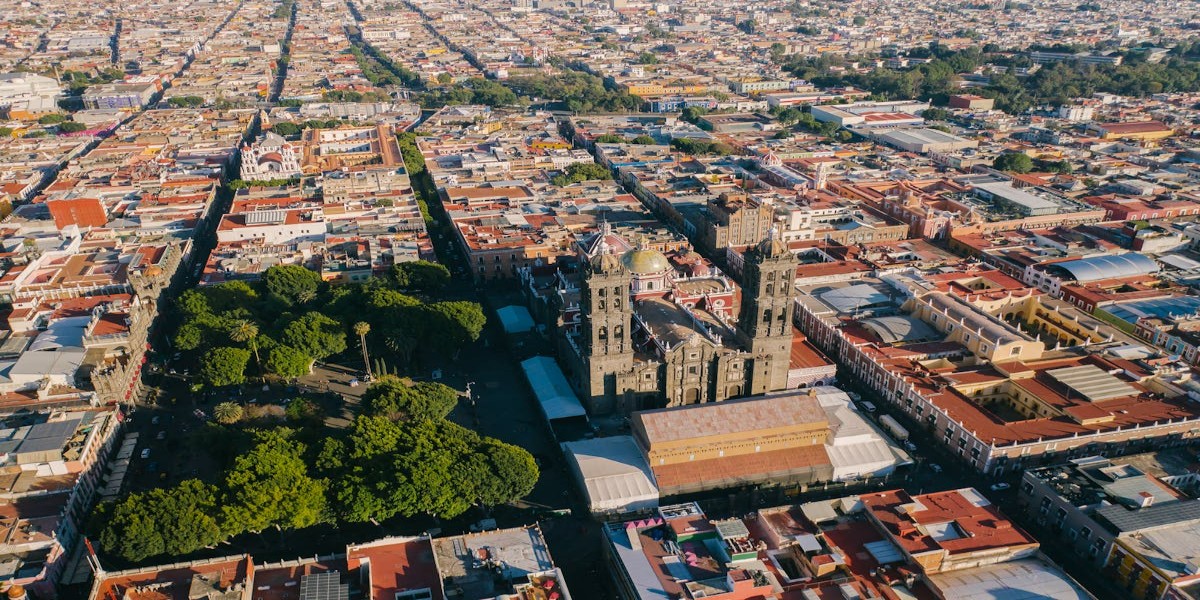
Cholula is a small, vibrant town on the outskirts of Puebla, Mexico, famous for two astonishing claims: the Great Pyramid of Cholula — the largest pyramid by base area in the world, dwarfing even the Great Pyramid of Giza — and an apocryphal 365 churches, one for every day of the year. In reality, the count falls short, but the density of colonial-era domes and bell towers rising above colorful streets is genuinely remarkable.
The Great Pyramid (Tlachihualtepetl) is the town’s must-see attraction. Overgrown with vegetation and topped by the yellow-and-white Santuario de la Virgen de los Remedios church, it looks more like a hill than a pyramid — until you enter the network of excavated tunnels running through its interior. The views from the summit, with the snow-capped volcanoes Popocatépetl and Iztaccíhuatl on the horizon, are among the most spectacular in central Mexico. At the base, the on-site museum and archaeological zone explain the pyramid’s 2,000-year construction history.
Cholula is best for history buffs, architecture lovers, and travelers seeking a quieter alternative to Puebla City’s busy center. San Pedro Cholula’s Plaza de la Concordia hosts morning street-food vendors beneath the Doric Portales columns, while San Andrés Cholula draws the university crowd with its buzzing bars, mezcalerías, and live-music venues. Vendors outside the pyramid sell hand-painted Talavera pottery, embroidered textiles, and carved wooden crafts.
The town is flat and easily explored on foot or by bicycle. Frequent buses and colectivos connect Cholula to Puebla’s city center in about 20 minutes, and Mexico City is roughly two hours northwest by car or bus.