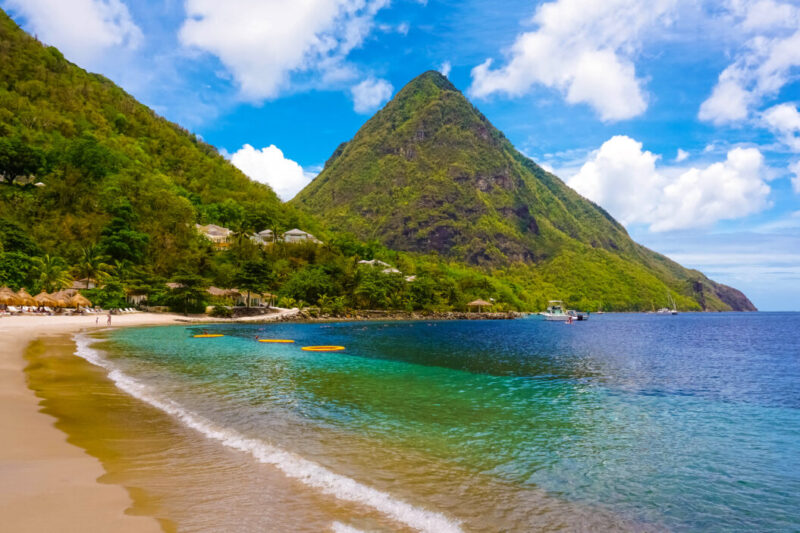
Gros Islet is a small, traditional fishing village on the northwestern tip of Saint Lucia, sitting just north of the Rodney Bay lagoon. It contrasts sharply with the resort-heavy Rodney Bay Strip immediately to its south, retaining narrow streets, modest Caribbean wooden architecture, and a genuinely local pace of life. The village is best known internationally for its weekly Friday Night Jump-Up, one of the Caribbean’s most celebrated street parties.
What is Gros Islet known for?
Gros Islet is most famously known for the Friday Night Jump-Up, a weekly open-air street party held along the main street of the village where vendors line the road selling grilled fish, chicken, corn on the cob, and rum drinks while soca and reggae music plays from large speakers. Beyond the party, the village is a working fishing community where boats launch daily from the waterfront, and local women still sell fresh catch from roadside stalls. The nearby Pigeon Island National Landmark, connected by a causeway just north of the village, adds significant historical and scenic weight to the area.
Best things to do in Gros Islet
The Friday Night Jump-Up on the main village street is the single most attended local event on the island and should not be missed by any visitor staying in the north. Beyond Friday nights, visitors can walk the Pigeon Island Causeway, explore the ruins of Fort Rodney and the interpretive museum inside Pigeon Island National Landmark, and watch fishing boats return with the morning catch at the village waterfront.
- Attend the Friday Night Jump-Up on Gros Islet’s main street
- Walk or drive to Pigeon Island National Landmark via the causeway
- Watch fishermen land their catch at the village seafront in the morning
- Explore Fort Rodney ruins and panoramic hilltop views on Pigeon Island
- Browse the Rodney Bay Marina, a short walk or drive south
Where to eat in Gros Islet
The most authentic eating in Gros Islet happens at the open-air stalls during the Friday Night Jump-Up, where grilled whole fish, barbecue chicken, and roasted corn are sold cheaply by local vendors along the main street. On other evenings and during the day, small rum shops and local eateries in the village serve Creole staples such as green fig and saltfish, bouillon, and fried bakes. The Rodney Bay Marina strip immediately south offers a broader range of restaurants if visitors want more variety.
- Friday Night Jump-Up food stalls: grilled fish and BBQ chicken
- Local rum shops in the village for Piton beer and Creole snacks
- Green fig and saltfish at village breakfast spots
- Rodney Bay Marina restaurants for broader dining options nearby
How to get to Gros Islet
Gros Islet is accessible from Castries, Saint Lucia’s capital, by the Route 1A minibus service that runs frequently between Castries Central Market area and the Gros Islet terminus, costing a small fixed fare and taking approximately 30 to 40 minutes depending on traffic. Taxis are widely available from Castries and from Hewanorra International Airport in the south, though the airport transfer is roughly 90 minutes. Visitors staying in Rodney Bay hotels can walk north along the Rodney Bay Strip to reach the village in under 20 minutes.
- Minibus Route 1A from Castries to Gros Islet terminus
- Taxi from Castries or George F.L. Charles Airport, under 30 minutes
- On foot from Rodney Bay Strip hotels, approximately 15-20 minutes north
- Rental car via the John Compton Highway heading north from Castries
Where to walk in Gros Islet
The most rewarding walk from Gros Islet is north along the Pigeon Island Causeway to Pigeon Island National Landmark, where trails climb to Fort Rodney’s signal posts on the two peaks and deliver sweeping views over Rodney Bay, the Atlantic, and the northern coast toward Martinique on clear days. Within the village itself, the short waterfront road past the fishing beach and back through the narrow residential streets gives a genuine sense of the community’s scale and character.
Best time to visit Gros Islet
Friday evening is the essential time to visit Gros Islet, when the Jump-Up transforms the main street from roughly 9 p.m. onward and runs late into the night. The dry season from December through April is the most comfortable period for exploring the area generally, with lower humidity and less rainfall. The Saint Lucia Jazz and Arts Festival, historically centered in the north of the island, brings additional cultural programming to the region typically in May.