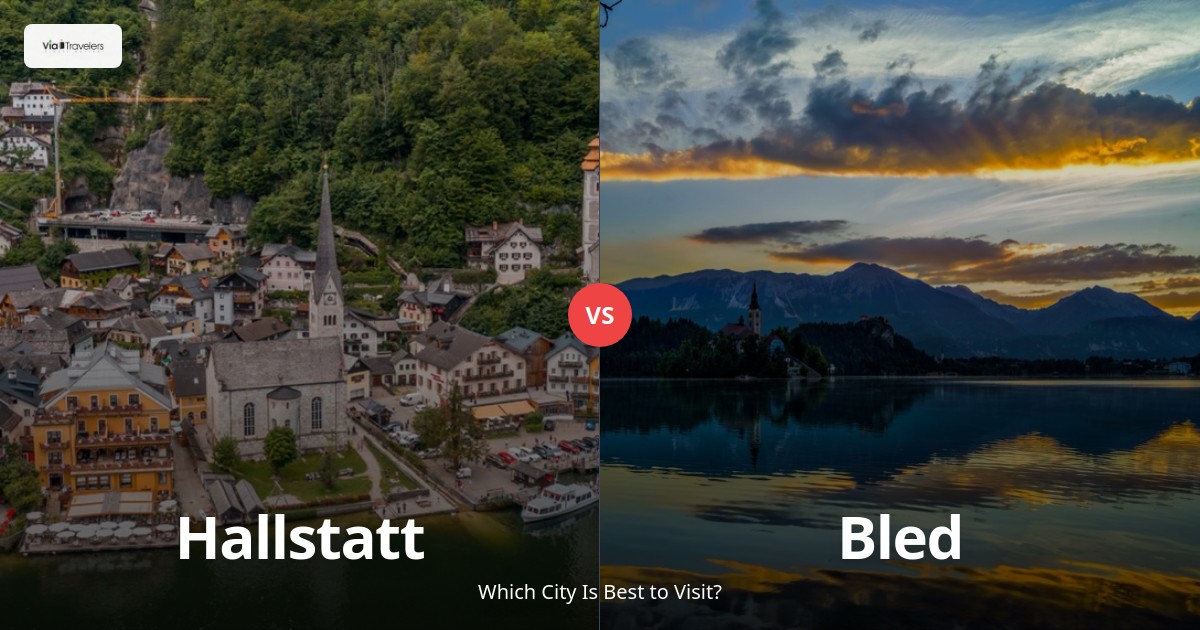
Hallstatt’s Historic Center occupies a narrow ledge between the Dachstein mountains and Hallstätter See in Upper Austria’s Salzkammergut region. The settlement is one of the oldest continuously inhabited places in Europe, giving its name to the Hallstatt archaeological culture of the early Iron Age. Its pastel-painted houses, steep salt-mine tunnels, and bone house at St. Michael’s Church draw over a million visitors annually to a village of fewer than 800 residents.
What is Hallstatt Historic Center known for?
Hallstatt is known above all for its salt-mining heritage, which dates back at least 7,000 years, making it one of the world’s oldest salt-production sites; the Salzwelten Hallstatt salt mine above the village offers guided underground tours including a miners’ slide and subterranean salt lake. The entire cultural landscape of Hallstatt-Dachstein/Salzkammergut was inscribed as a UNESCO World Heritage Site in 1997. The Gothic Catholic parish church of St. Michael, with its attached ossuary (Beinhaus) holding more than 1,200 decorated skulls, is a recognized historic monument within the center.
Best things to do in Hallstatt Historic Center
- Tour the Salzwelten Hallstatt salt mine, reached by the Salzbergbahn funicular from the center.
- Visit the Beinhaus ossuary inside St. Michael’s Church on Kirchenweg.
- Explore the Museum Hallstatt on Seestraße, which displays Iron Age artifacts from the nearby Hallstatt archaeological site.
- Walk along the Seestraße lakefront promenade past the historic boat dock and market square.
- Take a rowing-boat or electric-boat trip on Hallstätter See for views of the townscape from the water.
- Ride the Salzbergbahn funicular to the Salzberg plateau for panoramic Dachstein and lake views.
Where to eat in Hallstatt Historic Center
Restaurants in the Historic Center cluster along Seestraße and around Marktplatz, serving Austrian lake-region specialties including Reinanke (local whitefish), Forelle (trout), Schnitzel, and Knödel dumplings. Gasthaus zur Mühle on Kirchenweg is a long-standing local address offering traditional Austrian cuisine. Café am See and Bräugasthof Hallstatt on Seestraße provide lakeside seating with regional dishes and Austrian wines. Local bakeries near Marktplatz sell Salzstangerl (salt breadsticks), a nod to the town’s salt heritage.
How to get to Hallstatt Historic Center
The most practical public-transit route is by train to Hallstatt Bahnhof on the Salzkammergut railway line, followed by a short ferry crossing across Hallstätter See to the village dock on Seestraße, with ferries timed to train arrivals. From Salzburg, direct buses run via Bad Ischl to Hallstatt Lahn (the southern bus stop), about 1.5 hours. Drivers must use the Hallstatt Lahn car park to the south or the Park & Ride at Lahn, as through-traffic is restricted inside the Historic Center. The nearest major rail hub is Attnang-Puchheim, connecting to the main Austrian rail network via ÖBB.
Where to walk in Hallstatt Historic Center
The primary walking axis is Seestraße, the narrow lakeside street that runs the full length of the Historic Center from the southern Lahn area north to the main boat dock and Marktplatz, passing the parish church lane (Kirchenweg) and the Museum Hallstatt along the way. A steeper signed trail climbs from the center to the Salzberg plateau and the Rudolfsturm tower, a 14th-century watchtower with panoramic views over the lake and village.
Best time to visit Hallstatt Historic Center
Late spring (May–June) and early autumn (September–October) offer the most manageable crowd levels, mild temperatures of 15–22 °C, and clear conditions for photography of the lake and Dachstein backdrop. July and August bring peak crowds; the village imposes visitor-management measures including parking restrictions during high season. Winter visits (December–February) offer snow-dusted rooftops and far fewer tourists, though some boat services and attractions operate on reduced schedules.