
MenuClose

A place worth knowing

Hallstatt Old Town

Attractions · Village in HallstattUpdated

  • Google rating4.7/5
  • Typical visit3-4 hours, or a full day for more in-depth exploration including the salt mines (when open) and bone house.
  • EntranceAdmission required — check https://www.hallstatt.net/ for tickets
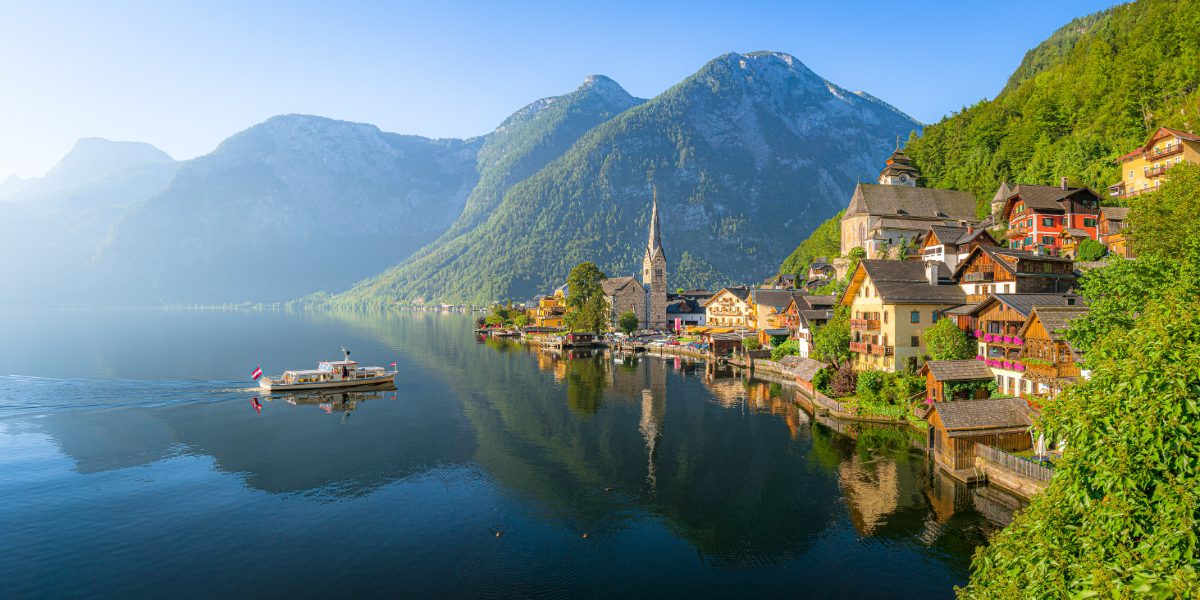
Old town Hallstatt and alpine deep blue lake with tourist ship
  • Today (Sunday)Open 24 hours
  • Typical visit3-4 hours, or a full day for more in-depth exploration including the salt mines (when open) and bone house.
  • EntranceAdmission required — check https://www.hallstatt.net/ for tickets
  • Google rating4.7/5
  • WebsiteOfficial site ↗
Opening hours all week
Monday
Open 24 hours
Tuesday
Open 24 hours
Wednesday
Open 24 hours
Thursday
Open 24 hours
Friday
Open 24 hours
Saturday
Open 24 hours
Sunday
Open 24 hours
Accessibility
"{"parking": "Designated disabled spaces in P1 with shuttle service", "skywalk": "Funicular accessible until April 2025, then closed for renovation", "saltMine": "Not wheelchair accessible – involves slides and stairs", "ferryBoat": "Wheelchair accessible from train station", "recommendation": "Limited accessibility – consider viewing from accessible lakeside paths", "villageStreets": "Steep, narrow cobblestone paths challenging for wheelchairs"}"
The short answer

Why it matters

A fairy-tale lakeside Alpine village with pastel houses, a 7,000-year-old salt mine, and a bone-filled charnel house on the Hallstattersee

Nestled between towering Alpine peaks and the crystalline waters of Lake Hallstatt, the Old Town of Hallstatt presents one of Europe’s most perfectly preserved medieval village landscapes, seemingly suspended in time for over seven centuries. The UNESCO-listed settlement’s distinctive pastel-colored houses cling to the narrow strip of land between mountain and lake, their reflections shimmering in the water that once provided the town’s only access route. This extraordinary setting conceals an even more remarkable history—archaeological evidence reveals continuous human habitation dating back to 5000 BCE, with nearby salt mines (the world’s oldest known) establishing Hallstatt as a center of Bronze and Iron Age European trade so significant that an entire historical period bears its name (the Hallstatt Culture, 800-400 BCE). Traditional wooden boathouses and the 16th-century Alpine houses with their characteristic balconies and flower boxes represent vernacular architecture perfectly adapted to the challenging mountain environment. The town’s Market Square and Gothic Catholic Church with its famous charnel house—where intricately painted skulls of former residents are displayed following centuries-old Alpine traditions of secondary burial—provide windows into unique cultural practices that developed in this isolated setting. Despite its diminutive size and population of under 800, Hallstatt embodies the quintessence of Alpine cultural landscapes and their harmonious integration of human settlement with dramatic natural surroundings.

Cultural Context

Historic lakeside village representing 4,000 years of continuous salt mining culture and gave name to Hallstatt archaeological culture of Early Iron Age Proto-Celtic peoples (800-450 BC). Embodies traditional Alpine architecture and lifestyle, symbolizing harmony between human activity and pristine natural environment in Salzkammergut region.

Historical Context

Salt mining began 2nd millennium BC, creating foundation for regional prosperity until mid-20th century. Developed into wealthy trading center due to valuable salt resources, with continuous mining operations from prehistoric times through 1960. Home to world oldest known salt mine, Salzwelten, demonstrating millennia of mining heritage.
Context

Story and significance

About

Hallstatt Old Town is a small lakeside village of painted alpine houses, narrow lanes and a lakeshore promenade set against steep mountains and salt-mining history. Visitors wander the compact center to see the 16th-century market square, waterfront views, and small local museums that interpret prehistoric salt extraction which shaped the community. The setting is best experienced slowly — boat rides on the lake, short hikes for vantage points, and sampling regional cuisine in cozy cafés bring the postcard scenery to life.

Historical significance

Hallstatt Old Town holds a profound place in European history, particularly due to its association with the Hallstatt Culture, an early Iron Age civilization that flourished between 800 and 450 BCE. This culture, named after the archaeological discoveries in the region, is considered a cornerstone in the study of early European prehistory, marking significant advancements in metallurgy, social organization, and trade networks across the continent. The town’s salt mines have been exploited continuously for over 7,000 years, making Hallstatt one of the earliest known centers of salt production, which was a highly valuable commodity in ancient times. This long-standing economic activity contributed to the town’s wealth and strategic importance throughout history. During the Middle Ages, Hallstatt was part of the Duchy of Austria and played a role in regional trade and cultural exchanges within the Alpine corridor. The preservation of its historic buildings and cultural practices offers insights into the daily lives and spiritual beliefs of its inhabitants over centuries. Furthermore, Hallstatt’s designation as a UNESCO World Heritage Site in 1997 underscores its global significance as a cultural landscape where human interaction with the natural environment has been sustained for millennia. The town’s legacy also extends into modern times, influencing art, archaeology, and tourism, while fostering a deep respect for heritage conservation. Through its continuous habitation and rich archaeological record, Hallstatt Old Town stands as a testament to the enduring human presence and cultural evolution in the heart of the Alps.

Historical context

Salt mining began 2nd millennium BC, creating foundation for regional prosperity until mid-20th century. Developed into wealthy trading center due to valuable salt resources, with continuous mining operations from prehistoric times through 1960. Home to world oldest known salt mine, Salzwelten, demonstrating millennia of mining heritage.

Cultural context

Historic lakeside village representing 4,000 years of continuous salt mining culture and gave name to Hallstatt archaeological culture of Early Iron Age Proto-Celtic peoples (800-450 BC). Embodies traditional Alpine architecture and lifestyle, symbolizing harmony between human activity and pristine natural environment in Salzkammergut region.

Architecture

Features traditional Alpine wooden architecture with painted facades, steep roofs, and lakeside positioning characteristic of Salzkammergut building traditions. Historic houses reflect centuries of prosperity from salt trade, showcasing distinctive Austrian vernacular architecture integrated into dramatic landscape setting between lake and mountains.

Local significance

UNESCO World Heritage Site since 1997 as part of Hallstatt-Dachstein/Salzkammergut Cultural Landscape. Major tourist destination experiencing overtourism since Korean TV exposure 2006. Essential Austrian cultural symbol representing idealized Alpine village life, continuing traditional salt mining operations while serving as global heritage tourism model.

Experience

Make the most of it

Local tips
  • Special exhibitions require separate tickets
  • Check for combo tickets with nearby attractions
  • Late night openings often have special events
  • Gift shops have unique souvenirs
  • Members get free entry and skip lines
  • Museum cafes often serve quality local food
  • Visit during weekdays for fewer crowds
Hidden gems nearby
  • Hidden courtyards perfect for photos
  • Free guided tours at specific times
  • Rooftop terraces often have great city views
  • Staff recommendations for must-see pieces
  • Lesser-known wings have amazing collections
  • Archive rooms sometimes open for special tours
  • Secret passages between galleries
Special features
  • Hallstatt Old Town is renowned for its extraordinary setting and unique architectural heritage, nestled on a narrow strip of land between the steep Dachstein Alps and the serene Lake Hallstatt. This compact historic district is characterized by its well-preserved 16th-century Alpine houses, many of which feature traditional wooden balconies adorned with colorful flowers. The town’s layout, shaped by the natural constraints of the mountains and lake, creates a labyrinth of narrow alleys and cobblestone streets that evoke a timeless charm. Notably, the Old Town includes the iconic Market Square, which serves as the social and commercial heart of the community, surrounded by historic buildings such as the Renaissance-style Rathaus (town hall) dating back to 1533. Hallstatt is also famous for its salt mining heritage, with the nearby Hallstatt Salt Mine being one of the oldest in the world, offering visitors a glimpse into early mining techniques and underground tunnels that have been in use since prehistoric times. The town’s cultural landscape is further enriched by its baroque Catholic parish church, featuring an impressive ossuary with intricately decorated skulls, a unique local tradition reflecting centuries of customs surrounding death and remembrance. The harmonious blend of natural beauty, historic architecture, and cultural artifacts makes Hallstatt Old Town a distinctive destination that encapsulates the spirit of Alpine heritage and human adaptation to the environment. This exceptional combination of features continues to captivate scholars, artists, and travelers alike, preserving its status as a living museum of European mountain culture.
Editorial scores

How we rate it

Authenticity10/10
Accessibility score6/10
Family-friendly score8/10
Off-the-beaten-path3/10

Editorial scores on a 10-point scale, judged against places of the same kind.

Updated Data: Editorial research · Google Places ratings · Verified coordinates