

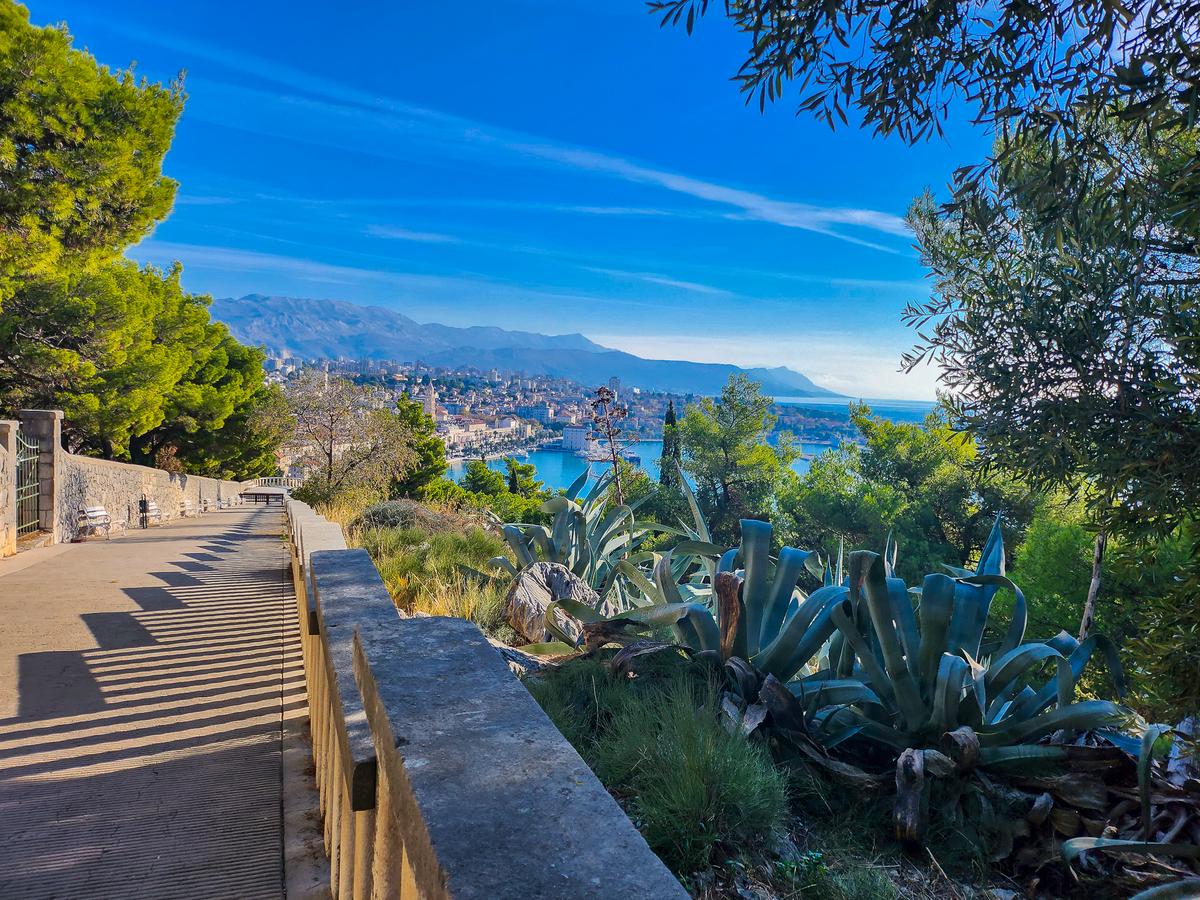
Old Town Dubrovnik sits on a limestone promontory jutting into the Adriatic Sea, its entire historic core listed as a UNESCO World Heritage Site since 1979. The town is enclosed by medieval stone walls stretching roughly two kilometres, and its interior is a dense grid of Baroque and Gothic architecture rebuilt after the 1667 earthquake. Visitors arrive by ferry, bus, or cruise ship to find one of the best-preserved walled cities in the Mediterranean.
What is Old Town Dubrovnik known for?
Old Town Dubrovnik is best known for its intact Renaissance and Baroque city walls, the polished limestone Stradun promenade running 300 metres through the centre, and a cluster of monuments including the 14th-century Franciscan monastery housing one of Europe’s oldest continuously operating pharmacies, founded in 1317. The walled city also gained global recognition as a filming location for King’s Landing in the HBO series Game of Thrones, drawing visitors to sites such as Fort Lovrijenac and the Jesuit Staircase on Jezuitski trg.
Best things to do in Old Town Dubrovnik
- Walk the full circuit of the City Walls (Gradske zidine), which rise up to 25 metres and offer panoramic Adriatic views.
- Visit the Rector’s Palace (Knežev dvor), the former seat of the Ragusan Republic, now a museum of cultural history.
- Explore the Franciscan Monastery and its cloister on Placa (Stradun), and see the working pharmacy inside.
- Ride the Dubrovnik Cable Car from Petra Krešimira IV street up to Mount Srđ for aerial views over the old town.
- Tour Fort Lovrijenac, the free-standing fortress west of the Pile Gate, used as a location during Game of Thrones filming.
- Visit the Cathedral of the Assumption of the Virgin (Katedrala Uznesenja), which holds relics attributed to Saint Blaise, the city’s patron.
Where to eat in Old Town Dubrovnik
The most concentrated dining is on and around Prijeko Street, the narrow lane running parallel to Stradun, though locals and informed visitors seek out smaller konobas tucked into side alleys for traditional Dalmatian cooking such as black risotto (crni rižot), grilled orada (sea bream), and peka-cooked lamb. Konoba Kamenice on Gundulićeva poljana square has served oysters and seafood since the 1980s and remains a reference point for honest local food. The open-air morning market at Gundulićeva poljana sells fresh produce, lavender products, and local cheeses daily.
Where to walk in Old Town Dubrovnik
The primary walking axis is the Stradun (also called Placa), a flat marble thoroughfare connecting Pile Gate in the west to Ploče Gate in the east, lined with uniform Baroque-era ground-floor shops built after the 1667 earthquake. A second rewarding route starts at Pile Gate, follows the city walls clockwise past the Minčeta Tower—the tallest point on the walls—continues along the sea-facing Adriatic side past St. John’s Fortress, and completes the circuit back at Pile, taking 60–90 minutes at a relaxed pace.
How to get to Old Town Dubrovnik
The main pedestrian entrance is Pile Gate on the western side of the walls, reached by city buses 1A, 1B, 3, and 8 from Dubrovnik’s main bus station in Gruž, with a journey of roughly 15–20 minutes. Dubrovnik Airport (DBV) is located about 20 kilometres southeast in Čilipi, served by airport shuttle buses that stop at Pile Gate and the Gruž ferry terminal. Ferry and catamaran services operated by Jadrolinija connect Dubrovnik’s Gruž harbour to the islands of Korčula, Hvar, and Split, with onward bus or taxi transfer to the old town.
Best time to visit Old Town Dubrovnik
Shoulder season—April to early June and September to October—offers the most manageable crowds, mild temperatures between 18–25°C, and lower accommodation prices than peak summer. July and August see the highest visitor volumes, with cruise ships docking daily at Gruž and the Stradun heavily congested before 9 a.m. and after 5 p.m.; the Dubrovnik Summer Festival runs from mid-July through mid-August, staging open-air performances at Fort Lovrijenac and other historic venues across the old town.