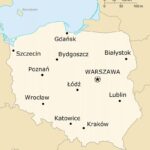
Gdańsk’s Old Town is one of Poland’s most beautiful urban ensembles — a meticulously reconstructed Hanseatic trading city on the Baltic coast where colorful merchant houses, Gothic churches, and amber-filled streets create an atmosphere that blends medieval grandeur with modern Polish vitality. Largely destroyed in 1945, the old town was rebuilt over decades using original plans and salvaged materials, resulting in a living monument to both historical craftsmanship and national determination.
The Long Market (Długi Targ) forms the old town’s ceremonial heart, anchored by the Neptune Fountain and the ornate Artus Court where merchants once sealed their deals. From there, Mariacka Street — known as Amber Street — runs to the Motława River waterfront lined with galleries selling Baltic amber jewelry, decorative pieces, and raw nuggets of fossilized resin. St. Mary’s Basilica, one of the world’s largest brick churches, towers over the skyline, and the Amber Museum in the Great Mill chronicles the region’s 40-million-year relationship with “Baltic gold.” The European Solidarity Centre at the nearby Gdańsk Shipyard tells the story of the Solidarity movement that helped end communism in Europe.
Gdańsk’s Old Town appeals to history buffs, architecture lovers, and travelers drawn to authentic local character. The neighborhood feels genuinely alive rather than museum-like, with Poles filling the cafe terraces and market stalls alongside visitors. Amber shoppers, craft-beer enthusiasts, and couples on Baltic city breaks will all find the old town deeply rewarding.
The old town is compact and flat, easily walkable from end to end in 20 minutes. Gdańsk Główny (main train station) sits at the western edge, with direct trains to Warsaw (under 3 hours), Kraków, and the tri-city neighbors of Sopot and Gdynia. Trams and buses serve the wider city, and Gdańsk Lech Wałęsa Airport is 15 kilometers west with bus and rail connections.