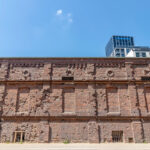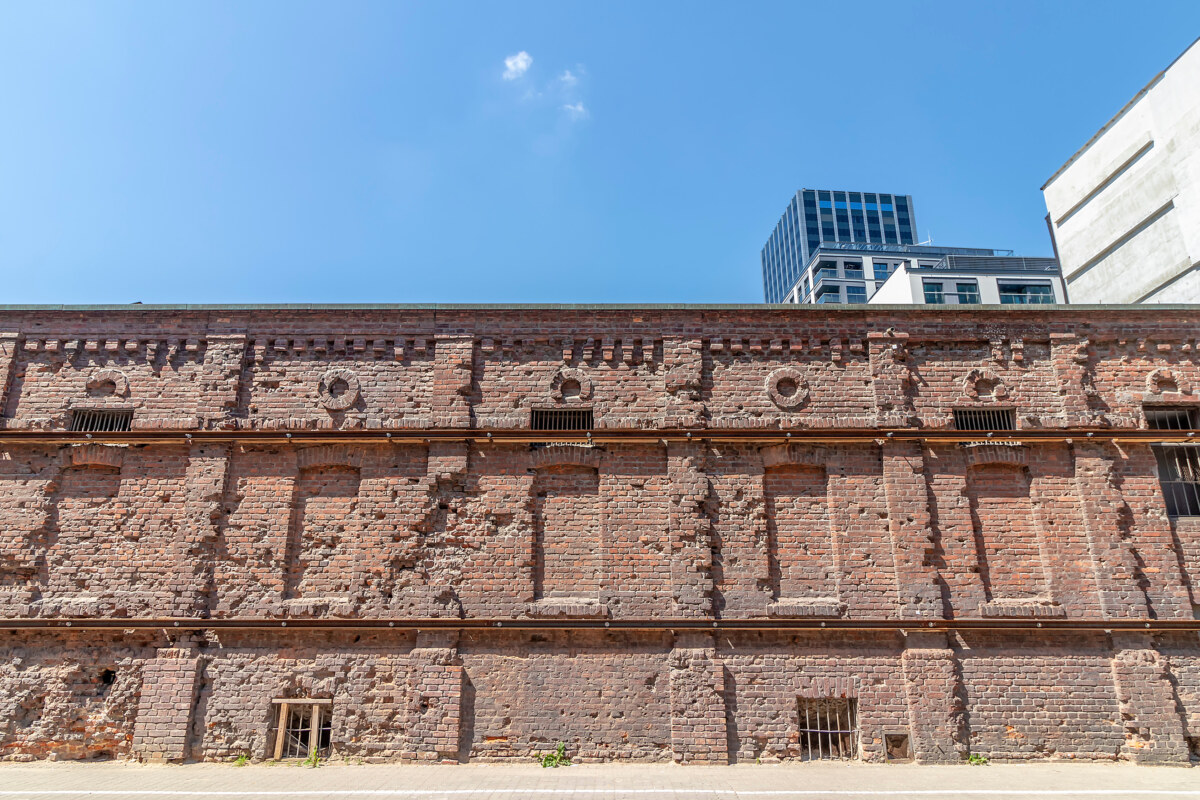
Praga is Warsaw’s creative right bank — a gritty, rapidly evolving district where 19th-century brick facades wear layers of street art, former factories hum with cafés and galleries, and the pre-war character that was largely erased from the left bank still survives in its courtyards and tenement buildings. Split into Praga Północ (North) and Praga Południe (South), the neighborhood is one of the few areas of Warsaw that was not leveled during World War II.
The centerpiece is Centrum Praskie Koneser, a converted 19th-century vodka distillery now housing the Polish Vodka Museum, design shops, restaurants, and creative studios within a striking red-brick complex. Nearby, the Neon Museum at Soho Factory preserves the glowing signs that once lit Communist-era Poland, and Bazar Różyckiego — the city’s oldest surviving market, established in the 19th century — still buzzes with around 300 vendors.
Praga is best for travelers who crave authenticity over polish, street-art lovers, and nightlife seekers. Ząbkowska Street is the neighborhood’s beating heart, lined with eclectic bars, vintage shops, and dive restaurants. Praga Park in the south offers green space with a lake, canoe rentals, and horseback riding.
Getting to Praga from central Warsaw takes just a few minutes by metro, tram, or a walk across the Świętokrzyski Bridge. The view back across the Vistula toward the rebuilt Old Town skyline is one of Warsaw’s best-kept photo opportunities.