Stari Grad, meaning Old Town, is the historical and cultural heart of Belgrade, Serbia. Stretching from the Kalemegdan plateau above the Sava and Danube confluence down through the urban grid toward Skadarlija, the district layers Roman, Ottoman, and Austro-Hungarian history into a single walkable area. It remains Belgrade’s most visited neighborhood and its civic center.
What is Stari Grad known for?
Stari Grad is known above all for Kalemegdan Fortress, a 2,000-year-old citadel that served Roman, Byzantine, Ottoman, and Serbian rulers and now anchors Belgrade’s largest public park; the district also contains the pedestrian boulevard Knez Mihailova Street, the National Museum, and the cobblestoned bohemian quarter of Skadarlija. The neighborhood holds the highest concentration of museums, galleries, Orthodox churches, and 19th-century facades in Serbia.
- Kalemegdan Fortress and Belgrade Fortress park complex
- Knez Mihailova Street, the main pedestrian shopping and promenading boulevard
- Skadarlija, the late 19th-century bohemian street lined with kafanas
- The National Museum of Serbia on Republic Square
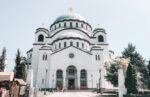
- The Church of Saint Sava is visible on the skyline just south of the district boundary
Best things to do in Stari Grad
The best things to do in Stari Grad include walking the ramparts of Kalemegdan at sunset for panoramic views over the Sava-Danube confluence, browsing the permanent collection at the National Museum on Trg Republike, and eating a traditional Serbian meal at one of the old kafanas on Skadarlija. The district rewards slow exploration on foot, with the Victor Monument, the Military Museum inside the fortress, and the Ethnographic Museum all within short walking distance of each other.
- Visit the Victor Monument (Pobednik) inside Kalemegdan for river panoramas
- Tour the Military Museum or the Natural History Museum in the fortress park
- Walk Knez Mihailova from Trg Republike to the fortress gate
- Dine on grilled meats and gibanica at a Skadarlija kafana
- Explore the Ethnographic Museum on Studentski Trg
Where to eat in Stari Grad
Skadarlija is the primary dining destination inside Stari Grad, where traditional kafanas such as Tri Šešira and Dva Jelena have served Serbian cuisine including roštilj, sarma, and pasulj since the 19th century; Knez Mihailova and the surrounding side streets also hold modern cafes, bakeries selling burek, and international restaurants catering to the heavy foot traffic. The covered Zeleni Venac market just outside the district boundary on the southwest is the main fresh-produce stop for residents.
- Tri Šešira kafana, Skadarska Street — traditional Serbian cuisine and live music
- Dva Jelena kafana, Skadarska Street — established 19th-century institution
- Burek and pastry bakeries along and off Knez Mihailova
- Café terraces on Trg Republike and Studentski Trg
Where to walk in Stari Grad
The most rewarding walking route in Stari Grad runs from Trg Republike along Knez Mihailova Street northwest to the Kalemegdan Fortress entrance, then loops through the park to the Victor Monument overlook and back through the lower fortress gate toward Studentski Trg. A second classic walk descends from Trg Republike southeast along Vuka Karadžića or Obilićev Venac to the cobblestones of Skadarlija, ending at the top of the bohemian street near Bulevar despota Stefana.
How to get to Stari Grad
Stari Grad is accessible by multiple Belgrade city bus lines stopping at Trg Republike, which functions as the district’s main transit hub; tram lines 2, 5, 7, 9, and 11 also serve stops along the district’s edges including Kalemegdan and Bulevar despota Stefana. Taxis and ride-hailing apps drop passengers directly at Knez Mihailova or the fortress, and the district is walkable from the Savamala waterfront area to the south.
Best time to visit Stari Grad
Late spring (May–June) and early autumn (September–October) offer the most comfortable conditions for exploring Stari Grad on foot, with mild temperatures, open café terraces, and cultural institutions running full schedules; summer evenings are lively but midday heat can be intense, while winter brings a quieter, atmospheric version of the district with fewer crowds at Kalemegdan and the museums.