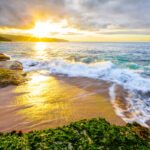
Waikiki is Honolulu’s densely developed beachfront resort neighborhood, occupying a narrow peninsula between the Pacific Ocean and the Ala Wai Canal on the island of O’ahu. The district centers on Kalakaua Avenue, a palm-lined boulevard running parallel to the beach and packed with international restaurants, open-air malls, and hotel lobbies that open directly onto the sand. Despite its commercial density, Waikiki retains genuine surf culture, historic landmarks, and easy access to the natural grandeur of Diamond Head State Monument.
What is Waikiki known for?
Waikiki is known worldwide for its 2-mile white-sand beach, consistent rideable surf breaks, and the highest concentration of hotels in Hawaii, all set against the iconic backdrop of Diamond Head crater. The shallow nearshore waters and gentle summer swells make it the birthplace of modern recreational surfing, and bronze statues of Duke Kahanamoku near the beach acknowledge his role in spreading the sport globally. The area also holds Fort DeRussy Beach Park, the Royal Hawaiian Hotel built in 1927, and the Moana Surfrider, Waikiki’s oldest hotel dating to 1901.
Best things to do in Waikiki
The single most rewarding activity in Waikiki is an outrigger canoe ride or surf lesson launched from the beach in front of the Kapahulu Groin, where instructors work with beginners in small groups on soft-top boards just offshore. Beyond the water, visitors can:
- Hike the 1.6-mile Diamond Head Summit Trail inside Diamond Head State Monument for panoramic O’ahu views
- Walk through the Honolulu Zoo on Kapahulu Avenue, home to African savanna exhibits and nēnē geese
- Explore Kapiolani Park, Honolulu’s oldest public park, for weekend farmers markets and free concerts at the Kapiolani Bandstand
- Browse the International Market Place on Kalakaua Avenue, an open-air mall built around a heritage banyan tree
- Watch free hula performances at Kuhio Beach Hula Mound nightly near the Kapahulu Groin torch-lighting ceremony
Where to eat in Waikiki
Waikiki’s dining ranges from counter-service plate-lunch spots serving loco moco and garlic shrimp to upscale oceanfront restaurants, with the greatest concentration of local-style options along Kuhio Avenue and the side streets between Kalakaua and the Ala Wai Canal. Marukame Udon on Saratoga Road draws long lines for budget-priced Sanuki-style udon made fresh in an open kitchen. The Cheesecake Factory at the Royal Hawaiian Center, Tikis Grill and Bar above Aston Waikiki Beach Hotel, and the Shore Bird at the Outrigger Waikiki are popular oceanfront options. Leonard’s Bakery on King Street just outside the district is the standard bearer for malasadas, Portuguese-style fried dough rolled in sugar.
Where to walk in Waikiki
The primary walking corridor is Kalakaua Avenue from Ala Moana Center eastward through the heart of Waikiki to Kapiolani Park, a flat 2-mile route passing the Royal Hawaiian Hotel, Moana Surfrider, Kuhio Beach Park, and the Duke Kahanamoku statue. A quieter parallel route runs along the Ala Wai Canal Promenade, a paved path on the mauka side of the neighborhood popular with joggers and outrigger canoe paddlers in the early morning. Both walks connect without hills and are fully accessible.
How to get to Waikiki
Waikiki is approximately 7 miles from Daniel K. Inouye International Airport and is most commonly reached by taxi, rideshare, or TheHandy shuttle; no rail service currently connects the airport to Waikiki directly, though Honolulu Rail Transit’s future extension is planned toward the area. Within the district, TheBus routes 8 and 20 operate frequently along Kuhio Avenue and link Waikiki to downtown Honolulu and Ala Moana Center. The Waikiki Trolley runs four color-coded lines connecting major attractions including Diamond Head, Ala Moana, and Chinatown.
Best time to visit Waikiki
Waikiki’s driest and sunniest months run from June through September, when trade winds keep temperatures around 85°F and ocean conditions are calmest for swimming; however, this period also coincides with peak tourist crowds and the highest hotel rates. April, May, and October offer a balance of favorable weather, thinner crowds, and lower prices. North shore swells arrive November through February, creating larger surf on Waikiki’s outer breaks and rougher conditions for casual swimmers.