MenuClose

A place worth knowing

Cafe Papeneiland Amsterdam

Restaurants · Café in AmsterdamUpdated

  • Google rating4.5/5 (6,500 reviews)
  • Typical visit30-60 minutes for a drink, longer if enjoying a meal like their apple pie.
  • EntranceFree
Dutch Apple Pie from Café 't Papeneilend, Amsterdam
Kyle Kroeger / ViaTravelers
  • Today (Tuesday)8:00 AM – 9:00 PM
  • Typical visit30-60 minutes for a drink, longer if enjoying a meal like their apple pie.
  • EntranceFree
  • Google rating4.5/5 6,500 reviews
  • WebsiteOfficial site ↗
Opening hours all week
Monday
8:00 AM – 9:00 PM
Tuesday
8:00 AM – 9:00 PM
Wednesday
8:00 AM – 9:00 PM
Thursday
8:00 AM – 9:00 PM
Friday
8:00 AM – 9:00 PM
Saturday
8:00 AM – 9:00 PM
Sunday
8:00 AM – 9:00 PM
Quiet times
"{}"
Busy times
"{}"
Accessibility
"{"facilities": "Toilets in basement down steep historic stairs – not accessible. No accessible toilet available. Consider nearby modern cafes for facilities.", "mobilityIssues": "Ground floor has some accessibility but very cramped with communal tables. Steep stairs to basement. Outdoor seating more accessible.", "elderlyConcerns": "Hard wooden seats, communal tables require climbing over benches. Limited comfortable seating. Toilet facilities down steep stairs.", "hearingImpaired": "Can be very noisy during peak hours. Outdoor seating quieter for conversation.", "visuallyImpaired": "Low lighting and uneven floors typical of historic brown cafes. Step at entrance not well marked.", "wheelchairAccess": "Limited – Historic 1642 building with steps at entrance and narrow doorways. Basement with tunnel not accessible."}"
The short answer

Why it matters

A wood-panelled brown café dating to 1642 on the Prinsengracht corner, famous for its towering apple pie that once lured former US President Bill Clinton.

Cafe Papeneiland stands as a living museum of Dutch social history on the corner of Prinsengracht and Brouwersgracht since 1642. This authentic brown cafe embodies gezelligheid—the distinctly Dutch concept of cozy conviviality—through its original features including antique Delft tiles, weathered wooden floors polished by centuries of patrons, and windows permanently hazed by generations of pipe smoke. Beyond mere ambiance, Papeneiland connects visitors to Amsterdam‘s religious history; its name (‘Papists Island’) references its role as a clandestine Catholic meeting place when public Catholic worship was prohibited. The cafe’s world-renowned apple pie, still baked to a generations-old recipe, attracts locals and cultural explorers seeking authentic Amsterdam experiences away from contrived tourist environments. Photographers capture quintessential Dutch moments as afternoon light filters through leaded glass onto wooden tables where locals engage in the time-honored tradition of conversation over jenever and beer. Papeneiland offers cultural travelers the rare opportunity to participate in a social institution virtually unchanged for nearly four centuries.

Cultural Context

Historic brown cafe embodying Amsterdam’s religious tolerance history, named Papists Island for sheltering Catholics during Reformation, represents centuries of Dutch social and religious freedom traditions

Historical Context

Built 1642 during Golden Age by Egbert Daelder, secret tunnel connected basement to hidden Catholic church at Prinsengracht 7 allowing clandestine worship during Protestant rule, owned by Netel family since 1966

Context

Story and significance

About

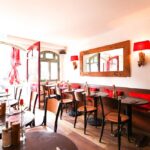
Cafe Papeneiland is a brown café (bruine kroeg) established in 1642 on the corner of Prinsengracht and Brouwersgracht in Amsterdam, making it one of the city’s oldest pubs. The interior preserves its 17th-century character with dark wood, Delft blue tiles, and walls darkened by centuries of atmosphere. A legend claims a secret tunnel once connected the café’s cellar to a clandestine Catholic church during the Reformation — the tunnel entrance is still visible. The café is famously known for its traditional Dutch apple pie, which drew international attention after a visit by former US President Bill Clinton.

Historical significance

Established in 1642, Cafe Papeneiland holds a remarkable place in Amsterdam’s social and cultural history, serving as a continuous gathering place for nearly four centuries. Its longevity makes it one of the oldest cafés in the city, bearing witness to Amsterdam’s evolution from a bustling 17th-century trade hub to a modern European metropolis. The café has historically been a meeting point for local residents, artists, and intellectuals, playing a subtle but enduring role in the social fabric of the Jordaan neighborhood. During the Dutch Golden Age, the café’s location on the Prinsengracht canal placed it at the heart of Amsterdam’s mercantile and cultural activity, contributing to its reputation as a hub for community exchange. Over the centuries, Cafe Papeneiland has maintained its identity despite numerous social and political changes, including the Napoleonic era, World War II, and the rapid modernization of the city in the 20th century. Its preservation is a testament to the Dutch commitment to conserving historical landmarks that embody national heritage and everyday life. The café’s legacy extends beyond its walls, symbolizing the endurance of traditional Dutch social customs and the importance of communal spaces in urban life. Today, it stands not only as a cherished local institution but also as a cultural monument that offers insight into Amsterdam’s layered history and the continuity of its vibrant neighborhood life.

Historical context

Built 1642 during Golden Age by Egbert Daelder, secret tunnel connected basement to hidden Catholic church at Prinsengracht 7 allowing clandestine worship during Protestant rule, owned by Netel family since 1966
Cultural context

Historic brown cafe embodying Amsterdam’s religious tolerance history, named Papists Island for sheltering Catholics during Reformation, represents centuries of Dutch social and religious freedom traditions

Architecture

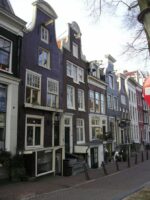
Iconic canal corner building with distinctive stepped gable facade at Prinsengracht-Brouwersgracht junction, preserved tunnel entrance in basement, traditional brown cafe interior with Delft tiles and period lighting

Local significance

Most photographed Amsterdam cafe location, famous for apple pie attracting celebrities including Bill Clinton, essential stop on historic pub tours representing authentic gezelligheid atmosphere

Experience

Make the most of it

Local tips
  • Tunnel entrance visible behind green-barred gate on basement stairs
  • Secret tunnel originally led to hidden Catholic church at Prinsengracht 7
  • Perfect example of Dutch gezelligheid (coziness) brown café culture
  • Summer crowds gather on small terrace for canal views and people watching
  • Beer selection includes local Brouwerij t IJ and Belgian Leffe
Hidden gems nearby
  • Basement conceals 400-year-old secret tunnel used by Catholic priests
  • Interiors restored to 17th-century glory with original creaky floorboards
  • Central pot stove heating and Delft-tiled bar with antique fittings
  • Display of beautiful Delft plates and tiles throughout café
  • Stunning canal corner location perfect for Amsterdam photography
Special features
  • Cafe Papeneiland is renowned for its distinctive ambiance that vividly captures the essence of a traditional Dutch brown café, a style characterized by its warm wooden interiors, cozy seating, and historic charm. Located at the intersection of Prinsengracht and Brouwersgracht, the café's original 17th-century architecture remains largely intact, featuring exposed beams, antique furnishings, and a well-preserved facade that transports visitors back to Amsterdam's Golden Age. One of its most notable features is the intimate atmosphere created by its small size and the close proximity of tables, encouraging convivial social interactions reminiscent of centuries past. The café is also famous for serving traditional Dutch apple pie, considered among the best in Amsterdam, made from a secret family recipe that has been passed down through generations. Additionally, the café's location on the picturesque canals offers stunning views that enhance the overall experience, making it a favored spot for both locals and tourists seeking an authentic taste of Amsterdam’s cultural and culinary heritage. The presence of original paintings and historical memorabilia on the walls further enriches the setting, providing a tangible connection to the city's rich cultural tapestry. These elements combine to make Cafe Papeneiland not just a place to eat and drink, but a living exhibit of Dutch social traditions and hospitality that continues to thrive in the modern era.
Editorial scores

How we rate it

Authenticity8/10
Accessibility score5/10
Family-friendly score9/10
Off-the-beaten-path5/10

Editorial scores on a 10-point scale, judged against places of the same kind.

Bookable experiences

Worth booking ahead in Amsterdam

Hand-picked from the operators our guides already send readers to. Prices and availability are live on the partner site.

We earn a commission if you book through these links, at no extra cost to you. It is how we keep the guides free and independent.

Updated Data: Editorial research · Google Places ratings · Verified coordinates