

A place worth knowing

Central Park

Manhattan’s 843-acre urban oasis with lakes, meadows, trails, a zoo, and iconic landmarks drawing 42 million visitors annually.

Parks · Park in New York CityUpdated

  • Google rating4.8/5 (350,000 reviews)
  • Typical visit3-6 hours for main attractions, full day for comprehensive exploration
  • EntranceFree
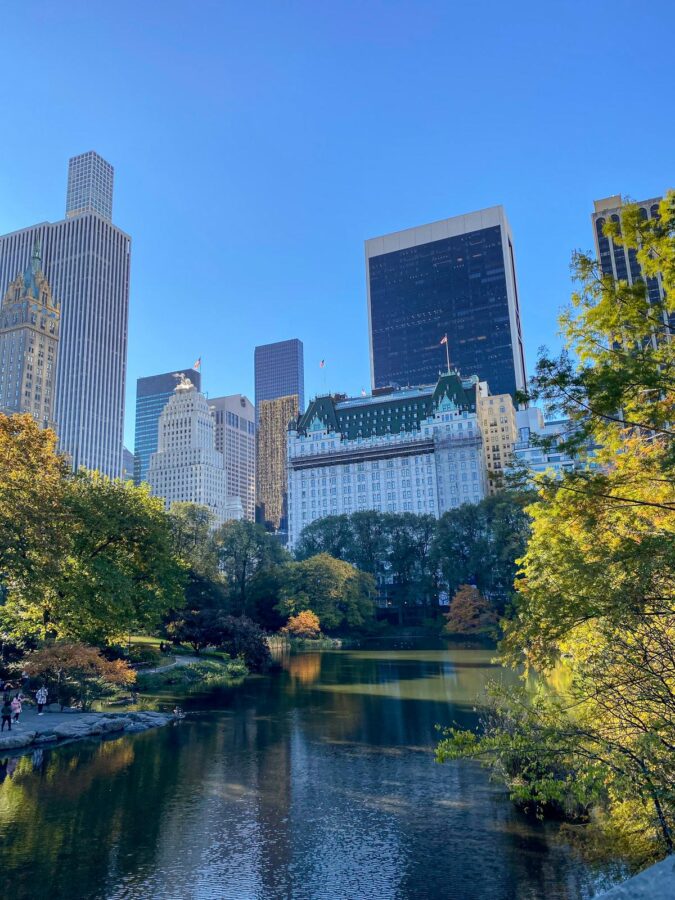
Autumn in Central Park NYC with skyline and fall foliage reflections
Kyle Kroeger / ViaTravelers
Build itinerary →
  • Today (Sunday)6:00 AM – 1:00 AM
  • Typical visit3-6 hours for main attractions, full day for comprehensive exploration
  • EntranceFree
  • Google rating4.8/5 350,000 reviews
  • WebsiteOfficial site ↗
Opening hours all week
Monday
6:00 AM – 1:00 AM
Tuesday
6:00 AM – 1:00 AM
Wednesday
6:00 AM – 1:00 AM
Thursday
6:00 AM – 1:00 AM
Friday
6:00 AM – 1:00 AM
Saturday
6:00 AM – 1:00 AM
Sunday
6:00 AM – 1:00 AM
Quiet times
early morning (6-9 AM), weekday mornings, winter months, evening hours after 6 PM, rainy days
Busy times
weekends, summer afternoons, holiday periods, special events, 10 AM – 4 PM daily
Accessibility
Services: Free accessible tours available, wheelchair accessible bike rentals at some locations. Warnings: Many scenic spots like Bow Bridge have steps, Ramble area has uneven terrain. Transport: Park roads closed to traffic except crosstown at 65th, 79th, 85th, 97th streets. Facilities: Accessible restrooms throughout park, some playgrounds have accessible equipment. Wheelchair access: Main paths paved and accessible, some areas have steep slopes or stairs only. Accessible entrances: All major entrances at street level, Columbus Circle best for accessibility.
The short answer

Why it matters

Manhattan's 843-acre urban oasis with lakes, meadows, trails, a zoo, and iconic landmarks drawing 42 million visitors annually.

Central Park is an 843-acre urban oasis in the heart of Manhattan, designed by Frederick Law Olmsted and Calvert Vaux in the 1850s. This iconic green space offers a peaceful escape from the bustling city with its stunning landscapes, diverse attractions, and year-round activities. Home to famous landmarks like Bethesda Fountain, Bow Bridge, and The Mall, Central Park provides visitors with everything from serene lakes and woodlands to cultural attractions and recreational facilities.

Cultural Context

Central Park represents a groundbreaking achievement in urban planning and landscape architecture. Designed as America’s first artificial work of art, it embodies the 19th-century vision of democratic public space where all social classes could enjoy nature together. The park has been featured in countless films, television shows, and literary works, making it an integral part of American cultural identity and a symbol of New York City‘s character.

Historical Context

Construction began in 1858 under the visionary design of Frederick Law Olmsted and Calvert Vaux, who won a competition with their ‘Greensward Plan.’ The massive project took over 20 years to complete, requiring the displacement of several communities including Seneca Village, a predominantly African American settlement. Workers moved nearly 5 million cubic yards of stone, earth, and topsoil, built 36 bridges and arches, and planted 500,000 trees, shrubs, and vines to create this masterpiece.
Context

Story and significance

About

Central Park is an expansive 843-acre urban park in the center of Manhattan, offering a mix of wide lawns, wooded paths, formal gardens and water features. Visitors can stroll or bike along meandering drives, rent a boat on the Lake, visit the Ramble for birdwatching, or relax on the Sheep Meadow while watching city life unfold. The park contains notable landmarks such as Bethesda Terrace and Fountain, the Conservatory Garden, and the Jacqueline Kennedy Onassis Reservoir, each offering distinct views and photographic opportunities. Seasonal programming includes free concerts, outdoor theater, ice skating in winter and varied recreational facilities that draw both locals and tourists.

Historical significance

Central Park pioneered the American park movement and established principles of landscape architecture still used today. It represented a revolutionary concept of public space in the 19th century, designed to provide all citizens with access to nature and beauty regardless of social status. The park’s creation also involved significant social change, including the displacement of existing communities.

Historical context

Construction began in 1858 under the visionary design of Frederick Law Olmsted and Calvert Vaux, who won a competition with their ‘Greensward Plan.’ The massive project took over 20 years to complete, requiring the displacement of several communities including Seneca Village, a predominantly African American settlement. Workers moved nearly 5 million cubic yards of stone, earth, and topsoil, built 36 bridges and arches, and planted 500,000 trees, shrubs, and vines to create this masterpiece.

Cultural context

Central Park represents a groundbreaking achievement in urban planning and landscape architecture. Designed as America’s first artificial work of art, it embodies the 19th-century vision of democratic public space where all social classes could enjoy nature together. The park has been featured in countless films, television shows, and literary works, making it an integral part of American cultural identity and a symbol of New York City’s character.

Architecture

Central Park showcases exceptional landscape architecture through its naturalistic design philosophy. The park features 36 distinctive bridges and arches, each uniquely designed to blend with the surrounding landscape. Notable architectural elements include the Gothic Revival Belvedere Castle, the ornate Bethesda Terrace with its intricate tile work, and the cast-iron Bow Bridge, demonstrating the integration of functional infrastructure with artistic beauty.

Local significance

Central Park serves as Manhattan’s primary green lung and community gathering space. It hosts major cultural events, provides recreational opportunities for millions of residents, and represents the democratic ideal of public space accessible to all social classes. The park’s 42 million annual visitors make it one of the most visited urban parks in the United States.

Experience

Make the most of it

Local tips
  • Visit Conservatory Garden early morning or late afternoon for fewer crowds
  • Shakespeare Garden Whispering Bench – sit at opposite ends to hear each other whisper
  • Alice in Wonderland statue perfect for children to climb – very popular photo spot
  • Bow Bridge most photographed at golden hour – arrive early for best shots
  • North Woods and Ramble offer wilderness escape feeling – over 200 bird species
  • Bethesda Fountain and Terrace free people-watching and architecture viewing
  • Lasker Rink reopening April 2025 after major renovations
  • Spring tulips in Conservatory Garden are spectacular – peak bloom late April
Hidden gems nearby
  • Conservatory Garden secret formal garden with French, Italian, English sections
  • Shakespeare Garden hidden below Belvedere Castle with plants from his plays
  • The Ramble 36-acre preserved woodland with Azalea Pond and mysterious Cave
  • North Woods wilder section with rustic trails and historic Blockhouse fort
  • Alice in Wonderland statue bronze sculpture with climbable mushroom and Cheshire Cat
  • Angel of the Waters (Bethesda Fountain) one of NYCs most beloved artworks
  • Strawberry Fields John Lennon memorial Imagine mosaic always has fresh flowers
  • Mall tree-lined promenade designed as American Champs-Élysées
Special features
  • Over 9,000 benches, 36 bridges and arches, 21 playgrounds, 843 acres of diverse landscapes including meadows, woodlands, and water features. Home to over 200 bird species and the famous Central Park Conservancy's restoration work.
Editorial scores

How we rate it

Authenticity9/10
Accessibility score8/10
Family-friendly score10/10
Off-the-beaten-path7/10

Editorial scores on a 10-point scale, judged against places of the same kind.

Updated Data: Editorial research · Google Places ratings · Verified coordinates