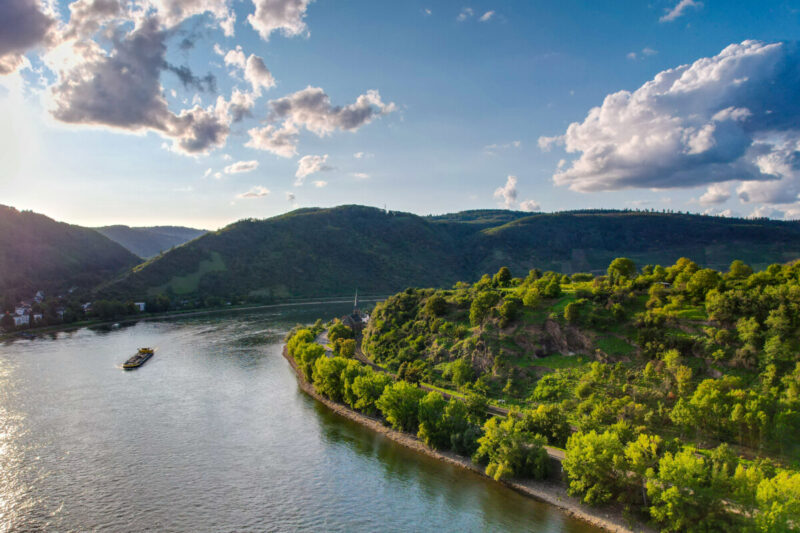
Located at the confluence of the Rhine and Moselle rivers in Koblenz, Germany, Deutsches Eck (“German Corner”) represents a symbolic landmark with both geographical and historical significance. The site derives its name from the Teutonic Knights who established a commandry here in 1216. However, its iconic status emerged in 1897 with the installation of a monumental equestrian statue of Kaiser Wilhelm I, commemorating his role in German unification. Rising 37 meters, this imposing bronze monument stood as a national symbol until its destruction near the end of World War II. In 1953, the preserved pedestal was rededicated as a memorial to German unity by Federal President Theodor Heuss. Following Germany’s reunification in 1990, a replica of the original statue was reinstated. Today, the promontory features flags of Germany’s 16 federal states, creating a striking visual display against the backdrop of the merging rivers. This geographic junction also gave Koblenz its name, derived from the Latin “Castellum apud Confluentes” meaning “fort at the confluence.” Visitors gather at this dramatic vantage point to witness the meeting of “Father Rhine” and “Mother Moselle” while reflecting on Germany’s complex journey toward unity.
Cultural Context
Symbol of German unity at confluence of Father Rhine and Mother Moselle where Teutonic Order settled 1216 giving name German Corner, part of UNESCO World Heritage Upper Middle Rhine Valley since 2002, attracts 2 million visitors annually as powerful representation of German identity and natural splendor
Historical Context
Named from Castellum apud Confluentes Latin for fort at confluence becoming Koblenz, Kaiser Wilhelm I monument erected 1897 designed by Bruno Schmitz 37 meters high celebrating German unification, destroyed 1945 rededicated by Theodor Heuss 1953 as unity memorial, reconstructed 1993 with 14-meter equestrian statue