
MenuClose

A place worth knowing

Göttweig Abbey

Attractions · Abbey in Wachau ValleyUpdated

  • Google rating4.6/5
  • Typical visit1.5 – 3 hours (longer if attending a service, exploring all collections, or enjoying the panoramic views extensively)
  • EntranceAdmission required — check https://www.stiftgoettweig.at/ for tickets
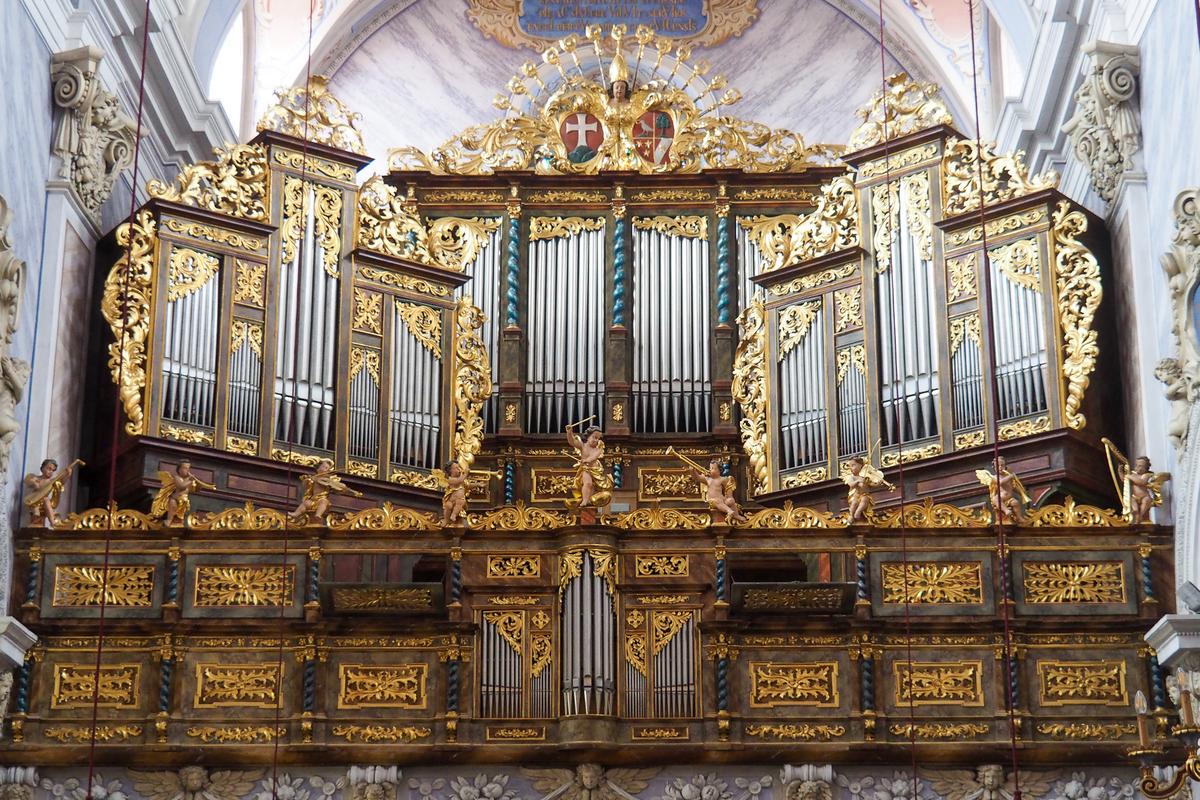
Interior of Göttweig Abbey Cathedral organ, Austrian baroque architecture, cultural travel destination
Göttweig Abbey’s stunning baroque organ (Kyle Kroeger / ViaTravelers)
  • Today (Thursday)Church: 8 AM – 6 PM
  • Typical visit1.5 – 3 hours (longer if attending a service, exploring all collections, or enjoying the panoramic views extensively)
  • EntranceAdmission required — check https://www.stiftgoettweig.at/ for tickets
  • Google rating4.6/5
  • WebsiteOfficial site ↗
Opening hours all week
Monday
Church: 8 AM – 6 PM
Tuesday
Church: 8 AM – 6 PM
Wednesday
Church: 8 AM – 6 PM
Thursday
Church: 8 AM – 6 PM
Friday
Church: 8 AM – 6 PM
Saturday
Church: 8 AM – 6 PM
Sunday
Church: 8 AM – 6 PM
Accessibility
"{"parking": "Accessible parking available near main entrance. Hilltop location requires vehicle access.", "mobility_info": "Some historic areas may have steps. Main church, museum, and restaurant accessible. Terraces offer level viewing areas. Some parts of monastery remain private.", "public_transport": "Limited public transport due to hilltop location. Tour buses and taxis recommended. Some tour operators offer accessible vehicles.", "wheelchair_access": "Main areas of monastery are wheelchair accessible. Historic building with some limitations. Church and museum areas have ramps and elevators.", "accessibility_services": "Staff assistance available. Accessible restrooms in visitor areas. Wheelchair access to main attractions.", "sensory_considerations": "Quiet monastic environment. Echo in baroque church. Panoramic views of Wachau Valley from terraces."}"
The short answer

Why it matters

A Baroque Benedictine hilltop abbey overlooking the Wachau Valley, a UNESCO site known as the Austrian Montecassino with a monumental staircase fresco

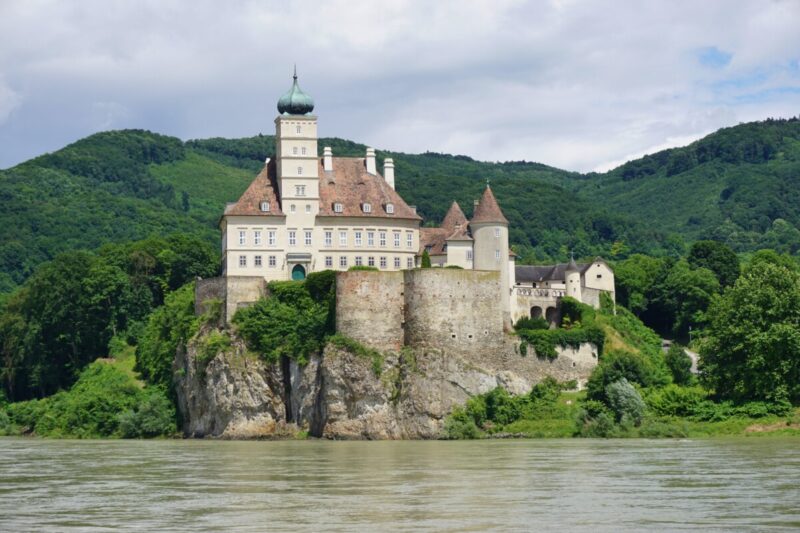
Nestled majestically atop a hill overlooking the eastern gateway of the Wachau Valley, a UNESCO World Heritage site, Göttweig Abbey stands as a spiritual and cultural beacon in Lower Austria for nearly a millennium. Founded in 1083 by Bishop Altmann of Passau, this Benedictine monastery is often hailed as the “Austrian Montecassino” due to its prominent location and historical significance. The abbey features magnificent Baroque architecture, including Austria’s largest Baroque staircase adorned with a ceiling fresco by Paul Troger depicting Emperor Charles VI as Apollo. Beyond its architectural splendor, the abbey houses significant artistic treasures, a renowned Graphic Art Collection of approximately 32,000 prints, a Historical Music Archive with 10,000 artifacts, and a library with over 100,000 volumes. Still functioning as an active monastery with a community of 30-45 Benedictine monks, it offers visitors not only cultural enrichment but also breathtaking panoramic views of the Wachau Valley, its vineyards, and the Danube River below.

Cultural Context

Founded 1083, rebuilt 1718-1749 as Baroque masterpiece representing spiritual and artistic achievement in Austrian monastery tradition

Historical Context

Founded 1083 by Bishop Altmann of Passau, rebuilt 1718 by Abbot Gottfried Bessel as Austrian Baroque architectural masterpiece

Context

Story and significance

About

Göttweig Abbey is a hilltop Benedictine monastery overlooking the Danube valley near Krems, notable for its Baroque architecture, impressive library and panoramic terraces. Visitors can tour the ornate abbey church, richly decorated state rooms and the historic monastic library, and walk the grounds for sweeping views of vineyards and the Wachau landscape. The abbey remains an active religious community, and exhibits and guided tours explain its artistic heritage, manuscript collections and role in regional history. Many travelers combine a visit with nearby wine villages and Danube river routes that highlight the area’s cultural and viticultural significance.

Historical significance

Founded in 1083 by Bishop Altmann of Passau, Göttweig Abbey has played a pivotal role in the religious, cultural, and political history of Austria for nearly a millennium. Originally established as a Benedictine monastery, it became a center for spiritual life, education, and manuscript preservation during the Middle Ages. The abbey endured significant challenges, including destruction by fire in 1718, which led to its extensive Baroque reconstruction under architect Johann Lucas von Hildebrandt, marking an important period of architectural and artistic renewal in the region. Göttweig Abbey also served as a refuge and stronghold during times of conflict, including the Ottoman wars in Europe and the Napoleonic invasions. Its library and scriptorium were instrumental in preserving theological and philosophical texts, contributing to the intellectual currents of Central Europe. The abbey’s vineyards and agricultural practices influenced the economic development of the Wachau Valley, reinforcing its status as a key center of monastic innovation and sustainability. Today, Göttweig Abbey stands as a testament to the enduring legacy of monasticism in Austria, symbolizing resilience, cultural preservation, and the harmonious integration of spiritual and worldly pursuits throughout centuries of European history.

Historical context

Founded 1083 by Bishop Altmann of Passau, rebuilt 1718 by Abbot Gottfried Bessel as Austrian Baroque architectural masterpiece
Cultural context

Founded 1083, rebuilt 1718-1749 as Baroque masterpiece representing spiritual and artistic achievement in Austrian monastery tradition

Architecture

Masterpiece of Austrian Baroque architecture designed by Johann Lucas von Hildebrandt inspired by Escorial. Features largest Baroque staircase in Austria with Paul Troger 1739 fresco depicting Emperor Charles VI as Apollo. Magnificent abbey church and monastic complex demonstrate Baroque architectural grandeur and religious expression.

Local significance

Part of UNESCO World Heritage Wachau landscape, positioned 422m above sea level overlooking Danube Valley. Major tourist destination offering breathtaking views and cultural experiences. Home to Austria highest apricot orchard and wine production. Essential stop on World Heritage Trail and Way of St James pilgrimage routes.

Experience

Make the most of it

Local tips
  • Visit highest apricot orchard in Austria Wachau Valley during bloom season
  • Try abbey-crafted apricot jams and wines made on location by monks
  • Best panoramic views from 422m elevation overlooking Danube valley
  • Founded 1083 – one of Austria oldest continuously operating monasteries
  • Community of about 30 Benedictine monks still active in daily operations
Hidden gems nearby
  • Monumental imperial staircase with 1739 Paul Troger ceiling fresco
  • One of largest and most beautiful Baroque staircases in Europe
  • Annual art exhibitions staged in historic royal and imperial rooms
  • Working monastery with authentic daily Benedictine monastic life
  • Panoramic terrace restaurant with sweeping Danube valley views
Special features
  • Largest Baroque staircase in Austria, 130,000-volume library, Paul Troger frescoes, active Benedictine monastery with daily services
Editorial scores

How we rate it

Authenticity9/10
Accessibility score9/10
Family-friendly score8/10
Off-the-beaten-path2/10

Editorial scores on a 10-point scale, judged against places of the same kind.

Updated Data: Editorial research · Google Places ratings