MenuClose

A place worth knowing

Kamari Beach

Nature · Beach in SantoriniUpdated

  • Google rating4.4/5
  • Typical visit3-5 hours (longer if including water sports or dining)
  • EntranceFree
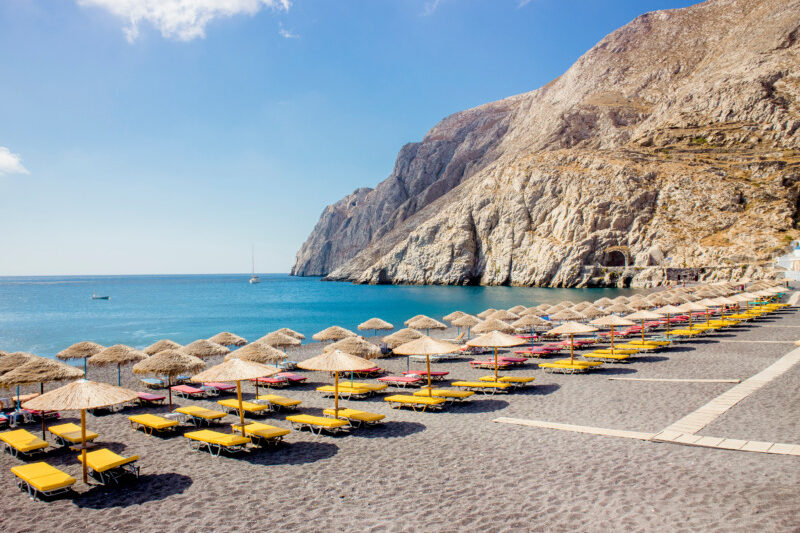
Beach Chairs at Kamari Beach Santorini, Greece
FotoHelin / Adobe Stock
  • Today (Friday)Open 24 hours
  • Typical visit3-5 hours (longer if including water sports or dining)
  • EntranceFree
  • Google rating4.4/5
Opening hours all week
Monday
Open 24 hours
Tuesday
Open 24 hours
Wednesday
Open 24 hours
Thursday
Open 24 hours
Friday
Open 24 hours
Saturday
Open 24 hours
Sunday
Open 24 hours
Accessibility
"{"seaAccess": "Gentle slope into water, clear visibility of seabed", "transport": "Bus service from Fira, large free parking lot at beach", "assistance": "Lifeguards on duty daily during summer season", "facilities": "Accessible changing cabins and fresh water showers", "beachTerrain": "Wide flat beach area suitable for wheelchairs on packed sand", "familyFriendly": "Best beach for kids and seniors – most family-friendly in Santorini", "wheelchairAccess": "Seatrack ramp enables safe independent sea access for mobility users"}"
The short answer

Why it matters

Santorini's most popular organized black-sand beach beneath Mesa Vouno cliff, lined with tavernas and a long pedestrian promenade

Kamari Beach stretches along Santorini‘s southeastern coastline as a distinctive volcanic marvel, where crystalline Aegean waters meet striking black sand created by ancient lava flows. Unlike Santorini’s clifftop caldera villages, Kamari offers a different island experience with its accessible beachfront promenade lined with tavernas, boutiques, and cafés shaded by tamarisk trees. The dramatic backdrop of Mesa Vouno mountain, crowned with the ruins of ancient Thera, creates a stunning visual contrast with the dark shoreline and turquoise sea. Awarded Blue Flag status for its cleanliness, the beach features organized sections with sunbeds and umbrellas alongside more secluded spots for tranquility seekers. Water sports enthusiasts find excellent opportunities for paddleboarding, jet skiing, and parasailing in the calm, clear waters. As evening approaches, Kamari’s ambiance transforms when beachfront establishments illuminate their terraces and the open-air cinema screens films beneath the stars. Culturally significant, the beach lies near archaeological sites including Ancient Thera (accessible via scenic hiking path or shuttle) and Panagia Episkopi, Santorini’s oldest Byzantine church. For travelers seeking an authentic experience beyond the famous sunset views of Oia, Kamari Beach offers the perfect balance of natural beauty, authentic Greek dining, and relaxed sophistication within a genuine local community.

Cultural Context

Kamari Beach holds a significant place within the cultural fabric of Santorini, reflecting the island’s deep connection to the sea and its volcanic heritage. The beach is more than a recreational spot; it is a venue where local traditions and contemporary life merge. The nearby village of Kamari hosts traditional festivals, such as the annual celebration of Agios Nikolaos, the patron saint of sailors, which includes religious processions and community feasts that honor the island’s maritime history. Local customs often revolve around the sea, with fishing and small-scale viticulture playing a role in daily life. The black volcanic sand of Kamari Beach is emblematic of Santorini’s volcanic origins and is a reminder of the island’s resilience and adaptation through centuries of geological upheaval. The beach also serves as a gathering place for both locals and visitors during cultural events, where traditional music and dance can often be experienced, showcasing the Aegean’s vibrant heritage. Kamari’s cultural context is deeply intertwined with its natural environment, making it a living example of how Santorini’s communities maintain their identity through a blend of ancient customs and modern tourism. The cultural practices observed around Kamari Beach continue to enrich the visitor experience by providing insight into the island’s unique way of life.

Historical Context

Kamari Beach’s history is inseparable from the broader narrative of Santorini, an island shaped by one of the most significant volcanic eruptions in human history—the Minoan eruption around 1600 BCE. This catastrophic event drastically altered the island’s landscape and influenced the development of ancient civilizations in the Aegean. While Kamari itself was a modest fishing village for much of its early history, it became increasingly important as a coastal settlement in the 20th century, particularly after the growth of tourism following World War II. The volcanic black sand of Kamari is a direct result of the island’s volcanic activity, which has defined Santorini’s geological and cultural evolution. Throughout the centuries, the area around Kamari has seen influences from various ruling powers, including the Venetians and Ottomans, each leaving subtle marks on the local culture and infrastructure. The beach’s modern development began in the 1970s when it transformed from a quiet fishing shore into a popular tourist destination, reflecting broader economic and social changes on the island. Today, Kamari Beach stands as a testament to Santorini’s ability to preserve its historical roots while adapting to contemporary demands, embodying a layered history that continues to unfold.


Context

Story and significance

About

A Blue Flag beach on Santorini’s southeastern coast, stretching roughly 5 km beneath the cliffs of Mesa Vouno mountain. Its distinctive black sand and pebbles formed from volcanic rock eroded since the Minoan eruption approximately 3,600 years ago. The dark shoreline absorbs heat quickly — footwear is advisable on sunny days. Organised sections provide sunbeds, umbrellas, and water sports; a seafront promenade runs the length of the beach with restaurants, bars, and shops. Mesa Vouno separates Kamari from neighbouring Perissa Beach to the south. Ancient Thera, the ruins of a Hellenistic city, sits on the mountaintop above.

Historical significance

Kamari Beach’s historical significance is deeply linked to Santorini’s broader volcanic and cultural history, serving as a living reminder of the island’s dramatic geological past. The black sand coastline is a direct consequence of the volcanic eruptions that shaped the island’s current form, particularly the Minoan eruption around 1600 BCE, which had far-reaching effects on ancient civilizations in the Aegean and Mediterranean regions. While Kamari itself was not a major ancient settlement, the area’s continuous habitation and use as a fishing and agricultural zone highlight the adaptive strategies of island communities in a challenging environment. The beach and its surroundings witnessed gradual transformation from a quiet rural landscape to a modern tourist destination in the late 20th century, reflecting wider historical trends in Greek economic development and international travel. Kamari’s role in preserving traditional ways of life alongside embracing modernity illustrates the island’s historical resilience and cultural continuity. Furthermore, the beach’s volcanic features provide valuable scientific insights into the region’s seismic activity and environmental history. As such, Kamari Beach is not only a site of natural beauty but also a place of historical importance that encapsulates key aspects of Santorini’s legacy and ongoing story.

Historical context

Kamari Beach’s history is inseparable from the broader narrative of Santorini, an island shaped by one of the most significant volcanic eruptions in human history—the Minoan eruption around 1600 BCE. This catastrophic event drastically altered the island’s landscape and influenced the development of ancient civilizations in the Aegean. While Kamari itself was a modest fishing village for much of its early history, it became increasingly important as a coastal settlement in the 20th century, particularly after the growth of tourism following World War II. The volcanic black sand of Kamari is a direct result of the island’s volcanic activity, which has defined Santorini’s geological and cultural evolution. Throughout the centuries, the area around Kamari has seen influences from various ruling powers, including the Venetians and Ottomans, each leaving subtle marks on the local culture and infrastructure. The beach’s modern development began in the 1970s when it transformed from a quiet fishing shore into a popular tourist destination, reflecting broader economic and social changes on the island. Today, Kamari Beach stands as a testament to Santorini’s ability to preserve its historical roots while adapting to contemporary demands, embodying a layered history that continues to unfold.
Cultural context

Kamari Beach holds a significant place within the cultural fabric of Santorini, reflecting the island’s deep connection to the sea and its volcanic heritage. The beach is more than a recreational spot; it is a venue where local traditions and contemporary life merge. The nearby village of Kamari hosts traditional festivals, such as the annual celebration of Agios Nikolaos, the patron saint of sailors, which includes religious processions and community feasts that honor the island’s maritime history. Local customs often revolve around the sea, with fishing and small-scale viticulture playing a role in daily life. The black volcanic sand of Kamari Beach is emblematic of Santorini’s volcanic origins and is a reminder of the island’s resilience and adaptation through centuries of geological upheaval. The beach also serves as a gathering place for both locals and visitors during cultural events, where traditional music and dance can often be experienced, showcasing the Aegean’s vibrant heritage. Kamari’s cultural context is deeply intertwined with its natural environment, making it a living example of how Santorini’s communities maintain their identity through a blend of ancient customs and modern tourism. The cultural practices observed around Kamari Beach continue to enrich the visitor experience by providing insight into the island’s unique way of life.

Architecture

The architectural landscape surrounding Kamari Beach is a distinctive blend of traditional Cycladic design and modern hospitality infrastructure, reflecting the evolution of Santorini’s built environment. Characterized by whitewashed cubic houses, smooth-edged structures, and blue-domed roofs, the local architecture adheres to principles that harmonize with the island’s natural volcanic terrain and climate. The village of Kamari features narrow winding streets and low-rise buildings designed to withstand seismic activity and intense sun exposure, utilizing thick walls and small windows to maintain cool interiors. Many of the hotels, restaurants, and shops along the beachfront incorporate these traditional elements while integrating contemporary materials such as reinforced concrete and glass to meet modern standards. The use of local volcanic stone in construction is notable, providing both aesthetic authenticity and practical durability. Public spaces and promenades along Kamari Beach are thoughtfully designed to enhance the natural beauty of the coastline while facilitating accessibility and leisure. This architectural synthesis respects Santorini’s heritage while accommodating the needs of a thriving tourist destination, making Kamari a compelling example of sustainable and culturally sensitive development.

Local significance

For the residents of Kamari and the broader Santorini community, Kamari Beach is a vital economic and social hub that supports livelihoods and fosters communal identity. The beach’s role extends beyond tourism; it is a place where locals gather for social interaction, traditional celebrations, and daily recreation. Fishing remains a modest but culturally important activity, with fishermen often seen at dawn preparing their boats along the shore, maintaining a centuries-old connection to the sea. The beach has also influenced local gastronomy, with many nearby tavernas specializing in fresh seafood dishes that reflect the island’s culinary heritage. Kamari Beach contributes significantly to the local economy by attracting visitors who support small businesses, artisans, and hospitality workers. The community’s relationship with the beach is characterized by a shared responsibility to preserve its natural environment and cultural authenticity amidst increasing tourist numbers. Local legends and stories about the volcanic origins of the island are frequently recounted, enriching the collective memory and sense of place. Kamari Beach remains a cornerstone of daily life for locals, symbolizing both the enduring traditions and evolving dynamics of Santorini society.

Experience

Make the most of it

Local tips
  • Museum cafes often serve quality local food
  • Gift shops have unique souvenirs
  • Special exhibitions require separate tickets
  • Late night openings often have unique events
  • Visit during weekdays for fewer crowds
  • Members get free entry and skip lines
  • Check for combo tickets with nearby attractions
Hidden gems nearby
  • Rooftop terraces often have great city views
  • Secret passages between galleries
  • Free guided tours at specific times
  • Archive rooms sometimes open for special tours
  • Staff recommendations for must-see pieces
  • Hidden courtyards perfect for photos
  • Lesser-known wings have remarkable collections
Special features
  • Kamari Beach is renowned for its striking black volcanic sand, a rare geological feature that sets it apart from typical Mediterranean beaches. This unique sand is the result of centuries of volcanic activity from the nearby Santorini caldera, giving the beach a dramatic and visually captivating appearance. The beach stretches for approximately 5 kilometers along the southeastern coast of the island, offering a spacious and well-organized environment for sunbathing, swimming, and water sports. The crystal-clear waters of the Aegean Sea provide excellent conditions for snorkeling and diving, revealing diverse marine life and underwater volcanic formations. Kamari also boasts a well-developed promenade lined with tavernas, cafes, and shops, allowing visitors to enjoy local cuisine and crafts while overlooking the sea. The beach’s accessibility, combined with its unique volcanic landscape, makes it a favored destination for families, couples, and solo travelers alike. Additionally, Kamari is equipped with modern amenities such as sunbeds, umbrellas, and lifeguard services, ensuring comfort and safety. Its combination of natural beauty and visitor-friendly infrastructure distinguishes Kamari Beach as a special feature of Santorini’s coastal offerings.
Editorial scores

How we rate it

Authenticity7/10
Accessibility score8/10
Family-friendly score8/10
Off-the-beaten-path4/10

Editorial scores on a 10-point scale, judged against places of the same kind.

Updated Data: Editorial research · Google Places ratings