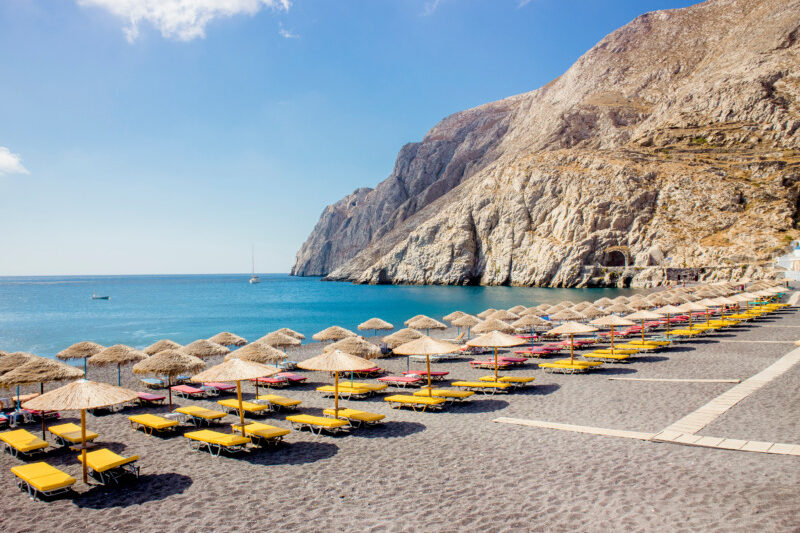
Kamari Beach
Kamari’s black sand is the real Santorini — no caldera crowds, just tavernas, tamarisk shade, and Mesa Vouno looming above the waterline.
Kamari’s black sand is the real Santorini — no caldera crowds, just tavernas, tamarisk shade, and Mesa Vouno looming above the waterline.

At midday, sunlight hits Melissani’s open roof and turns the lake an impossible blue — the kind you assume is a filter until you’re in the boat.
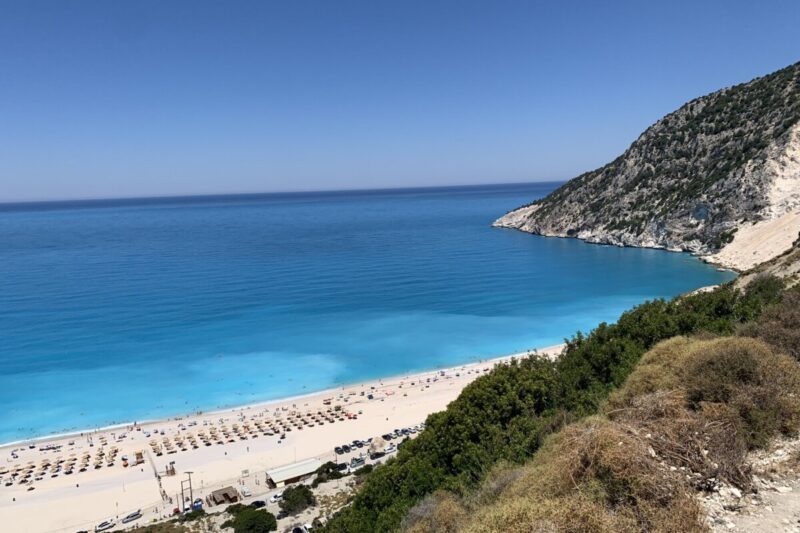
Myrtos hits different from the road above — 300m limestone cliffs, white marble pebbles, and that cobalt-to-turquoise shift you have to see to believe.

Getting to Ammoudi means 300 steps down from Oia or a boat — either way, grilled octopus at the water’s edge makes it worth it.

Metaxy Mas sits between two villages, away from the caldera crowds — and the slow-cooked lamb with thyme honey alone justifies the detour.

Tassia Dendrinou has been cooking in Fiskardo since the 1980s. The Kefalonian meat pie alone justifies the drive to the northern tip.

The Fisherman’s Cabin in Assos sits in a converted storage house — the family has been serving the day’s catch here since the 1970s.


The Archaeological Museum of Argostoli is worth knowing about — but go in with eyes open. It’s currently closed post-2014 earthquake.

Kefalonia’s most sacred site sits quietly in the Omala valley — the saint’s relics are here, and the atmosphere is unlike anywhere else on the island.
Casa Grec was one of Argostoli’s most charming courtyard restaurants — Greek, Italian, and French on one menu. It’s permanently closed now, so plan accordingly.

One display case in the Acropolis Museum is deliberately left empty — a quiet argument aimed directly at London.

The Acropolis gets the fame, but the Ancient Agora is where Athenian democracy actually happened — ballot disks and all.
15 columns still stand. The 16th fell in 1852 and never got up — it’s still lying there, which tells you everything about this place.


Two inscriptions, two cities, one arch — Hadrian drew the line between ancient Athens and his own in marble that’s still standing.

The Acropolis looks small from up here. At 277 meters, Lycabettus is the view Athens locals actually use.
Most visitors walk past this temple chasing the Parthenon. That’s a mistake — it’s better preserved and far less crowded.

The front-row marble thrones still have inscriptions. This is where Sophocles premiered. Standing here, that actually lands.