
MenuClose

A place worth knowing

Myrtos Beach

Nature · Beach in KefaloniaUpdated

  • Google rating4.7/5
  • Typical visit2-4 hours (longer if staying for sunset or extended swimming)
  • EntranceFree
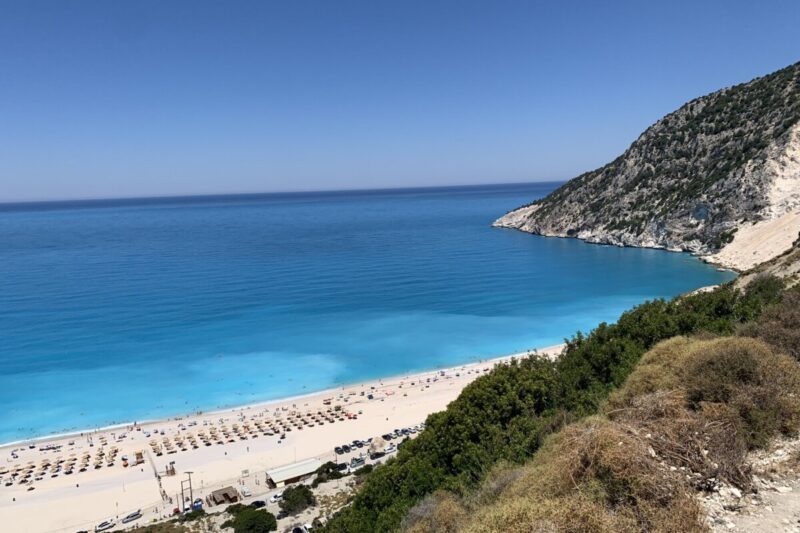
The electric blue waters and white sand of Myrtos Beach, Kefalonia, Greece
Woodrow Matthews / ViaTravelers
  • Today (Monday)Open 24 hours
  • Typical visit2-4 hours (longer if staying for sunset or extended swimming)
  • EntranceFree
  • Google rating4.7/5
Opening hours all week
Monday
Open 24 hours
Tuesday
Open 24 hours
Wednesday
Open 24 hours
Thursday
Open 24 hours
Friday
Open 24 hours
Saturday
Open 24 hours
Sunday
Open 24 hours
Accessibility
"{"parking": "Limited disabled parking spaces in small beachside lot", "facilities": "Basic toilets and changing rooms available but not fully accessible", "waterEntry": "Steep drop-off and pebbles make water entry challenging", "beachSurface": "Large white pebbles difficult for mobility impaired or elderly", "mobilityAccess": "Very limited – steep winding road down, no wheelchair access to beach", "recommendation": "Better enjoyed from clifftop viewpoints for those with mobility issues"}"
The short answer

Why it matters

A crescent of white pebbles beneath 300-meter limestone cliffs, repeatedly voted one of the most beautiful beaches in Greece and the world

Myrtos Beach on the Greek island of Kefalonia stands as one of the most photographed beaches in Greece and regularly appears in collections of the world’s most beautiful shorelines. Set dramatically at the base of towering limestone cliffs that plunge nearly 300 meters down to the sea, this crescent-shaped beach stretches for approximately 1.5 kilometers along the island’s northwestern coast. What makes Myrtos truly spectacular is the striking contrast between its pure white marble pebbles and the extraordinary spectrum of blue waters shifting from pale turquoise at the shoreline to deep cobalt further out—a visual effect created by the unique geological composition of the seafloor and exceptional water clarity. While the beach lacks natural shade and features a relatively steep shore drop-off, these qualities contribute to its unspoiled, dramatic landscape. Vehicle access requires navigating a winding mountain road with hairpin turns that offers breathtaking panoramic views of the beach below, making the approach itself a memorable part of the experience. Though it has minimal facilities—just a small canteen during summer months—Myrtos Beach rewards visitors with an authentic, natural Mediterranean beach experience where the interplay of mountains, sea, and sky creates an unforgettable sensory tableau that captures the raw beauty and elemental power of the Ionian Sea.

Cultural Context

Myrtos Beach holds a significant place within the cultural fabric of Kefalonia and the broader Ionian Islands. It is not only a natural landmark but also a symbol of the island’s identity, often featured in local art, music, and folklore. The beach is closely linked to the traditional maritime culture of Kefalonia, where fishing and seafaring have been central to community life for centuries. Local festivals and celebrations, such as the Feast of the Assumption on August 15th, often see residents gathering near coastal areas, including Myrtos, to honor religious and cultural traditions. The beach’s dramatic landscape has inspired numerous Greek artists and photographers, contributing to a shared cultural appreciation for natural beauty. While tourism has grown, local customs surrounding respect for nature and preservation of the environment remain strong, reflecting a deep-rooted cultural ethos of stewardship. Myrtos Beach also features in local stories about the island’s rugged terrain and the resilience of its inhabitants, reinforcing its role as a cultural touchstone. The beach remains a place where both locals and visitors can connect with the natural and cultural heritage of Kefalonia, making it a vital part of the island’s living traditions and contemporary cultural identity.

Historical Context

The historical context of Myrtos Beach is intertwined with the broader history of Kefalonia, an island with a rich and complex past dating back to antiquity. While the beach itself is primarily known for its natural beauty, the surrounding region has been inhabited since Neolithic times, with evidence of Mycenaean and Roman presence on the island. Kefalonia was an important strategic location throughout history, especially during Venetian rule from the 15th to the 18th century, which left a lasting impact on the island’s culture and architecture. The area around Myrtos Beach was largely rural and undeveloped until the mid-20th century when the island began to attract greater attention as a tourist destination. The catastrophic 1953 Ionian earthquake, which devastated much of Kefalonia, led to significant changes in the island’s infrastructure and population distribution, indirectly affecting access to Myrtos Beach. Over time, the beach became emblematic of Kefalonia’s natural heritage and resilience, symbolizing both the island’s historical upheavals and its recovery. Although Myrtos Beach itself was not a site of major historical events, its evolution from a remote cove to an internationally recognized landmark reflects the broader historical transformations of Kefalonia.


Context

Story and significance

About

Myrtos Beach on Kefalonia is a dramatic, crescent-shaped bay framed by steep limestone cliffs and bright white pebbles that contrast with startlingly clear turquoise water. The beach is accessed via a winding coastal road with a popular viewpoint above that highlights the sweeping shoreline; on the sand you’ll find sunbathers and swimmers but limited facilities, so bring supplies. The water is typically calm and excellent for swimming and snorkeling near the rocky edges, while the surrounding landscape invites short drives or photo stops rather than extended development.

Historical significance

While Myrtos Beach itself has not been the site of major historical events, its historical significance is intimately connected to the broader narrative of Kefalonia and its strategic position in the Ionian Sea. The beach’s dramatic cliffs and secluded location have provided natural shelter and vantage points throughout history, potentially serving as lookout points during periods of conflict, such as the Venetian-Ottoman struggles or World War II. The 1953 Ionian earthquake, which reshaped much of Kefalonia’s landscape and infrastructure, indirectly impacted the area by influencing patterns of settlement and tourism development. Over time, Myrtos Beach evolved from a relatively isolated coastal area to a symbol of the island’s natural resilience and post-earthquake recovery. Its rise to prominence in the late 20th and early 21st centuries as a premier tourist destination also marks an important chapter in the island’s modern history, reflecting shifts in economic focus and cultural exchange. The beach’s preservation efforts highlight the historical awareness of Kefalonians regarding the importance of safeguarding their natural heritage. Thus, Myrtos Beach stands as a testament to the island’s enduring legacy, blending natural history with human adaptation and cultural continuity.

Historical context

The historical context of Myrtos Beach is intertwined with the broader history of Kefalonia, an island with a rich and complex past dating back to antiquity. While the beach itself is primarily known for its natural beauty, the surrounding region has been inhabited since Neolithic times, with evidence of Mycenaean and Roman presence on the island. Kefalonia was an important strategic location throughout history, especially during Venetian rule from the 15th to the 18th century, which left a lasting impact on the island’s culture and architecture. The area around Myrtos Beach was largely rural and undeveloped until the mid-20th century when the island began to attract greater attention as a tourist destination. The catastrophic 1953 Ionian earthquake, which devastated much of Kefalonia, led to significant changes in the island’s infrastructure and population distribution, indirectly affecting access to Myrtos Beach. Over time, the beach became emblematic of Kefalonia’s natural heritage and resilience, symbolizing both the island’s historical upheavals and its recovery. Although Myrtos Beach itself was not a site of major historical events, its evolution from a remote cove to an internationally recognized landmark reflects the broader historical transformations of Kefalonia.
Cultural context

Myrtos Beach holds a significant place within the cultural fabric of Kefalonia and the broader Ionian Islands. It is not only a natural landmark but also a symbol of the island’s identity, often featured in local art, music, and folklore. The beach is closely linked to the traditional maritime culture of Kefalonia, where fishing and seafaring have been central to community life for centuries. Local festivals and celebrations, such as the Feast of the Assumption on August 15th, often see residents gathering near coastal areas, including Myrtos, to honor religious and cultural traditions. The beach’s dramatic landscape has inspired numerous Greek artists and photographers, contributing to a shared cultural appreciation for natural beauty. While tourism has grown, local customs surrounding respect for nature and preservation of the environment remain strong, reflecting a deep-rooted cultural ethos of stewardship. Myrtos Beach also features in local stories about the island’s rugged terrain and the resilience of its inhabitants, reinforcing its role as a cultural touchstone. The beach remains a place where both locals and visitors can connect with the natural and cultural heritage of Kefalonia, making it a vital part of the island’s living traditions and contemporary cultural identity.

Architecture

Myrtos Beach is primarily a natural environment and does not feature significant architectural structures; however, its surrounding area provides insights into traditional Ionian architectural styles that characterize Kefalonia. Nearby villages showcase vernacular architecture with stone-built houses, tiled roofs, and wooden shutters, reflecting centuries-old construction techniques adapted to the island’s seismic activity. The use of local limestone and timber demonstrates sustainable building practices that harmonize with the natural landscape. Although Myrtos Beach itself is devoid of large man-made structures, the presence of small, unobtrusive facilities such as beach kiosks and viewing platforms are designed to blend into the environment, respecting the beach’s pristine character. These constructions employ simple, functional designs with minimal environmental impact, emphasizing the importance of preserving the natural beauty that defines the beach’s appeal. The absence of extensive development at Myrtos Beach contrasts with other Mediterranean coastal areas, highlighting a deliberate architectural restraint that prioritizes ecological balance and cultural sensitivity. This approach to built environment around Myrtos contributes to the overall experience of the beach as a place where natural and human elements coexist thoughtfully.

Local significance

For the residents of Kefalonia, Myrtos Beach holds profound local significance beyond its international fame. It is a cherished natural landmark that embodies the island’s rugged beauty and serves as a source of local pride. The beach plays an important role in the community’s relationship with the sea, symbolizing both leisure and livelihood, as generations of Kefalonians have depended on the surrounding waters for fishing and maritime activities. Local families often visit Myrtos during the summer months, maintaining traditions of communal gatherings, picnics, and celebration that reinforce social bonds. The beach is also embedded in local folklore, with stories passed down about the natural forces that shaped the cliffs and the sea, reflecting a deep connection to the landscape. Economically, Myrtos contributes to the island’s tourism sector, which is vital for local employment and cultural exchange, yet residents strive to balance tourism with environmental preservation. The beach’s presence influences daily life by attracting visitors who support local businesses, artisans, and cultural events, fostering a sustainable relationship between the community and its natural surroundings. Myrtos Beach remains an emblem of Kefalonian identity, representing resilience, natural heritage, and the enduring spirit of the island’s people.

Experience

Make the most of it

Local tips
  • Visit during weekdays for fewer crowds
  • Members get free entry and skip lines
  • Museum cafes often serve quality local food
  • Gift shops have unique souvenirs
  • Check for combo tickets with nearby attractions
  • Special exhibitions require separate tickets
  • Late night openings often have special events
Hidden gems nearby
  • Hidden courtyards perfect for photos
  • Staff recommendations for must-see pieces
  • Secret passages between galleries
  • Rooftop terraces often have great city views
  • Archive rooms sometimes open for special tours
  • Lesser-known wings have amazing collections
  • Free guided tours at specific times
Special features
  • Myrtos Beach is renowned for its striking physical features, which distinguish it as one of Greece’s most iconic beaches. Its crescent-shaped bay is framed by steep, white limestone cliffs that plunge dramatically into the turquoise waters of the Ionian Sea, creating a breathtaking contrast of colors and textures. The beach itself is composed of fine white pebbles, rather than sand, which shimmer under the Mediterranean sun and contribute to the clarity of the water. The unique geology of the area includes karst formations and rare flora on the surrounding slopes, adding ecological interest to the site. Myrtos Beach’s exceptional water quality and visibility make it a popular spot for swimming and snorkeling, while the natural amphitheater-like shape amplifies the sound of the waves, enhancing the sensory experience. The beach is accessible via a winding road offering panoramic views, which has become an attraction in its own right. Myrtos also benefits from a protected status that limits construction and preserves its natural state. The combination of dramatic cliffs, pristine waters, and the beach’s relative seclusion creates an unparalleled natural setting that continues to captivate visitors and photographers worldwide.
Editorial scores

How we rate it

Authenticity9/10
Accessibility score4/10
Family-friendly score7/10
Off-the-beaten-path5/10

Editorial scores on a 10-point scale, judged against places of the same kind.

Updated Data: Editorial research · Google Places ratings