MenuClose

A place worth knowing

Mount Lycabettus

Nature · Hill in AthensUpdated

  • Google rating4.7/5 (42,000 reviews)
  • Typical visit1-3 hours (longer if hiking or dining)
  • EntranceFree
athens destination image
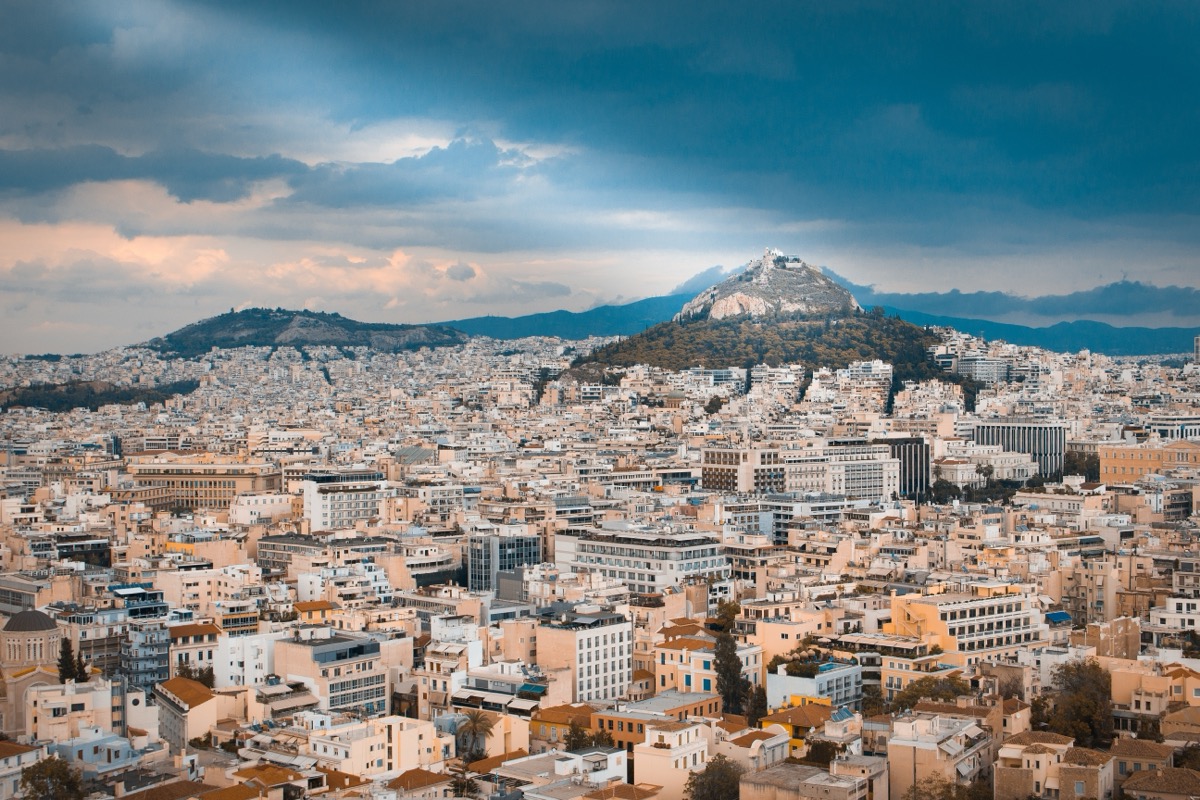
An aerial shot of Mount Lycabettus, Athens, Greece
  • Today (Thursday)Open 24 hours
  • Typical visit1-3 hours (longer if hiking or dining)
  • EntranceFree
  • Google rating4.7/5 42,000 reviews
  • WebsiteOfficial site ↗
Opening hours all week
Monday
Open 24 hours
Tuesday
Open 24 hours
Wednesday
Open 24 hours
Thursday
Open 24 hours
Friday
Open 24 hours
Saturday
Open 24 hours
Sunday
Open 24 hours
Quiet times
Early morning (07:00-09:00), Late evening after sunset (21:00-23:00), Weekdays during winter months
Busy times
Sunset hours (particularly in summer), 11:00-14:00 daily during tourist season (May-September), Weekends year-round
Accessibility
"{"transport": "Metro to Evangelismos, then short walk to funicular", "assistance": "Funicular staff can assist with boarding", "facilities": "Accessible restrooms at top", "wheelchair_access": "Funicular fully accessible, hiking trail not suitable"}"
The short answer

Why it matters

Athens' highest point at 277 meters, crowned by a whitewashed chapel with sweeping views from the Acropolis to the Saronic Gulf.

Rising 277 meters above Athens, Mount Lycabettus provides the city’s most spectacular panoramic views, encompassing the Acropolis, Aegean Sea, and sprawling metropolis below. This pine-covered limestone hill, accessible by funicular or hiking trail, offers a peaceful escape crowned by the charming Chapel of St. George.

Cultural Context

Mount Lycabettus holds a significant place in the cultural life of Athens, serving as a beloved gathering spot for both locals and visitors. Traditionally, the hill is associated with various Athenian customs, including seasonal celebrations and outdoor performances. The open-air theatre near the summit hosts concerts and cultural events, making it a vibrant venue that blends natural beauty with artistic expression. Local residents often hike up the hill for exercise, socializing, and to enjoy the panoramic views that stretch across the city to the Aegean Sea. The site is also intertwined with Greek Orthodox practices, as the small white Chapel of St. George, perched at the peak, is a place of worship and pilgrimage. The chapel is frequently used for weddings and religious ceremonies, reflecting the hill’s ongoing spiritual significance. Additionally, Mount Lycabettus embodies a symbol of Athenian identity and resilience, standing as a natural monument amid the urban landscape. Its presence in local folklore and modern cultural narratives underscores its importance beyond mere geography, representing a connection between the ancient past and contemporary city life. As such, Mount Lycabettus remains a cherished cultural landmark that continues to inspire artistic, religious, and communal activities throughout the year.

Historical Context

Mount Lycabettus has a rich historical background that dates back to ancient times, with its name believed to derive from the Greek word ‘lykos,’ meaning wolf, indicating that the hill may have once been a habitat for wolves. According to ancient legend, the hill was formed when the goddess Athena dropped a limestone mountain she was carrying to the Acropolis. Historically, the hill served as a natural lookout point due to its elevation of approximately 300 meters (908 feet), offering strategic views over Athens and its surroundings. While there are no extensive archaeological remains on the hill itself, its proximity to the Acropolis and other ancient sites situates it firmly within the historical landscape of classical Athens. Over the centuries, Mount Lycabettus has witnessed the evolution of Athens from a classical city-state through Roman, Byzantine, Ottoman, and modern eras. In the 19th century, following Greek independence, the hill became more accessible, with paths and a funicular railway constructed to facilitate visits. The Chapel of St. George, built in the 19th century, marks a significant historical addition, reflecting the religious and cultural revival of the period. Today, Mount Lycabettus stands as a testament to the layered history of Athens, embodying both its mythological origins and its continuous role as a vantage point and cultural symbol throughout the city’s development.

Context

Story and significance

About

Mount Lycabettus is a limestone hill rising above central Athens that rewards a steep walk or short funicular ride with panoramic city views, including the Acropolis and the Saronic Gulf. At the summit you find a small white chapel, viewing platforms and a cafe where people linger for sunset and night-time panoramas when the city lights spread below. Trails and staircases through pine-scented slopes lead up from different neighborhoods, making it a popular, accessible viewpoint and a pleasant contrast to Athens’ archaeological bustle.

Historical significance

Named after the ancient Athenian who transformed into a wolf upon Zeus’s altar, Mount Lycabettus has been a landmark in Athens since antiquity. In ancient times, it was believed to have been created when Athena dropped a limestone mountain she was carrying. During the 19th century, much of the hill was deforested, but reforestation efforts began in the early 20th century. The Chapel of St. George at the summit dates to the early 19th century, built upon earlier Byzantine ruins.

Historical context

Mount Lycabettus has a rich historical background that dates back to ancient times, with its name believed to derive from the Greek word ‘lykos,’ meaning wolf, indicating that the hill may have once been a habitat for wolves. According to ancient legend, the hill was formed when the goddess Athena dropped a limestone mountain she was carrying to the Acropolis. Historically, the hill served as a natural lookout point due to its elevation of approximately 300 meters (908 feet), offering strategic views over Athens and its surroundings. While there are no extensive archaeological remains on the hill itself, its proximity to the Acropolis and other ancient sites situates it firmly within the historical landscape of classical Athens. Over the centuries, Mount Lycabettus has witnessed the evolution of Athens from a classical city-state through Roman, Byzantine, Ottoman, and modern eras. In the 19th century, following Greek independence, the hill became more accessible, with paths and a funicular railway constructed to facilitate visits. The Chapel of St. George, built in the 19th century, marks a significant historical addition, reflecting the religious and cultural revival of the period. Today, Mount Lycabettus stands as a testament to the layered history of Athens, embodying both its mythological origins and its continuous role as a vantage point and cultural symbol throughout the city’s development.
Cultural context

Mount Lycabettus holds a significant place in the cultural life of Athens, serving as a beloved gathering spot for both locals and visitors. Traditionally, the hill is associated with various Athenian customs, including seasonal celebrations and outdoor performances. The open-air theatre near the summit hosts concerts and cultural events, making it a vibrant venue that blends natural beauty with artistic expression. Local residents often hike up the hill for exercise, socializing, and to enjoy the panoramic views that stretch across the city to the Aegean Sea. The site is also intertwined with Greek Orthodox practices, as the small white Chapel of St. George, perched at the peak, is a place of worship and pilgrimage. The chapel is frequently used for weddings and religious ceremonies, reflecting the hill’s ongoing spiritual significance. Additionally, Mount Lycabettus embodies a symbol of Athenian identity and resilience, standing as a natural monument amid the urban landscape. Its presence in local folklore and modern cultural narratives underscores its importance beyond mere geography, representing a connection between the ancient past and contemporary city life. As such, Mount Lycabettus remains a cherished cultural landmark that continues to inspire artistic, religious, and communal activities throughout the year.

Architecture

While Mount Lycabettus is primarily a natural landmark, it features notable architectural elements that enhance its cultural and historical appeal. The most prominent structure is the Chapel of St. George, a small whitewashed Greek Orthodox church situated at the summit. Constructed in the 19th century, the chapel exemplifies traditional Cycladic architectural styles characterized by simple geometric forms, white plastered walls, and a modest bell tower. Its design emphasizes harmony with the natural environment, using local materials such as stone and wood, which reflect the vernacular building techniques common in the region. The chapel’s interior is adorned with Byzantine-style icons and frescoes, demonstrating the continuity of Orthodox artistic traditions. Additionally, the funicular railway, built in 1965, is a significant engineering and architectural feature that facilitates access to the peak. This inclined railway uses mid-20th-century technology and design, blending functionality with minimal environmental impact. The pathways and terraces around the summit have been carefully constructed to accommodate visitors while preserving the hill’s natural terrain. Although Mount Lycabettus lacks large-scale architectural monuments, the integration of the chapel, the funicular, and visitor facilities showcases a thoughtful approach to design that respects both the cultural heritage and ecological sensitivity of the site. These architectural elements contribute to the hill’s identity as a harmonious meeting point between nature, spirituality, and modern urban life.

Local significance

For Athenians, Lycabettus represents an iconic urban escape and a symbol of the city’s geography. It serves as a natural orientation point visible from most areas of Athens. Locals frequently use it for morning exercise, evening strolls, and as a romantic spot. The hill has inspired countless Greek poems, songs, and paintings, featuring prominently in Athenian cultural identity.

Experience

Make the most of it

Local tips
  • Sunrise and sunset offer best light
  • Wildlife most active early morning
  • Local guides know hidden viewpoints
  • Seasonal changes create different experiences
  • Weekdays much less crowded
  • Respect local conservation efforts
  • Weather can change quickly
Hidden gems nearby
  • Secret swimming holes known to locals
  • Wildlife observation spots
  • Historical markers easily missed
  • Hidden caves and grottos
  • Natural formations off main path
  • Unmarked trails to pristine areas
  • Perfect picnic spots away from crowds
Special features
  • At 300 meters high, it's the highest point in central Athens, offering panoramic 360° views of the entire city, the Aegean Sea, and surrounding mountains. The summit features the white Chapel of St. George, an open-air amphitheater hosting concerts in summer, and a restaurant. The limestone composition gives the hill a distinct color and geological significance.
Editorial scores

How we rate it

Authenticity9/10
Accessibility score6/10
Family-friendly score7/10
Off-the-beaten-path4/10

Editorial scores on a 10-point scale, judged against places of the same kind.

Updated Data: Editorial research · Google Places ratings · Verified coordinates