MenuClose

A place worth knowing

Ancient Agora

Historical landmarks · Archaeological site in AthensUpdated

  • Google rating4.7/5 (38,000 reviews)
  • Typical visit2-3 hours average visit (longer if exploring the museum and all archaeological areas)
  • EntranceCheck https://odysseus.culture.gr/ for current pricing
The ruins of ancient Thira, a prehistoric village at the top of the mountain Mesa Vouno, Santorini, Greece
gatsi / Adobe Stock
  • Today (Thursday)8:00 AM – 5:00 PM
  • Typical visit2-3 hours average visit (longer if exploring the museum and all archaeological areas)
  • EntranceCheck https://odysseus.culture.gr/ for current pricing
  • Google rating4.7/5 38,000 reviews
  • WebsiteOfficial site ↗
Opening hours all week
Monday
8:00 AM – 5:00 PM
Tuesday
Closed
Wednesday
8:00 AM – 5:00 PM
Thursday
8:00 AM – 5:00 PM
Friday
8:00 AM – 5:00 PM
Saturday
8:00 AM – 5:00 PM
Sunday
8:00 AM – 5:00 PM
Accessibility
"{"parking": "Limited accessible parking near main entrance. Metro accessible via Monastiraki and Thissio stations with elevator access. Taxi drop-off available at entrance gates.", "elevator_access": true, "accessible_restrooms": true, "assistance_available": "Site staff provide accessibility information and alternative routes. Audio guides available in multiple languages. Large print materials and tactile maps upon request for visually impaired visitors.", "wheelchair_accessible": true, "special_accommodations": "Paved main pathways suitable for wheelchairs and mobility aids. Stoa of Attalos museum fully accessible with elevator. Some archaeological areas have uneven surfaces – accessible viewing areas provided. Seating areas throughout site for rest breaks."}"
The short answer

Why it matters

Birthplace of Athenian democracy where Socrates debated, featuring the beautifully restored Stoa of Attalos and the Temple of Hephaestus.

Standing at the heart of ancient Athenian civic life, the Ancient Agora offers an incomparable window into the birthplace of democracy and Western philosophy. This expansive archaeological site served as Athens‘ commercial, political, and social hub for over 1,000 years, where Socrates engaged citizens in philosophical discourse and St. Paul preached to skeptical Athenians. The remarkably preserved Temple of Hephaistos crowns the site as one of Greece’s most intact Doric temples, while the reconstructed Stoa of Attalos now houses a museum with artifacts excavated from the site—including the clay ballot disks used in the world’s first democratic voting system. Walking the marble pathways among fallen columns and building foundations, visitors can trace the physical space where concepts like democracy, philosophy, and rhetoric developed. Unlike the more ceremonial Acropolis that towers above it, the Agora reveals the practical, everyday life of antiquity’s most influential civilization.

Cultural Context

The Ancient Agora represents the birthplace of democratic ideals and civic participation that continue defining Western political culture, where citizens first gathered to debate, vote, and shape government through reasoned discourse and collective decision-making. This sacred space where Socrates questioned assumptions, Plato developed philosophical foundations, and Aristotle explored political theory remains central to understanding how intellectual inquiry and public discourse create the foundations for democratic society. The Agoras role as Athenas commercial, political, and religious center demonstrates how ancient Greek culture integrated economic activity, civic responsibility, and spiritual practice into unified community life that valued citizen participation and cultural achievement. Religious festivals held in the Agora provided rare opportunities for Athenian women to participate in public cultural life, officiating goddess Athena worship and maintaining community traditions that connected daily life to divine protection and cultural identity. The space fostered cultural innovations including theater, philosophy, rhetoric, and political theory that spread throughout the ancient world and continue influencing contemporary arts, education, and governance systems across democratic societies. The Agoras preservation of diverse perspectives, from wealthy aristocrats to common craftsmen like Simon the Cobbler, created inclusive cultural environments where social class did not determine intellectual worth or contribution to community dialogue. Educational traditions established in the Agora, where teachers like Socrates engaged students through questioning rather than lecturing, revolutionized learning approaches that emphasize critical thinking over rote memorization throughout Western educational systems.

Historical Context

The Ancient Agora served as Athens civic heart from the 6th century BCE through the 1st century CE, witnessing the birth and evolution of the worlds first democratic government and the philosophical foundations that continue shaping Western civilization. The site developed as Athens transitioned from aristocratic rule to democratic participation, with key buildings like the Bouleuterion housing the 500-citizen council and the Tholos serving as headquarters for daily government operations including emergency responses and legislative preparation. The Agoras golden age during the 5th century BCE coincided with Athenian imperial power and cultural achievement, when democratic ideals, philosophical inquiry, and artistic innovation reached unprecedented heights under leaders like Pericles and thinkers like Socrates. The spaces role in Socrates trial and execution in 399 BCE marked a turning point in philosophical history, demonstrating both the power and limitations of democratic decision-making while inspiring generations of thinkers to explore justice, truth, and civic responsibility. During Hellenistic and Roman periods, the Agora maintained its cultural significance while adapting to new political realities, preserving democratic traditions and philosophical schools that influenced Roman republican ideals and later Renaissance humanism. The sites continuous use for over 1,000 years as assembly place, marketplace, court, and residential area demonstrates remarkable historical continuity that connects ancient democratic experiments to modern civic institutions and public spaces. Archaeological excavations since the 1930s have uncovered extraordinary evidence of daily life, political processes, and cultural practices that provide unprecedented insights into how democracy actually functioned in practice rather than just theory.

Context

Story and significance

About

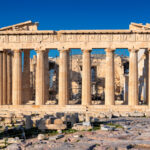
The civic and commercial heart of ancient Athens, in use from the 6th century BC through the late Roman period. Socrates, Plato, and Aristotle debated here, and democratic assembly business was conducted in the open air. The site’s most prominent surviving structure is the Temple of Hephaestus on its western hill. The Stoa of Attalos — a 2nd-century BC covered colonnade rebuilt in the 1950s — now houses the Museum of the Ancient Agora, displaying artefacts from daily Athenian life. Covered by the Acropolis unified site ticket.

Historical significance

The Ancient Agora represents the most significant political and intellectual site in human history, serving as the birthplace of democratic governance, philosophical inquiry, and civic participation that fundamentally shaped Western civilization and continue influencing global political development. The democratic institutions pioneered in the Agora, including citizen councils, public debate, majority voting, and constitutional government, provided essential models for later republican and democratic systems from Rome through the American and French revolutions to contemporary democracies worldwide. The philosophical traditions established by Socrates, Plato, and Aristotle in Agora settings created methodologies for critical thinking, ethical reasoning, and political theory that remain central to education, governance, and intellectual discourse across cultures and centuries. The sites role in developing concepts of citizenship, individual rights, religious freedom, and civic responsibility provided foundational principles for human rights declarations, constitutional law, and international governance systems that protect democratic values globally. The Agoras integration of political participation with commercial activity, religious practice, and cultural expression demonstrated sustainable approaches to community organization that balance individual freedom with collective responsibility and continue informing urban planning and civic design. The archaeological evidence preserved at the Agora provides unique documentation of how democratic institutions actually functioned in practice, offering essential insights for contemporary democratic reform and civic engagement strategies. The international influence of Athenian democratic and philosophical innovations spread through Alexander the Greats conquests, Roman adoption, Islamic preservation, and Renaissance revival, creating continuous intellectual traditions that connect ancient wisdom to modern challenges. The site serves as a global symbol of human potential for self-governance, rational inquiry, and peaceful conflict resolution that inspires democratic movements and intellectual freedom advocacy worldwide.

Historical context

The Ancient Agora served as Athens civic heart from the 6th century BCE through the 1st century CE, witnessing the birth and evolution of the worlds first democratic government and the philosophical foundations that continue shaping Western civilization. The site developed as Athens transitioned from aristocratic rule to democratic participation, with key buildings like the Bouleuterion housing the 500-citizen council and the Tholos serving as headquarters for daily government operations including emergency responses and legislative preparation. The Agoras golden age during the 5th century BCE coincided with Athenian imperial power and cultural achievement, when democratic ideals, philosophical inquiry, and artistic innovation reached unprecedented heights under leaders like Pericles and thinkers like Socrates. The spaces role in Socrates trial and execution in 399 BCE marked a turning point in philosophical history, demonstrating both the power and limitations of democratic decision-making while inspiring generations of thinkers to explore justice, truth, and civic responsibility. During Hellenistic and Roman periods, the Agora maintained its cultural significance while adapting to new political realities, preserving democratic traditions and philosophical schools that influenced Roman republican ideals and later Renaissance humanism. The sites continuous use for over 1,000 years as assembly place, marketplace, court, and residential area demonstrates remarkable historical continuity that connects ancient democratic experiments to modern civic institutions and public spaces. Archaeological excavations since the 1930s have uncovered extraordinary evidence of daily life, political processes, and cultural practices that provide unprecedented insights into how democracy actually functioned in practice rather than just theory.

Cultural context

The Ancient Agora represents the birthplace of democratic ideals and civic participation that continue defining Western political culture, where citizens first gathered to debate, vote, and shape government through reasoned discourse and collective decision-making. This sacred space where Socrates questioned assumptions, Plato developed philosophical foundations, and Aristotle explored political theory remains central to understanding how intellectual inquiry and public discourse create the foundations for democratic society. The Agoras role as Athenas commercial, political, and religious center demonstrates how ancient Greek culture integrated economic activity, civic responsibility, and spiritual practice into unified community life that valued citizen participation and cultural achievement. Religious festivals held in the Agora provided rare opportunities for Athenian women to participate in public cultural life, officiating goddess Athena worship and maintaining community traditions that connected daily life to divine protection and cultural identity. The space fostered cultural innovations including theater, philosophy, rhetoric, and political theory that spread throughout the ancient world and continue influencing contemporary arts, education, and governance systems across democratic societies. The Agoras preservation of diverse perspectives, from wealthy aristocrats to common craftsmen like Simon the Cobbler, created inclusive cultural environments where social class did not determine intellectual worth or contribution to community dialogue. Educational traditions established in the Agora, where teachers like Socrates engaged students through questioning rather than lecturing, revolutionized learning approaches that emphasize critical thinking over rote memorization throughout Western educational systems.

Architecture

The Ancient Agora demonstrates revolutionary urban planning principles that integrated democratic governance, commercial activity, and religious practice within carefully designed public spaces that maximized civic participation and community interaction. The remarkably preserved Temple of Hephaistos represents the pinnacle of Doric architectural achievement, with precise mathematical proportions, sophisticated construction techniques, and aesthetic refinement that influenced classical architecture throughout Western civilization for over two millennia. The reconstructed Stoa of Attalos showcases Hellenistic architectural innovation with its two-story colonnade design, sophisticated engineering, and adaptive functionality that served simultaneously as covered marketplace, meeting space, and administrative center. The circular Tholos building demonstrates specialized government architecture designed for democratic operations, with unique round design that facilitated equal participation among council members while providing practical spaces for dining, lodging, and emergency governance. The Bouleuterion represents pioneering civic architecture designed specifically for legislative assembly, with acoustic engineering and sight line optimization that enabled effective communication among 500 citizen-councilors during democratic deliberations. The integration of fountains, drainage systems, and paved walkways throughout the Agora demonstrates advanced urban infrastructure planning that prioritized public health, accessibility, and civic dignity while managing large populations and diverse activities. The spatial relationships between temples, government buildings, commercial areas, and public gathering spaces reflect sophisticated understanding of how architectural design influences social behavior and democratic participation. The sites layout demonstrates early examples of zoning principles that separate yet connect different urban functions, creating efficient traffic flow while maintaining the symbolic and practical relationships between religious, political, and economic activities.

Local significance

The Ancient Agora serves as a powerful symbol of Athenian identity and Greek national heritage, providing residents with direct connection to their ancestors democratic innovations and philosophical achievements that continue defining modern Greek political and cultural values. Local schools throughout Athens use the Agora for civic education, teaching students about democratic participation, citizenship responsibilities, and philosophical inquiry through hands-on experience in the actual spaces where these concepts originated. The site functions as a community gathering place for political discussions, cultural events, and civic ceremonies that connect contemporary Athenian democracy to its ancient roots while addressing current social and political challenges. Athens residents find inspiration and pride in showing international visitors the birthplace of democracy, strengthening cultural identity while promoting understanding of Greek contributions to world civilization and political development. Local philosophers, political scientists, and educators regularly use the Agora for lectures, seminars, and discussions that continue the tradition of public intellectual engagement that defines Athenian cultural life across millennia. The sites preservation and ongoing archaeological research provide employment and professional development opportunities for local archaeologists, historians, and cultural workers who contribute to international scholarship while maintaining community connections to heritage. Neighborhood families often visit the Agora for cultural education and recreational activities that combine tourism with genuine appreciation for local history and its relevance to contemporary life and civic participation. The Agoras integration with modern Athens urban planning demonstrates how ancient heritage can enhance rather than constrain contemporary development while preserving essential cultural landscapes for future generations.

Experience

Make the most of it

Local tips
  • Greeks visit early morning 8-10am or late afternoon cooler weather
  • Stoa of Attalos museum included with site admission worth visiting
  • Temple of Hephaistos best preserved Greek temple classical period
  • Winter pricing 5 EUR significant savings November-March
  • Combined with Acropolis visit same day walking distance apart
Hidden gems nearby
  • Stoa of Attalos 116m long reconstructed 1952-1956 American School
  • Museum exhibits Neolithic to Post-Byzantine Athenian democracy artifacts
  • Temple of Hephaistos 449-415 BCE patron god metalworking craftsmanship
  • Agoraios Kolonos hill western side panoramic agora views
  • Christian church conversion preserved Hephaisteion exceptional condition
Special features
  • The Ancient Agora uniquely preserves the worlds first democratic voting system, including original clay ballot disks (ostraka) used for ostracism and election procedures that established fundamental principles of secret balloting and citizen participation in governance. The site contains the only intact classical Greek civic complex where visitors can walk the same marble pathways used by Socrates, Plato, Aristotle, and other foundational Western thinkers during their philosophical discussions and public teachings. The Stoa of Attalos museum houses extraordinary artifacts excavated from the site, including pottery, coins, tools, and personal items that provide intimate insights into daily life, commercial practices, and social customs of ancient democratic society. The preserved Temple of Hephaistos offers rare opportunities to experience complete ancient Greek religious architecture, with original columns, pediments, and interior spaces that demonstrate the integration of craftsmanship, artistry, and spiritual practice. Simon the Cobblers workshop ruins mark the exact location where Socrates conducted informal philosophical schools, connecting visitors to specific places where Western philosophical traditions and critical thinking methods were developed and practiced. The sites ongoing archaeological excavations continue revealing new discoveries about ancient democratic processes, urban planning, and daily life, making it a living laboratory for understanding classical civilization and its continuing influence. The Agoras position beneath the Acropolis creates dramatic visual relationships between religious, political, and civic spaces that demonstrate how ancient Greeks conceived the connections between divine authority and democratic governance. Educational programs and guided tours provide access to specialized archaeological knowledge and historical interpretation that helps visitors understand the complex relationships between ancient democratic innovations and contemporary political institutions.
Editorial scores

How we rate it

Authenticity9/10
Accessibility score8/10
Family-friendly score6/10
Off-the-beaten-path4/10

Editorial scores on a 10-point scale, judged against places of the same kind.

Updated Data: Editorial research · Google Places ratings · Verified coordinates