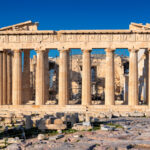
The Acropolis of Athens stands as the preeminent symbol of ancient Greek civilization and classical architecture. This UNESCO World Heritage Site perched on a rocky outcrop above Athens has been inhabited since the 4th millennium BC, but reached its zenith in the 5th century BC under statesman Pericles. The site is dominated by the Parthenon, a Doric temple dedicated to Athena, alongside other masterpieces including the Propylaea (monumental gateway), the Erechtheion (with its famous Caryatid porch), and the Temple of Athena Nike. These structures represent the pinnacle of classical Greek art and architecture, embodying the democratic values and philosophical ideals of ancient Athens. Though damaged over centuries, particularly during a 1687 Venetian siege that caused an explosion in the Parthenon, the Acropolis remains one of the world’s most significant archaeological sites and continues to inspire visitors with its harmonious proportions, sculptural brilliance, and historical importance.
Cultural Context
The Acropolis represents the pinnacle of ancient Greek civilization and serves as the sacred center of Athenian religious and civic life. Dedicated to Athena, patron goddess of wisdom and warfare, the complex embodied the Classical ideals of harmony, proportion, and democratic values that defined 5th-century BCE Athens. The Parthenon housed the magnificent gold and ivory statue of Athena Parthenos by Phidias, while the site hosted the grand Panathenaic Festival celebrating Athenian identity. As the birthplace of democracy and philosophical thought, the Acropolis became the cultural nucleus where art, architecture, and intellectual achievement converged, establishing enduring Western aesthetic and political principles that continue to influence civilization today.
Historical Context
The Acropolis hill has been continuously inhabited since the Neolithic period (4000 BCE), evolving from a Mycenaean fortress in the 13th century BCE to the crown jewel of Classical Athens. Following Persian destruction in 480 BCE, Pericles initiated the ambitious reconstruction program (447-432 BCE) during Athens’ Golden Age, transforming the site into an unprecedented architectural complex. The project, funded controversially through Delian League treasury surplus, employed renowned architects Ictinus and Callicrates alongside master sculptor Phidias. This building campaign coincided with Athens’ democratic zenith and cultural supremacy over other Greek city-states, creating monuments that would survive Roman occupation, Byzantine conversion, Ottoman rule, and Venetian bombardment to remain symbols of Classical civilization.