MenuClose

A place worth knowing

Temple of Hephaestus

Attractions · Ancient temple in AthensUpdated

  • Google rating4.7/5
  • Typical visit1-2 hours average visit
  • EntranceFree (donations welcome)
  • Today (Thursday)8:00 AM – 5:00 PM
  • Typical visit1-2 hours average visit
  • EntranceFree (donations welcome)
  • Google rating4.7/5
Opening hours all week
Monday
8:00 AM – 5:00 PM
Tuesday
8:00 AM – 5:00 PM
Wednesday
8:00 AM – 5:00 PM
Thursday
8:00 AM – 5:00 PM
Friday
8:00 AM – 5:00 PM
Saturday
8:00 AM – 5:00 PM
Sunday
8:00 AM – 5:00 PM
Quiet times
08:00-09:30, Late afternoon, Winter months, Weekdays
Busy times
10:00-12:00, 14:00-16:00, Summer months, Cruise ship days
Accessibility
"{"paths": "Some gravel paths, main routes paved", "contact": "Call +30 210 3210185 for assistance", "assistance": "Staff available at entrance", "facilities": "Accessible restrooms at main entrance", "temple_platform": "Accessible via ramp", "wheelchair_access": "Yes via Thiseion Square entrance (Apostolou Pavlou Street)"}"
The short answer

Why it matters

The best-preserved ancient Greek temple in the world, built in 449 BC and overlooking the Ancient Agora from the Agoraios Kolonos hill

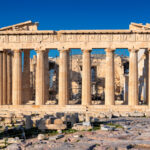
The Temple of Hephaestus stands as one of the best-preserved ancient Greek temples, crowning the northwest side of the Agora in Athens. Built around 450 BCE and dedicated to Hephaestus, god of craftsmanship and metalworking, this Doric temple exemplifies classical Greek architectural precision with its symmetrical columns, intricate friezes, and harmonious proportions. The temple’s exceptional state of preservation owes largely to its conversion to a Christian church in the 7th century, which protected it from significant alterations for over a millennium. Constructed from Pentelic marble, the same material used for the Parthenon, the temple features original sculptural decoration depicting the labors of Heracles and the exploits of Theseus. Surrounded by ancient olive trees and offering panoramic views of the Agora and modern Athens, this architectural masterpiece provides visitors with a tangible connection to Athens’ golden age under Pericles and stands as a testament to the enduring influence of classical Greek design.

Cultural Context

The Temple of Hephaestus holds profound cultural significance as a symbol of ancient Greek religious practices and artisanal pride. Dedicated to Hephaestus, the god of fire, metalworking, and craftsmanship, and Athena Ergane, goddess of pottery and crafts, the temple was a focal point for artisans and craftsmen in classical Athens. The temple’s location in the Agora, the social and political heart of the city, underscores its importance as a cultural hub where worship, commerce, and civic life intersected. Local customs likely included offerings and rituals to honor Hephaestus and Athena, seeking divine favor for skilled labor and protection of workshops. The temple also reflects the deep respect the Athenians had for manual labor and craftsmanship, elevating these professions to divine status. Celebrations related to Hephaestus, such as the Hephaesteia festival, would have involved processions, sacrifices, and communal gatherings that reinforced social cohesion and the cultural identity of the artisan class. Today, the temple remains a potent cultural emblem, reminding visitors of the integral role that craftsmanship and religious devotion played in shaping Athenian society and its enduring legacy in Western civilization.

Historical Context

The Temple of Hephaestus was constructed between 449 and 415 BCE during the height of the Athenian Classical period, a time marked by artistic flourishing and political power under Pericles. It was built to replace an earlier temple destroyed by the Persians during the invasion of 480 BCE, symbolizing Athenian resilience and renewal after the Persian Wars. The temple was dedicated to Hephaestus, the god of fire and metalworking, and Athena Ergane, reflecting the importance of craftsmanship in Athens’ economy and culture. Historically, the temple stood on the northwest side of the Agora, the civic center of Athens, linking it to both religious worship and the daily lives of citizens. Over time, the temple survived relatively intact due to its conversion into a Christian church in the 7th century CE, which helped preserve its structure throughout the Byzantine period and Ottoman occupation. This continuous use highlights the adaptive reuse of sacred spaces in Athens’ layered history. Excavations in the 19th and 20th centuries revealed its remarkable preservation, making it one of the best-preserved classical Greek temples. The temple’s endurance through centuries of social and political change reflects the complex historical narrative of Athens from antiquity to the modern era.

Context

Story and significance

About

The best-preserved ancient Greek temple, standing on the western edge of the Ancient Agora of Athens. Built between 449 and 415 BC in Doric style and dedicated to Hephaestus (god of metalworking) and Athena Ergane (goddess of crafts). The temple survives almost entirely intact — all 34 columns, the roof, and much of the entablature remain — thanks to its conversion into a Christian church (Agios Georgios) in the 7th century, which protected it from stone quarrying. Exterior friezes depict the labours of Heracles and Theseus. The temple overlooks the reconstructed Stoa of Attalos and the agora grounds below.

Historical significance

Completed around 415 BCE, the Temple of Hephaestus is one of the best-preserved ancient Greek temples. Dedicated to Hephaestus, god of metalworking and craftsmanship, and Athena Ergane, goddess of pottery and crafts, its location near the Ancient Agora reflects the area’s status as a craftsmen’s quarter. The temple later served as a Christian church (Church of St. George) from the 7th century until 1834, which helped preserve its structure. It’s an excellent example of Doric architecture and provides critical insights into ancient Greek religious practices and architectural techniques.

Historical context

The Temple of Hephaestus was constructed between 449 and 415 BCE during the height of the Athenian Classical period, a time marked by artistic flourishing and political power under Pericles. It was built to replace an earlier temple destroyed by the Persians during the invasion of 480 BCE, symbolizing Athenian resilience and renewal after the Persian Wars. The temple was dedicated to Hephaestus, the god of fire and metalworking, and Athena Ergane, reflecting the importance of craftsmanship in Athens’ economy and culture. Historically, the temple stood on the northwest side of the Agora, the civic center of Athens, linking it to both religious worship and the daily lives of citizens. Over time, the temple survived relatively intact due to its conversion into a Christian church in the 7th century CE, which helped preserve its structure throughout the Byzantine period and Ottoman occupation. This continuous use highlights the adaptive reuse of sacred spaces in Athens’ layered history. Excavations in the 19th and 20th centuries revealed its remarkable preservation, making it one of the best-preserved classical Greek temples. The temple’s endurance through centuries of social and political change reflects the complex historical narrative of Athens from antiquity to the modern era.
Cultural context

The Temple of Hephaestus holds profound cultural significance as a symbol of ancient Greek religious practices and artisanal pride. Dedicated to Hephaestus, the god of fire, metalworking, and craftsmanship, and Athena Ergane, goddess of pottery and crafts, the temple was a focal point for artisans and craftsmen in classical Athens. The temple’s location in the Agora, the social and political heart of the city, underscores its importance as a cultural hub where worship, commerce, and civic life intersected. Local customs likely included offerings and rituals to honor Hephaestus and Athena, seeking divine favor for skilled labor and protection of workshops. The temple also reflects the deep respect the Athenians had for manual labor and craftsmanship, elevating these professions to divine status. Celebrations related to Hephaestus, such as the Hephaesteia festival, would have involved processions, sacrifices, and communal gatherings that reinforced social cohesion and the cultural identity of the artisan class. Today, the temple remains a potent cultural emblem, reminding visitors of the integral role that craftsmanship and religious devotion played in shaping Athenian society and its enduring legacy in Western civilization.

Architecture

The Temple of Hephaestus is a quintessential example of Doric architecture, showcasing the classical Greek emphasis on harmony, proportion, and craftsmanship. Constructed primarily from Pentelic marble, the temple measures approximately 31 by 13.7 meters and features a peripteral design with 6 columns on the short sides and 13 on the long sides. Its architectural plan follows the canonical Doric order, characterized by fluted columns with simple capitals, a frieze composed of triglyphs and metopes, and a sturdy, balanced structure. Notably, the temple’s metopes depict mythological scenes, including the labors of Heracles and the exploits of Theseus, which serve both decorative and narrative functions, linking architecture with storytelling. The temple’s cella housed cult statues, likely of Hephaestus and Athena, emphasizing its religious function. Skilled ancient Greek builders employed precise stone-cutting and assembly techniques without mortar, relying on carefully shaped blocks and metal clamps to achieve structural stability. The temple’s excellent state of preservation allows modern visitors to appreciate original architectural details, including the sculptural pediments and the interior layout. Its design influenced subsequent classical architecture and remains a vital reference point for understanding ancient Greek temple construction and aesthetic principles.

Local significance

For Athenians, the Temple of Hephaestus represents the endurance of their cultural heritage and serves as a symbol of the city’s ancient glory. It stands as a testament to Athens’ historical importance as a center of craftsmanship and artistry. Local residents often view it as a more authentic and less commercialized experience compared to the Acropolis. The temple’s integration into the Ancient Agora archaeological park makes it a place where locals regularly walk and connect with their history.

Experience

Make the most of it

Local tips
  • Gift shops have unique souvenirs
  • Museum cafes often serve quality local food
  • Late night openings often have unique events
  • Special exhibitions require separate tickets
  • Check for combo tickets with nearby attractions
  • Visit during weekdays for fewer crowds
  • Members get free entry and skip lines
Hidden gems nearby
  • Staff recommendations for must-see pieces
  • Free guided tours at specific times
  • Lesser-known wings have remarkable collections
  • Rooftop terraces often have great city views
  • Secret passages between galleries
  • Hidden courtyards perfect for photos
  • Archive rooms sometimes open for special tours
Special features
  • Remarkably well-preserved colonnade and roof, original marble sculptural decoration on the metopes depicting the labors of Heracles and Theseus, exceptional Doric architecture, elevated position providing panoramic views of Athens, and marble friezes above the porches.
Editorial scores

How we rate it

Authenticity9/10
Accessibility score6/10
Family-friendly score7/10
Off-the-beaten-path5/10

Editorial scores on a 10-point scale, judged against places of the same kind.

Updated Data: Editorial research · Google Places ratings