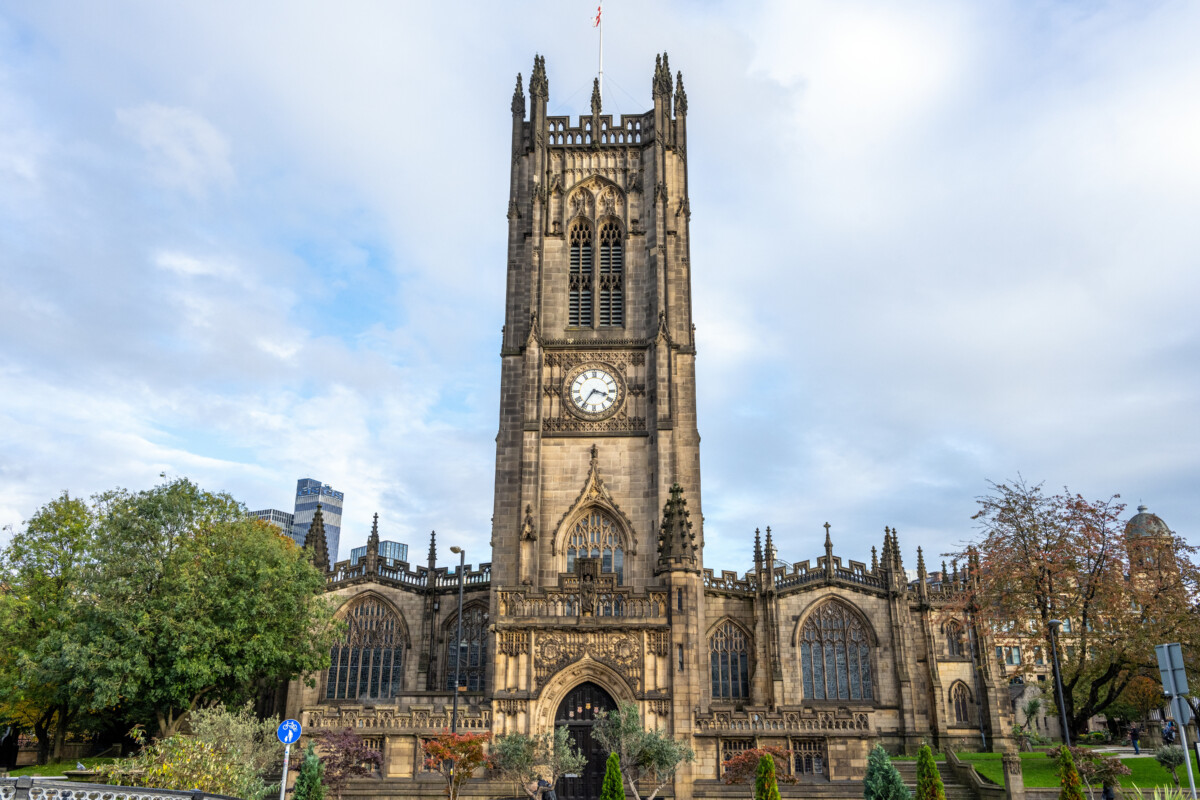

Manchester Cathedral stands as the spiritual heart of England’s industrial revolution birthplace, where medieval grandeur meets modern resilience in a structure that has witnessed over 600 years of urban transformation. Originally founded as a collegiate church in 1421, this magnificent Gothic edifice showcases the widest nave of any English cathedral, creating an extraordinary sense of space beneath its distinctive ‘angel roof’ adorned with carved wooden angels dating to the 15th century. The cathedral’s honey-colored Collyhurst sandstone exterior belies the treasures within: misericords (carved choir seats) depicting medieval life with surprising humor, Victorian stained glass windows that survived wartime bombing, and the regimental chapel honoring Manchester’s military history. During World War II, a German bomb devastated the Lady Chapel, but meticulous restoration preserved the building’s authentic character while incorporating modern elements like the striking ‘Healing Window’ designed by Linda Walton. Today’s cathedral serves multiple roles: active Anglican worship space, concert venue showcasing the historic 1871 ‘Bridgewater’ organ, and cultural landmark where guided tours reveal hidden medieval carvings and the ‘Manchester Bodley’ – a unique 15th-century wooden sculpture. The surrounding Medieval Quarter, with its mix of historic pubs and modern businesses, creates an authentic urban cathedral experience where ancient faith traditions continue amid the bustle of contemporary Manchester life.
Cultural Context
Manchester Cathedral holds a central place in the cultural and religious life of Manchester, reflecting the city’s rich tapestry of faith and community traditions. As the mother church of the Anglican Diocese of Manchester, it serves as a hub for worship, music, and communal gatherings, hosting regular services that draw people from diverse backgrounds. The cathedral is particularly known for its vibrant choral tradition, which includes a renowned choir that performs both traditional Anglican liturgies and contemporary sacred music. It also plays a significant role in local celebrations such as Remembrance Day and civic events, embodying the intersection of spiritual practice and public life. The cathedral’s outreach programs and community initiatives emphasize inclusivity, offering support and a spiritual home for marginalized groups within Manchester’s multicultural populace. Seasonal festivals like Christmas and Easter are marked by elaborate services and concerts that attract visitors and locals alike, fostering a sense of unity and shared heritage. The building itself is a symbol of resilience and continuity, standing as a testament to the enduring faith and cultural identity of Manchester’s people. Through its ongoing role in education, music, and social outreach, Manchester Cathedral continues to shape and reflect the cultural fabric of the city with sensitivity and respect for its diverse communities.
Historical Context
Manchester Cathedral’s origins trace back to the medieval period, with its foundation established in 1421 when the church was elevated to collegiate status by Bishop Thomas Langley. The site has been a place of Christian worship since at least the 7th century, evolving through numerous phases of construction and restoration. The cathedral witnessed significant historical events, including damage during the English Civil War and extensive bombing in the Manchester Blitz of World War II, which necessitated careful post-war restoration. Key historical figures associated with the cathedral include John Owens, a 19th-century benefactor whose legacy contributed to the growth of Manchester’s educational institutions. Over the centuries, the cathedral has adapted to the city’s transformation from a medieval market town to a powerhouse of the Industrial Revolution, reflecting the social and economic shifts of the region. In 1847, Manchester was established as a diocese, and the church was designated a cathedral, marking its importance in the ecclesiastical hierarchy. The building’s survival and restoration after wartime destruction symbolize the city’s resilience and commitment to preserving its heritage. Throughout its history, Manchester Cathedral has been a witness to the changing tides of religious practice, urban development, and community identity, maintaining its role as a spiritual and historical landmark.