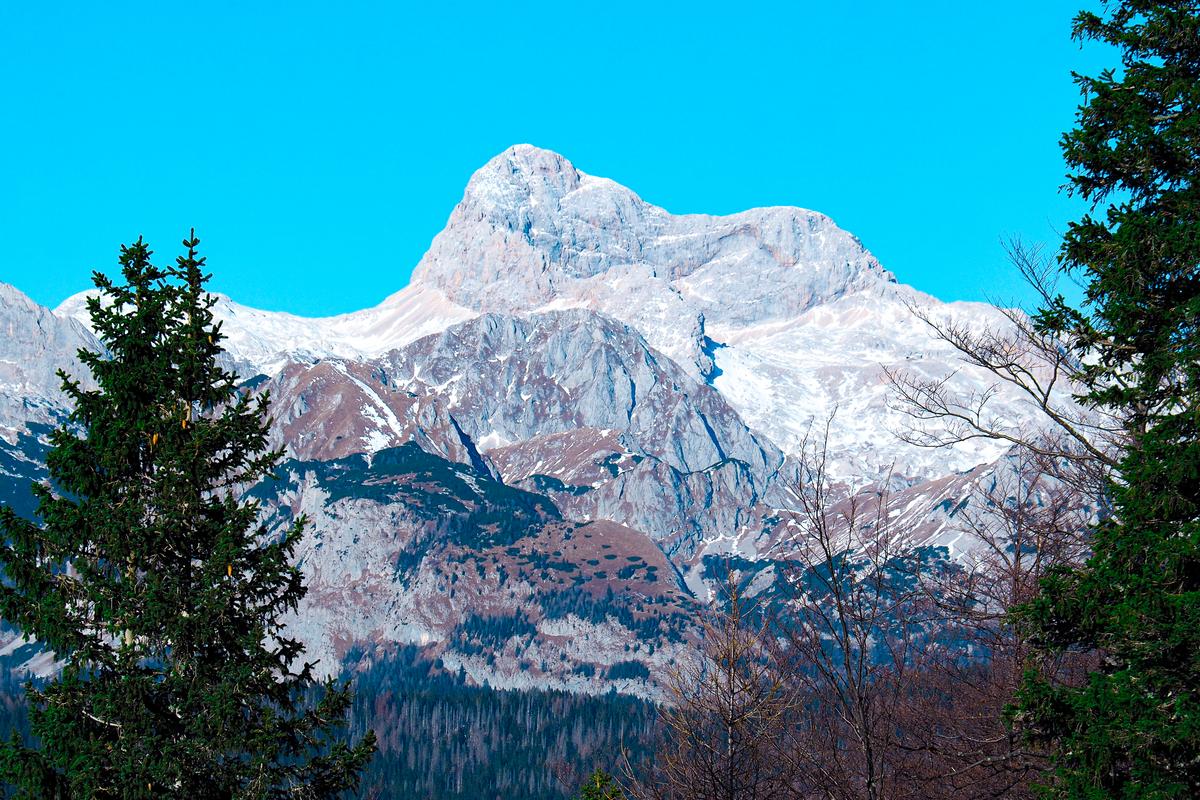
Carved over millennia by the crystalline waters of the Mostnica stream, this hidden natural masterpiece winds through the pristine Voje Valley on the eastern edge of Slovenia’s Triglav National Park. Mostnica Gorge (Mostniška korita) stretches for nearly 2 kilometers, where the dancing alpine waters have sculpted a narrow passage through ancient limestone, creating a mesmerizing display of emerald pools, cascading mini-waterfalls, and smooth-walled chambers. The gorge reaches depths of 20 meters in places, with its most distinctive feature being the “Elephant Rock”—a natural stone formation remarkably resembling an elephant’s head drinking from the turquoise waters below. A well-maintained trail follows alongside and occasionally crosses over the gorge via rustic wooden bridges that offer perfect vantage points for photographers capturing the play of light through the dense forest canopy onto the glimmering water. The hike culminates at the 21-meter-high Slap Voje waterfall, where water cascades dramatically down a moss-covered rock face into a serene woodland pool. Unlike more commercially developed gorges in the region, Mostnica retains an authentic wilderness feeling with minimal infrastructure, allowing visitors to experience the raw beauty of the Julian Alps in near solitude, particularly during early morning hours or shoulder seasons when the subtle sounds of the rushing waters and diverse alpine bird species create a natural symphony amid the untouched landscape.
Cultural Context
Mostnica Gorge holds a special place within the cultural fabric of the Upper Carniola region of Slovenia, where it is situated. The gorge and its surrounding landscapes have long been intertwined with local traditions of nature reverence and mountain folklore. The area is part of Triglav National Park, which is deeply connected to Slovenian identity and cultural heritage, symbolizing the country’s respect for its alpine environment. Local communities celebrate the natural beauty of the gorge through seasonal festivals and guided nature walks that emphasize ecological awareness and traditional knowledge of the land. The gorge also features in regional folk tales, often depicted as a mystical passageway shaped by elemental forces, reflecting the cultural importance of natural landmarks in storytelling. Additionally, the Mostnica Gorge area is used for educational purposes, where schools and cultural groups engage in activities fostering a connection between youth and their natural heritage. The practice of sustainable tourism here aligns with Slovenian customs of protecting natural spaces while sharing their cultural narratives. The gorge’s serene atmosphere has inspired local artists and writers, embedding it further into the cultural consciousness of the region. Overall, Mostnica Gorge is not only a natural wonder but also a cultural symbol that resonates with Slovenian values of nature preservation and heritage celebration.
Historical Context
Mostnica Gorge’s formation spans thousands of years, shaped by the erosive power of the Mostnica stream carving through limestone rock. Historically, the area around the gorge has been inhabited since prehistoric times, with archaeological evidence indicating early human presence in the broader Triglav National Park region. During the medieval period, the gorge and the Voje Valley were part of important trade and transit routes connecting various Alpine communities, although the gorge itself remained relatively inaccessible, preserving its pristine condition. In the 19th century, as mountaineering and nature exploration gained popularity in Europe, Mostnica Gorge attracted naturalists and early tourists fascinated by its geological formations and crystal-clear waters. The establishment of Triglav National Park in 1924, the first national park in Slovenia, marked a significant milestone in protecting the gorge and its surroundings, reflecting growing environmental awareness. Over the 20th century, the gorge has been a subject of scientific study, particularly in geology and hydrology, contributing to understanding karst landscapes. The area witnessed limited human impact during both World Wars due to its remote location, which helped preserve its natural state. Today, Mostnica Gorge stands as a testament to natural history and human interaction with the environment, representing centuries of geological evolution and cultural appreciation.