MenuClose

A place worth knowing

New Orleans Pharmacy Museum

Museums · History museum in LouisianaUpdated

  • Google rating4.7/5 (2,230 reviews)
  • Typical visit1 hour 30 minutes to 2 hours average visit
  • EntranceAdmission required — check http://www.pharmacymuseum.org/ for tickets
Interior of New Orleans Pharmacy Museum
sgavoyages / TripAdvisor
  • Today (Sunday)10:00 AM – 5:00 PM
  • Typical visit1 hour 30 minutes to 2 hours average visit
  • EntranceAdmission required — check http://www.pharmacymuseum.org/ for tickets
  • Google rating4.7/5 2,230 reviews
  • WebsiteOfficial site ↗
Opening hours all week
Monday
10:00 AM – 5:00 PM
Tuesday
Closed
Wednesday
10:00 AM – 5:00 PM
Thursday
10:00 AM – 5:00 PM
Friday
10:00 AM – 5:00 PM
Saturday
10:00 AM – 5:00 PM
Sunday
10:00 AM – 5:00 PM
Rating breakdown
  • 5 stars1,687
  • 4 stars402
  • 3 stars103
  • 2 stars19
  • 1 star19

Based on 2,230 Google reviews and 7,253 photos.

The short answer

Why it matters

Circa-1823 apothecary is now a museum with exhibits of early medicines, superstitious cures & more.

Housed in an 1823 Creole townhouse, the New Orleans Pharmacy Museum immerses visitors in the sometimes-eccentric world of 19th-century medicine. Original hand-blown bottles, leech jars, voodoo potions and a perfectly preserved apothecary counter reveal how America’s first licensed pharmacist, Louis J. Dufilho, Sr., once dispensed remedies. Interpretive exhibits trace the evolution of pharmaceuticals, dentistry and surgical tools, while guided tours unpack the myths and maladies of early New Orleans life.

Cultural Context

The New Orleans Pharmacy Museum is deeply embedded in the rich cultural tapestry of New Orleans, a city renowned for its unique blend of French, Spanish, African, and Creole influences. This museum offers a window into the traditional healing practices and medicinal customs that shaped the region, reflecting the diverse cultural heritage of the city. The museum highlights how indigenous knowledge, African herbal traditions, and European medical practices intersected in the 19th century, providing insight into the cultural practices surrounding health and wellness in the American South. Visitors gain an understanding of the role of apothecaries in daily life, where remedies were crafted using local plants and imported ingredients, often blending science with superstition and folklore. The museum’s exhibits also emphasize the social customs of the era, including the role of pharmacists as trusted community figures and the importance of herbalism in Creole and African American communities. By preserving these traditions, the New Orleans Pharmacy Museum serves as a cultural bridge connecting modern audiences with the rich, multicultural history of healing and medicine in Louisiana. This cultural context enriches the visitor experience, fostering a greater appreciation of the city’s diverse heritage and its ongoing influence on contemporary health practices.

Historical Context

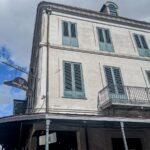
The New Orleans Pharmacy Museum is housed in a building dating back to 1823, originally operating as the apothecary shop of Louis J. Dufilho, Jr., who is recognized as the first licensed pharmacist in the United States. The museum chronicles the evolution of pharmacy and medicine from the early 19th century through the early 20th century, a period marked by significant advancements in medical knowledge and pharmaceutical practice. The collection includes artifacts and documents that illustrate the transition from traditional remedies to more scientific approaches to medicine, contextualizing the role of pharmacists in a time before modern regulations and standardized medications. This location also reflects the broader historical narrative of New Orleans as a bustling port city where ideas and goods from Europe, the Caribbean, and the Americas converged. The museum captures key historical moments such as the impact of yellow fever epidemics and the challenges of public health in a growing urban center. It also sheds light on the professionalization of pharmacy as a discipline, highlighting important figures like Dufilho and the emergence of formal training and licensing requirements. Through its preservation of these historical elements, the New Orleans Pharmacy Museum offers a comprehensive look at the intersection of medicine, commerce, and community in 19th-century America.
Context

Story and significance

About

French Quarter {“Service options”: {“Onsite services”: true}, “Accessibility”: {“Wheelchair accessible parking lot”: false}, “Amenities”: {“Restroom”: true, “Restaurant”: false}}

Historical significance

The site is important for understanding the history of public health, pharmacy, and the circulation of medicinal substances in New Orleans, including how medical practice intersected with cultural beliefs and global trade. It preserves material culture—apothecary jars, equipment and records—that illuminates everyday medical history for scholars and the public.

Historical context

Housed in a building that once operated as a 19th-century apothecary, the museum documents how pharmacists and medical practitioners served the population during periods of epidemics, trade-linked drug availability, and changing scientific knowledge. Its collection reflects practices from the antebellum through early modern eras.

Cultural context

The New Orleans Pharmacy Museum interprets the history of medicine, pharmacy practice and folk remedies in the city, attracting visitors interested in medical history, voodoo-era remedies, and 19th-century domestic health care. It functions as an educational site connecting the city’s multicultural healing traditions with broader social history.

Architecture

The museum occupies a period commercial-residential masonry building typical of the French Quarter, with modest historic detailing and interior spaces adapted for retail and domestic use. Its significance lies more in the preserved shop layout, cabinetry and pharmaceutical fixtures than in monumental architecture.

Local significance

The New Orleans Pharmacy Museum highlights the city’s 19th-century medical practices and serves as a local repository of historical healthcare artifacts and stories. For residents interested in the city’s social and medical history, it offers a tangible link to historic pharmacy, early remedies and the multicultural influences on local medicine. The museum is valued by community members and educators as a small-scale cultural resource that illuminates everyday life and public health in earlier eras of New Orleans.

Updated Data: Editorial research · Google Places ratings · Verified coordinates