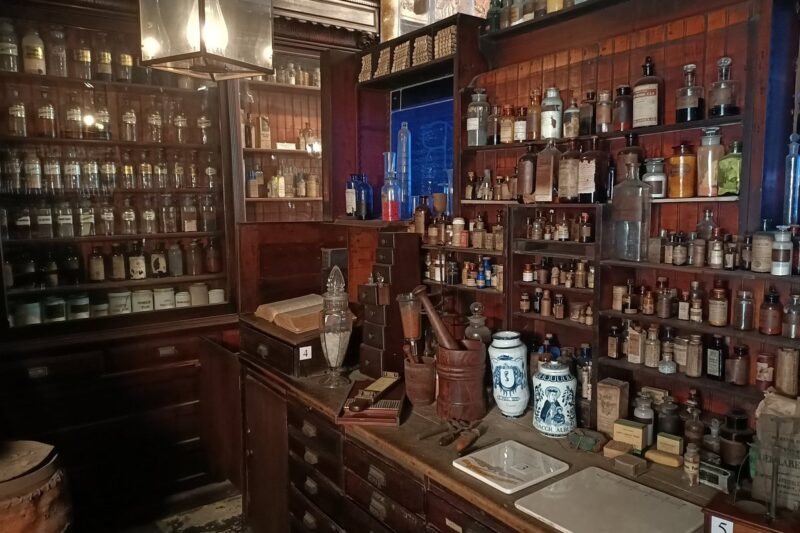
The Marie Laveau House stands as a portal to New Orleans’ mystical heritage, honoring the legendary Voodoo Queen who bridged African spiritual traditions with Creole culture in 19th-century New Orleans. Located in the heart of the French Quarter, this historic residence tells the story of Marie Laveau, a free woman of color who became one of the most powerful and respected figures in New Orleans history. The house represents the convergence of African, Caribbean, and European spiritual traditions that created the unique Voodoo culture of New Orleans. Visitors discover the authentic history of Voodoo as a healing practice and spiritual system that provided strength and community for enslaved and free people of color. The architecture reflects typical Creole cottage design with its steep-pitched roof, French doors, and raised construction that adapted European styles to Louisiana‘s climate and culture. Marie Laveau’s legacy extends beyond mysticism to include her work as a hairdresser, healer, and community leader who helped both the wealthy elite and the most disadvantaged residents of New Orleans. The site offers insight into the complex social dynamics of antebellum New Orleans, where free people of color occupied a unique position in society. Today, the house serves as an important cultural landmark that preserves the authentic history of Voodoo tradition and celebrates Marie Laveau’s enduring influence on New Orleans’ spiritual and cultural identity.
Cultural Context
The Marie Laveau House is deeply embedded in the cultural fabric of New Orleans, representing the enduring legacy of Voodoo as both a spiritual practice and a cultural identity. Marie Laveau, often called the Voodoo Queen of New Orleans, was a pivotal figure in the 19th century who blended African spiritual traditions with Catholicism and local customs, creating a syncretic belief system that remains influential today. The house serves as a symbol of resilience and cultural preservation for the African American community and practitioners of Voodoo, highlighting themes of empowerment, healing, and community cohesion. It is a site where local customs such as ritual offerings, spiritual consultations, and celebrations of Voodoo heritage take place, especially during events like the annual Voodoo Festival and All Saints Day. Visitors to the house gain insight into the complex spiritual worldview that shaped New Orleans’ diverse religious landscape, including practices of ancestor veneration, herbal medicine, and ritual dance. The cultural context of the Marie Laveau House is inseparable from the city’s history of racial and cultural hybridity, making it a living testament to the endurance of African diasporic traditions in the Americas. It remains a vital cultural landmark that educates and inspires respect for the spiritual diversity that defines New Orleans today.
Historical Context
The Marie Laveau House is historically significant as the reputed residence of Marie Laveau, a legendary figure in 19th-century New Orleans known for her influence as a Voodoo practitioner, healer, and community leader. Born in 1801, Laveau’s life spanned a period of intense social and cultural transformation in Louisiana, including the antebellum era, the Civil War, and Reconstruction. She was renowned for her spiritual guidance, charitable works, and ability to navigate the complex racial and social hierarchies of her time. The house itself dates back to the early 19th century and stands as a witness to the vibrant Creole culture that flourished in the French Quarter. Over the decades, the property has been preserved as a tangible link to Laveau’s legacy and the broader history of Voodoo in the United States. Historical records and oral traditions suggest that the house was a center for community gatherings, healing rituals, and spiritual consultations. Its survival through periods of urban development and social change underscores its importance as a historical landmark. The site also reflects the broader narrative of African American resilience and cultural retention in the face of slavery, segregation, and marginalization, making it a key historical asset for understanding New Orleans’ past.