
MenuClose

A place worth knowing

North Shore

Beaches · Coastal region in OahuUpdated

  • Google rating4.8/5 (50,000 reviews)
  • Typical visitHalf-day to Full-day (depending on activities like surfing, snorkeling, food truck exploration, and beach relaxation)
  • EntranceFree
The North Shore Inn Entrance, Crestline, California
  • Today (Monday)Open 24 hours
  • Typical visitHalf-day to Full-day (depending on activities like surfing, snorkeling, food truck exploration, and beach relaxation)
  • EntranceFree
  • Google rating4.8/5 50,000 reviews
  • WebsiteOfficial site ↗
Opening hours all week
Monday
Open 24 hours
Tuesday
Open 24 hours
Wednesday
Open 24 hours
Thursday
Open 24 hours
Friday
Open 24 hours
Saturday
Open 24 hours
Sunday
Open 24 hours
Accessibility
"{"parking": "Designated accessible spots at Ehukai, Sunset Beach, and Waimea Bay parks", "rentals": "Beach wheelchairs available through local organizations (call ahead)", "best_spots": "Haleiwa Beach Park most accessible with calm water and facilities", "challenges": "Sand can be difficult for standard wheelchairs, limited accessible paths to water", "facilities": "Accessible restrooms at main beach parks, outdoor showers at most beaches", "wheelchair_access": "Major beaches have paved paths to sand, beach wheelchairs available at some locations"}"
The short answer

Why it matters

The legendary 'Seven Mile Miracle' of Oahu — a coastline of world-class surf breaks including Pipeline, Sunset Beach, and Waimea Bay, centred on the laid-back surf town of Haleiwa.

{“en”: “The legendary North Shore of Oahu is the global epicenter of surfing, where winter swells create massive waves at world-famous breaks like Pipeline and Sunset Beach. This 7-mile stretch from Haleiwa to Kahuku transforms seasonally – from a mecca for pro surfers and competitions in winter to a calm swimming and snorkeling paradise in summer. The laid-back surf town vibe permeates everything from the colorful food trucks serving garlic shrimp and acai bowls to the historic Haleiwa town with its surf shops and shave ice stands. Beyond the beaches, the North Shore offers spectacular sunsets, sea turtle encounters, and a glimpse into authentic Hawaiian beach culture away from Waikiki crowds.”}

Cultural Context

The North Shore of Oahu holds profound cultural significance as a vital center of Hawaiian tradition and identity, particularly in relation to the ancient practice of surfing, known locally as heʻe nalu. This area has long been revered by Native Hawaiians not only for its natural beauty but also as a sacred place where the ocean’s power is both respected and celebrated. The North Shore is home to several important cultural sites and is closely linked to Hawaiian legends, such as those involving the demigod Maui, who is said to have shaped the Hawaiian Islands. The community actively preserves traditional customs through events like the annual Vans Triple Crown of Surfing, which honors the sport’s indigenous roots while attracting global attention. Local customs emphasize a deep respect for the land (‘aina) and sea (kai), with many residents practicing sustainable fishing and farming methods passed down through generations. The area also hosts cultural festivals that showcase Hawaiian music, dance (hula), and language, reinforcing the North Shore’s role as a living repository of Hawaiian heritage. Visitors are encouraged to approach the region with cultural sensitivity, recognizing the spiritual and historical layers that enrich the North Shore beyond its reputation as a world-class surfing destination. This cultural depth ensures the North Shore remains a vibrant symbol of Hawaiian identity and resilience today.

Historical Context

The North Shore of Oahu has a rich historical narrative that traces back centuries to the early Polynesian settlers who first inhabited the Hawaiian Islands. Historically, this stretch of coastline was a vital resource for Native Hawaiians, providing abundant marine life and serving as a strategic location for fishing and navigation. By the 19th century, the area began to gain international recognition when Western explorers and missionaries arrived, bringing significant changes to the islands’ social and economic structures. The mid-20th century marked a pivotal era for the North Shore when it emerged as the epicenter of modern big-wave surfing, largely popularized by pioneering surfers such as Duke Kahanamoku, who is often credited with introducing surfing to the wider world. The 1960s and 1970s saw the rise of the North Shore as a global surfing destination, with iconic beaches like Waimea Bay and Sunset Beach becoming legendary for their massive winter swells. This period also witnessed tensions between development pressures and efforts to preserve the natural and cultural integrity of the region. Today, the North Shore’s history is celebrated through museums, surf competitions, and community initiatives that honor both its indigenous heritage and its transformative role in surfing history. The historical evolution of the North Shore reflects a dynamic interplay between tradition and modernity, making it a site of enduring significance in Hawaiian and global contexts.


Context

Story and significance

About

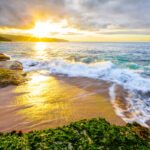
Oʻahu’s North Shore stretches seven miles along the island’s northern coast, earning the nickname ‘Seven Mile Miracle’ for its concentration of world-class surf breaks. Banzai Pipeline at Ehukai Beach produces some of the planet’s most powerful barrel waves over a shallow, cavernous reef — strictly for professionals. Waimea Bay generates 30- to 50-foot swells in winter. Sunset Beach hosts annual Triple Crown competitions. In summer (May–September), the same beaches flatten into calm, swimmable turquoise water. The surf town of Haleʻiwa anchors the area with shave ice shops, plate lunch counters, and art galleries, while Laniakea Beach draws visitors to observe Hawaiian green sea turtles resting on the sand.

Historical significance

The North Shore of Oahu holds a prominent place in both Hawaiian and surfing history, marking it as a site of considerable historical significance. Traditionally, this coastal region was integral to Native Hawaiian society, serving as a prime location for fishing, surfing, and religious ceremonies linked to the ocean’s power. The North Shore’s historical importance increased in the early 20th century when Duke Kahanamoku, an Olympic swimmer and Hawaiian native, popularized surfing internationally by demonstrating the sport’s artistry and athleticism. This helped transform the North Shore into a global surfing pilgrimage site by the mid-1900s. The area’s beaches witnessed the birth of big-wave surfing culture during the 1950s and 1960s, with figures like Greg Noll and Eddie Aikau pushing the boundaries of what was possible on massive waves, thereby shaping modern surf history. The North Shore also played a role in the broader narrative of Hawaiian sovereignty and cultural resurgence, as local communities have worked to protect their heritage and natural resources amidst increasing tourism and development pressures. Its legacy extends beyond sports to encompass environmental activism, cultural education, and the affirmation of Native Hawaiian identity. Thus, the historical significance of the North Shore is multifaceted, reflecting its enduring contribution to cultural heritage, sport, and environmental stewardship.

Historical context

The North Shore of Oahu has a rich historical narrative that traces back centuries to the early Polynesian settlers who first inhabited the Hawaiian Islands. Historically, this stretch of coastline was a vital resource for Native Hawaiians, providing abundant marine life and serving as a strategic location for fishing and navigation. By the 19th century, the area began to gain international recognition when Western explorers and missionaries arrived, bringing significant changes to the islands’ social and economic structures. The mid-20th century marked a pivotal era for the North Shore when it emerged as the epicenter of modern big-wave surfing, largely popularized by pioneering surfers such as Duke Kahanamoku, who is often credited with introducing surfing to the wider world. The 1960s and 1970s saw the rise of the North Shore as a global surfing destination, with iconic beaches like Waimea Bay and Sunset Beach becoming legendary for their massive winter swells. This period also witnessed tensions between development pressures and efforts to preserve the natural and cultural integrity of the region. Today, the North Shore’s history is celebrated through museums, surf competitions, and community initiatives that honor both its indigenous heritage and its transformative role in surfing history. The historical evolution of the North Shore reflects a dynamic interplay between tradition and modernity, making it a site of enduring significance in Hawaiian and global contexts.
Cultural context

The North Shore of Oahu holds profound cultural significance as a vital center of Hawaiian tradition and identity, particularly in relation to the ancient practice of surfing, known locally as heʻe nalu. This area has long been revered by Native Hawaiians not only for its natural beauty but also as a sacred place where the ocean’s power is both respected and celebrated. The North Shore is home to several important cultural sites and is closely linked to Hawaiian legends, such as those involving the demigod Maui, who is said to have shaped the Hawaiian Islands. The community actively preserves traditional customs through events like the annual Vans Triple Crown of Surfing, which honors the sport’s indigenous roots while attracting global attention. Local customs emphasize a deep respect for the land (‘aina) and sea (kai), with many residents practicing sustainable fishing and farming methods passed down through generations. The area also hosts cultural festivals that showcase Hawaiian music, dance (hula), and language, reinforcing the North Shore’s role as a living repository of Hawaiian heritage. Visitors are encouraged to approach the region with cultural sensitivity, recognizing the spiritual and historical layers that enrich the North Shore beyond its reputation as a world-class surfing destination. This cultural depth ensures the North Shore remains a vibrant symbol of Hawaiian identity and resilience today.

Architecture

While the North Shore of Oahu is primarily renowned for its natural landscapes and surf culture, it also features distinctive architectural elements that reflect the region’s historical and cultural evolution. The built environment here is characterized by modest, low-rise structures that harmonize with the coastal surroundings, often incorporating traditional Hawaiian architectural principles such as open-air designs, lanais (verandas), and the use of natural materials like wood and thatch. Many of the older buildings, including surf shacks and local community centers, showcase mid-20th century vernacular styles that emerged during the surfing boom, emphasizing simplicity and functionality to accommodate the laid-back lifestyle of residents and visitors. Additionally, there are several notable historic sites and temples that reflect ancient Hawaiian construction techniques, utilizing stone and wood in ways that honor spiritual and communal values. Recent architectural developments in the area strive to balance modern amenities with environmental sustainability, often employing eco-friendly materials and designs that minimize impact on the fragile coastal ecosystem. This approach underscores a broader community commitment to preserving the North Shore’s unique character and cultural heritage. Overall, the architectural landscape of the North Shore provides a subtle yet meaningful narrative of adaptation, respect for nature, and cultural continuity.

Local significance

For the residents of Oahu, the North Shore is far more than a tourist destination; it is a vital part of community identity, livelihood, and cultural preservation. Locally, the North Shore serves as a gathering place for families and friends, where traditional practices such as fishing, canoe paddling, and surfing are passed down through generations. The area’s small towns, like Haleiwa, function as social and economic hubs that sustain local artisans, farmers, and business owners, fostering a close-knit community atmosphere distinct from the urban centers of Honolulu. The North Shore also holds spiritual significance for many Native Hawaiians, who regard the ocean and land as interconnected sources of life and ancestral wisdom. Local legends and oral histories emphasize the sacred relationship between people and nature, encouraging stewardship and respect. The impact of the North Shore on daily life is evident in community efforts to protect the environment, maintain cultural sites, and regulate development to preserve the area’s character. Moreover, the North Shore’s role in hosting internationally acclaimed surfing events brings economic benefits while promoting Hawaiian culture on a global stage. Ultimately, the North Shore embodies a living cultural landscape where tradition, community, and nature coexist, deeply influencing the lives and values of its residents.

Experience

Make the most of it

Local tips
  • Museum cafes often serve quality local food
  • Members get free entry and skip lines
  • Gift shops have unique souvenirs
  • Special exhibitions require separate tickets
  • Late night openings often have special events
  • Visit during weekdays for fewer crowds
  • Check for combo tickets with nearby attractions
Hidden gems nearby
  • Archive rooms sometimes open for special tours
  • Secret passages between galleries
  • Staff recommendations for must-see pieces
  • Lesser-known wings have amazing collections
  • Hidden courtyards perfect for photos
  • Free guided tours at specific times
  • Rooftop terraces often have great city views
Special features
  • The North Shore of Oahu is distinguished by several unique physical and cultural features that contribute to its global renown and local importance. Foremost among these are its legendary surf breaks, including Banzai Pipeline, Waimea Bay, and Sunset Beach, which attract the world’s best surfers to tackle waves that can exceed 30 feet during the winter months. These surf spots are not only natural phenomena but also cultural landmarks that embody the spirit and history of Hawaiian surfing. Beyond the waves, the North Shore boasts a diverse ecosystem with pristine beaches, coral reefs, and lush valleys that provide habitat for native flora and fauna, some of which are endangered. The area is also noted for its rural charm, with small-scale farms producing tropical fruits, coffee, and vegetables that support local sustainability efforts. Unique community events such as the annual Haleiwa Arts Festival and various surf competitions highlight the creative and athletic talents of the region while fostering a strong sense of local pride. Additionally, the North Shore’s scenic hiking trails, tide pools, and sea caves offer visitors immersive experiences in nature. These distinctive elements combine to make the North Shore a multifaceted destination where natural beauty, cultural heritage, and recreational opportunities intersect in remarkable ways.
Editorial scores

How we rate it

Authenticity9/10
Accessibility score8/10
Family-friendly score7/10
Off-the-beaten-path5/10

Editorial scores on a 10-point scale, judged against places of the same kind.

Updated Data: Editorial research · Google Places ratings · Verified coordinates