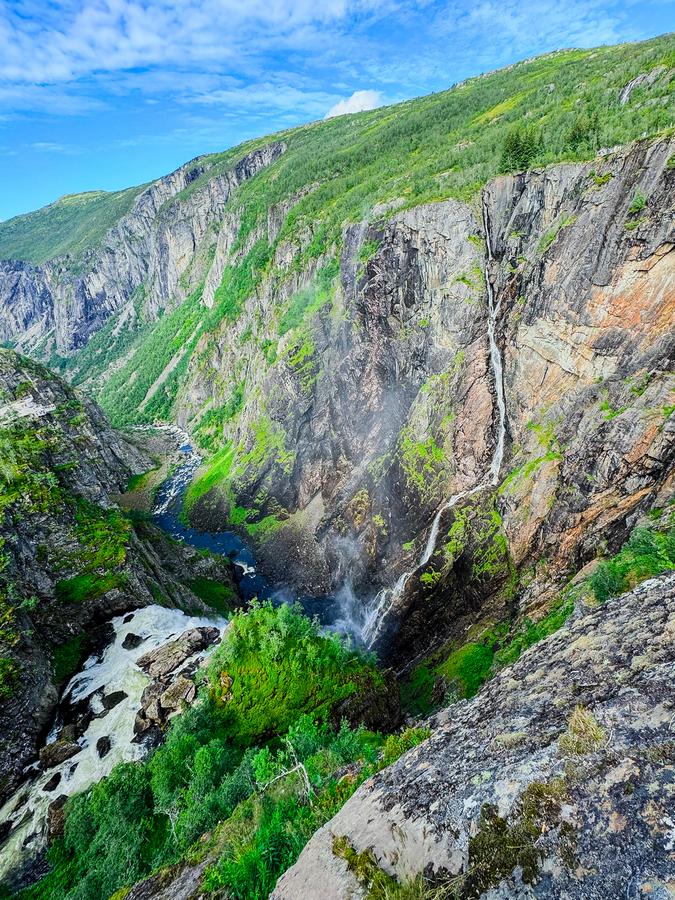
Cascading in two dramatic drops of 16 and 52 meters down a sheer rock face in Slovenia’s Triglav National Park, Peričnik Waterfall (Slap Peričnik) embodies the pristine natural beauty of the Julian Alps while offering visitors a uniquely immersive experience among European waterfalls. Unlike most waterfalls viewed solely from the front, Peričnik’s distinctive feature is the naturally formed cave behind the main cascade that allows visitors to walk completely behind the thundering curtain of water—experiencing the fall from every angle while feeling the vibration of the rock and the fine mist that creates permanent rainbows in the sunlight. The waterfall derives its power from snowmelt in the high Alpine peaks, causing dramatic seasonal variations in flow that transform its character throughout the year: sometimes a delicate lace-like veil in late summer, sometimes a roaring torrent during spring thaw, and occasionally a partially frozen ice sculpture during the harshest winter periods. Accessible via a moderate 20-minute hike through beech forest from the nearby Triglav National Park information center in the Vrata Valley, the trail follows part of the historic trade route that once connected this isolated region to wider markets. Beyond its natural spectacle, Peričnik holds cultural significance in Slovene identity as a symbol of the country’s unspoiled mountain landscapes and features prominently in regional folklore, including tales of water fairies (povodnj mož) said to dwell behind the falls.
Cultural Context
Peričnik Waterfall holds a significant place in Slovenian cultural heritage, deeply intertwined with local folklore and traditional narratives of the Triglav National Park region. The waterfall is often associated with legends of water spirits and mythical creatures believed to inhabit the pristine natural environment. These stories have been passed down through generations, reflecting the local community’s reverence for nature and the spiritual connection they maintain with the landscape. The site is also a popular destination for cultural events celebrating Slovenian identity and nature conservation, especially during seasonal festivals such as the summer solstice, where locals gather to honor the harmony between human life and the natural world. Additionally, Peričnik Waterfall has inspired numerous Slovenian poets, painters, and writers who have depicted its majestic beauty and symbolic significance in their works. The waterfall’s presence in traditional songs and oral histories emphasizes its role as a cultural landmark that embodies the enduring relationship between the people and their environment. Visitors to Peričnik can experience this cultural richness through guided tours that highlight these traditions and the ecological importance of the area, fostering a deeper appreciation for the Slovenian cultural landscape. Thus, Peričnik Waterfall is not only a natural marvel but also a vital cultural emblem within Slovenia’s national narrative.
Historical Context
The historical context of Peričnik Waterfall is closely linked to the broader development of Triglav National Park and the conservation movement in Slovenia. The waterfall has been recognized as a natural landmark since at least the 19th century, during the rise of Alpine tourism and the early efforts to protect the Julian Alps’ unique environment. Early explorers and naturalists documented Peričnik in their travelogues, contributing to its growing fame as a scenic and geological wonder. The area surrounding the waterfall became part of Triglav National Park when it was established in 1924, marking one of the earliest national parks in Europe and reflecting Slovenia’s commitment to preserving its natural heritage. Throughout the 20th century, Peričnik Waterfall witnessed increased visitation, which necessitated the development of sustainable pathways and visitor infrastructure to protect the fragile ecosystem. The waterfall has also been a site of scientific interest, particularly in studies of karst geology and hydrology, due to its two-tiered cascade and the unique microclimate it creates. Its historical significance is further underscored by its role in promoting environmental awareness and ecotourism in Slovenia. Today, Peričnik Waterfall stands as a testament to the country’s longstanding dedication to balancing nature preservation with public enjoyment, reflecting a historical evolution from wilderness to protected natural treasure.