
MenuClose

A place worth knowing

St. Beatus-Höhlen

Attractions · Cave in InterlakenUpdated

  • Google rating4.4/5 (8,500 reviews)
  • Typical visit1.5-2 hours
  • EntranceAdmission required — check https://www.beatushoehlen.swiss/ for tickets
Dom Perignon Wine Cave
Kyle Kroeger / ViaTravelers
  • Today (Tuesday)10:00 AM – 5:00 PM
  • Typical visit1.5-2 hours
  • EntranceAdmission required — check https://www.beatushoehlen.swiss/ for tickets
  • Google rating4.4/5 8,500 reviews
  • WebsiteOfficial site ↗
Opening hours all week
Monday
10:00 AM – 5:00 PM
Tuesday
10:00 AM – 5:00 PM
Wednesday
10:00 AM – 5:00 PM
Thursday
10:00 AM – 5:00 PM
Friday
10:00 AM – 5:00 PM
Saturday
10:00 AM – 5:00 PM
Sunday
10:00 AM – 5:00 PM
Accessibility
"{"safety": "Non-slip shoes essential, handrails throughout", "mobility": "Good mobility required – uneven surfaces, 200+ steps", "age_restrictions": "Children under 6 free, must be supervised", "wheelchair_access": "Not wheelchair accessible due to stairs and narrow passages"}"
The short answer

Why it matters

A kilometre-long illuminated cave system carved into the cliffs above Lake Thun, where an Irish monk allegedly slew a dragon and made his hermitage.

St. Beatus Caves offer a spectacular underground journey through millennia of geological history above Lake Thun. Legend says Irish monk St. Beatus slayed a dragon here in 6th century. Today visitors explore 1km of illuminated passages featuring stunning stalactites, stalagmites, and underground lakes in Switzerland’s most accessible show cave.

Cultural Context

Cave steeped in medieval legend of St. Beatus defeating dragon, symbolizing Christianity conquering paganism. Popular pilgrimage site since Middle Ages.

Historical Context

Caves formed over millions of years by water erosion. First explored 1904, opened to public 1906. Used as air raid shelter WWII. Over 14km mapped but only 1km accessible to visitors.


Context

Story and significance

About

The St. Beatus-Höhlen (Saint Beatus Caves) are a stalactite and stalagmite cave system set dramatically above Lake Thun in the Bernese Oberland, Switzerland. Around one kilometre of the 14-kilometre cave network is accessible via illuminated pathways through grottos, chambers, and underground waterfalls. Legend holds that the Irish monk Saint Beatus drove a dragon from the caves in the 6th century. The temperature inside stays a constant 8–10°C. A 60-minute tour covers 297 steps and an 87-metre elevation drop, emerging to panoramic views of Lake Thun and the Bernese Alps.

Historical significance

The St. Beatus-Höhlen hold considerable historical importance as a site where natural history and human legend intersect. Historically, the caves are linked to early Christian missionary activity in the Alpine region, with Saint Beatus himself being a figure of religious and cultural significance from the 6th century. The caves have served as a refuge, a place of spiritual retreat, and a source of local myth for over a millennium. Their documentation and public opening in the 19th century marked an important moment in the history of natural heritage preservation in Switzerland, contributing to the rise of speleology and geotourism. The site exemplifies how natural landscapes can become embedded in national and regional narratives, influencing cultural identity and historical memory. Additionally, the caves have provided valuable geological and paleontological information, offering insights into the region’s glacial past and subterranean ecosystems. The legacy of the St. Beatus-Höhlen continues to influence contemporary understandings of the relationship between humans and the natural world, making them a historically significant landmark in both scientific and cultural terms.

Historical context

Caves formed over millions of years by water erosion. First explored 1904, opened to public 1906. Used as air raid shelter WWII. Over 14km mapped but only 1km accessible to visitors.
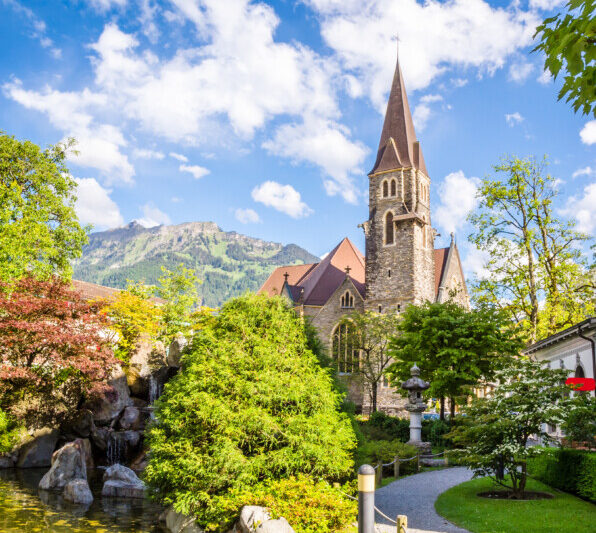
Cultural context

Cave steeped in medieval legend of St. Beatus defeating dragon, symbolizing Christianity conquering paganism. Popular pilgrimage site since Middle Ages.

Architecture

While the St. Beatus-Höhlen are primarily a natural formation, the site features several architectural elements that enhance the visitor experience and reflect historical construction techniques. The caves’ entrance area includes a chapel dedicated to Saint Beatus, constructed in a traditional Swiss alpine style using local stone and timber, which harmonizes with the natural surroundings. This chapel serves as a cultural and spiritual gateway, blending religious architecture with the natural environment. Additionally, the site includes carefully engineered walkways, staircases, and lighting installations designed to provide safe access while minimizing environmental impact. These structures demonstrate a thoughtful integration of modern engineering with respect for the cave’s delicate ecosystem. The use of non-invasive materials and subtle lighting ensures that the architectural interventions do not detract from the caves’ natural beauty. Over time, architectural adaptations have evolved to accommodate increasing tourism while preserving the site’s integrity, exemplifying a balance between accessibility and conservation. These design elements illustrate how human craftsmanship can complement and protect natural wonders without overwhelming them.

Local significance

For the local community of Interlaken and the surrounding Bernese Oberland region, the St. Beatus-Höhlen represent both a cherished natural treasure and a symbol of regional identity. The caves contribute significantly to the local economy through tourism, providing employment opportunities and supporting small businesses such as guided tour services, hospitality, and artisanal crafts. Beyond economic impact, the caves hold a place in the collective memory and cultural pride of the area, celebrated in local storytelling, art, and festivals. The legend of Saint Beatus and the dragon is a foundational narrative that fosters a sense of continuity and belonging among residents. The site also serves as an educational resource for local schools and environmental groups, emphasizing the importance of geological conservation and cultural heritage. Community-led initiatives often focus on preserving the natural environment around the caves, reflecting a deep respect for the landscape. The St. Beatus-Höhlen thus function as a vital communal space where history, nature, and culture converge, shaping the everyday lives and traditions of the local population.

Experience

Make the most of it

Local tips
  • Sunrise and sunset offer ideal light
  • Respect local conservation efforts
  • Wildlife most active early morning
  • Weekdays much less crowded
  • Weather can change quickly
  • Local guides know hidden viewpoints
  • Seasonal changes create different experiences
Hidden gems nearby
  • Wildlife observation spots
  • Perfect picnic spots away from crowds
  • Secret swimming holes known to locals
  • Hidden caves and grottos
  • Unmarked trails to pristine areas
  • Historical markers easily missed
  • Natural formations off main path
Special features
  • The St. Beatus-Höhlen are renowned for their extensive network of limestone caves, stretching over 1.5 kilometers and featuring spectacular stalactites, stalagmites, and underground waterfalls formed over thousands of years. One of the most distinctive physical features is the large underground lake, which reflects the cave formations and adds to the ethereal atmosphere. The caves are illuminated with subtle, energy-efficient lighting that highlights the natural contours and mineral deposits without disturbing the ecosystem. Visitors can explore several chambers, each with unique geological formations such as the 'Dragon’s Lair,' which ties directly to the local legend of Saint Beatus. The site also boasts a museum and exhibition area that showcases fossils, minerals, and the geological history of the region, providing an educational complement to the natural spectacle. Seasonal events such as guided tours and light shows further enhance the visitor experience, emphasizing the caves’ mystical and scientific aspects. The combination of natural beauty, mythological significance, and modern interpretive facilities makes the St. Beatus-Höhlen a unique destination that appeals to a wide range of interests.
Editorial scores

How we rate it

Authenticity8/10
Accessibility score5/10
Family-friendly score7/10
Off-the-beaten-path6/10

Editorial scores on a 10-point scale, judged against places of the same kind.

Updated Data: Editorial research · Google Places ratings · Verified coordinates