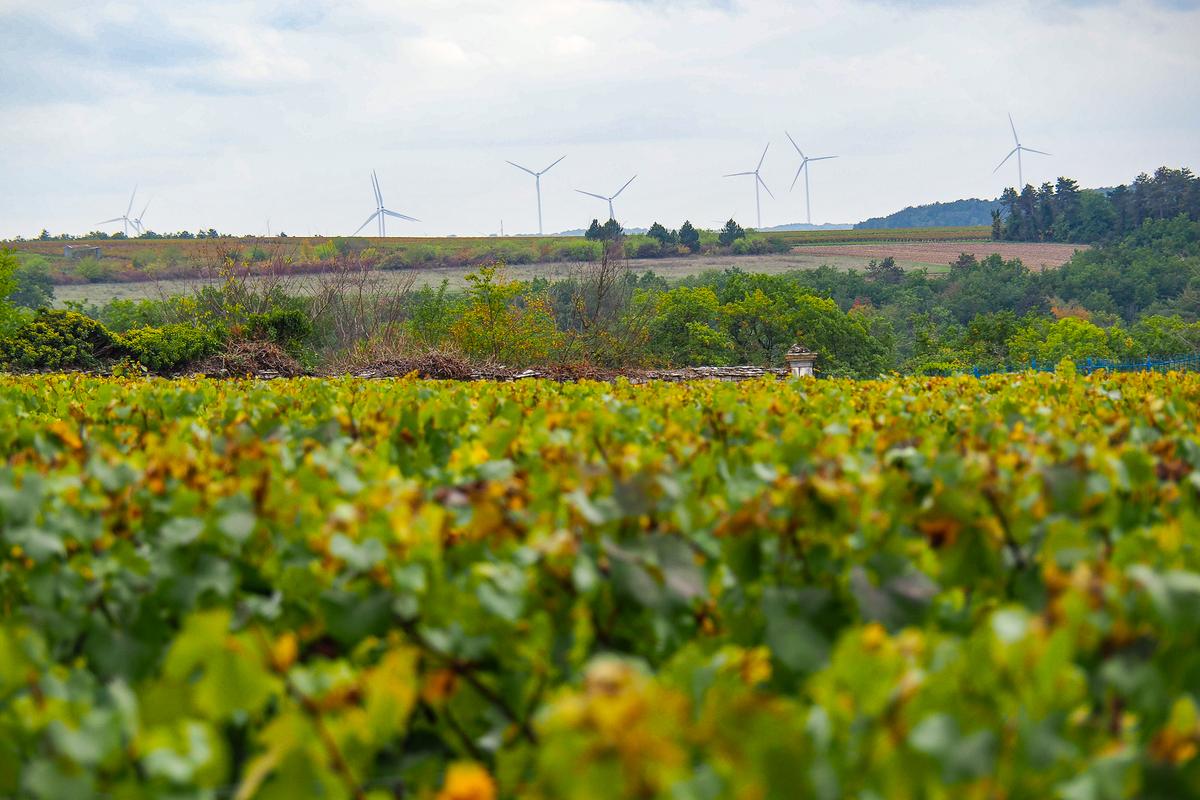
Burgundy is worth visiting for its vineyard villages, compact historic cities, UNESCO-listed abbeys and wine landscapes, Roman sites, and easygoing routes by car, bike, boat, and train. For a first trip, spend three to five days between Dijon and Beaune, reserve winery visits before arrival, and use a guided driver on days when you plan to taste wine.
The places below cover the historic region of Burgundy, called Bourgogne in French. Burgundy is now part of the larger administrative region of Bourgogne-Franche-Comté, but the historic name remains standard in English travel and wine contexts. This guide focuses on Burgundy rather than the wider modern region.
Last fact-checked: August 3, 2026. Opening days, tasting formats, and ticket prices can change, so confirm details on the linked official websites before a long drive.
This article contains affiliate links. ViaTravelers may earn a commission at no extra cost to you. Recommendations are based on relevance to the trip, not commission rate.
Best things to do in Burgundy at a glance
| Experience | Best for | Time to allow | Planning note |
|---|---|---|---|
| Beaune and the Hôtel-Dieu | First-time visitors | Half to full day | Reserve the Hôtel-Dieu in busy periods |
| Route des Grands Crus | Vineyard scenery and villages | Full day | Use a driver if tasting |
| Burgundy wine tour | Learning about appellations | Half or full day | Winery appointments are often required |
| Dijon and the Owl Trail | Car-free city break | Full day | Start early for markets and museums |
| Abbey of Fontenay | UNESCO heritage | 1.5 to 2 hours | Check seasonal tour times |
| Vézelay | Romanesque architecture | 2 to 4 hours | Expect an uphill walk |
| Guédelon | Families and living history | 3 to 5 hours | Seasonal opening |
| Autun | Roman history | Half to full day | Sites are spread around town |
| Burgundy Canal | Cycling and slow travel | Half day or longer | Choose one manageable section |
| Parc de la Bouzaize | A relaxed break in Beaune | 45 to 90 minutes | Seasonal activities may cost extra |
How to plan a Burgundy trip
Three days is enough for the core Burgundy experience: one day in Dijon, one day along the wine route, and one day in Beaune. Four or five days lets you add a northern heritage loop around Fontenay, Vézelay, Guédelon, or Auxerre, or a southern loop through Autun, Cormatin, and Mâcon. The broader Burgundy travel guide can help you decide which part of the region fits your route through France.
| Trip length | A realistic plan | Main tradeoff |
|---|---|---|
| 2 days | Dijon, Beaune, and a short section of the Route des Grands Crus | Little time for abbeys or smaller towns |
| 3 days | Dijon, a guided wine day, and Beaune | Choose either northern or southern Burgundy, not both |
| 4 to 5 days | Core wine country plus one heritage day | Still requires selective routing |
| 6 or more days | Add the canal, northern Yonne, Autun, Cormatin, or Mâcon | More driving unless you change bases |
Where to base yourself
Dijon is the easiest base without a car. It has direct rail connections, a walkable center, museums, restaurants, and access to organized wine tours. Beaune works better for travelers who want early access to the Côte de Beaune, winery appointments, and evenings in a smaller town. A split stay of one night in Dijon and two or three nights in Beaune is efficient for a first visit.
When to visit
Late spring and early autumn usually offer a good balance of vineyard color, comfortable walking weather, and open attractions. Harvest season brings energy to the wine villages, but working wineries may have less time for visitors and popular rooms sell out. Summer has the longest attraction schedules, while winter is quieter and requires more careful checks for seasonal closures.
Wine tasting and driving
France prohibits driving at a blood-alcohol level of 0.5 g/L or higher for most drivers and 0.2 g/L for probationary licenses. Those thresholds are not a safe tasting plan. Designate a driver, book a guided tour, use a taxi, or arrange transport through your accommodation whenever alcohol is part of the day.
19 best things to do in Burgundy, France
1. Explore Beaune and the Hôtel-Dieu
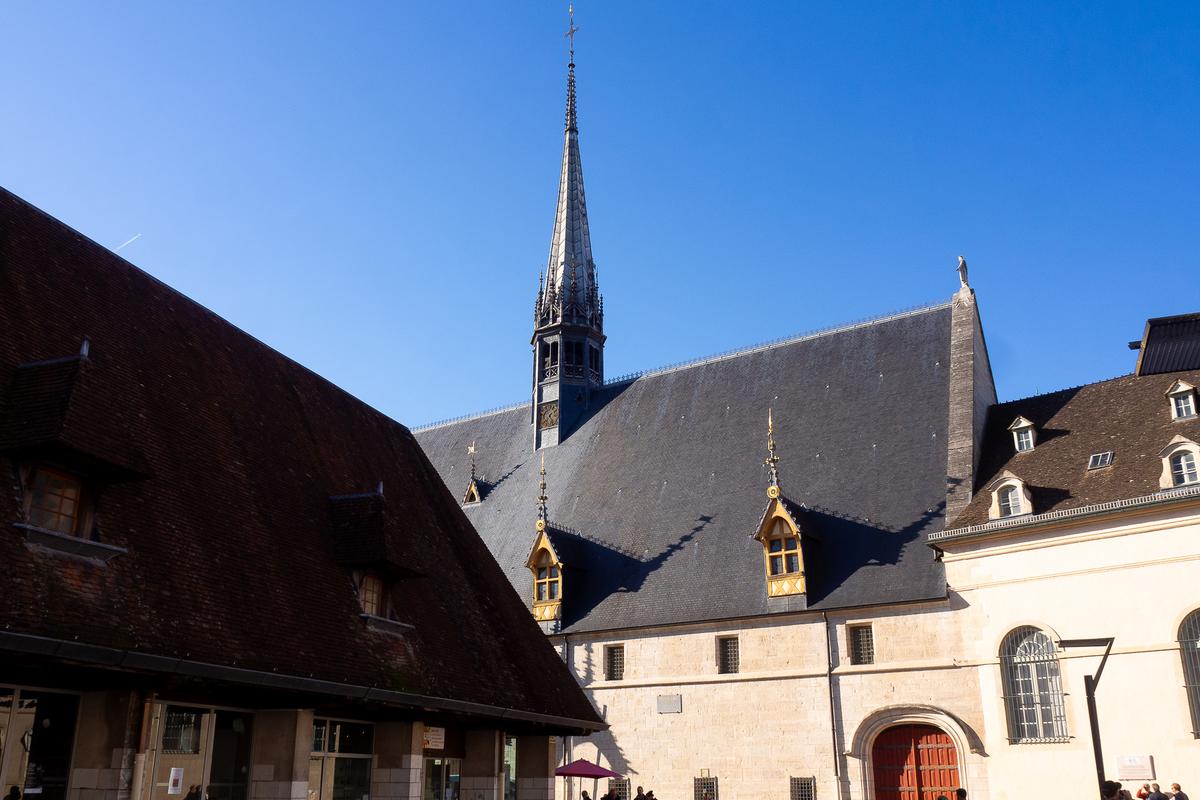
Beaune is the most useful first stop for understanding Burgundy wine country. Its walled center is compact, the surrounding vineyards begin close to town, and the Hôtel-Dieu gives the trip a cultural anchor beyond tastings.
The Hôtel-Dieu, also called the Hospices de Beaune, was founded in 1443 as a hospital for people who could not afford care. Its patterned glazed-tile roof is the best-known view, but the interior is the reason to buy a ticket: the Great Hall of the Poor, historic pharmacy, kitchens, and Rogier van der Weyden’s Last Judgment altarpiece explain how medicine, charity, art, and wine became linked here. Check the official Beaune tourism information before visiting.
Afterward, walk the ramparts, browse the Saturday market when your dates align, and visit the Collégiale Notre-Dame. A half day covers the essentials, but a full day leaves time for a cellar visit and a long lunch. Our guide to the best things to do in Beaune has a more detailed town itinerary.
For accommodation, Maison Cabotte is a practical option outside the busiest lanes, while Les Remparts Hôtels et Demeures Historiques puts you inside the historic center. ViaTravelers has stayed at the latter; see our Les Remparts hotel review for room and location details.
2. Drive the Route des Grands Crus

The Route des Grands Crus is the clearest way to see how Burgundy’s villages, vineyard slopes, and appellations fit together. The signed route runs for about 60 kilometers from Dijon to Santenay through 37 wine villages in the Côte de Nuits and Côte de Beaune. Auxerre and Chablis are not on this route; they belong to a separate northern Burgundy trip.
A full-day route might include Marsannay-la-Côte, Gevrey-Chambertin, Vougeot, Nuits-Saint-Georges, Beaune, Pommard, Meursault, and Santenay. Trying to stop in every village turns the day into a windshield tour. Pick two winery appointments, one cultural stop such as Château du Clos de Vougeot, and one village for lunch.
The vineyards are working agricultural land. Stay on public roads and marked paths, do not walk between rows without permission, and never assume a cellar accepts drop-ins. The official Route des Grands Crus map is more reliable than a generic map app for the signed wine-road sequence. Our overview of wine regions in France explains how Burgundy compares with Bordeaux, Champagne, the Rhône, and the Loire.
3. Take a guided Burgundy wine tour
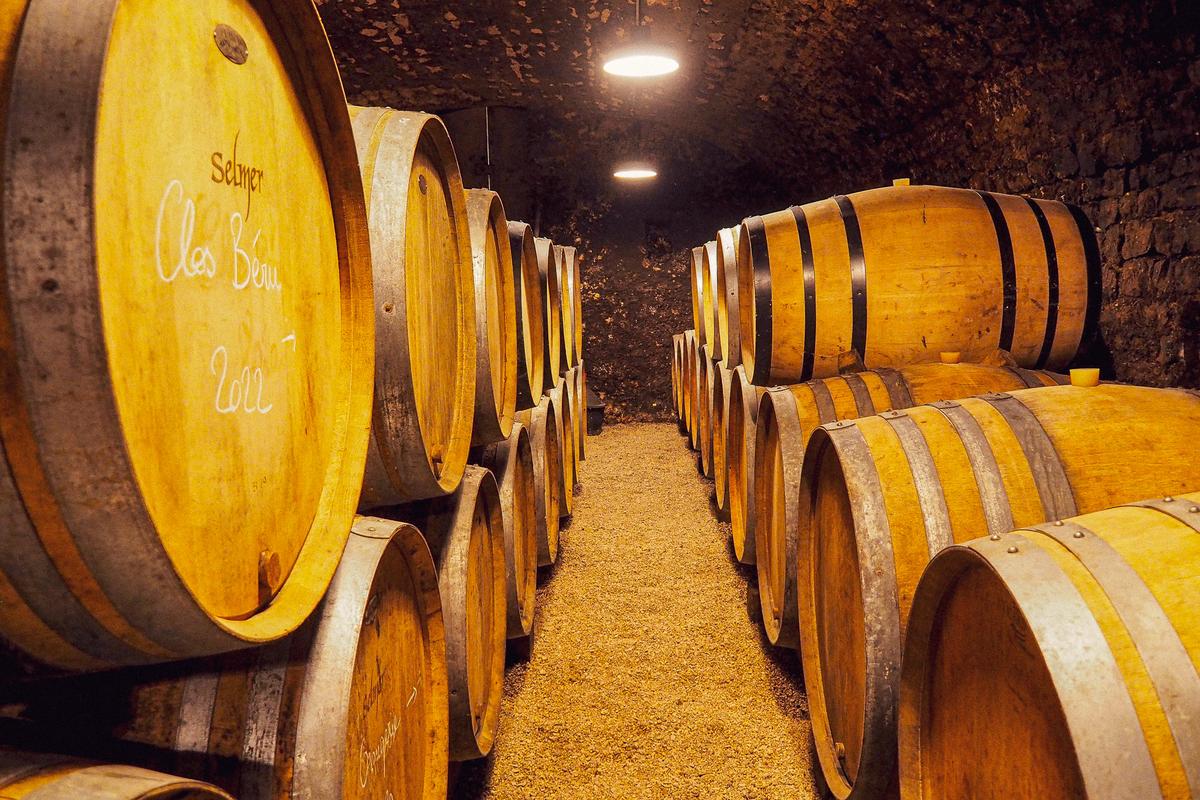
A guided tour is the most efficient choice when you want producer visits, context, and safe transport in the same day. Burgundy’s labeling system is tied closely to place, so a good guide should explain regional, village, Premier Cru, and Grand Cru appellations rather than simply pour a long list of wines.
The word climat has a specific meaning here. It refers to a precisely delimited vineyard parcel with a recognized history and growing conditions, not the weather. The Climats of the Côte de Nuits and Côte de Beaune form a UNESCO-listed cultural landscape. The official Bourgogne Wine Board is a strong reference for appellations and terminology.
Choose a small-group or private tour that names the areas it visits, states the approximate number of producers and tastings, and explains whether lunch is included. Travelers with specific interests, such as organic farming, white Burgundy, Grand Cru vineyards, or entry-level bottles, should tell the operator before the day begins. Our comparison of the best wine tours in Burgundy covers more bookable options.
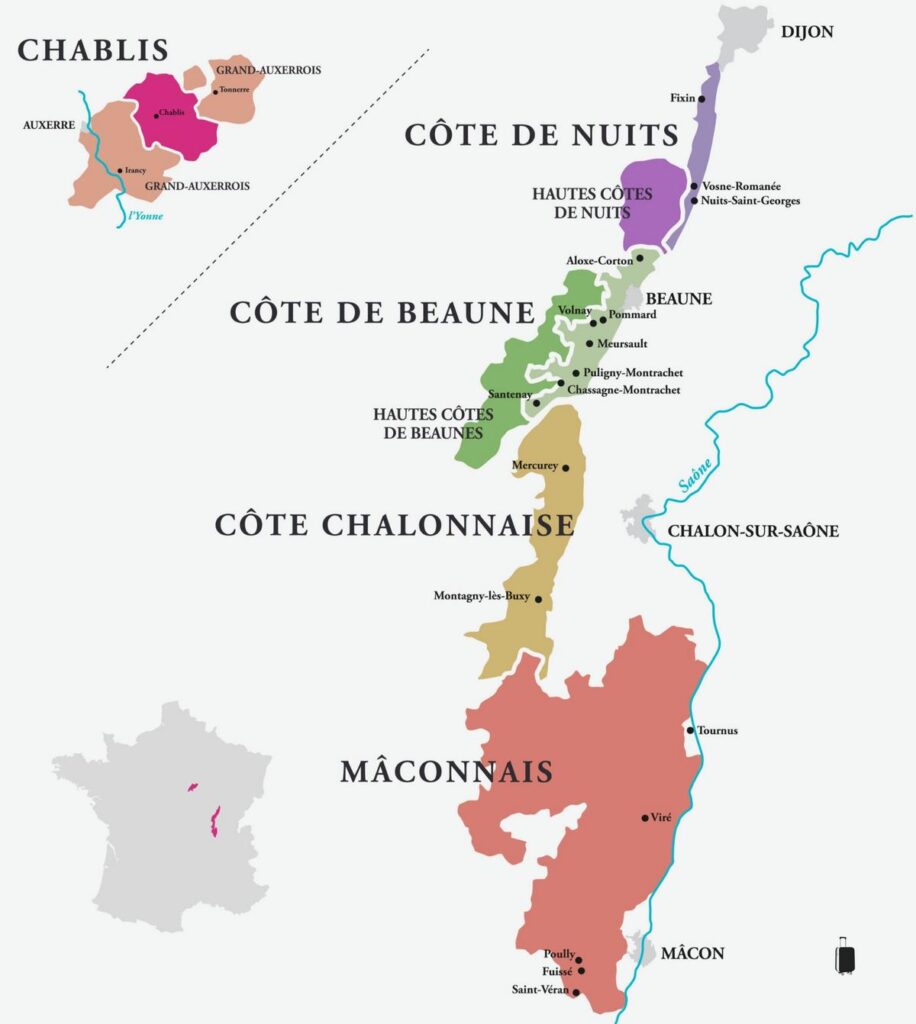
Use the map below to orient yourself before choosing a tour. Chablis lies well north of the Côte d’Or, while the Mâconnais is in southern Burgundy; covering both on one tasting day is not realistic.
4. Follow Dijon’s Owl Trail

Dijon deserves a full day rather than a quick mustard stop. The historic center is walkable, mostly car-free, and dense with medieval streets, private mansions, churches, food shops, and museums. It is also the best Burgundy base for travelers arriving by train.
The Owl Trail is the simplest self-guided introduction. Bronze arrows lead through 22 stops in roughly one hour, passing Notre-Dame church and its carved owl, Maison Millière, Hôtel de Vogüé, the Palace of the Dukes and Estates of Burgundy, Saint-Bénigne Cathedral, Darcy Garden, and Les Halles. Pick up the booklet or app rather than trying to reconstruct the route from disconnected pins. The official Owl Trail page has current details.
Leave room for the market district and local specialties. Dijon mustard, gingerbread, crème de cassis, and dishes such as oeufs en meurette or boeuf bourguignon make more geographic sense here than flammekueche, which belongs to Alsatian cooking. A food tour can be useful, but independent travelers can build a strong route around Les Halles, a mustard shop, and a wine bar.
5. Book a tasting at Château de Pommard

Address: 15 Rue Marey Monge, 21630 Pommard
Château de Pommard is a useful stop for travelers who want a structured tasting close to Beaune. Its Clos Marey-Monge vineyard and education-focused experiences make it easier to connect what is in the glass with Burgundy’s soils, parcels, and classification system.
Current restoration work changes the visit. The estate states that its cellars and vineyards are not open to the public during renovation, although guided tastings continue. Do not book on the assumption that a standard cellar tour is included. Review the latest options on the Château de Pommard experiences page.
A tasting here fits well between Beaune and Meursault, and the village of Pommard is pleasant for a short walk. Allow about an hour for the tasting itself, then add time if you plan lunch or another estate. Check current Château de Pommard tasting availability before setting the day’s route.
6. Visit the Musée des Beaux-Arts de Dijon

Address: 1 Rue Rameau, 21000 Dijon
The Musée des Beaux-Arts occupies the Palace of the Dukes and Estates of Burgundy, so the building and collection work as one visit. It is one of France’s older major museums, with displays spanning Antiquity to the 21st century.
The essential rooms are those containing the tombs of the Dukes of Burgundy and their carved mourners. The wider collection includes paintings, sculpture, decorative arts, and antiquities. The museum holds far more than can be seen in one visit, so allow 90 minutes for highlights or two to three hours for a broader circuit.
Admission to the permanent collection is free, as it is at Dijon’s municipal museums. Temporary exhibitions or guided activities may follow different rules, so check the official museum overview. The free admission and central location make this a strong bad-weather option rather than a substitute for the Louvre.
7. Fly above the vineyards in a hot-air balloon

A balloon flight gives you the broadest view of the vineyard slopes, villages, woods, and tiled roofs around Beaune or Vézelay. Operators generally fly in calm conditions around sunrise or sunset, with the main season running from spring into autumn.
The route is controlled by wind, not by a fixed sightseeing itinerary. A Beaune departure does not guarantee a flight to Dijon or over a particular vineyard. Weather can also force a late cancellation, so schedule the flight early in your stay and keep the following morning or evening flexible.
The whole activity often takes several hours once inflation, the flight, landing, and return transport are included. Ask about minimum age, mobility requirements, transfer arrangements, and the cancellation policy before paying. Travelers comparing regions can also review our guide to hot-air balloon rides around the world. Check current Burgundy balloon departures if your dates are flexible.
8. Taste kir and visit the Cassissium

Kir is a Burgundy aperitif made by combining dry white wine with crème de cassis, a blackcurrant liqueur. The drink is associated with Félix Kir, a former mayor of Dijon, although blackcurrant-and-wine mixtures predate the name. A kir royal uses sparkling wine instead of still white wine.
For more context than a single glass at a bar, visit the Cassissium in Nuits-Saint-Georges. Its standard visit combines a museum, film, guided production tour, and tasting. Children are welcome and receive syrup rather than alcohol, and the site states that it is accessible to visitors with reduced mobility.
Booking is strongly recommended for guided tours and workshops, especially in high season. Allow roughly 75 to 90 minutes and confirm the fixed start time rather than arriving late in the day. The official Cassissium website lists current formats and opening periods.
9. Join a seasonal Burgundy truffle hunt

The Burgundy truffle, Tuber uncinatum, is harvested from mid-September through the end of January. That season matters. Some operators demonstrate truffle hunting at other times, but a visitor should not expect the same likelihood of finding or tasting a freshly harvested local truffle outside the main period.
A good tour explains the relationship between truffle-producing trees, soil, scent-trained dogs, and careful harvesting. Many experiences pair the search with a tasting, lunch, or cooking demonstration. Check exactly what is included, because a short field demonstration and a multi-course truffle meal are very different products.
Truffle hunting works best for food-focused travelers who want an activity beyond wine. Wear shoes suitable for damp ground and ask about accessibility if anyone in the group has limited mobility. Review the current truffle-hunting itinerary and meal inclusions before booking.
10. Walk up the hill at Vézelay

Vézelay is a hill town built around the Basilica of Sainte-Marie-Madeleine, a UNESCO World Heritage site and a major work of Burgundian Romanesque architecture. The approach through the village is part of the visit: the main street climbs past stone houses, small shops, galleries, and viewpoints before reaching the basilica.
The church became an important medieval pilgrimage destination because of relics attributed to Mary Magdalene. That tradition should not be confused with a verified claim that she was buried here. Inside, look for the striped arches of the nave, sculpted capitals, and the portal between the narthex and nave.
Most of the former abbey buildings disappeared after the French Revolution, so the surviving church and hill are the focus. Allow two to four hours for the climb, basilica, lanes, and viewpoints. Parking is below the upper village, and the walk is steep enough to matter for travelers with limited mobility. Vézelay also belongs on a broader list of beautiful villages in France.
For an overnight stay, Hôtel Restaurant de la Poste & du Lion d’Or has a central location near the approach to the basilica. Rates and parking arrangements vary by date.
11. See the Cistercian Abbey of Fontenay

Address: Abbaye de Fontenay, 21500 Marmagne
The Abbey of Fontenay is one of Burgundy’s most coherent historic sites. Founded by Saint Bernard in the early 12th century, the Cistercian complex preserves the church, cloister, chapter house, monks’ dormitory, bakery, forge, and landscaped grounds. UNESCO highlights the site as an unusually complete expression of early Cistercian self-sufficiency.
The restrained architecture is the point. Fontenay does not rely on ornate decoration; its proportions, stonework, water systems, and work buildings explain how the monastic community was organized. Allow 90 minutes to two hours, longer if you join a guided visit or spend time photographing the gardens.
The abbey is near Montbard and fits a northern Burgundy day with Semur-en-Auxois or another nearby heritage stop. Opening patterns change by season, and some guided tours are in French, so check the official Abbey of Fontenay website before leaving. The site also belongs among the most significant historic landmarks in France.
12. Watch medieval construction at Guédelon

Address: D955, 89520 Treigny-Perreuse-Sainte-Colombe
Guédelon is an experimental archaeology project where craftspeople are building a 13th-century fortified castle with period-appropriate techniques and materials sourced from the site. It stands in Guédelon Forest in a former quarry, not inside Morvan Regional Natural Park.
The value is in watching the work. Quarrymen, stonemasons, carpenters, blacksmiths, tile makers, rope makers, and other trades turn stone, wood, earth, and iron into a functioning building. The exact activity changes as construction advances, so repeat visits can be different.
Allow at least three hours and preferably most of a day with children. Guédelon is seasonal, generally opening from spring into autumn, and the outdoor site involves uneven ground. Check the official Guédelon calendar for 2026 dates, daily demonstrations, accessibility information, and advance tickets.
13. Explore Auxerre’s cathedral, abbey, and riverfront

Auxerre is a strong northern Burgundy stop for its riverfront skyline, half-timbered streets, Saint-Étienne Cathedral, Saint-Germain Abbey, and Clock Tower. Its appeal comes from the preserved medieval city rather than a group of major Roman ruins.
Start along the Yonne for the classic view, then climb into the old town. Saint-Étienne Cathedral is a Gothic building with notable stained glass and a Romanesque crypt. The former Abbey of Saint-Germain now combines historic architecture, early medieval crypts, archaeology, and museum collections. Current hours and access to crypts or treasures can differ from general church access, so use the Auxerre tourist office to confirm what is open.
A half day covers the central monuments and quays. Stay longer if you want a slower dinner by the river or a separate outing to Chablis, about 20 kilometers away. Our guide to the best things to do in Chablis helps connect the town with nearby vineyards without treating it as part of the Route des Grands Crus.
14. See Roman and Romanesque Autun

Autun is the best choice in Burgundy for travelers who want substantial Roman remains and major Romanesque sculpture in the same town. The Roman city of Augustodunum left a large theater, surviving gates including Porte d’Arroux and Porte Saint-André, and the so-called Temple of Janus.
The Roman theater was built around the first century and is one of the largest surviving theaters in Roman Gaul. The sites are spread out, so a car or bicycle saves time. In the upper town, Saint-Lazare Cathedral is known for its sculpted Last Judgment tympanum associated with Gislebertus and for its Romanesque capitals.
Allow a full day if you want the cathedral, Roman monuments, and museum or treasury time. Use the official Autun tourism site to check restoration work, opening hours, and guided visits. Autun is also a better fit than Auxerre for readers specifically looking for Roman history in a small French town.
15. Tour the 17th-century Château de Cormatin

Address: Grande Rue, 71460 Cormatin
Château de Cormatin is an early 17th-century château, not a medieval fortress. The Marquises of Huxelles began building it in the early 1600s as a statement of power and prestige. Its moats and severe exterior lead to unusually rich Louis XIII interiors.
The guided interior visit covers the Gilded Rooms, historic apartments, kitchens, and a large open staircase. Outside, the grounds include formal gardens, water features, an old-style vegetable garden, and a boxwood maze. The contrast between the restrained façade and elaborate rooms is the main reason to visit.
Allow about an hour for the guided interior and another 30 to 60 minutes for the gardens. The château has seasonal opening periods, so confirm the current schedule on the official Château de Cormatin website. Garden-focused travelers can place it within a broader route through notable gardens in Europe.
16. Walk along the Saône in Mâcon

Mâcon is a useful southern Burgundy base with a riverfront promenade, colorful façades, a walkable old town, and quick access to the Mâconnais vineyards. It is better understood through its Saône setting and historic center than through Roman ruins.
Begin on Quai Lamartine, cross or view the Saint-Laurent bridge, then walk to Place aux Herbes and the Maison de Bois. Built between about 1490 and 1510, the carved timber house is generally described by the local tourist office as the oldest house in Mâcon. Continue to Saint-Pierre church, the surviving towers of Vieux Saint-Vincent, and the Musée des Ursulines if its collections fit your schedule.
Half a day is enough for the center; an overnight stay makes sense if you are exploring Pouilly-Fuissé, Solutré, or the wider Mâconnais. The Mâcon South Burgundy tourist office provides current routes and attraction schedules.
17. Follow Nevers’ blue line through the historic center

Nevers sits on the Loire in western Burgundy and works well as a half-day city stop. A painted blue line guides visitors through the center, linking religious buildings, the Ducal Palace, old streets, viewpoints, and the town’s faience heritage.
The Cathedral of Saint-Cyr and Saint-Julitte is unusual because it combines a Romanesque west choir with a Gothic east choir and later stained glass. Nearby, the 15th- and 16th-century Palais Ducal has a broad Renaissance façade and now contains civic and exhibition spaces. Access within active public buildings can change, so do not assume every room is open.
Allow about two hours for the marked route and longer if you visit a museum or faience workshop. Nevers is part of the historic Burgundy covered here, although its Loire setting feels different from the vineyard corridor between Dijon and Beaune. Check France’s official Nevers overview and local tourism listings for current access.
18. Walk, cycle, or cruise a section of the Burgundy Canal

The Canal de Bourgogne stretches for 242 kilometers between the Yonne and Saône valleys, connecting Migennes with Saint-Jean-de-Losne through 189 locks. It is a multi-day waterway, not a single attraction that can be covered on an afternoon stroll.
Choose one section based on your route. Around Tonnerre and Montbard, the canal pairs well with northern heritage sites. Near Dijon and the Ouche Valley, it works as a cycling or walking break from wine-country driving. Longer travelers can rent a boat or plan a point-to-point cycling stage along the towpath.
Surface quality, bike rental availability, lock operations, and navigation conditions vary, so plan the exact segment rather than relying on the canal’s total length. The official Burgundy Canal overview is a useful starting point for routes by boat, bike, and foot.
19. Take a break in Parc de la Bouzaize

Address: Rue du Docteur Bouley, 21200 Beaune
Parc de la Bouzaize is a five-hectare park near the western edge of Beaune’s center. It sits around the source of the Bouzaize and includes an English-style garden, pond, walking paths, children’s play equipment, and a small animal area.
This is not a destination that needs a long detour, but it is useful after the Hôtel-Dieu, during a family afternoon, or when the group needs a break from tastings and formal sightseeing. Some play equipment is accessible to children who use wheelchairs. Seasonal boats, rides, or other activities may have separate schedules and charges.
Allow 45 to 90 minutes. The park is roughly a 10- to 15-minute walk from the historic center, depending on your starting point. Check the official Parc de la Bouzaize listing for current facilities.
Optional extension outside Burgundy: Sancerre

Sancerre is a worthwhile wine-country extension, but it is not in Burgundy. The hill town is in the Cher department of Centre-Val de Loire, within the historic province of Berry and the Loire wine region. Keeping that distinction clear prevents a common geographic error in Burgundy itineraries.
The town overlooks the Loire and surrounding Sauvignon Blanc vineyards. The main stops are the narrow streets, Maison des Sancerre wine center, Fiefs Tower and viewpoints, and prearranged estate tastings. Sancerre makes the most sense for travelers continuing west or north rather than as a quick side trip from Beaune.
Allow at least half a day and preferably an overnight stay if wine is the focus. Review the official Sancerre destination overview before combining it with a Burgundy route.
A practical 3-day Burgundy itinerary
Day 1: Dijon
- Walk the Owl Trail before the center becomes busy.
- Visit the Musée des Beaux-Arts and the tombs of the Dukes of Burgundy.
- Have lunch near Les Halles, then browse mustard, gingerbread, and cassis shops.
- Stay in Dijon or take an evening train to Beaune.
Day 2: Route des Grands Crus and Beaune
- Join a guided wine tour or travel with a designated driver.
- Choose two producer visits and one village stop rather than rushing the full route.
- Finish in Beaune for the Hôtel-Dieu, ramparts, dinner, and an overnight stay.
Day 3: Pick one regional loop
- Northern heritage: Abbey of Fontenay plus Semur-en-Auxois, or Vézelay plus Auxerre. Guédelon needs most of a day and should replace, not supplement, the other stops.
- Southern Burgundy: Autun, Château de Cormatin, or Mâcon and the Mâconnais. Choose two nearby priorities rather than attempting all three cities in one day.
- Slower day: cycle or walk a section of the Burgundy Canal, then return to Beaune for Parc de la Bouzaize and dinner.
Best tours in Burgundy
The most useful paid tours solve a practical problem: they arrange appointments that are hard to coordinate independently, provide transport on tasting days, or make a weather-dependent activity easier to manage. Confirm the current meeting point, cancellation terms, lunch inclusions, and number of tastings before booking.
| Tour | Best for | Main consideration |
|---|---|---|
| Burgundy bike and wine tour from Beaune | Active travelers who want vineyard roads and producer visits | Check distance, terrain, bike type, and weather policy |
| Full-day Burgundy tour with multiple tastings | First-time wine visitors who want a guided overview | A high tasting count can be tiring; food and pacing matter |
| Burgundy truffle hunt and meal | Food travelers visiting in truffle season | Verify fresh-truffle season and exact meal inclusions |
| Hot-air balloon flight near Beaune | Photography and a broad landscape view | Weather can change the route or cancel the flight |
Frequently asked questions about visiting Burgundy
Is Burgundy worth visiting?
Yes. Burgundy is a strong choice for travelers interested in wine, food, medieval and Roman history, UNESCO sites, compact cities, cycling, and slower countryside routes. A first trip works well with Dijon and Beaune as bases.
How many days do you need in Burgundy?
Plan three days for Dijon, Beaune, and the Route des Grands Crus. Four or five days gives you time for one additional area, such as Fontenay and Vézelay in the north or Autun, Cormatin, and Mâcon in the south.
Do you need a car in Burgundy?
You do not need a car for Dijon, central Beaune, or the train journey between them. A car or guided tour is useful for vineyard villages, abbeys, Guédelon, the canal, and rural sites. Use a driver or organized transport on wine-tasting days.
What is the best time to visit Burgundy?
Late spring and early autumn usually provide comfortable weather and attractive vineyard scenery. Summer has longer opening schedules but more visitors. Harvest season is memorable, although winery availability may be limited because producers are working.
What is the difference between Bourgogne, Burgundy, and Bourgogne-Franche-Comté?
Bourgogne is the French name for Burgundy. Burgundy is the English name for the historic and wine region. Bourgogne-Franche-Comté is the larger modern administrative region that includes Burgundy and neighboring Franche-Comté.
Do Burgundy wineries require reservations?
Many do. Burgundy estates are often working producers with limited visitor capacity rather than large walk-in attractions. Reserve tastings in advance, especially during weekends, summer, and harvest season.
Plan your Burgundy trip
A strong Burgundy itinerary is selective. Use Dijon for city culture and rail access, Beaune for wine-country logistics, and one additional day for the part of the region that best matches your interests. Reserve producer visits, keep tasting days free from driving, and verify seasonal sites before building a long rural route.
For the next stage of planning, compare the best places to visit in France, browse our France destination guides, and review classic French cuisine before choosing restaurants and food experiences.