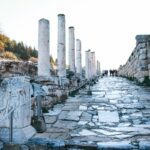
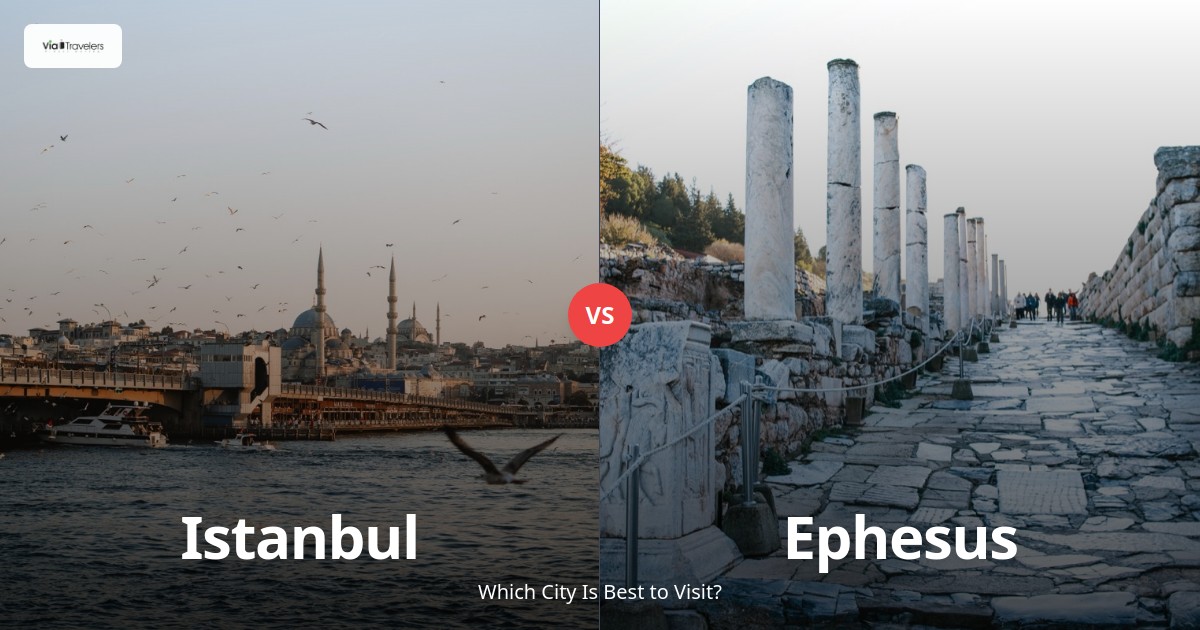
Ephesus, an ancient city located in Turkey, is renowned for its incredible archaeological sites and rich history. Once a bustling port city, it is home to the well-preserved ruins of the Temple of Artemis, one of the Seven Wonders of the Ancient World. Visitors can wander through its impressive streets, marvel at the grand Library of Celsus, and explore the remnants of the Roman theater, all while immersing themselves in the stories of this once-thriving metropolis.
The destination guide
Ephesus
At a glance
Currency₺ TRYCode: TRY
Time zoneTurkey Time
Languages
- Turkish
Setting
- Aegean coast ruins
- Ancient Greek-Roman city
- Marble terraces
- Archaeological site
Known for
- Ancient History
- Archaeology
- Architecture
- Pilgrimage
- UNESCO Heritage
- Photography
- Cultural Immersion
Population250K250,000 residents
VisaDuration: Up to 90 days within any 180-day period · Documents: Valid U.S. passport with at least 6 months validity beyond date of entry and space for entry and exit stamps
How Ephesus scores
6/10OverallFair
Weather7/10
Value for money8/10
Safety7/10
Food & cuisine5/10
Culture & arts7/10
Cultural experience9/10
History10/10
Nature & outdoors4/10
Adventure4/10
Nightlife2/10
Shopping5/10
Family friendly5/10
Romance7/10
Character
Photography score7/10
Authenticity score10/10
Off-the-beaten-path score7/10
Editorial scores on a 10-point scale, weighed against destinations of the same kind.
Travel safety snapshot
Overall60/100Exercise precaution
Women travellers50/100
LGBTQ+ travellers20/100
Theft65/100
Medical care60/100
Physical harm55/100
Political freedom50/100
SafePlace indicators use their source 100-point scale; higher is more favourable. Planning context, not a live travel advisory — check official government guidance before you go.
When to go
Best months to visit: March, April, May, September, October and November.
- January: 5.9 to 13.2 degrees Celsius, 154.7 millimetres of rain, best-time score 3 out of 5.
- February: 6.6 to 15 degrees Celsius, 67.3 millimetres of rain, best-time score 3 out of 5.
- March: 8.3 to 17.4 degrees Celsius, 77.8 millimetres of rain, best-time score 4 out of 5.
- April: 12.1 to 21.6 degrees Celsius, 54 millimetres of rain, best-time score 5 out of 5.
- May: 16.3 to 26 degrees Celsius, 43.2 millimetres of rain, best-time score 5 out of 5.
- June: 21.2 to 31.9 degrees Celsius, 30.6 millimetres of rain, best-time score 3 out of 5.
- July: 24.2 to 36.2 degrees Celsius, 3.6 millimetres of rain, best-time score 2 out of 5.
- August: 24.2 to 35.2 degrees Celsius, 2.7 millimetres of rain, best-time score 2 out of 5.
- September: 20.3 to 30.9 degrees Celsius, 16.8 millimetres of rain, best-time score 5 out of 5.
- October: 15.6 to 25.4 degrees Celsius, 41.4 millimetres of rain, best-time score 5 out of 5.
- November: 11.7 to 20.2 degrees Celsius, 117 millimetres of rain, best-time score 4 out of 5.
- December: 7.7 to 14.9 degrees Celsius, 118.8 millimetres of rain, best-time score 3 out of 5.
Month-by-month conditions and packing advice
- January
- Cool to mild, rainy January in Ephesus: the site is open, but cold rain or building heat makes longer archaeological walks less ideal. Crowds: January in Ephesus is one of the wetter periods, so museums, food stops, flexible reservations, and backup indoor plans make the trip easier. Pack: Pack layered clothing and comfortable walking shoes. Add a rain jacket or compact umbrella.
- February
- Cool to mild, occasional rain February in Ephesus: the site is open, but cold rain or building heat makes longer archaeological walks less ideal. Crowds: February in Ephesus is workable with normal seasonal planning; build in layers, weather checks, and a mix of indoor and outdoor activities. Pack: Pack layered clothing and comfortable walking shoes.
- March
- Cool to mild, some rain March in Ephesus: cooler shoulder edges are practical with fewer crowds and manageable walking conditions. Crowds: March in Ephesus is workable with normal seasonal planning; build in layers, weather checks, and a mix of indoor and outdoor activities. Pack: Pack layered clothing and comfortable walking shoes. Add a rain jacket or compact umbrella.
- April
- Mild to warm, occasional rain April in Ephesus: mild spring and fall weather makes ruins, terraces, and nearby Selcuk sites comfortable to explore. Crowds: April in Ephesus is comfortable for sightseeing, neighborhoods, food stops, day trips, and outdoor time with limited weather friction. Pack: Pack layered clothing and comfortable walking shoes.
- May
- Mild to warm, occasional rain May in Ephesus: mild spring and fall weather makes ruins, terraces, and nearby Selcuk sites comfortable to explore. Crowds: May in Ephesus is comfortable for sightseeing, neighborhoods, food stops, day trips, and outdoor time with limited weather friction. Pack: Pack light clothing, sun protection, and comfortable walking shoes.
- June
- Warm to hot, occasional rain June in Ephesus: the site is open, but cold rain or building heat makes longer archaeological walks less ideal. Crowds: June in Ephesus is workable with normal seasonal planning; build in layers, weather checks, and a mix of indoor and outdoor activities. Pack: Pack light clothing, sun protection, and comfortable walking shoes.
- July
- Very hot, mostly dry July in Ephesus: summer heat makes exposed ruins tiring and less comfortable. Crowds: July in Ephesus can be very hot, so travelers should favor early starts, shaded breaks, indoor attractions, and flexible afternoon pacing. Pack: Pack breathable clothing, strong sun protection, and a refillable water bottle.
- August
- Very hot, mostly dry August in Ephesus: summer heat makes exposed ruins tiring and less comfortable. Crowds: August in Ephesus can be very hot, so travelers should favor early starts, shaded breaks, indoor attractions, and flexible afternoon pacing. Pack: Pack breathable clothing, strong sun protection, and a refillable water bottle.
- September
- Warm to hot, mostly dry September in Ephesus: mild spring and fall weather makes ruins, terraces, and nearby Selcuk sites comfortable to explore. Crowds: September in Ephesus is workable with normal seasonal planning; build in layers, weather checks, and a mix of indoor and outdoor activities. Pack: Pack light clothing, sun protection, and comfortable walking shoes.
- October
- Mild to warm, occasional rain October in Ephesus: mild spring and fall weather makes ruins, terraces, and nearby Selcuk sites comfortable to explore. Crowds: October in Ephesus is comfortable for sightseeing, neighborhoods, food stops, day trips, and outdoor time with limited weather friction. Pack: Pack light clothing, sun protection, and comfortable walking shoes.
- November
- Mild to warm, some rain November in Ephesus: cooler shoulder edges are practical with fewer crowds and manageable walking conditions. Crowds: November in Ephesus is workable with normal seasonal planning; build in layers, weather checks, and a mix of indoor and outdoor activities. Pack: Pack layered clothing and comfortable walking shoes. Add a rain jacket or compact umbrella.
- December
- Cool to mild, some rain December in Ephesus: the site is open, but cold rain or building heat makes longer archaeological walks less ideal. Crowds: December in Ephesus is workable with normal seasonal planning; build in layers, weather checks, and a mix of indoor and outdoor activities. Pack: Pack layered clothing and comfortable walking shoes. Add a rain jacket or compact umbrella.
Peak season
- July
- August
- May
- June
- September
Off-peak
- December
- January
- February
- March
- April
- October
- November
Know before you go
Neighbourhoods
Ephesus is primarily known for its archaeological site, but nearby Selçuk offers charming neighborhoods with local markets, cafes, and historical sites:
- Selçuk: The town closest to Ephesus, featuring quaint streets and the Basilica of St. John
- Şirince: A nearby village known for its wine production and beautiful views
Best time to visit
The best time to visit Ephesus is during the spring (April to June) and fall (September to October) when the weather is pleasant and ideal for exploring the ruins. Summer can be extremely hot, making it less comfortable for outdoor activities.
Season by season
Spring (Apr–Jun): 15–25 °C, wildflowers, pleasant exploring, moderate crowds. Summer (Jul–Aug): 30–40 °C, intense heat, peak cruise season, night visits available. Autumn (Sep–Nov): 20–30 °C, mild and uncrowded, ideal balance. Winter (Dec–Mar): 5–15 °C, rain possible, very few visitors, atmospheric solitude.
Crowds
Very high mid-morning when cruise ships dock at Kuşadası (especially May–October); moderate at opening (8 AM) and in late afternoon; low in winter months (December–February)
Getting there and around
Getting there
Ephesus is accessed via Izmir Adnan Menderes Airport (ADB), located 85km away. Turkish Airlines and other carriers operate flights from Istanbul (1 hour, €60-150) and European cities. From the airport, take the TCDD train directly to Selçuk (1 hour, €2), the nearest town to Ephesus.
Alternatively, from Istanbul take the overnight bus to Selçuk (7-8 hours, €15-25) or fly to Izmir then train to Selçuk. From Izmir city center, trains depart from Basmane Station to Selçuk every 4 hours (80 minutes, €2). The ancient site is located 3.5km from Selçuk town center.
Getting around
From Selçuk to Ephesus, take the yellow dolmuş (shared minibus) from the bus terminal or town center stops (7 minutes, €1). Dolmuş services run regularly throughout the day and drop passengers at the Lower Gate entrance.
Taxis from Selçuk cost approximately €8-10 to either gate, with most visitors preferring the Upper Gate for a downhill walk through the ruins. The site has two entrances: the Lower Gate (near Library of Celsus) and Upper Gate (near coach parking). After exploring the 3km archaeological site on foot, return minibuses depart from the Lower Gate area. The entire ancient city requires 2-3 hours of walking on uneven terrain with minimal shade.
Top experiences in Ephesus
Library of Celsus
The iconic two-story marble façade of Ephesus, built around 117 AD as both a library housing 12,000–15,000 scrolls and a monumental tomb for the Roman senator Tiberius Julius Celsus Polemaeanus. Four statues in niches once represented Wisdom, Knowledge, Intelligence, and Virtue. The architects used an optical illusion—shorter central columns that make the structure appear larger than it is. Currently undergoing restoration (as of 2024–25) to preserve deteriorating materials, though the façade remains visible. It’s the single most photographed structure in Turkey after Hagia Sophia.
Great Theatre
A colossal Roman amphitheater carved into the slope of Mount Pion (Panayır Dağı), seating 25,000 spectators across 66 rows. It hosted dramatic performances, political assemblies, and gladiatorial contests. The acoustics are remarkable—a whisper from the orchestra circle carries to the top tier. The theatre faces west toward the ancient harbor, and climbing to the upper rows delivers a panoramic sweep of the entire site and the Cayster plain. This is where the silversmith riot against St. Paul (Acts 19) is said to have occurred.
Terrace Houses
Six multi-story Roman residences revealing how Ephesus’s elite lived in the 1st–3rd centuries AD. Walking through climate-controlled covered walkways, visitors see stunningly preserved mosaic floors, elaborate frescoes depicting mythological scenes, underfloor heating systems, and private courtyards with fountains. These ‘houses on the slope’ are the best-preserved examples of Roman domestic architecture in the eastern Mediterranean. Requires a separate ticket (~€15) but worth every cent for anyone interested in daily life beyond temples and theatres. Allow 45–60 minutes.
Temple of Hadrian & Curetes Street
Two highlights along Ephesus’s marble-paved main boulevard. The Temple of Hadrian features a graceful Corinthian colonnade and a curved arch decorated with a relief of Tyche (the city goddess) and Medusa. Curetes Street itself—named for the priests of Artemis—is flanked by honorific columns, stone-carved shop fronts, and mosaic sidewalks that evoke the commercial bustle of a Roman high street. The street connects the Library of Celsus to the upper agora and includes the Fountain of Trajan and the public latrines (a fascinating glimpse of Roman plumbing).
House of the Virgin Mary
A small stone chapel perched on Bulbul Mountain, 7 km from Ephesus, believed to be where the Virgin Mary spent her final years under the care of the Apostle John. The site was ‘rediscovered’ in 1891 based on the visions of a bedridden German nun. It is recognized by the Vatican as a pilgrimage destination and has been visited by three popes. A natural spring flowing from the hillside is said to have healing properties. Visitors of all faiths leave prayers on a wishing wall. Allow 30–45 minutes plus the drive.
Editor-curated picks carried over from our original guide. Where a full place guide exists, the card links to it.
Worth booking ahead in Ephesus
Hand-picked from the operators our guides already send readers to. Prices and availability are live on the partner site.
BrowseViator
Tours and tickets in Ephesus on Viator (opens Viator in a new tab)
Viator's full list of bookable tours and tickets in Ephesus.
BrowseGetYourGuide
Experiences in Ephesus on GetYourGuide (opens GetYourGuide in a new tab)
Everything GetYourGuide sells in Ephesus, with the cancellation terms on each listing.
Where to stayBooking.com
Stays in Ephesus (opens Booking.com in a new tab)
Live rates and availability for Ephesus on Booking.com; filter by neighbourhood once you know where your days start.
We earn a commission if you book through these links, at no extra cost to you. It is how we keep the guides free and independent.
Tips from the field
Highlights
- Library of Celsus Façade
- Great Theatre (25,000 seats)
- Terrace Houses Roman Residences
- Temple of Hadrian & Curetes Street
- House of the Virgin Mary
- Temple of Artemis (Seven Wonders site)
- Ephesus Archaeological Museum
- Şirince Wine Village Nearby
Best activities
- Walk Curetes Street from the upper gate downhill to the Library of Celsus, explore the Terrace Houses Roman residences, climb the Great Theatre for panoramic views, visit the House of the Virgin Mary pilgrimage site, photograph the Temple of Hadrian reliefs, see the Ephesus Archaeological Museum in Selçuk, visit the lone column of the Temple of Artemis (one of the Seven Wonders), attend the Ephesus festival in summer, and combine with a day trip to Şirince wine village.
Local experiences
- Arrive at 8 AM from the upper (south) gate for a crowd-free downhill walk through the entire site, hire a local guide to bring the ruins to life with archaeological storytelling, taste Ephesus-region wines and fruit preserves in the hilltop village of Şirince, visit the Ephesus Archaeological Museum in Selçuk to see statues of Artemis recovered from the site, eat homemade gözleme (stuffed flatbread) at a roadside stand near Selçuk, watch the sunset from the Basilica of St. John's hilltop, and explore the Saturday morning Selçuk market for local produce and textiles.
Practical tips
- Wear comfortable walking shoes as the site is extensive
- Bring water and sun protection, especially in summer
- Consider hiring a guide for in-depth historical context
- Visit early in the day to avoid crowds and heat
Photography tips
- The Library of Celsus is best photographed in early morning when the sun illuminates its western façade and crowds are absent—use the columns of the lower agora to frame it from a distance. The Great Theatre's immense scale requires a wide-angle lens
- position yourself on the orchestra floor to capture all 66 rows radiating outward. Terrace House frescoes and mosaics demand low-light capability (no flash allowed). The Temple of Hadrian's curved arch creates a natural frame for detail shots. Tripods are not permitted, so use image stabilization or brace against columns. Late-afternoon backlighting through the colonnades creates dramatic shadow patterns on the marble street.
Timing
- Allow a full day for the Ephesus area: 3–4 hours at the archaeological site itself (start at the upper gate, work downhill), 30–45 minutes at the House of the Virgin Mary, and 1–2 hours at the Selçuk Archaeological Museum and Basilica of St. John. Add a half-day to Şirince village for wine tasting. Ephesus is 80 km south of Izmir (1 hr by car) and 20 km from the cruise port of Kuşadası.
Keeping it authentic
- Ephesus is one of the few archaeological sites where you walk on the same marble streets Romans walked—chariot ruts are still visible in the stone. Unlike many ancient sites that require imagination, Ephesus's scale and preservation make the urban layout tangible: you can trace the route from harbor to agora to theatre to library. The Terrace Houses, in particular, bridge the gap between monumental ruins and human daily life—seeing a 2,000-year-old fresco of Eros on a bedroom wall is quietly astonishing. Visiting at opening (8 AM) from the upper gate, before cruise-ship buses arrive around 10 AM, delivers a near-solitary experience.
Culture, customs and safety
Cultural heritage
Ephesus preserves one of antiquity most magnificent Greco-Roman urban centers, where Ionian Greek philosophy, Roman imperial grandeur, and early Christian heritage converged to create a cultural crossroads that influenced Western civilization. The ancient city represents the pinnacle of classical urban planning, architectural achievement, and religious transformation from pagan temple worship to Christian pilgrimage destination. Ephesus cultural heritage encompasses classical philosophy, architectural innovation, early Christian history, and the ongoing archaeological preservation efforts that continue to reveal the sophisticated urban culture of the ancient Mediterranean world.
Local customs & etiquette
In Ephesus, be respectful of local customs and traditions.