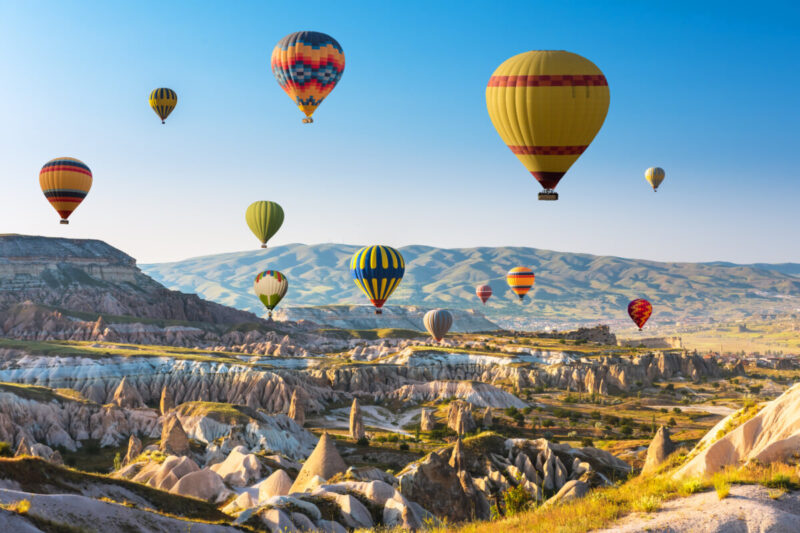
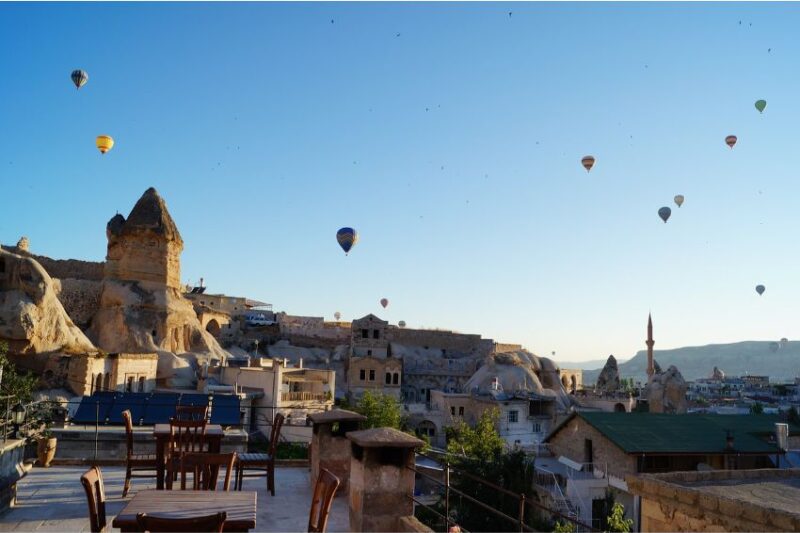
Hagia Sophia’s architectural-spiritual marvel (537 CE) representing possibly the world’s greatest historical building with soaring dome, ethereal mosaics witnessing Istanbul’s layered history—largest Byzantine church converted to Ottoman mosque (1453), museum (1935), and mosque again (2020) with €25 entry and upper viewing deck 10th-century mosaic access. Cappadocia’s surreal dreamlike landscapes featuring hot air balloon rides over unique rock formations, ancient cave dwellings, Derinkuyu underground cities, plus UNESCO Göreme Open Air Museum’s remarkably well-preserved monastery-chapel ruins carved from soft rock fairy chimneys with impressive fresco collections. Pamukkale’s striking white travertine terraces filled with warm mineral-rich waters where ancient Romans soaked, alongside UNESCO Hierapolis ruins and contemporary Turkish bath spa experiences creating natural wonder-ancient history fusion. Ephesus’ best-preserved ancient city (10th century BC) featuring Library of Celsus, Temple of Artemis, grand Great Theatre seating 24,000 spectators, while Troy’s legendary Trojan War archaeological remains connect myth with history despite lacking Hierapolis’ splendid monuments. Istanbul’s Old City Blue Mosque and Hagia Sophia anchoring architectural wonders, traditional wooden-fronted Sogukceşme Street buildings, hamams, stunning Bosphorous views to Asian side, creating living museum where every corner reveals new stories across spring-autumn ideal sightseeing seasons spanning ancient civilizations to natural wonders.
The destination guide
Turkey

Country in EuropeUpdated
- Overall9/10
- Best forCouples
- PeakJun–Aug
- CurrencyTRY
Hagia Sophia has been a church, mosque, and museum — sometimes in the same century. Turkey rewards the historically curious like almost nowhere else.
Browse all 9 destinations in Turkey
Travel guides for Turkey
Destination stories (1)
More guides featuring Turkey (13)
At a glance
- Turkish
- Mediterranean coast
- Anatolian plateau
- Mountain ranges
- Historic ruins
- Ancient Civilizations
- Cultural Crossroads
- Unique Landscapes
- Culinary Journeys.
How Turkey scores
Editorial scores on a 10-point scale, weighed against destinations of the same kind.
Travel safety snapshot
SafePlace indicators use their source 100-point scale; higher is more favourable. Planning context, not a live travel advisory — check official government guidance before you go.
When to go
Best months to visit: March, April, May, June, September, October and November.
- January: -4.6 to 4.2 degrees Celsius, 54.3 millimetres of rain, best-time score 3 out of 5.
- February: -3.9 to 6.1 degrees Celsius, 33.8 millimetres of rain, best-time score 3 out of 5.
- March: -0.2 to 10.7 degrees Celsius, 60.5 millimetres of rain, best-time score 4 out of 5.
- April: 4.5 to 16.6 degrees Celsius, 50 millimetres of rain, best-time score 5 out of 5.
- May: 8.8 to 20.4 degrees Celsius, 65.4 millimetres of rain, best-time score 5 out of 5.
- June: 12.7 to 25.3 degrees Celsius, 35.3 millimetres of rain, best-time score 4 out of 5.
- July: 15.1 to 29.2 degrees Celsius, 3.7 millimetres of rain, best-time score 3 out of 5.
- August: 15.5 to 29.9 degrees Celsius, 7.7 millimetres of rain, best-time score 3 out of 5.
- September: 12.2 to 25.1 degrees Celsius, 11.8 millimetres of rain, best-time score 5 out of 5.
- October: 7.4 to 19.1 degrees Celsius, 18.2 millimetres of rain, best-time score 5 out of 5.
- November: 1.9 to 12.6 degrees Celsius, 31.7 millimetres of rain, best-time score 4 out of 5.
- December: -1.5 to 7 degrees Celsius, 44.7 millimetres of rain, best-time score 3 out of 5.
Month-by-month conditions and packing advice
- January
- Cold, occasional rain January in Turkey: winter cold and snow in some regions make broad sightseeing less comfortable, though city culture can still work. Crowds: January in Turkey is workable with normal seasonal planning; build in layers, weather checks, and a mix of indoor and outdoor activities. Pack: Pack warm layers, a coat, and comfortable shoes for cold mornings and evenings.
- February
- Cold, occasional rain February in Turkey: winter weather keeps the trip more focused on cities, food, museums, and selected regional routes. Crowds: February in Turkey is workable with normal seasonal planning; build in layers, weather checks, and a mix of indoor and outdoor activities. Pack: Pack warm layers, a coat, and comfortable shoes for cold mornings and evenings.
- March
- Cool to mild, occasional rain March in Turkey: season-edge timing can work with regional heat, cold, or beach goals planned around. Crowds: March in Turkey is workable with normal seasonal planning; build in layers, weather checks, and a mix of indoor and outdoor activities. Pack: Pack warm layers, a coat, and comfortable shoes for cold mornings and evenings.
- April
- Cool to mild, occasional rain April in Turkey: Istanbul, Cappadocia, ruins, food, coast, bazaars, and cultural routes are most comfortable in spring or autumn. Crowds: April in Turkey is workable with normal seasonal planning; build in layers, weather checks, and a mix of indoor and outdoor activities. Pack: Pack layered clothing and comfortable walking shoes.
- May
- Mild to warm, occasional rain May in Turkey: Istanbul, Cappadocia, ruins, food, coast, bazaars, and cultural routes are most comfortable in spring or autumn. Crowds: May in Turkey is comfortable for sightseeing, neighborhoods, food stops, day trips, and outdoor time with limited weather friction. Pack: Pack layered clothing and comfortable walking shoes.
- June
- Mild to warm, occasional rain June in Turkey: early summer can work well for the coast and cultural routes, though heat starts building inland. Crowds: June in Turkey is comfortable for sightseeing, neighborhoods, food stops, day trips, and outdoor time with limited weather friction. Pack: Pack light clothing, sun protection, and comfortable walking shoes.
- July
- Warm to hot, mostly dry July in Turkey: peak-summer heat makes inland ruins, cities, and walking-heavy days less comfortable. Crowds: July in Turkey is workable with normal seasonal planning; build in layers, weather checks, and a mix of indoor and outdoor activities. Pack: Pack light clothing, sun protection, and comfortable walking shoes.
- August
- Warm to hot, mostly dry August in Turkey: high heat and crowds make broad sightseeing less balanced, though beach-focused trips can still work. Crowds: August in Turkey is workable with normal seasonal planning; build in layers, weather checks, and a mix of indoor and outdoor activities. Pack: Pack light clothing, sun protection, and comfortable walking shoes.
- September
- Mild to warm, mostly dry September in Turkey: Istanbul, Cappadocia, ruins, food, coast, bazaars, and cultural routes are most comfortable in spring or autumn. Crowds: September in Turkey is comfortable for sightseeing, neighborhoods, food stops, day trips, and outdoor time with limited weather friction. Pack: Pack light clothing, sun protection, and comfortable walking shoes.
- October
- Cool to mild, mostly dry October in Turkey: Istanbul, Cappadocia, ruins, food, coast, bazaars, and cultural routes are most comfortable in spring or autumn. Crowds: October in Turkey is workable with normal seasonal planning; build in layers, weather checks, and a mix of indoor and outdoor activities. Pack: Pack layered clothing and comfortable walking shoes.
- November
- Cool to mild, occasional rain November in Turkey: season-edge timing can work with regional heat, cold, or beach goals planned around. Crowds: November in Turkey is workable with normal seasonal planning; build in layers, weather checks, and a mix of indoor and outdoor activities. Pack: Pack warm layers, a coat, and comfortable shoes for cold mornings and evenings.
- December
- Cold, occasional rain December in Turkey: winter weather narrows broad outdoor sightseeing but can suit Istanbul, food, museums, and selected snow-season routes. Crowds: December in Turkey is workable with normal seasonal planning; build in layers, weather checks, and a mix of indoor and outdoor activities. Pack: Pack warm layers, a coat, and comfortable shoes for cold mornings and evenings.
- June
- July
- August
- January
- February
- December
Know before you go
Best time to visit
April to May, September to October
Season by season
Spring (April-May) and Autumn (Sept-Oct) are ideal, offering pleasant weather for sightseeing. Summer is very hot and crowded, while winter can be cold, with snow common in Cappadocia.
Crowds
High
Getting there and around
Getting there
Fly into Istanbul (IST or SAW), Antalya (AYT), Ankara (ESB), or Izmir (ADB) depending on your region. Turkish Airlines has extensive domestic and international routes. Intercity buses (Kamil Koç, Metro) are affordable and connect all cities.
Top experiences in Turkey
Hagia Sophia (Istanbul)
The meeting point of East and West. The Hagia Sophia (church turned mosque) is an architectural marvel. Topkapi Palace, the Grand Bazaar, and the Bosphorus strait. Overwhelming history.
Cappadocia Hot Air Balloons
A moonscape landscape of ‘fairy chimneys’ (rock formations). Famous for hot air balloon rides at sunrise and underground cities. Cave hotels offer a unique stay.
Ancient City of Ephesus
One of the best-preserved Roman cities in the world. The Library of Celsus is the icon. Walking the marble streets gives you a real sense of ancient life.
Pamukkale
‘Cotton Castle’. White travertine terraces filled with thermal blue water. Created by mineral springs. The ancient city of Hierapolis is right on top. A natural spa.
Turquoise Coast (Antalya/Bodrum)
The Mediterranean coast. Stunning blue water, ancient ruins (Lycian tombs), and gulet (boat) cruises. Antalya, Kas, and Fethiye are key spots.
Editor-curated picks carried over from our original guide. Where a full place guide exists, the card links to it.
Worth booking ahead in Turkey
Hand-picked from the operators our guides already send readers to. Prices and availability are live on the partner site.
BrowseViator
Tours and tickets in Turkey on Viator (opens Viator in a new tab)
Viator's full list of bookable tours and tickets in Turkey.
BrowseGetYourGuide
Experiences in Turkey on GetYourGuide (opens GetYourGuide in a new tab)
Everything GetYourGuide sells in Turkey, with the cancellation terms on each listing.
Where to stayBooking.com
Stays in Turkey (opens Booking.com in a new tab)
Live rates and availability for Turkey on Booking.com; filter by neighbourhood once you know where your days start.
We earn a commission if you book through these links, at no extra cost to you. It is how we keep the guides free and independent.
Where to stay
Ciragan Palace Kempinski (Istanbul)
Tekelli, Göreme Cd. No:1, 50240 Uçhisar/Nevşehir, Türkiye
A unique luxury hotel in Uchisar. The rooms are restored caves filled with priceless antiques. It has a heated outdoor pool with a view of the hot air balloons. Magical.
Museum Hotel (Cappadocia)
Yıldız, Çırağan Cd. No:32, 34349 Beşiktaş/İstanbul, Türkiye
A former Ottoman palace on the Bosphorus. It is the epitome of grandeur. An infinity pool right on the water. Staying here feels like being a Sultan.
Charisma De Luxe Hotel (Kusadasi)
Datça Yolu Hisarönü Mevkii, 48700 Marmaris/Muğla, Türkiye
Located on the Datca Peninsula. A secluded resort with five private beaches. Scenic, luxurious, and peaceful. A favorite of the jet set.
Editor-curated stays carried over from our original guide. Where we have reviewed the hotel, the card links to the review.
Tips from the field
Highlights
- The awe-inspiring architecture of Istanbul's mosques, the surreal fairy chimneys of Cappadocia from a balloon, and the incredibly preserved Roman ruins of Ephesus.
Best activities
- Cruising the Bosphorus Strait between two continents, exploring the underground cities of Cappadocia, and walking the marble streets of Ephesus.
Local experiences
- Relaxing in a traditional Turkish Hammam (bathhouse), or drinking strong Turkish tea (çay) while playing backgammon at a local cafe.
Practical tips
- Domestic flights are frequent and affordable, making it easy to hop between Istanbul, Cappadocia, and the coast. Dress modestly when visiting mosques (women must cover their heads and shoulders).
Photography tips
- A hot air balloon ride at sunrise in Cappadocia offers arguably one of the most iconic travel photography opportunities in the world.
Timing
- A classic itinerary covering Istanbul, Cappadocia, and Ephesus requires at least 8 to 10 days.
Keeping it authentic
- Turkey is the ultimate crossroads of East and West, offering an intoxicating mix of Byzantine and Ottoman history alongside warm, unparalleled hospitality.
Culture, customs and safety
Cultural heritage
Turkey’s cultural and historical heritage is a profound blend of civilizations spanning millennia, from the ancient Hittites and Greeks to the Byzantines and Ottomans. Its architectural legacy includes marvels such as the Hagia Sophia in Istanbul, a UNESCO World Heritage Site that bridges Christian and Islamic traditions. The archaeological site of Göbekli Tepe, over 11,000 years old, challenges our understanding of early civilization and ritual. Traditions like Turkish coffee culture, shadow puppetry, and carpet weaving continue to carry deep cultural significance. Across Anatolia, historic towns like Safranbolu and the rock-hewn churches of Cappadocia reveal layers of heritage that shaped both regional identity and global history.
Safety notes
Tourist areas are heavily secured and generally safe. However, travelers should remain vigilant in crowded places due to past terrorism concerns. Avoid border areas with Syria. Petty theft exists in major bazaars.