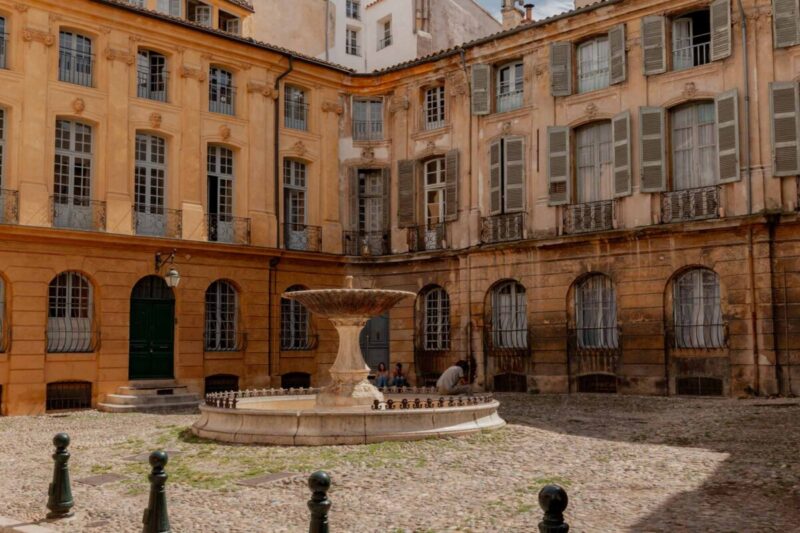
Paul Cézanne’s birthplace preserving the master painter’s authentic Atelier studio exactly as when he died—supplies organized near windows, smock hanging on walls, favorite props positioned for still life work, plus Jas de Bouffan family home (40 years) and “In the Steps of Cézanne” bronze “C” sidewalk plaques marking living, school, family, and contemporary meeting places. Roman thermal springs heritage since 123 BC founding when natural hot springs attracted settlers, preserved through approximately 30 ornamental fountains including La Rotonde (1860, largest, most photographed), Fontaine Moussue’s natural Bagniers spring flowing constantly at 18°C, and healing spa traditions continuing European thermal tourism. Cours Mirabeau’s grand 17th-century boulevard—Aix’s Champs-Élysées lined with plane trees, cafes, 300-year-old homes repurposed as businesses, creating elegant promenade for wealthy society evolution. Daily Provençal markets (larger Tuesday, Thursday, Saturday mornings) featuring pottery, tablecloths, licorice, spices, clothes, soap across Cours Mirabeau and Place du Palais de Justice. “City of water” combining Roman settlement heritage with artistic legacy, vibrant market culture, and fountain-adorned streets where ancient thermal wellness meets contemporary Mediterranean charm in Provence’s most elegant cultural capital.
The destination guide
Aix-en-Provence
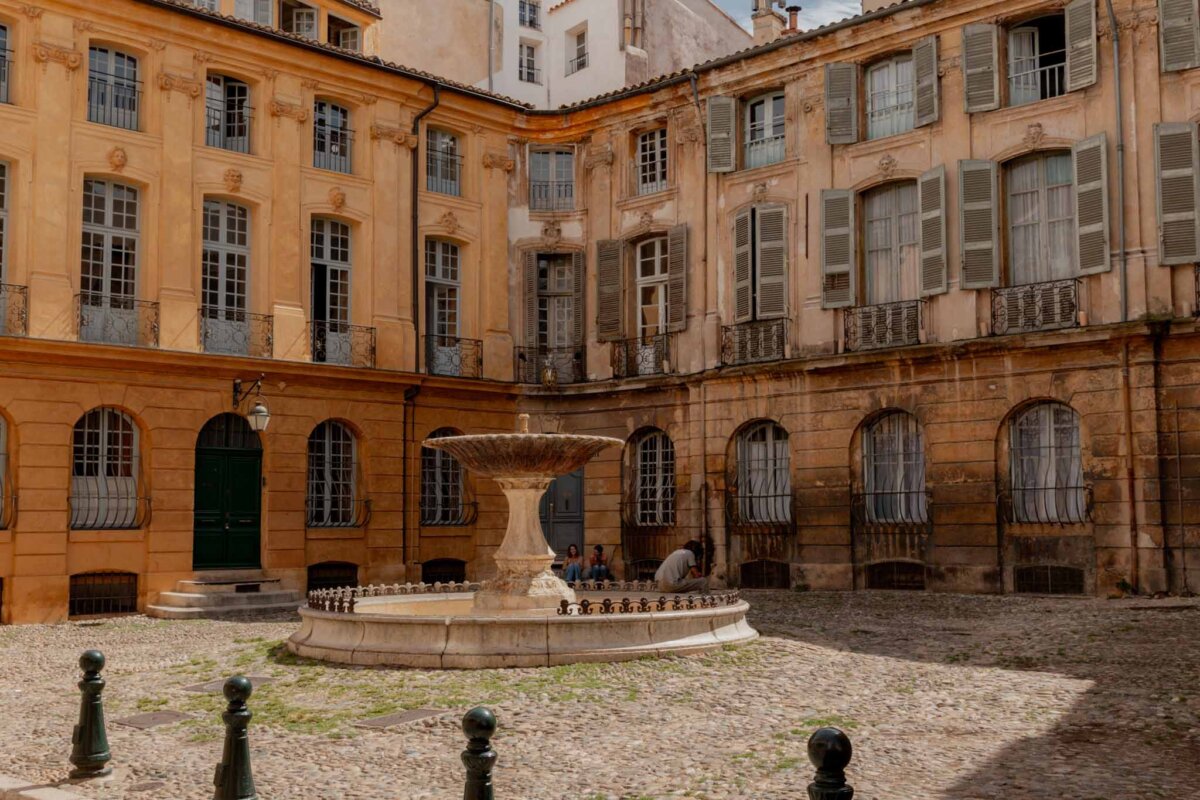
Cézanne’s atelier still has his smock on the wall. Follow the bronze ‘C’ markers around Aix and the city starts making sense.
Travel guides for Aix-en-Provence
More guides featuring Aix-en-Provence (2)
At a glance
- French
- Provençal town
- Cours Mirabeau boulevard
- Limestone hills
- Lavender fields
How Aix-en-Provence scores
Editorial scores on a 10-point scale, weighed against destinations of the same kind.
Travel safety snapshot
SafePlace indicators use their source 100-point scale; higher is more favourable. Planning context, not a live travel advisory — check official government guidance before you go.
When to go
Best months to visit: April, May, June, July, September and October.
- January: 2.9 to 10.4 degrees Celsius, 1.9 millimetres of rain, best-time score 2 out of 5.
- February: 3.7 to 11.8 degrees Celsius, 12.1 millimetres of rain, best-time score 2 out of 5.
- March: 6.6 to 15.1 degrees Celsius, 37 millimetres of rain, best-time score 3 out of 5.
- April: 9.1 to 19.1 degrees Celsius, 2.5 millimetres of rain, best-time score 4 out of 5.
- May: 11.9 to 19.6 degrees Celsius, 32.1 millimetres of rain, best-time score 5 out of 5.
- June: 17.4 to 26.6 degrees Celsius, 24.6 millimetres of rain, best-time score 5 out of 5.
- July: 19.4 to 30.2 degrees Celsius, best-time score 4 out of 5.
- August: 19.6 to 29.8 degrees Celsius, 3.7 millimetres of rain, best-time score 3 out of 5.
- September: 16.4 to 25.2 degrees Celsius, 18.3 millimetres of rain, best-time score 5 out of 5.
- October: 11.6 to 19 degrees Celsius, 25.7 millimetres of rain, best-time score 5 out of 5.
- November: 8.4 to 15.1 degrees Celsius, 34.3 millimetres of rain, best-time score 3 out of 5.
- December: 4.7 to 11.1 degrees Celsius, 18.5 millimetres of rain, best-time score 2 out of 5.
Month-by-month conditions and packing advice
- January
- Cool weather, mostly dry January in Aix-en-Provence: cold winter weather is less balanced for a first-time Provence visit. Crowds: Quieter tourist season with lower hotel rates and smaller crowds at major attractions. Ideal for cultural immersion, art gallery visits, and indoor market exploration. Some outdoor activities like lavender field tours are unavailable, but thermal springs, museums, and Cézanne sites remain accessible. Pack: Warm layers including sweaters and coat; Waterproof jacket for occasional Mistral winds; Comfortable walking boots for cobblestone streets; Scarf and gloves for evening temperatures; Breathable base layers for indoor heating; Camera gear for crisp winter light photography
- February
- Cool weather, mostly dry February in Aix-en-Provence: cold winter weather is less balanced for a first-time Provence visit. Crowds: February sits in Aix-en-Provence’s low tourism season, offering calm streets, reduced accommodation prices, and fewer queues at cultural landmarks such as the Saint-Sauveur Cathedral or Granet Museum. While temperatures are cool, they are comfortable for walking tours, market visits, and countryside excursions without summer’s intense heat. The dry weather makes it easier to plan outdoor activities, but shorter daylight hours and occasional brisk mistral winds mean scheduling sightseeing earlier in the day. This is an excellent time for travelers seeking authentic daily life, winter festivals, and a more intimate connection with the city’s artistic and culinary heritage without tourist-season congestion. Pack: Warm layered clothing for cool mornings and evenings; Comfortable closed-toe walking shoes; Windproof jacket to guard against mistral winds; Light scarf for added warmth; Smart casual attire for indoor dining and cultural events; Compact umbrella for unexpected showers
- March
- Cool weather, some rain March in Aix-en-Provence: cooler, hotter, or quieter months narrow the most comfortable outdoor window. Crowds: March offers a quieter, more contemplative Aix-en-Provence experience before the bustle of late spring and summer. While not peak tourist season, the moderate weather allows comfortable exploration of markets, museums, and nearby vineyards without the heavy crowds or high-season pricing. Outdoor café seating becomes increasingly pleasant in the midday sun, though mornings and evenings can be brisk. This is a transitional month: ideal for travelers seeking cultural immersion, photography, and early spring landscapes. Layered clothing is essential for comfort across the day’s temperature swings, and booking flexibility is possible thanks to lower accommodation demand compared to summer months. Pack: Layered clothing for cool mornings and mild afternoons; Water-resistant jacket for occasional showers; Comfortable walking shoes for cobblestone streets; Scarf or light shawl for added warmth; Compact umbrella for unpredictable rain; Camera for capturing spring blossoms and architecture
- April
- Cool weather, mostly dry April in Aix-en-Provence: spring buildup or lavender-season heat can still work with timing planned carefully. Crowds: April marks the start of the shoulder season in Aix-en-Provence, offering a sweet spot between winter’s quiet and summer’s tourist rush. The mild daytime temperatures and low rainfall make it ideal for outdoor sightseeing, countryside hikes, and visiting nearby vineyards. Crowds are moderate, with slightly better hotel availability and pricing than in peak summer. While evenings can still be brisk, daytime warmth encourages café culture and leisurely market strolls. Seasonal festivals and art exhibitions begin to appear on the calendar, enhancing cultural appeal. Booking accommodations in advance is wise, especially around Easter holidays, when local events draw both French and international visitors. Pack: Light sweater or cardigan for cool mornings; Comfortable walking shoes for cobblestone streets; Light scarf to guard against the Mistral wind; Layered clothing for temperature shifts; Compact umbrella for unexpected showers; Smart-casual attire for dining and cultural events
- May
- Warm and pleasant, some rain May in Aix-en-Provence: markets, fountains, cafes, museums, lavender-area drives, vineyards, and old-town walks balance warmth and atmosphere. Crowds: May marks the beginning of Aix-en-Provence’s lively shoulder season, attracting travelers who want warm, walkable days without the peak summer crowds. Conditions are excellent for exploring historic squares, attending open-air festivals, and taking day trips to nearby villages. Tourist numbers start to rise as seasonal events like local wine fairs and markets gain momentum, but accommodations remain more affordable than in July and August. Outdoor dining thrives, and cultural institutions extend opening hours, yet there’s still breathing room in cafés and museums. Occasional rain showers are typically brief and rarely disrupt plans, though flexible itineraries help. It’s a prime time to enjoy Provençal charm before the summer rush fully arrives. Pack: Light waterproof jacket for occasional showers; Comfortable walking shoes for cobblestone streets; Layered clothing for cool mornings and warm afternoons; Compact travel umbrella; Sunglasses with UV protection; Light scarf for style and warmth in breezes
- June
- Warm and pleasant, mostly dry June in Aix-en-Provence: markets, fountains, cafes, museums, lavender-area drives, vineyards, and old-town walks balance warmth and atmosphere. Crowds: June marks the start of the high season in Aix-en-Provence, with warm, mostly dry days ideal for exploring markets, festivals, and outdoor cafés. Crowd levels begin to rise, especially toward the latter half of the month as summer holidays approach, but prices remain slightly lower than in peak July and August. It’s a sweet spot for travelers wanting the vibrancy of summer without its fullest crush. Lavender excursions, vineyard visits, and open-air concerts are in full swing, while hiking trails in the Luberon and Sainte-Victoire offer comfortable daytime conditions. Advance booking for accommodations and popular cultural events is recommended to secure the best choices. Pack: Lightweight linen or cotton outfits for daytime warmth; Comfortable walking sandals for cobblestone streets; Wide-brimmed hat and high SPF sunscreen; Light sweater or wrap for cooler evenings; Reusable water bottle for day trips; Smart-casual attire for evening dining and cultural events
- July
- Hot and sunny, mostly dry July in Aix-en-Provence: spring buildup or lavender-season heat can still work with timing planned carefully. Crowds: July is peak season in Aix-en-Provence, attracting visitors with its flawless weather and lively cultural calendar, including music and arts festivals. Expect high accommodation rates and busy streets, particularly in the historic center and at major attractions. The hot, dry conditions are excellent for outdoor dining, countryside excursions, and exploring vineyards, but midday heat can be intense, making early morning and late afternoon the best times for sightseeing. Lavender fields in nearby Luberon and Valensole are in full bloom, drawing additional crowds. Advance booking for accommodations and popular tours is essential, and securing shaded seating at restaurants is advisable. Pack: Lightweight breathable clothing for hot days; Wide-brimmed hat for sun protection; High SPF sunscreen and sunglasses; Comfortable sandals or breathable walking shoes; Reusable water bottle to stay hydrated; Light shawl or scarf for evening breezes
- August
- Warm and pleasant, mostly dry August in Aix-en-Provence: cooler, hotter, or quieter months narrow the most comfortable outdoor window. Crowds: August is peak tourist season in Aix-en-Provence, coinciding with France’s national holiday month when many locals take summer vacations. Expect vibrant streets, lively festivals, and bustling markets, but also higher accommodation rates and busy restaurants. The hot, dry conditions are excellent for outdoor dining, evening strolls, and cultural events such as open-air concerts, though midday heat can make strenuous hiking less comfortable. Early mornings and evenings are the best times for exploring the countryside or climbing Mont Sainte-Victoire. Booking in advance is essential during this high-demand period, and dining reservations are recommended to secure spots at popular bistros and wine terraces. Pack: Lightweight, breathable clothing for hot days; Wide-brimmed hat and high-SPF sunscreen; Comfortable sandals or breathable walking shoes; Reusable water bottle to stay hydrated; Light shawl or scarf for modesty in churches; Sunglasses with UV protection
- September
- Warm and pleasant, mostly dry September in Aix-en-Provence: markets, fountains, cafes, museums, lavender-area drives, vineyards, and old-town walks balance warmth and atmosphere. Crowds: September marks the tail end of the peak tourist season in Aix-en-Provence, bringing excellent conditions for outdoor sightseeing, wine tours, and cultural festivals such as the grape harvest celebrations. Crowds begin to thin compared to July and August, yet popular sites still retain lively energy. Accommodation prices are slightly lower than high summer rates, though advance booking remains wise for prime spots. Warm afternoons allow for leisurely lunches outdoors, while cooler evenings invite relaxed strolls along the Cours Mirabeau. This is also a prime time for cycling through vineyard routes and enjoying seasonal produce at weekly markets, with minimal risk of weather disruption. Pack: Lightweight layers for warm days and cooler evenings; Comfortable walking shoes for cobblestone streets; Sunglasses and SPF 30+ sunscreen; Light scarf or shawl for cooler nights; Foldable umbrella for occasional showers; Casual chic attire suitable for Provençal dining
- October
- Warm and pleasant, some rain October in Aix-en-Provence: markets, fountains, cafes, museums, lavender-area drives, vineyards, and old-town walks balance warmth and atmosphere. Crowds: October is shoulder season in Aix-en-Provence, offering a quieter atmosphere compared to the busy summer months. The mild temperatures are ideal for outdoor exploration, from strolling the old town to hiking in the Sainte-Victoire hills. Vineyards are active with harvest activities, and cultural events often coincide with the season. Accommodation prices tend to be more moderate, and attractions are less crowded, allowing for a more relaxed experience. Some seasonal cafés or outdoor venues may reduce hours, but most cultural sites remain open. This is an excellent time for travelers seeking authentic Provençal life without peak-season congestion. Pack: Light jacket or sweater for cooler mornings and evenings; Comfortable walking shoes for cobblestone streets; Compact umbrella or light rain jacket; Scarf or shawl for added warmth and style; Layers such as long-sleeve shirts and light trousers; Sunglasses to handle low autumn sun glare
- November
- Cool weather, some rain November in Aix-en-Provence: cooler, hotter, or quieter months narrow the most comfortable outdoor window. Crowds: November marks the low tourist season in Aix-en-Provence, offering peaceful exploration of museums, historic squares, and countryside walks. Cooler temperatures are comfortable for active sightseeing, though early evenings limit daylight hours for excursions. Accommodation prices tend to be lower, and availability is high, making it easier to secure central stays. Occasional rain may shift plans indoors, encouraging visits to art galleries, Provençal cooking classes, and covered markets. It’s a rewarding month for travelers seeking authenticity, with minimal crowds and the charm of local life unfolding at a slower pace. Pack: Water-resistant jacket for occasional showers; Warm layers for cool mornings and evenings; Comfortable walking shoes for cobblestone streets; Compact umbrella for unpredictable rain; Scarf and light gloves for added warmth; Smart-casual attire suitable for cafés and cultural venues
- December
- Cool weather, mostly dry December in Aix-en-Provence: cold winter weather is less balanced for a first-time Provence visit. Crowds: December offers a quieter, more intimate Aix-en-Provence experience as the city shifts into its low tourist season. Cooler weather and reduced crowd levels make it ideal for exploring cultural sites, browsing festive markets, and enjoying seasonal cuisine without the peak-season rush. Accommodation rates are generally lower, providing good value, though some rural attractions may operate on reduced hours. The crisp, dry climate is excellent for walking tours, but evenings can feel quite cold. This period is less suited for outdoor vineyard visits or lavender excursions, which peak in warmer months. Booking indoor cultural activities in advance ensures a smooth visit, while flexibility with plans allows for adapting to occasional rain or wind. Pack: Warm layered clothing for fluctuating daytime temperatures; Comfortable waterproof walking shoes; Insulated jacket to block Mistral winds; Scarf, hat, and gloves for chilly mornings and evenings; Compact umbrella for occasional showers; Smart-casual attire for indoor dining and cultural events
- June
- July
- August
- January
- February
- November
Know before you go
Best time to visit
The best time to visit Aix-en-Provence is during the shoulder seasons of April to June and September to October, when mild Provençal weather, fewer crowds, and blooming landscapes create ideal conditions for exploring the city’s fountains, markets, and Cézanne’s countryside.
Spring (April-June)
Temperatures range from 13-25°C (55-77°F) with blossoming gardens, poppy fields in May, and lavender beginning to bloom in late June. The Easter Festival and Spring Crafts Fair add cultural flair. Fewer tourists than summer.
Summer (June-August)
Hot and sunny, with temperatures reaching 30-35°C (86-95°F). Lavender fields are at their peak from mid-June to early August. The renowned Festival d’Aix-en-Provence brings world-class opera and music. Peak season with higher prices and larger crowds.
Autumn (September-November)
Comfortable temperatures (15-23°C / 59-73°F) with golden countryside, grape harvests, and wine-tasting opportunities. Tourist numbers thin out, and accommodation prices drop. September retains summer warmth.
Winter (December-March)
Mild for continental Europe (5-12°C / 41-54°F) with occasional rain. Very few tourists, the lowest prices, and a peaceful atmosphere. Christmas markets and Provençal holiday traditions add seasonal charm.
Season by season
Summer (June-Aug):
Weather: 25-35°C, sunny
Highlights: Lavender fields nearby
Best For: Festivals (Opera)
Spring (April-May):
Weather: 15-20°C, mild
Highlights: Gardens blooming
Best For: Art tours
Fall (Sept-Oct):
Weather: 15-25°C, golden
Highlights: Grape harvest
Best For: Hiking
Winter (Nov-March):
Weather: 5-15°C, cool
Highlights: Santons (Navity figures)
Best For: Markets
Crowds
Aix-en-Provence peaks in summer (June–August) and during the Festival d’Aix (July), with Cours Mirabeau and markets crowded; quietest in winter (November–February) outside school holidays, making it moderately busy in high season and calm off-season.
Getting there and around
Getting there
Aix-en-Provence is served by two stations: the city center station with regional trains and the Aix-TGV station (15km west) with high-speed connections to Paris (3 hours), Lyon (1 hour), and Brussels. Shuttle buses connect Aix-TGV to downtown every 20 minutes for €4.50. Marseille Provence Airport (30km) offers the nearest international flights with direct buses every 30 minutes taking 30 minutes for €8. From Marseille, trains run every 30 minutes taking 40 minutes. The A8 and A7 motorways provide road access, though the old town has limited parking.
Getting around
Aix’s historic center within the ring boulevards is compact and walkable, with main attractions within 15 minutes of the iconic Cours Mirabeau. The Aix en Bus network operates 26 lines with mini-buses navigating narrow old town streets, single tickets €1.20. The Diablines electric shuttles circle the center every 10 minutes for free. Bicycle sharing via Vélo offers 20 stations throughout town. The famous markets sprawl across multiple squares on Tuesday, Thursday, and Saturday mornings. Most hotels locate near Cours Mirabeau or the Mazarin quarter. Evening strolls along tree-lined boulevards are local tradition.
Top experiences in Aix-en-Provence
Cours Mirabeau
The main avenue of Aix. Lined with plane trees, fountains, and cafes. It is the place to embrace the French art of ‘flâner’ (strolling aimlessly). Les Deux Garçons is the famous brasserie where Cézanne and Zola hung out.
Atelier Cézanne (Studio)
The studio where Paul Cézanne worked for the last 4 years of his life. It has been left exactly as it was—his coat, palette, and the objects he painted (apples, vases) are still there. It is a pilgrimage for art lovers.
Saint-Sauveur Cathedral
A cathedral built on the site of a Roman forum. It mixes Romanesque, Gothic, and Baroque styles. The Cloister is a peaceful gem. The triptych of the Burning Bush (15th century) is its treasure.
Place d'Albertas
A beautiful baroque square that looks like a theatre set. It is paved with cobblestones and surrounded by elegant mansions. It is small but photogenic. In summer, musicians often play here.
Mont Sainte-Victoire
The limestone mountain that dominates the landscape east of Aix. Cézanne painted it over 80 times. You can hike to the Cross or visit the Bibémus Quarries to see the orange rock shapes that inspired cubism.
Editor-curated picks carried over from our original guide. Where a full place guide exists, the card links to it.



Worth booking ahead in Aix-en-Provence
Hand-picked from the operators our guides already send readers to. Prices and availability are live on the partner site.
Day tripGetYourGuide
Versailles Palace guided tour with coach transfer (opens GetYourGuide in a new tab)
Guided palace visit with the coach transfer handled, so you skip the RER connection and the ticket-office line.
Where to stayBooking.com
Stays in Aix-en-Provence (opens Booking.com in a new tab)
Live rates and availability for Aix-en-Provence on Booking.com; filter by neighbourhood once you know where your days start.
We earn a commission if you book through these links, at no extra cost to you. It is how we keep the guides free and independent.
Where to stay
Villa Gallici Hôtel & Spa
18 Av. de la Violette, 13100 Aix-en-Provence, France
A Relais & Châteaux property that feels like an 18th-century Provençal country house. The gardens are filled with lavender and cypress trees. The decor is lavish—brocade, velvet, antiques. It is romantic and quintessentially French.
Hotel Le Pigonnet
5 Av. du Pigonnet, 13090 Aix-en-Provence, France
A historic hotel set in a beautiful garden with view of Mont Sainte-Victoire. Cézanne used to paint here. It is elegant, peaceful, and feels like a sanctuary within the city. The pool in the garden is a delight.
Renaissance Aix-en-Provence Hotel
320 Av. Wolfgang Amadeus Mozart, 13100 Aix-en-Provence, France
A modern, chic hotel located near the Grand Théâtre. It features a striking contemporary design, an indoor pool, and a great spa. It is spacious and comfortable, offering a contrast to the historic city center.
Editor-curated stays carried over from our original guide. Where we have reviewed the hotel, the card links to the review.
Tips from the field
Highlights
- Cézanne – Hometown hero
- Fountains – City of Water
- Markets – Provençal life
- Calissons – Almond candy
- Architecture – Baroque gold
- Students – Lively vibe
- Opera – Festival d'Aix
- Wine – Rosé country
Best activities
- Have a coffee at Les Deux Garçons. Visit the daily market (Place Richelme) for lavender honey and cheese. Walk in Cézanne's footsteps to his studio. Hike Mont Sainte-Victoire. Eat a 'Calisson' (diamond-shaped sweet). Listen to opera in July.
Practical tips
- Currency: Euro (EUR)
- Getting There: Marseille Provence Airport (MRS) is the nearest airport, 25 km away. Shuttle bus (Line 40) connects to Aix bus station (~€8, 30 minutes). TGV trains connect Paris to Aix-en-Provence TGV station in 3 hours.
- Transportation: The historic center is very walkable. Small electric "La Diabline" minibuses cover the old town (~€0.60 per ride). The Aix-en-Provence City Pass (24-72 hours, €29-49) includes public transport, museum entry, and guided tours.
- Dining: Provençal cuisine at moderate prices. Traditional dishes include ratatouille, bouillabaisse, and calissons (local almond candy). Restaurants away from Cours Mirabeau offer better value (€15-30 per person). Fresh produce markets on Place Richelme operate daily.
- Free Attractions: Strolling Cours Mirabeau, exploring the Old Town's fountains and squares, Terrain des Peintres (Cézanne's painting sites), Cathédrale Saint-Sauveur, browsing the daily markets.
- Day Trips: Visit the lavender fields of Valensole Plateau, Cassis and the Calanques, or Mont Sainte-Victoire for hiking.
- Tipping: Service included ("service compris"); rounding up appreciated
- Electricity: 230V/50Hz, Type C/E plugs
Photography tips
- Golden Hour: Sunset on the Cours Mirabeau (sun filters through plane trees).
- Iconic Shots:
- The mossy fountains on Cours Mirabeau.
- Mont Sainte-Victoire from the Terrain des Peintres.
- The items in Cézanne's studio (still life).
- Place d'Albertas.
- The colorful market stalls.
- Technique: The light in Provence is famous for a reason (it inspired Impressionism). It is warm and golden.
Timing
- Peak Season (June-Aug):
- Hot, lavender, Opera
- Shoulder Season (April-May, Sept):
- Best weather, less crowded
- Low Season (Nov-March):
- Quiet, authentic winter
Keeping it authentic
- Aix is bourgeois, elegant, and wealthy. It is sometimes called the '21st arrondissement of Paris'. It is very walkable. The markets are authentic—refer to the 'Halles' for food. Dress code is 'chic décontracté' (smart casual).
Culture, customs and safety
Cultural heritage
Aix-en-Provence preserves its legacy as the historic capital of Provence and birthplace of Post-Impressionism where Paul Cézanne painted Montagne Sainte-Victoire over 80 times. Founded as Aquae Sextiae in 123 BCE around thermal springs, Roman ruins include the amphitheater beneath Palais de Justice. The medieval Old Town features the 12th-century Cathedral of Saint-Sauveur blending Romanesque, Gothic, and Baroque styles. Cours Mirabeau, lined with 17th-century hôtels particuliers and plane trees, epitomizes French elegance. The city maintains calisson candy-making traditions since 1454 and hosts the prestigious Festival d’Aix opera festival since 1948. Traditional Provençal markets offer lavender, herbs, and santons (nativity figurines) maintaining regional craft heritage.
Local customs & etiquette
Provençal culture saturates Aix with markets offering lavender, olive oil, and herbs defining regional identity. The city of Cézanne maintains artistic traditions with numerous galleries and the painter’s preserved studio. Café culture thrives along Cours Mirabeau where Zola and Cézanne once gathered. The university presence since 1409 keeps the city youthful and intellectual. Calissons d’Aix (almond candy) have been made since the 15th century. The fountain city (city of a thousand fountains) uses water as architectural element. Apéro time is sacred with pastís and rosé wine. Southern French relaxation means shops close 12-2 PM and Sundays. The mistral wind shapes local life with shuttered windows and wind-protected cafés.
Safety notes
Aix-en-Provence is considered a very safe city with a low crime rate.
General Safety:
• Pickpocketing can occur in crowded areas, especially along Cours Mirabeau and during market days
• Keep valuables in a cross-body bag and avoid leaving bags unattended at cafés
• Solo female travelers generally report feeling comfortable and secure
Nighttime:
• Stick to well-lit, populated areas if walking after dark
• Use registered taxis or ride-sharing apps for late-night travel
Public Transport:
• Watch belongings on buses, particularly when boarding and alighting
Drink Safety:
• Do not leave drinks unattended in bars and restaurants
Water:
• Tap water is safe to drink
• Do not drink from decorative fountains
Emergency contacts:
• General: 112
• Police: 17
• Ambulance: 15
• Fire: 18